Before ‘The Munsters’: The Little-Known Story of Fred Gwynne’s WWII Military Service
Long before the makeup and the laughs, the man behind Herman Munster was a teenage sailor facing the Pacific war

For millions of classic TV viewers and generations of fans, actor Fred Gwynne—despite a lifetime of resistance on his part—will always be recognized as Herman Munster, patriarch of the 1964 to 1966 spooky sitcom The Munsters. Looking (intentionally) like Frankenstein’s monster from the Universal horror films of the ‘30s and ‘40s, Herman was a towering, soft-spoken sitcom dad with a gentle soul and boisterous sense of humor. But what the vast majority of those same people likely don’t realize is that long before he lumbered down the stairs at 1313 Mockingbird Lane, Gwynne had already lived through an experience that helped to shape the rest of his life: military service in the United States Navy during World War II.
From prep school to the Pacific: Fred Gwynne’s early life
Born Frederick Hubbard Gwynne on July 10, 1928, in New York City, he enlisted in the Navy in June 1944, not long after turning 17 and at a time when the war was looming over nearly every American household. As was the norm with young men of his generation, the path he was on in life—to become an artist—was interrupted by global events that were changing everything. He entered the service as an Apprentice Seaman and reported to boot camp at the Naval Training Center in Sampson, New York, later that summer. Needless to say, this was a sharp turn from the privileged academic world he had known (having entered prep school at 13) and one that locked him into a rigid structure built around discipline, hierarchy and responsibility.
A radioman at sea: Fred Gwynne’s military service on the USS PC-581
Following basic training, Gwynne continued his naval education, attending communications training and advancing through the enlisted ranks. He ultimately became a radioman, responsible for monitoring ship-to-ship and ship-to-shore communications, logging incoming messages and ensuring orders were received clearly and relayed without error. It was work that demanded long hours of listening, waiting and absolute accuracy—often in cramped radio rooms where silence and concentration mattered as much as speed. While it’s tempting to dramatize such positions, the reality of wartime naval service was often about repetition and readiness—being prepared to act instantly, even if nothing happened for long stretches at a time.
In April 1945, Gwynne reported for duty at Pearl Harbor and was assigned to the USS PC-581, a patrol craft operating in the Pacific during the final months of the war. Like hundreds of similar ships, PC-581 was known only by its number rather than a name, one of many reminders that life in the Navy was built around function, not sentiment. Gwynne served aboard the ship into 1946, spending long stretches at sea as the fighting came to an end and the Navy gradually shifted from wartime operations to the routines of peacetime.


Gwynne rarely talked about his Navy service in dramatic terms, and that says a lot. Rather than a series of war stories, his time in uniform seems to have been about growing up fast. He went in as a teenager and came out having spent years inside a system where nothing revolved around any one person, including himself.
After his honorable discharge, he returned to civilian life and took advantage of the G.I. Bill, initially studying art at the Phoenix School of Design before transferring to Harvard University in 1948. There, he majored in English, contributed to the Harvard Lampoon and immersed himself in drawing and performance prior to his graduation in 1951. He joined the Hasty Pudding Club and appeared in student theatrical productions, laying the groundwork for a career that would eventually blend visual art, writing and acting.

The lasting legacy of ‘The Munsters’ star’s wartime experience
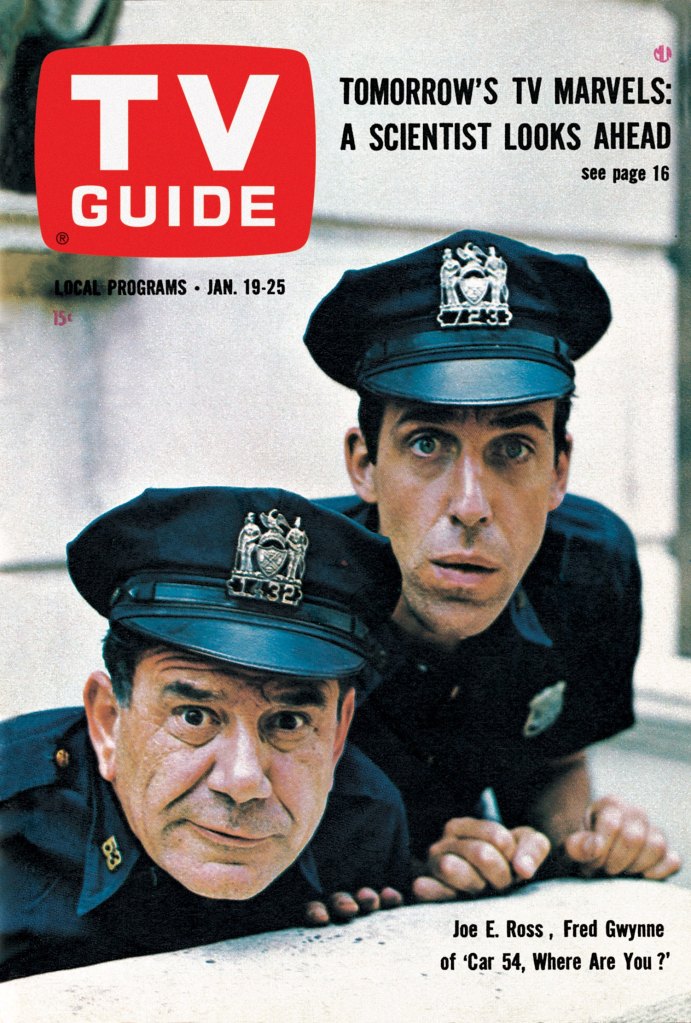
That shift—from sailor to student to artist—was a familiar path for many veterans of Gwynne’s generation. And while the Navy didn’t turn him into an actor, it did give him something just as lasting: perspective. By the time success arrived, whether on Broadway, in television roles like Car 54, Where Are You? and The Munsters or later through his work as a writer and illustrator of children’s books, Gwynne carried himself with a calm assurance that suggested he’d already been through something bigger than show business.
Looked at that way, Fred Gwynne’s time in uniform doesn’t compete with his acting legacy—especially as star of The Munsters—but it does add another layer to it. It’s a “quieter” chapter than his television fame, but it adds a more human face to his on-screen persona.
Conversation
All comments are subject to our Community Guidelines. Woman's World does not endorse the opinions and views shared by our readers in our comment sections. Our comments section is a place where readers can engage in healthy, productive, lively, and respectful discussions. Offensive language, hate speech, personal attacks, and/or defamatory statements are not permitted. Advertising or spam is also prohibited.