115 Years of Frankenstein on Film: Meet Every Actor Who Has Played the Creature
From Boris Karloff to Jacob Elordi, a century of actors have brought Frankenstein’s Monster to life

Long before vampires and werewolves became the pop-culture creatures of choice, Frankenstein’s Monster stood alone as cinema’s original misunderstood monster. First brought to life in Thomas Edison’s 1910 silent short, Mary Shelley’s creation has been stitched together and reimagined in nearly every generation since—from Boris Karloff’s lumbering giant in the 1930s Universal classics to Peter Boyle’s comedic twist in Young Frankenstein, and on to Robert De Niro’s tormented soul and Jacob Elordi’s upcoming portrayal for Guillermo del Toro. Each actor has reshaped the creature to reflect his time: sometimes terrifying, sometimes tragic or sometimes both.
What unites them is the search for humanity within horror. Over more than a century, these portrayals have transformed the Monster from a mute menace into a mirror of our fears and a need for connection. Whether stalking fog-drenched castles or dancing under laboratory lightning, Frankenstein’s Monster continues to rise again, reborn, misunderstood and part of the gothic family that includes his dark cousins, the vampires and werewolves who haunt our screens beside him.
And for the record, Frankenstein is actually Dr. Victor Frankenstein, creator of—wait for it—Frankenstein’s monster, though many refer to the creature by his maker’s name.
Charles Ogle (1865–1940)
Frankenstein project: Frankenstein (1910, Edison Studios)
Behind the scenes: Ogle’s makeup, which was a crude mixture of greasepaint and papier-mache, made him cinema’s first Frankenstein’s Monster. The short film, produced by Thomas Edison, ran about 16 minutes and emphasized the creature’s moral corruption rather than brute strength. The film was long believed lost until a surviving print surfaced in the 1970s.
Boris Karloff (1887–1969)
Frankenstein projects: Frankenstein (1931), Bride of Frankenstein (1935), Son of Frankenstein (1939)
Behind the scenes: Karloff’s performance defined the Monster for generations, from his halting movements to the flat-topped head created by makeup artist Jack Pierce. He removed his dental bridge for a sunken-cheek effect and endured hours of makeup each day. Karloff brought pathos to the character, transforming the Monster from villain to tragic antihero.
Lon Chaney Jr. (1906–1973)

Frankenstein project: The Ghost of Frankenstein (1942)
Behind the scenes: Chaney inherited the role after Karloff declined to return. He reportedly disliked the heavy makeup and stiff costume, which limited movement, but he brought the same wounded dignity he gave to his Wolf Man. Universal reused Karloff’s headpiece mold, slightly modified to fit Chaney’s larger frame.
Bela Lugosi (1882–1956)
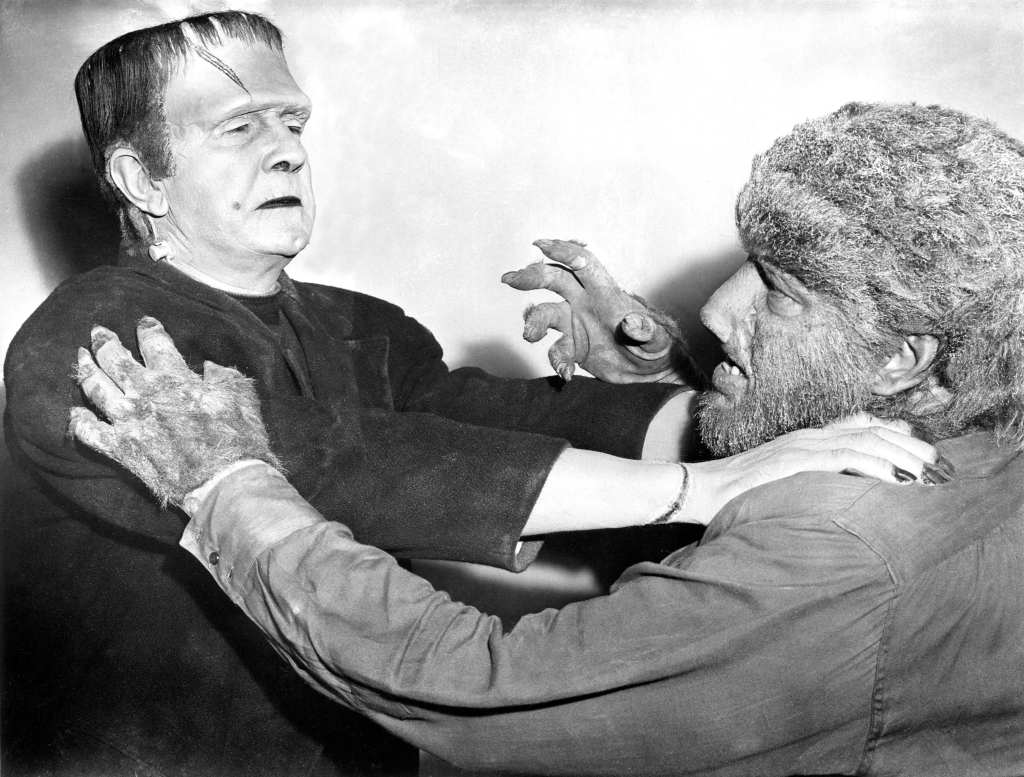
Frankenstein project: Frankenstein Meets the Wolf Man (1943)
Behind the scenes: Originally intended to reprise his role as Ygor merged with the Monster, Lugosi’s scenes were heavily cut, removing dialogue that explained the character’s blindness and leaving him to stumble silently through the film. Although best known for Dracula, this was Lugosi’s only official appearance as the Monster.
Glenn Strange (1899–1973)
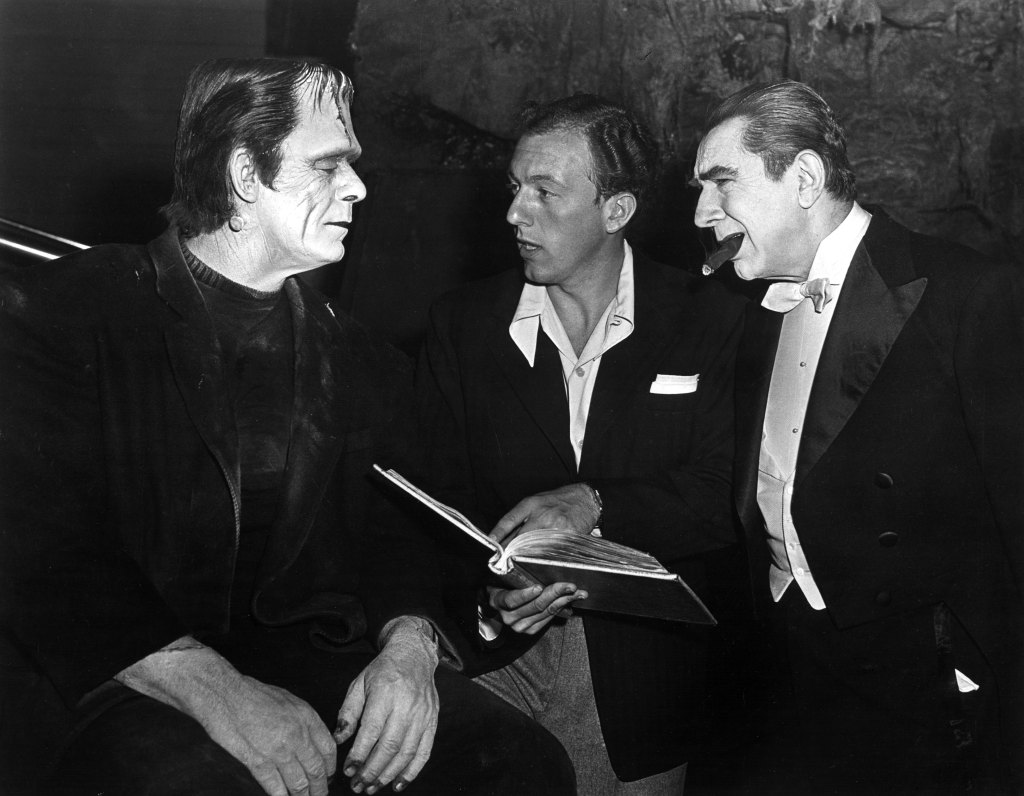
Frankenstein projects: House of Frankenstein (1944), House of Dracula (1945), Abbott and Costello Meet Frankenstein (1948)
Behind the scenes: Strange became Universal’s “house Monster,” chosen for his imposing 6’5” frame. Karloff coached him through the role, teaching him the Monster’s physicality. In Abbott and Costello Meet Frankenstein, Lon Chaney Jr. (as the Wolf Man) performed a key fight scene that helped cement the movie’s status as a horror-comedy classic.
Christopher Lee (1922–2015)
Frankenstein project: The Curse of Frankenstein (1957)
Behind the scenes: Hammer Films’ first color version of the story introduced a more visceral and violent Monster. Lee’s interpretation was mute and brutal, contrasting sharply with Karloff’s tragic portrayal. The makeup, designed by Phil Leakey, emphasized torn flesh and surgical scars, setting the template for Hammer’s gorier Gothic style and establishing Lee as a horror icon alongside Peter Cushing’s Dr. Frankenstein.
Kiwi Kingston (1914–1992)
Frankenstein project: The Evil of Frankenstein (1964)
Behind the scenes: A professional wrestler turned actor, Kingston donned heavy makeup modeled more closely on Universal’s 1930s design after Hammer reached a legal agreement with Universal Pictures. His limited screen time and stiff performance underscored the film’s emphasis on atmosphere over pathos.
David Prowse (1935–2020)
Frankenstein projects: The Horror of Frankenstein (1970), Frankenstein and the Monster from Hell (1974)
Behind the scenes: Before gaining fame as Darth Vader, Prowse played the Monster twice for Hammer. His imposing physique was ideal for the role, though he later admitted the makeup was claustrophobic and painful to remove. Peter Cushing, reprising his role as Baron Frankenstein, described Prowse as “a gentle giant with extraordinary patience.”
Michael Sarrazin (1940–2011)
Frankenstein project: Frankenstein: The True Story (1973, NBC miniseries)
Behind the scenes: Sarrazin’s creature began handsome before decaying grotesquely—a concept inspired by Mary Shelley’s novel but seldom depicted onscreen. The acclaimed two-part TV movie, produced by Hammer alumni, featured elaborate makeup by Roy Ashton and a script co-written by Christopher Isherwood. Sarrazin’s sympathetic portrayal helped revive serious interest in the source material.
Peter Boyle (1935–2006)
Frankenstein project: Young Frankenstein (1974)
Behind the scenes: Boyle’s affectionate parody of Karloff’s creature in Mel Brooks’s black-and-white spoof remains one of the most beloved interpretations. His dance sequence to “Puttin’ on the Ritz” with Gene Wilder has become iconic. Brooks noted that Boyle improvised much of his physical comedy and brought “an unexpected tenderness that made the joke work.”
Robert De Niro (1943– )
Frankenstein project: Mary Shelley’s Frankenstein (1994)
Behind the scenes: Directed by Kenneth Branagh, this adaptation aimed to restore the tragic intellect of Shelley’s original creature. De Niro spent hours in prosthetics that simulated crude surgical grafts rather than the square-headed design of earlier films. He approached the part psychologically, keeping a production diary in character to explore the monster’s loneliness and rage.
Patrick Bergin (1951– )
Frankenstein project: Frankenstein (1992, TNT television movie)
Behind the scenes: This cable version, filmed largely in Poland, presented Bergin’s creature as articulate and tormented. Critics praised its faithfulness to the novel’s tone, though the modest budget limited the visual ambition seen in larger productions.
Aaron Eckhart (1968– )
Frankenstein projects: I, Frankenstein (2014)
Behind the scenes: Eckhart trained extensively in martial arts for the film’s action-heavy depiction of the creature—reimagined as “Adam,” a warrior in a centuries-long war between gargoyles and demons. Though critically panned, the film reflected a trend toward superhero-style reinterpretations of gothic icons.
Rory Kinnear (1978– )

Frankenstein Project: Penny Dreadful (TV series, 2014–2016)
Behind the scenes: Kinnear’s eloquent, literary “Creature”—named Caliban or John Clare—was a highlight of Showtime’s gothic series. His portrayal emphasized poetry and melancholy, earning praise for restoring the creature’s intelligence and humanity. Kinnear described wearing “half a life-mask each day” to achieve the scarred yet expressive look.
Jacob Elordi (1997– )
Frankenstein projects: Frankenstein (2025, directed by Guillermo del Toro)
Behind the scenes: Del Toro’s long-gestating adaptation of Shelley’s novel casts Elordi as the creature opposite Oscar Isaac and Mia Goth. Though unreleased, del Toro has promised a faithful and emotional approach, describing the story as “the ultimate tale of creation and abandonment.” Elordi has called it “a dream role—raw, physical and terrifyingly human.”
Conversation
All comments are subject to our Community Guidelines. Woman's World does not endorse the opinions and views shared by our readers in our comment sections. Our comments section is a place where readers can engage in healthy, productive, lively, and respectful discussions. Offensive language, hate speech, personal attacks, and/or defamatory statements are not permitted. Advertising or spam is also prohibited.