The Lost History of the First ‘Star Trek’ Convention—Told by the Fans Who Ran It (Exclusive)
Inside the chaotic 1972 gathering that launched modern fandom—and was nearly forgotten

The rise of Star Trek fandom didn’t begin in a convention hall packed with thousands of fans—it started, improbably, in a public library. On March 1, 1969, just weeks before Star Trek would effectively end its network run (its final episode, “Turnabout Intruder,” wouldn’t air until June due to a preemption following the death of President Eisenhower), a group of dedicated fans gathered at the Newark, New Jersey Public Library for what would later be described—somewhat generously—as the first Star Trek convention.
It was organized by Sherna Comerford, a New Jersey-based fan and organizer, and Devra Langsam, a children’s librarian whose enthusiasm for the series extended into slide presentations and fan programming. Also central to the early movement was Elyse Rosenstein, a fan deeply involved in organizing and promoting early Star Trek gatherings, and Joan Winston, a television industry professional whose media connections would prove crucial in turning a niche fan event into something much bigger.
Roughly 300 people attended—an impressive number for what was essentially an afternoon gathering—and the programming reflected both fandom’s creativity and its grassroots nature: panel discussions on the Star Trek phenomenon, slide shows featuring images of the Enterprise sets and alien worlds, filk singing inspired by the series and a talk by science fiction author Hal Clement. The event concluded with a skit by Comerford titled “Spock Shock.” In retrospect, it wasn’t quite a convention in the modern sense—but it was the spark.
Note: The above video actually isn’t footage from the 1972 convention, as William Shatner was not a guest there, but it’s certainly a good insight into what they were like.
ELYSE ROSENSTEIN: “I wanted to go, but my mother didn’t want me to, although I did send one or two things over there. Here’s the problem I have with it, though: people call it the first Star Trek convention, but it wasn’t a convention. It was an afternoon at the library. It was a very nice afternoon, which had some local publicity. There were a couple of panels of Star Trek fans and it had a display of some items Sherna borrowed.”
DEVRA LANGSAM: “That was just a little group of us in Newark, because my friend Sherna lived there and we were able to get the library’s auditorium. We went, talked about Star Trek, and showed some pictures. The library people thought we were crazy. ‘This is a TV show. You’re having a meeting to talk about a TV show?’ There was a bit of that. Of course, the hotel didn’t care as long as we paid the bills.”
When was the first ‘Star Trek’ convention?
The hotel she references was the Statler Hilton—later known as the Hotel Pennsylvania until its demolition in 2023—located across the street from New York City’s Penn Station. From January 21 to 23, 1972, it served as the site of what is widely considered the first true Star Trek convention, organized by a group of fans known as The Committee. Among the featured guests were series creator Gene Roddenberry, Majel Barrett and writers Dorothy Fontana, David Gerrold and Isaac Asimov. It marked the beginning of what would become thousands of Star Trek conventions held around the world in the decades that followed.
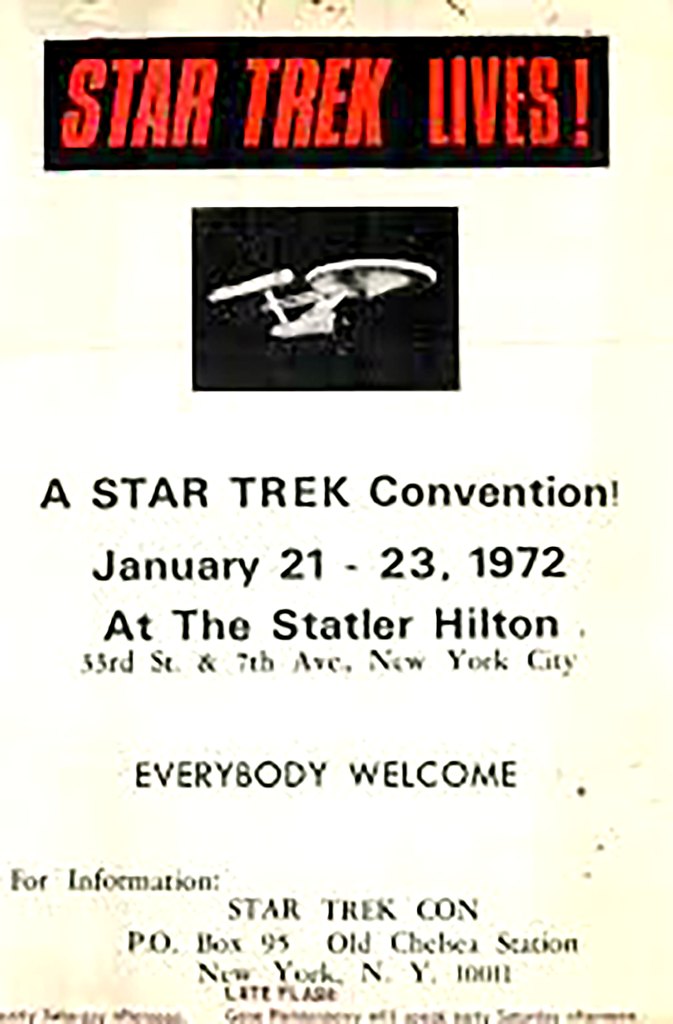
ELYSE ROSENSTEIN: “The resurgence of Star Trek actually started with myself and a friend of mine, Devra Langsam. She was a children’s librarian, and we both had a pretty vast collection of thirty-five-millimeter Star Trek slides, which were stuff off the cutting-room floor. She used to put together slide shows for the library that she worked in; it was something she would do for the kids. While we had a large overlap, we each had a good selection of slides that the other didn’t have. So we were looking at the slides, and she had a couple of narratives that were fan-written that she was putting to them. After doing this for seven hours, you get a little loopy.
We were both members of the Lunarians, which was a fiction society, and they ran Lunacon, a fan-based science-fiction convention, once a year. I turned to her and said something like, ‘We ought to have a science-fiction convention for Star Trek,’ and she replied, ‘Yeah, we can get 500 of our closest friends’—which was just the kind of thing she used to say.”
DEVRA LANGSAM: “Following a Lunacon, Elyse had come over to my house to help me with a slide project, and one of us said, ‘Wouldn’t it be nice if we had a convention that was only for Star Trek people?’ and three days later she called me and said, ‘We’ve got a hotel—the Statler Hilton—and a printer.’ It was sort of, like, ‘What?’ The printer, of course, would be for flyers. We had other people that we asked to help us, like setting up an art show. The whole thing was modeled very much on the standard science-fiction convention with panels and art shows and costume presentations.”
ELYSE ROSENSTEIN: “Our original idea wasn’t a Star Trek convention, but a science-fiction convention with a major emphasis on Star Trek. We also had science-fiction panels, mostly on Sunday because the emphasis was on Star Trek.”
DEVRA LANGSAM: “We talked to people and said, ‘We’d love to have your artwork exhibited,’ and we had a dealers’ room, which Phil Seuling ran. Nobody was worried at that point about whether Paramount had licensed them or not. They were fan-made things and Joan, through her contacts with the networks, invited the guests to come, and they came even though we didn’t pay them anything.”
ELYSE ROSENSTEIN: “One of the major differences in the conventions—and this is relevant—is that science-fiction fandom never advertised. Nobody ever put an ad out or flyer, except at other conventions. The only way you heard about conventions was through word-of-mouth. The World Science Fiction Convention that was held immediately prior to the first Star Trek convention had about 1,000 to 1500 people attending, which is a nice number. We, on the other hand, did publicize it. We didn’t take an ad in the paper or anything, but we did call the networks, and we had two camera crews down there. ABC and CBS came down. NBC claimed they had too much news to cover to spare the crew. The long and short of it is that those networks, at least in local coverage, had stories about it. Not only did we get science-fiction fans who are Star Trek fans, but the public became aware of this event and they showed up.”

DEVRA LANGSAM: “We had people that we knew in the New York community help us, and Joan Winston, who worked in one of the networks as a secretary, got in touch with NASA and got us an exhibit, including a real space suit.”
ELYSE ROSENSTEIN: “Joanie at the time knew everybody. She contacted NASA and asked if we could get some sort of exhibit, because this was 1972 and the space program was still going strong. They said yes and that the exhibit would be arriving in seven cartons to the hotel. Unfortunately, those cartons were actually crates. They fit into the freight elevator with about half an inch to spare. There was a mock-up of a space capsule and, among other things, a mannequin in a space suit, which she assumed was also a mock-up.”
DEVRA LANGSAM: “That space suit was real, which, over the course of the convention, someone stole the arm off of. That was just dreadful.”
ELYSE ROSENSTEIN: “Joanie apologized to someone at NASA, and that’s when we learned that it was real. We were mortified that it actually happened—there was a rope around it, but no glass barrier at that point. She had told them about the fun we had getting the crates in and out of the freight elevator, and they actually apologized to us.”
DEVRA LANGSAM: “By the time we arrived ahead of the convention, we had between eight hundred and nine hundred preregistered people. We thought that was great; usually your preregistration doubled for the convention itself.”

ELYSE ROSENSTEIN: “We thought maybe 1500 or 1600 people would show up altogether. We had 2,000 badges and 2,000 program books. Apparently, as we discovered, when you advertise, you get more people. We ended up with about 3500 people showing up. Not all at once, thank goodness.”
DEVRA LANGSAM: “We ran out of everything. We ran out of name tags, we ran out of program books, we ran out of trivia contest sheets. I was printing them in my house on a mimeograph, and you don’t realize how long it takes to print 2,000 things.”
ELYSE ROSENSTEIN: “We had the facility from 8 a.m. Friday morning, but the convention didn’t start at 8 a.m.—it started at 2 p.m. However, the hotel posted it in the lobby as 8 a.m., which we didn’t realize because most of us came in on Thursday night and stayed over. We weren’t in the lobby, but on the top floor of the Statler Hilton, where the convention was held. By 10 a.m., we had no choice but to open registration, because the dealers were still setting up. It was a crazy day. It was a Friday, Saturday, and Sunday convention. By Sunday, you were pretty much just letting people in because there was no point. You’re going to charge them for coming in for two or three hours on a Sunday afternoon?”
“We had gotten a number of episodes of the show in 35mm from Paramount, which were loaned to us for the duration of the convention. We had gotten waivers from the Screen Actors Guild that we didn’t have to pay royalties as long as nobody made any money on it. So what we had to do there was allow people to come in and watch the episodes without paying for membership into the convention. The films were run Friday and Saturday night and they were free. It was posted down in the lobby that if you wanted to come and watch it, you could.”
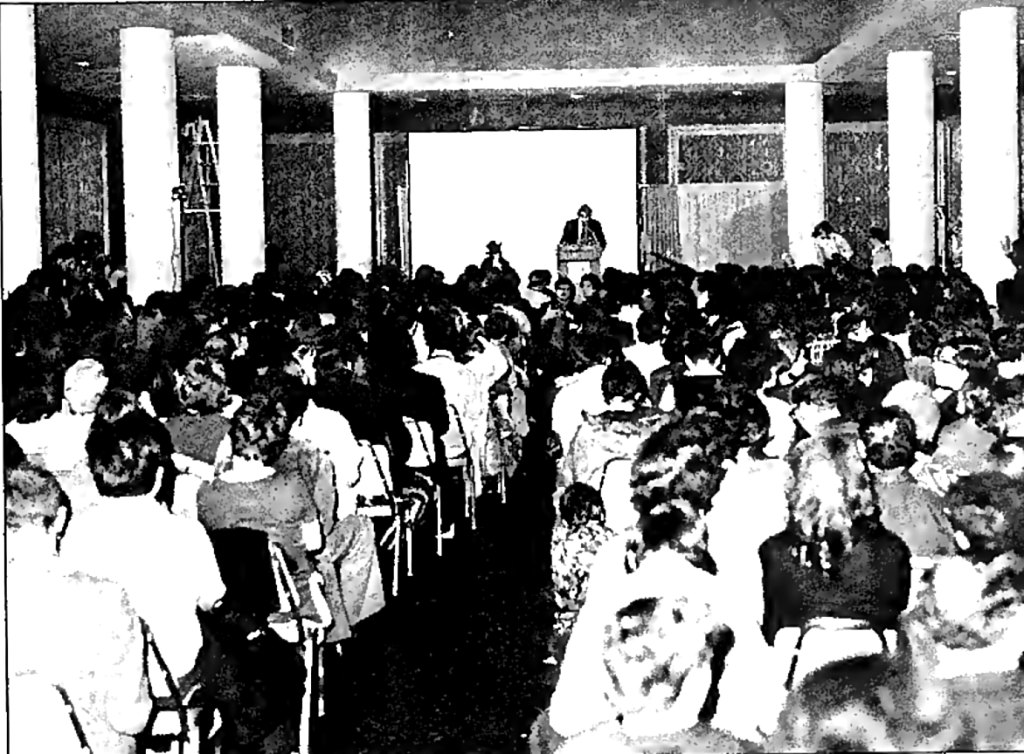
“We had a dinner on Saturday night for the Committee and our guests, and among them was Majel Barrett. The hallway was pretty quiet because everybody was in the main ballroom watching, I think, ‘The Trouble With Tribbles.’ We were outside the ballroom, and you could hear virtually the entire audience quoting the lines along with the screen. She was astonished, because this was 1972 and the show had gone off the air in 1969. It was in reruns, but that was about it. They didn’t really appreciate how much of a loyal fan following they still had.”
HOWARD WEINSTEIN (author; writer, Star Trek: The Animated Series): “When the first Star Trek convention happened in 1972, I was in college. I was a freshman at the University of Connecticut. Our winter break vacation didn’t coincide with a lot of other schools, so most of my friends had gone back to college when the convention took place. I was still home, and I said, ‘Dammit, I’m not missing this Star Trek convention, I’m going to go by myself if I have to—there may not be another one.’”
“I went on Sunday, but they had run out of badges. I didn’t get a badge. I did get to see the big speakers, like Isaac Asimov and Gene and Majel. And I wandered through the dealers’ room, which was not big enough for the crowd. It was really wall-to-wall humanity. There was a relatively small ballroom area and a relatively small cordoned-off dealers’ area. It was packed. There was really no room to move without bumping somebody with your elbows. But it was great fun and just an amazing experience for everyone who was there. I feel really lucky that I went to the first convention.”
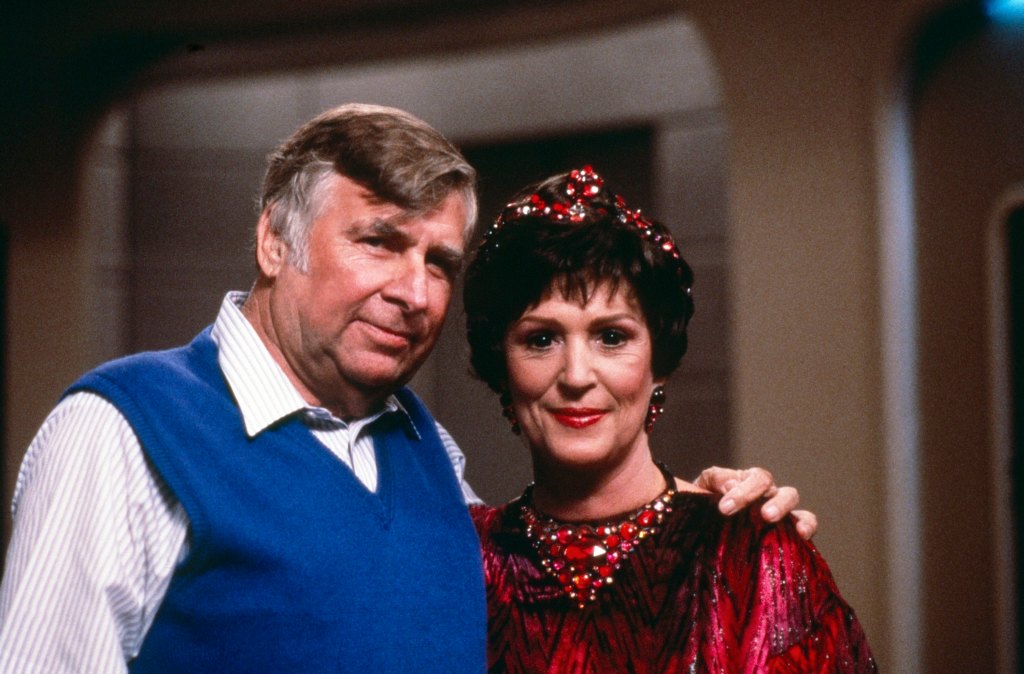
ADAM MALIN (cofounder, Creation Entertainment): “I went to that 1972 show and it was amazing. Seeing Gene Roddenberry at that show was just unbelievable, and I remember sitting in the Penthouse room, the 18th floor of the Statler Hilton. The room was packed with fans watching the classic blooper reels. I just could not believe it—I mean, to this day I think they were hysterical, but to see them then, in 1972, and to be surrounded by Star Trek fans was so amazing. I realized that there was a Star Trek fan community just like there was for comic-book fans. I slowly began to realize that fandom was a growing, living thing.”
ELYSE ROSENSTEIN: “These people were just happy to be there, which was true of science-fiction fans in general. People at the time who were real science-fiction fans, and who were aware of science fiction, but even people who weren’t, a lot of them were kind of outsiders to the mainstream. Most people were reading romance novels, most teenagers were reading about rock and all this other stuff. How many wanted to read about a speculative future? You don’t get that. People who were interested in it were kind of outsiders, myself included. I always had a book in my hand. Still do. At that Star Trek convention, there was an acceptance of people, taking them at face value without dismissing them. It was a different frame of mind. That’s why that first convention had no trouble. Despite the number of people that were there, we didn’t have any fights. We didn’t have the kind of problems that would normally be associated with an overcrowding bunch of people.”

The crowds only continued to grow. In 1973, the Committee moved the convention to the much larger Commodore Hotel in New York, with guests including James Doohan and George Takei, and a surprise appearance by Leonard Nimoy that thrilled the 6,200 attendees. By 1974, the event had shifted to the Americana Hotel, where attendance swelled to more than 15,000, with an additional 6,000 fans reportedly turned away. When the convention returned to the Commodore in 1975, registration was capped at 6,000—a limit that remained in place for 1976 as well.
DEVRA LANGSAM: “The fact that the conventions grew bigger and bigger was shocking. We had about 15 people working on the Committee, of whom only five actually did most of the work. That’s the way that goes—we had help from a friend who had access to a real computer, so we were able to computerize our mailing list long before anybody besides big companies ever dreamed of that, and we sent out a progress report, which is what the Worldcons do, saying, ‘Hey, look at this. We’ve invited this person to come, and he says he’s going to come.’ We didn’t say how much we had to pay him.”
“The first convention was such a success in terms of reaching people that when we started to do the second one, we got a lot of people coming back. So it was like you had three weeks off and then you started all over again for the following year’s convention.”
Conversation
All comments are subject to our Community Guidelines. Woman's World does not endorse the opinions and views shared by our readers in our comment sections. Our comments section is a place where readers can engage in healthy, productive, lively, and respectful discussions. Offensive language, hate speech, personal attacks, and/or defamatory statements are not permitted. Advertising or spam is also prohibited.