‘Star Trek’ and The Beatles: The Emotional Connection between John, Paul, Captain Kirk and Mr. Spock
Writer Roberto Orci revealed how shared tragedy linked two of the Fab Four and the 'Star Trek' icons

As was the case with the original Star Trek, one of the defining strengths of J.J. Abrams’ 2009 big screen reboot is the relationship between James T. Kirk and Spock, with Chris Pine and Zachary Quinto assuming the William Shatner and Leonard Nimoy roles. What distinguishes this iteration, however, is the deeper emotional symmetry woven into their connection. For the first time, both characters are shaped by parallel trauma: the loss of a parent at the hands of the same enemy. Nero’s actions don’t just set the plot in motion—they create a shared emotional foundation between two men who otherwise approach the universe from opposite directions.
For co-writer Roberto Orci, that dynamic wasn’t accidental. In fact, he points to an unexpected but fitting real-world parallel: the creative and personal bond between Beatles John Lennon and Paul McCartney.
“We looked at John Lennon and Paul McCartney’s friendship as part of our model for Kirk and Spock,” the late Orci explained. “They were opposites and they bonded very young because they both lost their mothers when they were teens. They might not have actually gotten along at the time had it not been for that kind of a bond. They were the only ones who kind of understood each other’s pain about having lost their mother, so they were definitely an influence on Kirk and Spock. You know, Star Trek and The Beatles were products of the ‘60s, so sometimes you have to tie it all together.”
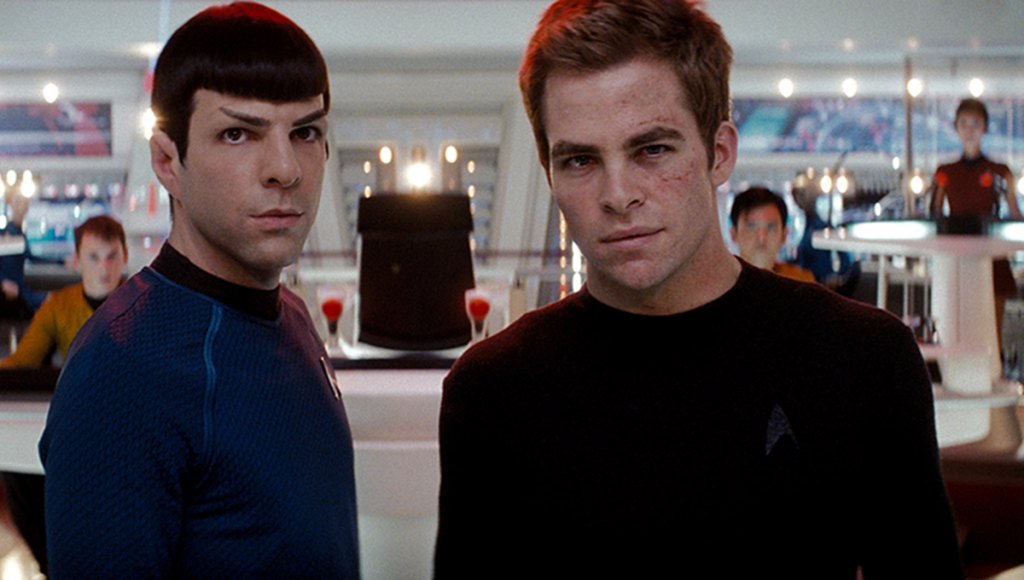
It’s a comparison that works on multiple levels. Both duos are built on contrast—emotion versus logic, instinct versus discipline—but what holds them together is something more personal than philosophical. In the case of Lennon and McCartney, their shared loss created a bond that transcended their differences and helped fuel one of the most productive creative partnerships in modern music. Orci and his writing partner, Alex Kurtzman, sought to channel that same idea into Kirk and Spock: two men who may clash on the surface, but who are ultimately connected by an understanding that no one else can quite share.
That connection becomes particularly important in Star Trek (2009), where Spock’s loss of his mother, Amanda, mirrors Kirk’s earlier loss of his father, George. The film uses those parallel experiences not just as character motivation, but as a kind of emotional shorthand—allowing the audience to understand why these two very different personalities might find common ground.

Of course, mapping Lennon and McCartney directly onto Kirk and Spock isn’t quite so simple. As Orci pointed out, the lines blur the closer you look.

“The more you read about them, the more you realize how they each had elements of the other,” he says. “The Yin and Yang—each have elements of the other color within their spot. I think it depends on the day.”
After considering it further, however, Orci offers a more definitive take. “You know what? Spock is Lennon, because Paul is the optimist who can kind of see through the pain and still keep his chin up. That’s Kirk. Spock is a little more fatalistic with his logic, as John Lennon was.”
It’s an observation that gets at what Abrams’ Star Trek was trying to do with the characters. By giving Kirk and Spock that shared loss, the film creates a connection between them that goes beyond their usual push and pull. They’re still very different people, but there’s something underneath it now—something that explains why they keep finding their way back to each other.
Conversation
All comments are subject to our Community Guidelines. Woman's World does not endorse the opinions and views shared by our readers in our comment sections. Our comments section is a place where readers can engage in healthy, productive, lively, and respectful discussions. Offensive language, hate speech, personal attacks, and/or defamatory statements are not permitted. Advertising or spam is also prohibited.