The Lost Original ‘Star Trek’ Pilot, ‘The Cage,’ That Nearly Launched a Very Different Series
Director Robert Butler reveals why he thought the show's first 1964 pilot was 'a shopping list of science fiction trickery'

In television history, few pilots have had a stranger journey than the first attempt at Star Trek. Today, the 1964 pilot episode “The Cage” is widely regarded as a landmark in sci-fi TV—a serious, character-driven story that helped lay the groundwork for the series that would debut two years later. Yet at the time, the show’s director, Robert Butler, wasn’t entirely convinced that the material he was working with would become something lasting.
Written by Gene Roddenberry, “The Cage” introduced audiences to the crew of the starship Enterprise under the command of Captain Christopher Pike, played by Jeffrey Hunter (now portrayed by Anson Mount in Star Trek: Strange New Worlds). In the episode, the Enterprise answers a distress signal from the distant world of Talos IV, where Pike is captured by a powerful race of telepathic aliens known as the Talosians. Possessing the ability to create vivid illusions, the Talosians attempt to manipulate Pike into remaining on their planet as part of a breeding experiment intended to rebuild their dying civilization.
At this early stage, Roddenberry’s concept for Star Trek was still evolving. The pilot presented a more introspective tone than the series that would follow, emphasizing psychological conflict and philosophical ideas over action, while introducing early versions of characters and elements that would later become iconic, including the half-Vulcan science officer Spock as portrayed by Leonard Nimoy.
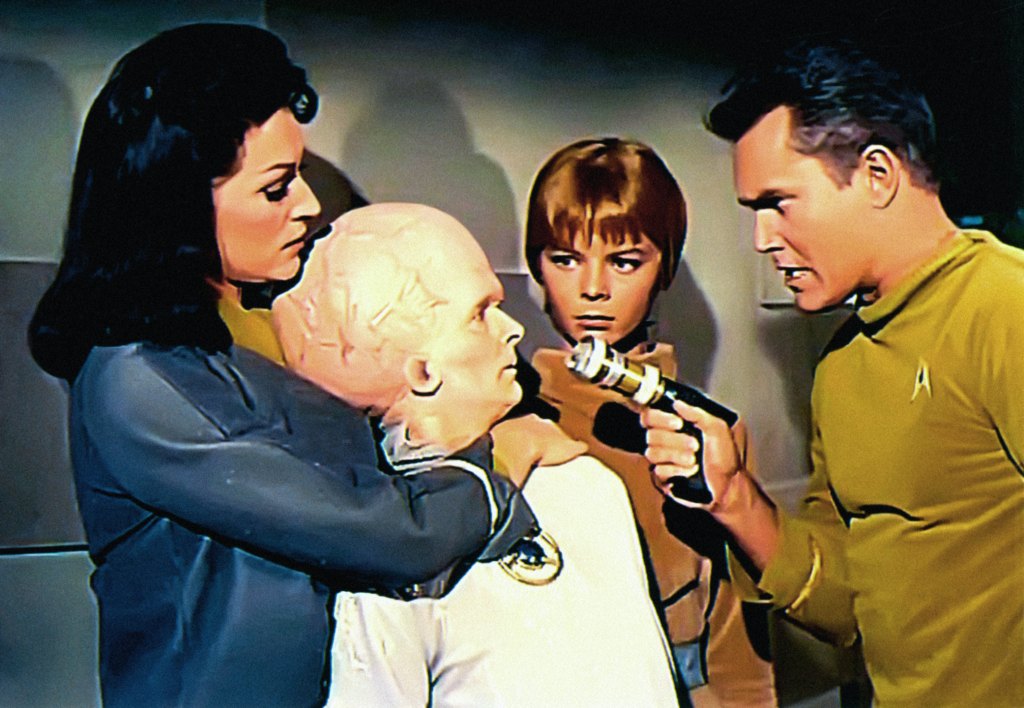
Looking back decades later in an exclusive interview, the late Butler remembered being hesitant when Star Trek creator Gene Roddenberry first approached him about directing the pilot. “That came because I had worked for Gene Roddenberry when he was the producer-creator of The Lieutenant starring Gary Lockwood,” Butler recalled. “Gene had finished writing ‘The Cage’ and he asked me to read it, which I did. He offered it to me and I was kind of secretly hesitant. It was such a showcase script showcasing solid, good and fascinating science-fiction disciplines, examples and events, and because of that I thought it was a little obscure. The story was somewhat remote and I discussed whether or not people would get it.
“I could tell at that point that Gene was a little consumed with it and that he couldn’t have heard any objections,” he added. “But my wife said, ‘Why not?’ That being said, I thought the pilot that I directed for Star Trek was kind of unforgivably weird material. Green material, really. I mean, I was green and Gene Roddenberry was green. Both of us were.”
‘Sci-fi chestnuts’
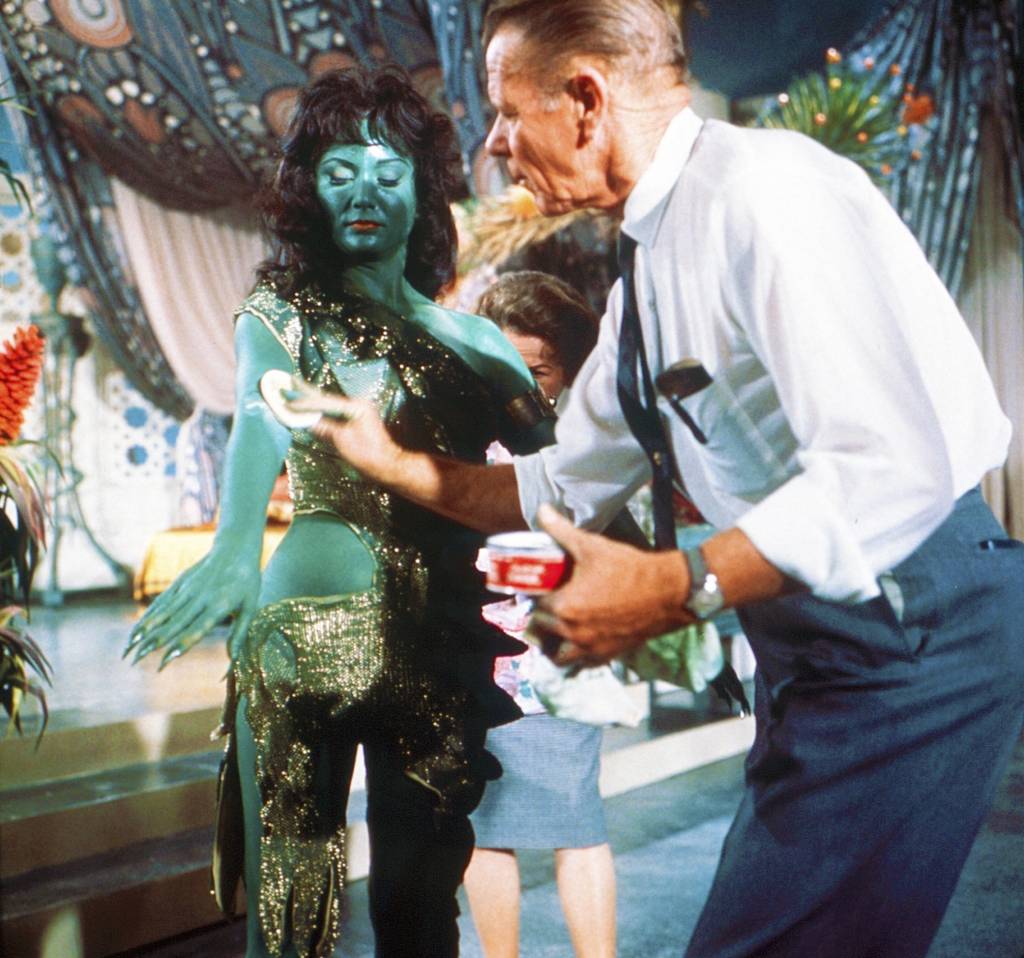
Butler’s primary concern with the script was what he saw as a patchwork of familiar science-fiction ideas. “That pilot with Jeffrey Hunter was kind of a shopping bag of science fiction,” he said. “You know, we had the girl that went green and the girl who aged before our eyes. There were just a bunch of sci-fi chestnuts in my mind. I didn’t know science fiction all that well, so I think that gave me perspective. It was a shopping list of science fiction trickery—going to the planet with a completely different set of physical characteristics and a line added in the script was something about the atmosphere is much like our very own, or some damn thing like that. I thought it was really kind of amateur night. But I kept my mouth shut and took the job and had a great experience with it.”
When NBC reviewed the pilot, the network made a decision that was almost unheard of in television. They ordered a second one. As Butler remembered it, the network’s reaction was both puzzled and intrigued. “They postponed it and then later apparently said, ‘We like it. We’re fascinated by it. We don’t understand it. Do it again.’”
‘Star Trek’ pilot, take two

That second attempt—1965’s “Where No Man Has Gone Before,” directed by James Goldstone—would introduce William Shatner as Captain James T. Kirk and eventually led to the series that premiered on NBC 60 years ago in 1966. But “The Cage” itself still stands as the first glimpse of Roddenberry’s universe.
In Butler’s view, one of the strengths of the pilot was leading man Hunter as Pike, who would later become a major figure in Star Trek mythology. Butler remembered being impressed with Hunter’s professionalism, even when the material became unusual.
“Jeffrey Hunter did a really excellent journeyman job of playing that character,” Butler said, “because all of my disdain for part of it, he had to do some pretty goofy things in it. He just hung in and did them as well as could be done. Whether he was a compromise candidate or whether everyone believed in him at the time, I don’t know. When the 11th hour approaches, you finally have to take your money and bet it. That’s always the case. Generally he was an extremely pleasant, centered guy, and maybe decent and nice to a fault. A gentle guy.
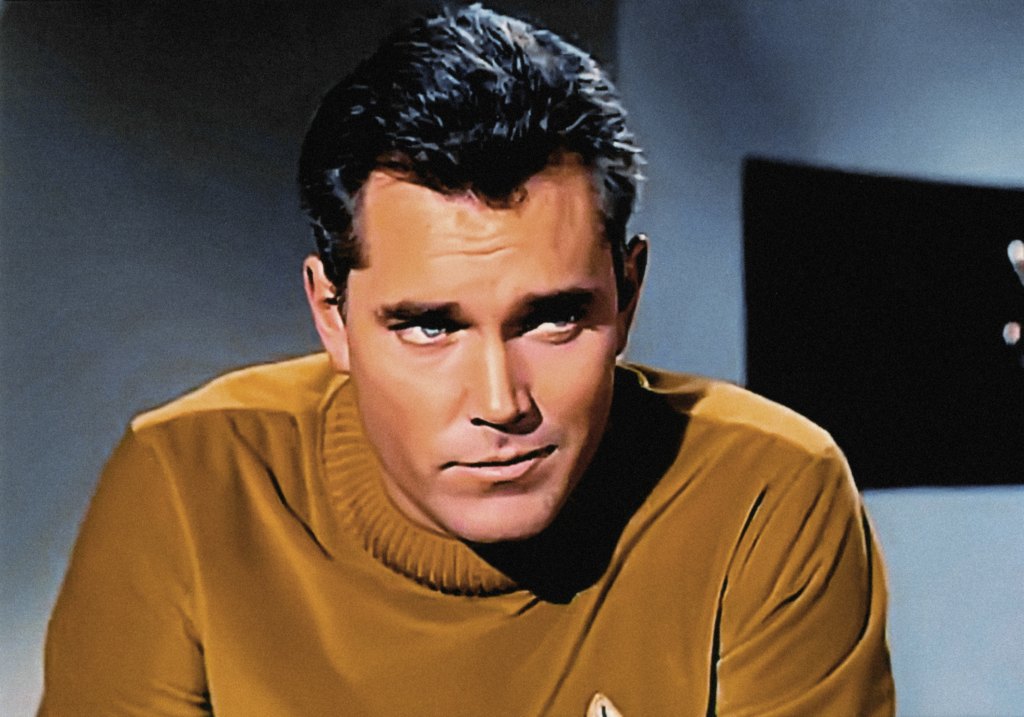
“I did not know Jeff except professionally, from a distance—not personally at all. I thought he was a good, chiseled hero for that kind of part. I remember thinking, ‘God, he’s handsome,’ and this was, sadly, the opinion of him at the time. When one is trying to bring reality into an unreal situation, that usually isn’t a wise thing to do—to hire a somewhat perfect-looking actor. You should find someone who seems to be more natural and more ‘real.’ I don’t remember saying those things, but that continues to be my view.”
The scene that really worked
One moment Butler particularly remembered was the quiet conversation between Captain Pike and the ship’s doctor, Dr. Boyce, played by John Hoyt. In the scene, Pike privately admits that the strain of command is beginning to wear on him, confiding that he is tired of carrying the responsibility for the lives of the more than 200 crew members under his command. Boyce listens carefully, offering both sympathy and perspective, gently reminding Pike that what he may be feeling is not a loss of purpose but simply the emotional toll of leadership. The exchange gave the pilot a moment of introspection that stood apart from its more overt science-fiction elements. It also established a mentor-style dynamic between the captain and the ship’s doctor—an idea that would evolve in later episodes of Star Trek into the far more argumentative but deeply loyal friendship between Captain Kirk and Dr. McCoy.
“That was one of the best written scenes in the whole pilot as I remember. I thought it played very, very well,” reflected Butler. “Although, and I’m not really proud of this, but as I was casting the doctor, I was against DeForest Kelley being cast, who was the person Gene wanted. As a younger guy, I guess I felt that he was somewhat more of a heavy. At the time, I remember thinking that he was somewhat earthbound. Maybe I thought his youth at the time defied reality somewhat, whereas if we got a seasoned veteran in there, that might bring us a great spread of reality among your main people. Gene stood up for DeForest to the end, but ultimately he backed me and went with John Hoyt.”
Ironically, the very elements Butler questioned about the pilot are part of what made “The Cage” revolutionary in hindsight. At a time when television science fiction was dominated by spectacle-driven shows like those produced by Irwin Allen (Lost in Space,Voyage to the Bottom of the Sea, The Time Tunnel), Roddenberry’s concept leaned toward philosophical storytelling. But Butler admitted that he didn’t necessarily see the show in those terms.
“I never did understand or like Star Trek much at all,” he said candidly. “I thought it was quite obvious—most of the material in all the shows.” Still, he came to appreciate one part of the phenomenon: the fans. “I spoke at a few things involving the Star Trek conventions, and the people were quite marvelous. They were really a cross section of the country. They would get dressed up in the costumes, as you know. And as they expressed themselves and their enthusiasm for the show, I thought they were quite articulate and solid… a little more sane than we were.”
The legacy of ‘The Cage’

Today, “The Cage” is recognized as one of the most unusual pilots ever produced. NBC’s unprecedented decision to commission a second pilot led to the version of Star Trek that ultimately entered television history. Yet the original episode remained important enough that much of its footage was later reused in the two-part episode “The Menagerie.”
Looking back 60 years after the original series’ debut, Butler admitted that no one involved in making “The Cage” could have predicted the cultural phenomenon that Star Trek would eventually become.
“I will say that we were all praying and doing our best on ‘The Cage’,” he smiled. “The eventual phenomenon was bigger than I expected—not that I really measured it at the time. That wasn’t in the equation. You just roll up your sleeves and decide what the hell it is you’re trying to do. Then you jump in and never look back.”
Conversation
All comments are subject to our Community Guidelines. Woman's World does not endorse the opinions and views shared by our readers in our comment sections. Our comments section is a place where readers can engage in healthy, productive, lively, and respectful discussions. Offensive language, hate speech, personal attacks, and/or defamatory statements are not permitted. Advertising or spam is also prohibited.