The Lost ‘Star Trek: Phase II’ Episode That Sent Kirk to Pearl Harbor—and Nearly Changed Everything
Inside the World War II time-travel script that almost saw Captain Kirk alter history and destroy a planet

Before Star Trek returned to theaters in the form of Star Trek: The Motion Picture in 1979, the Enterprise crew nearly came back in a very different form. The plan was a new television series titled Star Trek: Phase II.
‘Star Trek: Phase II’—key points before you read on
-
A planned revival of the original show–In 1977, Paramount Pictures began developing Star Trek: Phase II as a continuation of the beloved Star Trek: The Original Series.
-
The original cast was returning–William Shatner, DeForest Kelley, James Doohan, George Takei, Nichelle Nichols and Walter Koenig were all set to reprise their roles aboard the Enterprise.
-
A new Vulcan character–Because Leonard Nimoy initially declined to return as Spock, the writers created a new Vulcan science officer named Xon (with David Gautreaux hired to play him).
-
New sets and a bigger look–The series would have featured redesigned Enterprise sets and more ambitious visual effects than the original show, reflecting the higher production ambitions of late-1970s television.
-
A pilot already in development–A two-hour pilot titled “In Thy Image” was already being written when the studio began reconsidering the project’s future.
-
How it became a movie instead–Rather than launching the proposed Paramount Television Service, the studio decided to transform the project into a feature film. The pilot story ultimately evolved into Star Trek: The Motion Picture.
-
One of the unfilmed episodes–Among the scripts developed for the planned series was “Tomorrow and the Stars,” a time-travel story that would have sent Captain Kirk back to Pearl Harbor on the eve of the 1941 attack, forcing him to confront the classic Star Trek dilemma of whether to alter history or allow events to unfold as they must.
How ‘Tomorrow and the Stars’ grew out of Roddenberry’s ‘Genesis II’
From nearly its beginning, time travel episodes have been an important part of Star Trek, three standout examples being The Original Series’ “The City on the Edge of Forever,” the 1986 feature film Star Trek IV: The Voyage Home and The Next Generation’s “Yesterday’s Enterprise.” But one of the most intriguing example comes in the form of the “lost” Phase II episode, “Tomorrow and the Stars,” written by Larry Alexander.
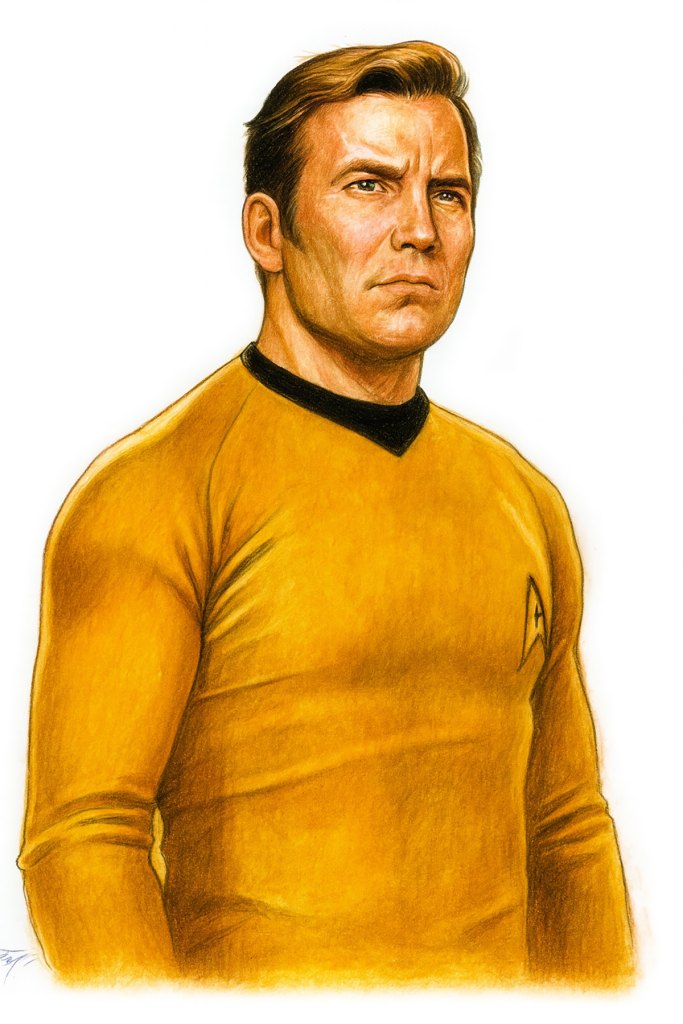
Long before “Tomorrow and the Stars” entered the development pipeline for Star Trek: Phase II, its narrative DNA could already be found in another Gene Roddenberry project. During the early 1970s, while developing his post-apocalyptic pilot Genesis II, Roddenberry outlined a number of possible story ideas for a proposed series. One of them was titled “The Apartment.” In that concept, astronaut Dylan Hunt would become trapped in a temporal anomaly that sent him partially out of phase with time, causing him to appear as a ghostlike figure to a woman living in a contemporary apartment. Unable to physically interact with the world around him, Hunt would form an emotional connection with the woman who could see him, leading to a bittersweet romantic dilemma rooted in time and circumstance.
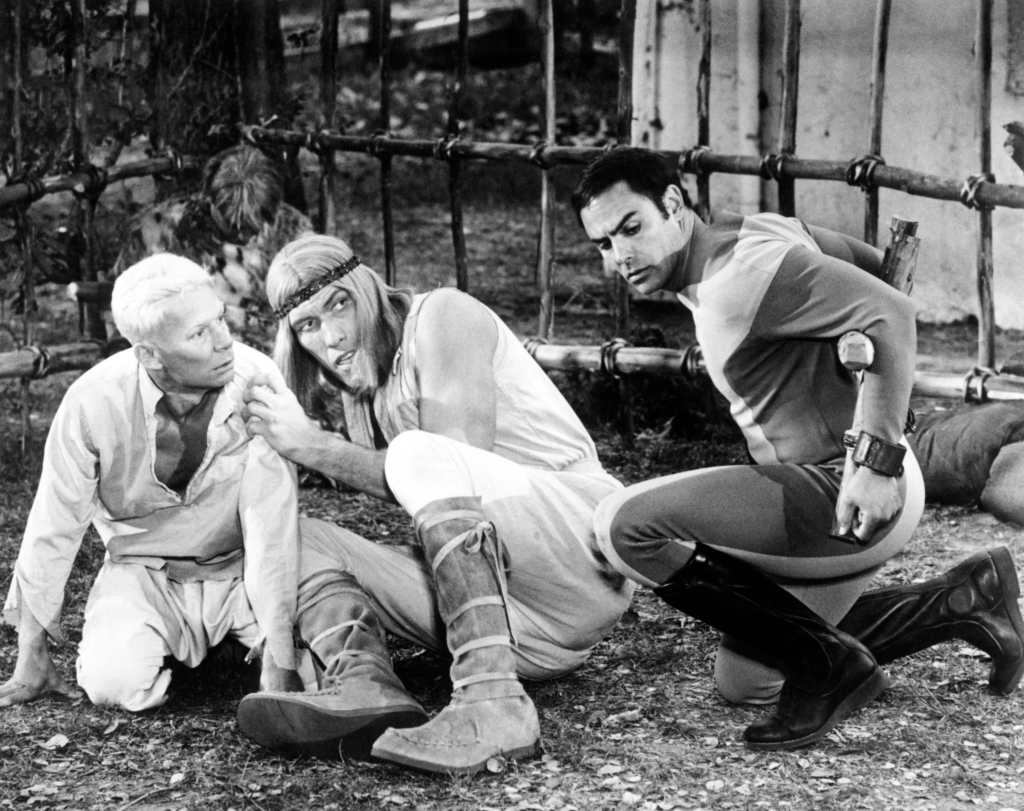
When Genesis II failed to move forward as a series, Roddenberry didn’t discard the idea. Instead, he recycled the core premise several years later when Alexander was given the assignment to reshape and expand it.
Captain Kirk: Planet destroyer?
Alexander’s first attempt to adapt the Genesis II concept took shape in a script titled “Ghost Story.” In that version, Kirk and a landing party explore a devastated world that still contains remnants of highly advanced technology, though its civilization has long since vanished. During the mission, Kirk is accidentally hurled backward in time to a period before the catastrophe occurred. There, he encounters a group of scientists experimenting with a device capable of scanning and projecting the human mind. When the machine is connected to Kirk, the experiment goes horribly wrong: the process releases the darker, primitive side of his psyche—his id—manifesting it as a destructive force that ultimately annihilates the planet. The disaster witnessed by the Enterprise crew in the present is revealed to be the result of Kirk’s own unwitting role in the past. Alexander freely admitted that the premise owed something to Forbidden Planet, but argued that his version pushed the idea further by locating the danger not in alien technology itself, but in the untamed depths of Kirk’s own mind.
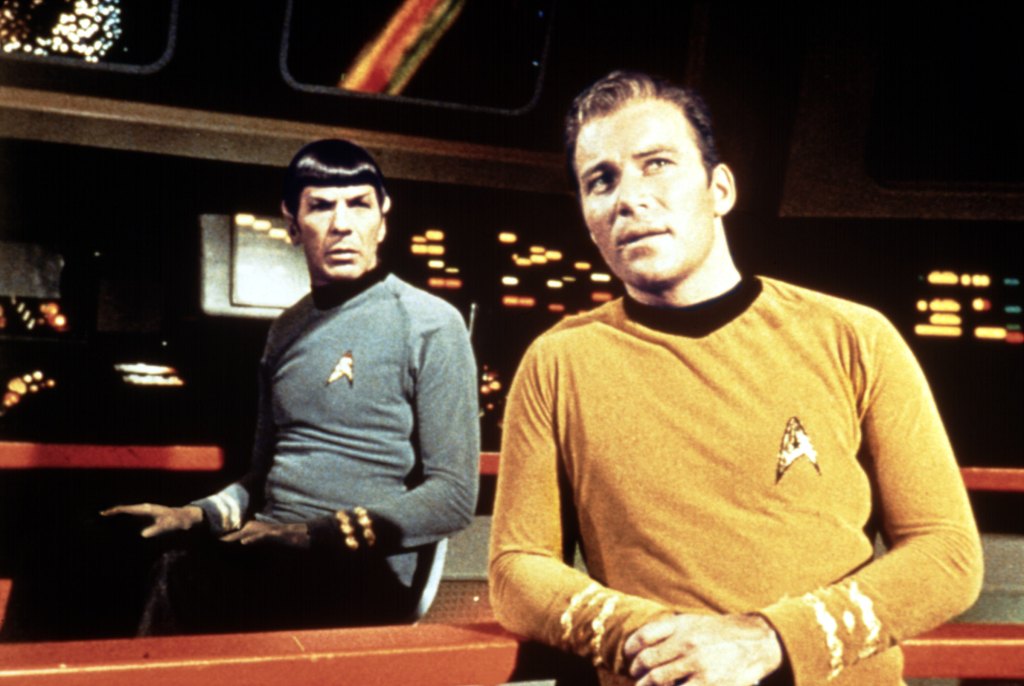
“I thought it was a wonderful story idea to have Captain Kirk responsible for the death of a planet,” suggests Alexander in an exclusive interview. “It makes it much more human and, to me, much more of an interesting irony. That’s the kind of material that I think is interesting, and I was shocked when Gene Roddenberry said he didn’t want to go with it. It was suggested that saddling Kirk with a planet’s destruction wasn’t the right thing to do to a heroic character. But in effect, it wasn’t his doing. He asked them not to do it. I was very strict about that. He didn’t volunteer to do this, and when he realized what was going on, he did everything possible to stop it. All of that, I think, holds up on that basis. I was thinking very strictly about what happened to Kirk in many episodes where things didn’t turn out the way he hoped. That’s what makes Star Trek so wonderful.”
“As heroic as Kirk was,” he adds, “through no fault of his own, hard choices had to be made. In Harlan Ellison’s story—The City on the Edge of Forever, Kirk has to allow Edith Keeler to die. It’s a gulp at the show’s end, and it’s like that when the people of this planet find that it’s his demons which have destroyed their world, not theirs. It makes it that much more ironic.”
As a result, the setting shifted to Pearl Harbor on the eve of World War II, Dylan Hunt became Captain James T. Kirk and the ghostlike temporal displacement was retained as the central dramatic device—demonstrating Roddenberry’s tendency to revisit and refine story concepts across multiple projects.
‘Tomorrow and the Stars’: The lost ‘Phase II’ episode explained
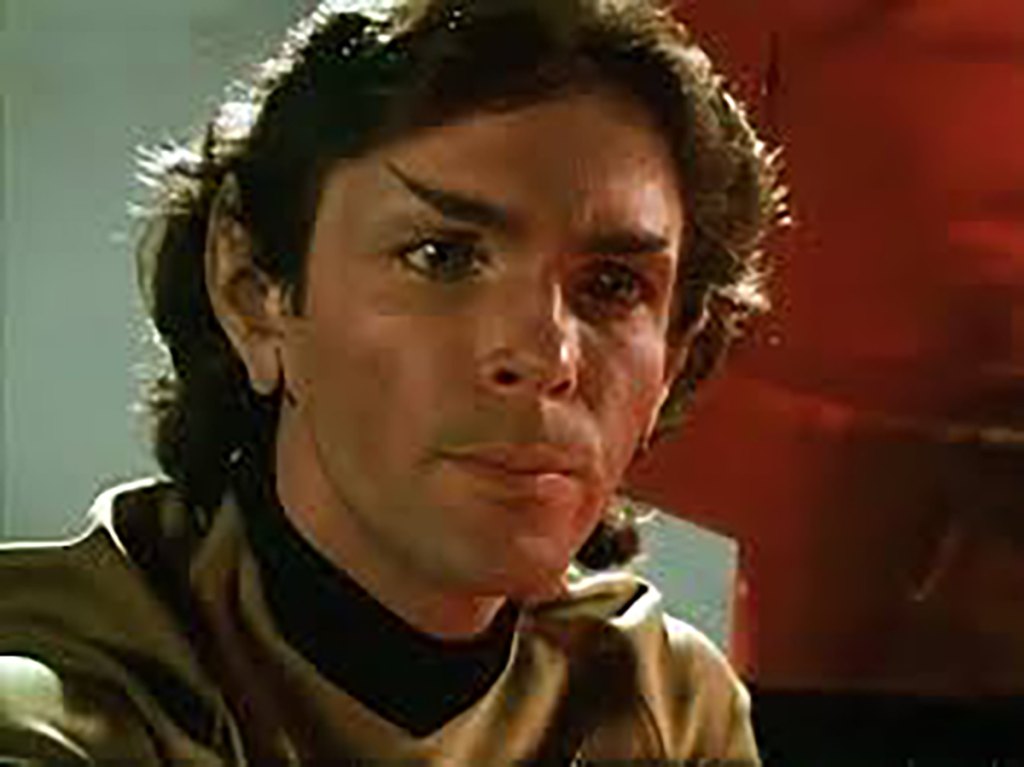
A battle with a Klingon ship leaves the Enterprise transporter severely damaged and Pavel Chekov suffering from dangerous Iridium-7 radiation exposure. When the ship reaches Earth orbit and Captain James T. Kirk begins showing symptoms as well, Montgomery Scott and Xon risk using the unstable transporter to beam both men down for emergency treatment. Chekov arrives safely—but Kirk does not. Instead, he materializes in a ghostlike, transparent state in the backyard of a Honolulu home belonging to Elsa Kelly, the wife of a U.S. Navy officer. Though startled, Elsa gradually accepts Kirk’s explanation that he is a starship captain from the future. Meanwhile, Scott and Xon discover the transporter accident has hurled Kirk backward in time to Pearl Harbor in December 1941. Although they cannot yet retrieve him, Scott manages to restore Kirk’s physical solidity, allowing him to interact normally with the world—and with Elsa, with whom he soon forms a deep emotional bond.
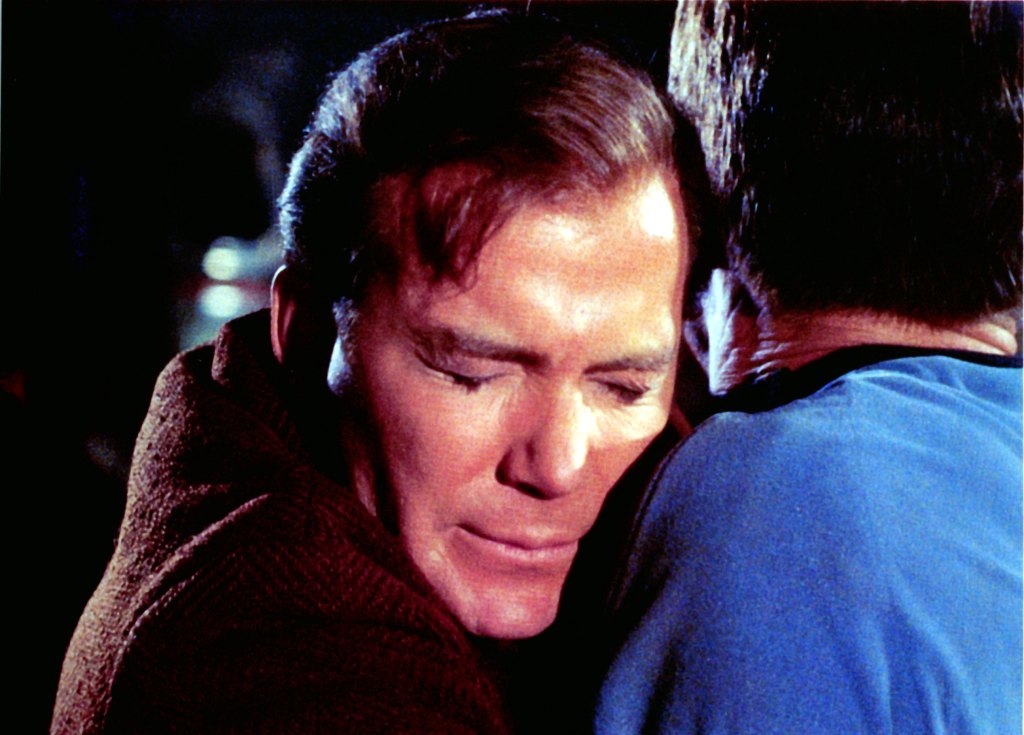

As Kirk and Elsa attempt to flee Hawaii together, her husband Richard grows suspicious and alerts Naval Intelligence, believing Kirk to be a spy. Back aboard the Enterprise, Scott and Xon attempt another risky maneuver, sending Dr. Leonard McCoy and Commander Willard Decker back in time to locate him. Their arrival coincides with the opening moments of the Japanese attack on Pearl Harbor. Realizing her husband is stationed aboard the USS Arizona, Elsa runs toward the chaos in hopes of warning him, while Kirk struggles with the moral dilemma of interfering with history. McCoy and Decker find Kirk amid the unfolding disaster and the three officers are beamed safely back to the Enterprise—leaving Elsa behind in the past. Later, Counselor Ilia helps Kirk come to terms with the experience, reminding him that even within tragedy, he briefly encountered something extraordinary: a love that transcended time itself.
A final thought about the lost WWII episode
It was Roddenberry’s decision to have Kirk go back to Earth’s past and he chose Pearl Harbor on the eve of the Japanese attack as the time and place. To Alexander, this seemed like a very “obvious” way to go. “At the same time,” he explains, “Pearl Harbor is good, because it’s visual and you could use footage from various war films, which would work. But I didn’t want to have the responsibility because the story works as a story. It’s like sending somebody back in time to kill Adolph Hitler in the crib, and he does it. The only irony you can have is his coming back and them saying, ‘Why didn’t you kill Kowalski like we asked you to?’ History would be the same, but somebody else would do the job. You want to go back in history? Give me an event, and I’ll do it. The story is the same no matter what.”
Conversation
All comments are subject to our Community Guidelines. Woman's World does not endorse the opinions and views shared by our readers in our comment sections. Our comments section is a place where readers can engage in healthy, productive, lively, and respectful discussions. Offensive language, hate speech, personal attacks, and/or defamatory statements are not permitted. Advertising or spam is also prohibited.