How Two ‘Star Trek’ Fan Stories Captured Captain Kirk and Mr. Spock’s Eternal Bond
Before the films, ‘The Beast’ and ‘The Mind-Sifter’ explored the devotion of the 'Star Trek' duo

For the past 60 years, Star Trek has given us starships, strange new worlds and plenty of pulse-pounding adventure. But if you ask longtime fans what keeps them coming back, many will tell you it isn’t the phasers or the warp drive—it’s the friendship at the heart of it all.
From the very first season of the original series, there was something magnetic about William Shatner’s Captain James T. Kirk and Leonard Nimoy’s Mr. Spock. They were opposites in temperament—instinct and logic, passion and restraint—yet together they felt complete. Over time, their bond became one of television’s most enduring partnerships, built on trust, loyalty and a willingness to risk everything for one another. With that in mind, there’s something almost eerie about the way two completely separate writers, working in the Star Trek fanfiction era of the late 1970s, told essentially the same story—just flipped inside out.

In Teri White’s The Beast, Spock is the one lost in time. A transporter malfunction throws him back to 1910. He wakes without memory, without identity, without even language as he once knew it. Frontier America sees pointed ears and strange behavior and draws the only conclusion it knows how to draw: monster. He’s caged and exhibited as a circus attraction on the Fourth of July—a “devil-beast” in a garishly painted wagon. Reviews from the time dwell on the image: Spock in animal skins, confused, almost feral in appearance. The Vulcan who normally stands at the intellectual center of the Enterprise is reduced to vulnerability and spectacle. But the emotional core of the story isn’t the circus. It’s the search.

Months have passed since a transporter accident that took Spock away. Starfleet authorizes one final attempt to find him in the past, and while regulations may be running out of patience, Kirk isn’t. Reviewers consistently describe the story as psychological rather than purely action-driven. This is Kirk operating on faith. Even when Spock can only remember fragments—warmth, safety, the name Jim—that thread is enough.
From ‘The Beast’ to ‘The Mind-Sifter’
Now turn the mirror. In Shirley S. Maiewski’s The Mind-Sifter, it’s Kirk who disappears. Kidnapped by Klingons, subjected to the titular device and marooned in the 1950s, he ends up institutionalized—not as a monster this time, but as a mental patient. The mind-sifter leaves him regressed, disoriented and stripped of command presence. He isn’t Captain Kirk. He’s a confused man behind locked doors. And this time it’s Spock who refuses to stop searching.
Fan reactions to The Mind-Sifter often focus less on the plot mechanics than on Spock’s devotion. Whether readers preferred the original zine version or the edited book publication in Star Trek: The New Voyages, almost everyone agreed on the emotional center: Spock’s relentless determination to find Kirk and restore him. Some read the story as strong friendship, while others saw early K/S currents running beneath it. Many quoted the same lines: “It seems I always turn to you when I need help.” “As I have turned to you, Jim.” The reciprocity is unmistakable.
Put the two stories side by side and the symmetry becomes impossible to ignore. In The Beast, a heartbroken Kirk looks at a caged “animal” and sees Spock. In Mind-Sifter, Spock looks at a broken institutional patient and sees Kirk. Rather than rank or memory, both stories revolve around recognition. “I know you,” the rescuer says in both cases. “Even if you don’t know yourself.”
What makes this even more fascinating is that neither story came out of nowhere. The original series had been quietly laying the groundwork all along. Go back to “Where No Man Has Gone Before.” It’s only the second pilot, and already there’s a spark in the way Shatner and Nimoy play off one another. By “The Menagerie,” Spock is risking court-martial to return Captain Pike to Talos IV, and Kirk ultimately stands with him. In “Amok Time,” Kirk diverts the Enterprise to Vulcan for Spock’s pon farr, putting his career on the line. When Spock believes he has killed Kirk in ritual combat, his composure shatters in a way that even McCoy can’t ignore.
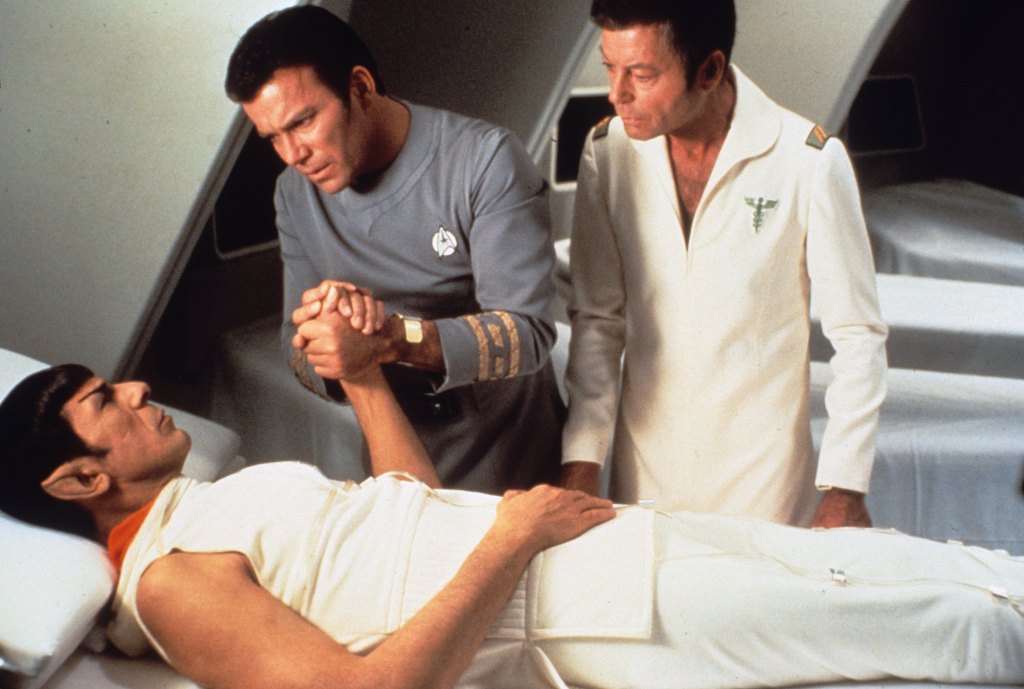
And then there’s Star Trek: The Motion Picture. When Spock returns emotionally distant after attempting Kolinahr, it’s the quiet moments that land hardest. After his mind meld with V’ger, he reaches out to Kirk in sickbay. “This simple feeling,” he says, acknowledging the value of emotion. It’s an intimate moment.

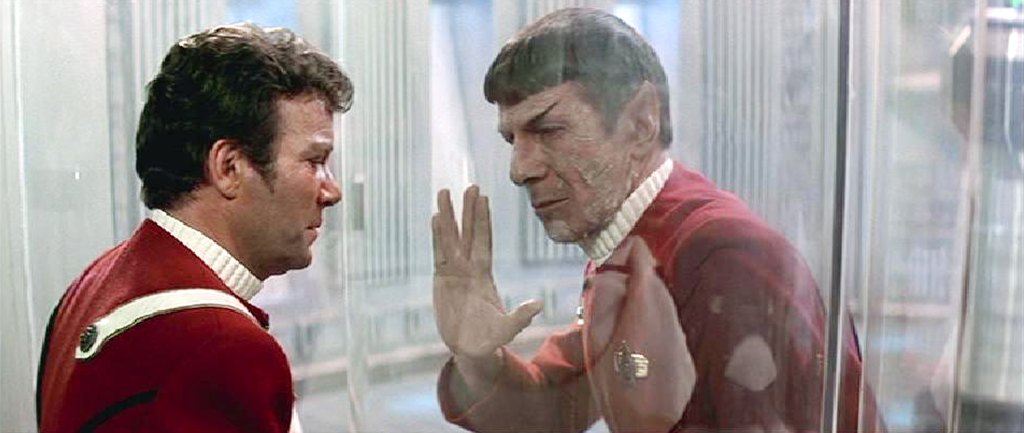
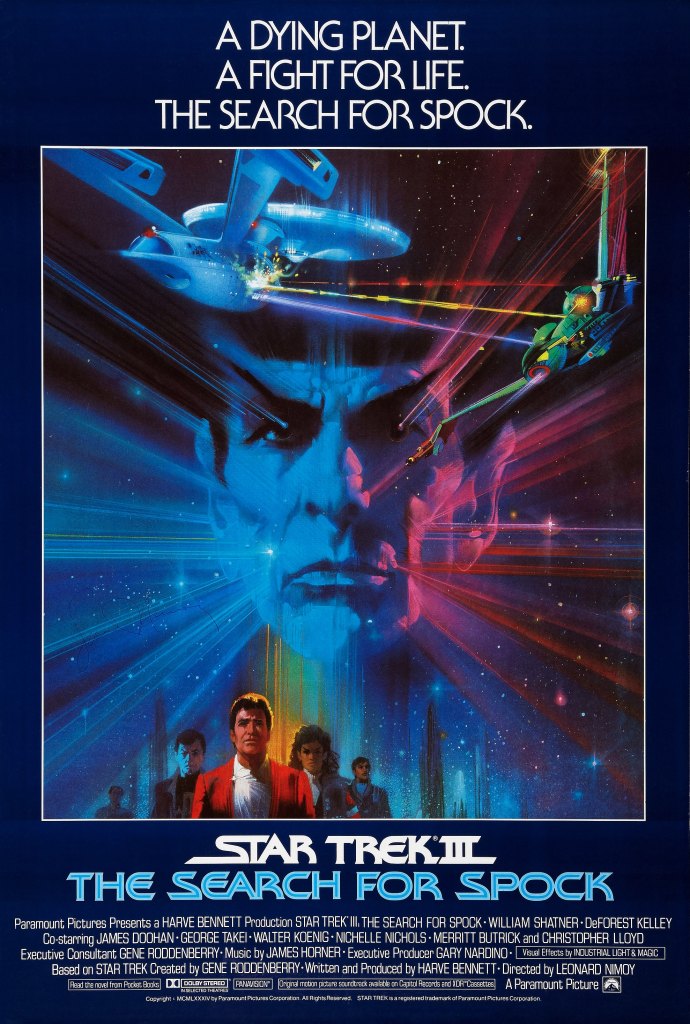
And then, of course, other films make it explicit. The Wrath of Khan gives us sacrifice in a radiation chamber. The Search for Spock gives us Kirk stealing a starship and risking everything to bring his friend back. Seen in that light, The Beast and The Mind-Sifter are the perfect bridge between series and films. They take what was already visible on screen and push it further. What happens if one of them loses everything—memory, dignity, identity? Would the other still go? Fandom’s answer was immediate and unequivocal: yes.
And crucially, it wasn’t one-sided. Canon gives us Spock’s sacrifice and Kirk’s quest to restore him, but in these early fan works, devotion flows both ways. Kirk saves Spock. Spock saves Kirk. Each man gets to be the one who is lost and each man gets to be the one who refuses to give up. Strip away command, intellect and certainty, and what remains? One man hearing the other call and crossing time to answer.
Decades later, whether you read these stories as pure friendship, proto-K/S, or something in between, that symmetry still resonates. Before canon fully embraced the mythic depth of Kirk and Spock’s bond, fandom had already mapped it in both directions.
Conversation
All comments are subject to our Community Guidelines. Woman's World does not endorse the opinions and views shared by our readers in our comment sections. Our comments section is a place where readers can engage in healthy, productive, lively, and respectful discussions. Offensive language, hate speech, personal attacks, and/or defamatory statements are not permitted. Advertising or spam is also prohibited.