What Is Retatrutide? Dr. Terry Dubrow Says This Weight-Loss Drug ‘Will Change Everything’
People lose up to 71 lbs in 68 weeks—and an even more potent version is already in the works
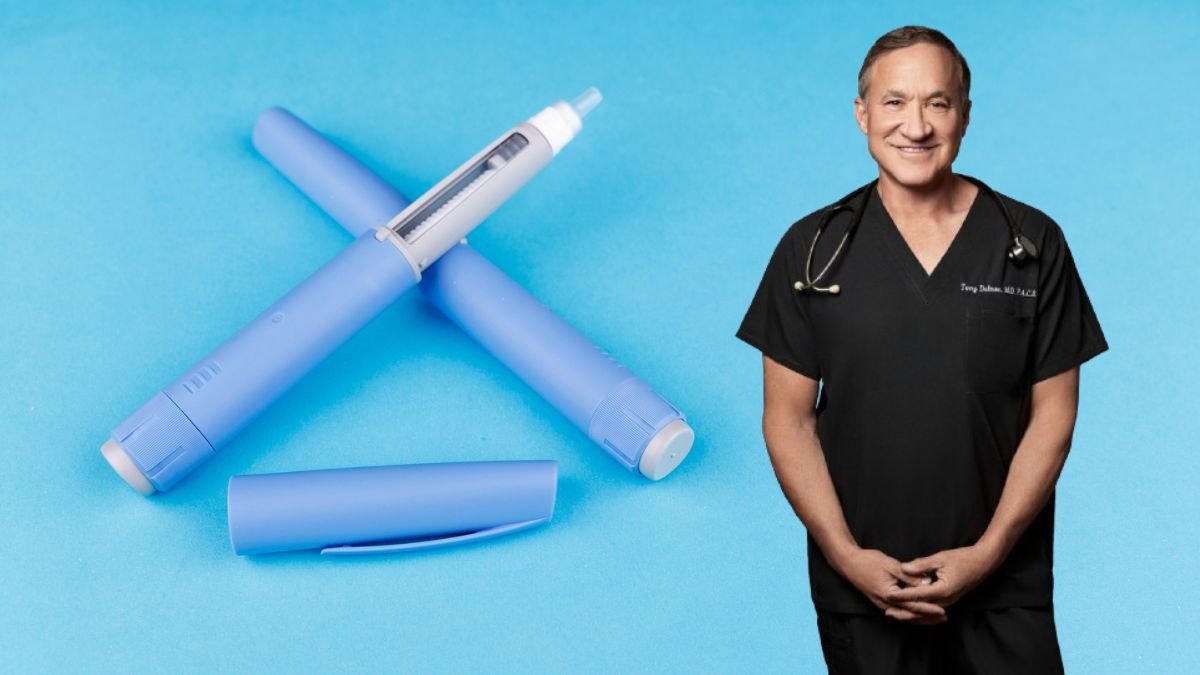
Key Takeaways
- Retatrutide is so powerful, it may replace weight loss surgery for many people.
- Early studies suggest retatrutide can deliver dramatic weight loss and preserve muscle.
- Until retatrutide arrives, Dr. Dubrow recommends tirzepatide as the best GLP-1 available.
The buzz around weight-loss drugs has never been louder or more exciting, especially when it comes to a brand new option called retatrutide or “reta”—stuff so powerful it’s basically threatening to put weight-loss surgeons out of business. A lot of us have questions: What is retatrutide? Where do we get it? Could it really be a better choice than other GLP-1 medications like Ozempic or Zepound?
For answers, we turned to Terry Dubrow, MD, who has spent the last 18 months studying and testing retatrutide and other GLP-1 medications. (Yes, he’s a famous plastic surgeon and star of Botched; GLP-1s are his new passion, and he recently passed his obesity medicine board exam with flying colors!) Here, Dr. Dubrow—who has personally tested retatrutide so he’d have firsthand knowledge when discussing it with patients—shares the latest on the blockbuster drug, plus everything else you need to know about your GLP-1 options.
Check out Dr. Dubrow, who appears on the July 2, 2026 cover of of Woman’s World magazine, where he shares the latest on retatrutide and GLP-1 drugs. Get your copy here!

First, what are GLP-1s exactly?
It’s the nickname for a category of prescription drugs including Ozempic, Wegovy, Mounjaro, Zepbound, retatrutide and more. They all spike the natural hormone GLP-1 (short for glucagon-like peptide-1), dramatically improving blood sugar control and appetite. Insurance often won’t pay for the pricey meds, but they’re transforming the weight and health of millions, even working for many people who’ve struggled to slim down for years or decades. “They’re the most impactful drugs in the history of medicine,” Dr. Dubrow says.
Dr. Dubrow’s guide to GLP-1s—and why retatrutide could change the game
Retatrutide has the most buzz, but it will be impossible to get a legal prescription for the weekly injectable for at least several months, as the final phase of testing is being analyzed and must still be sent to the FDA for approval. So let’s dive into why it may be worth the wait and what the best (and cheapest!) alternatives are.

Retatrutide is the drug of the future
Drug maker Eli Lilly has released sneak-peek findings from the Phase 3 trial, and retatrutide benefits seem wildly impressive so far. FDA approval for this blockbuster option is expected as early as this winter, “but all of Beverly Hills already takes the black-market version,” says Dr. Dubrow. It’s called a triple agonist because it acts on three hormones: GLP-1, GIP and glucagon. Glucagon is “a hormone that dissolves fat.” After Dr. Dubrow personally tested retatrutide for research purposes, this is his verdict: “It’s going to change everything.”
Advantages: Results rival gastric bypass. “Weight-loss surgeons are already feeling the impact,” he says. “Some practices are decimated.” Reta also seems to preserve muscle mass better than other GLP-1s. On top of that, findings have been released that show retatrutide reduces pain from knee osteoarthritis an average 74 percent. And a Nature Medicine study found it may reduce liver fat by up to 82 percent.
Drawbacks: Like all GLP-1s, it has side effects, with nausea and other GI problems being most common. There may be risk of cardiac arrhythmias; final data from Phase 3 clinical trials has yet to be released. And some people have dropped out of studies because they feel they’re losing too much weight.
Typical results: A 12-mg dose of retatrutide led to an average loss of 71 pounds in 68 weeks, per early results from clinical testing.
Who it’s best for: The 15 percent of folks who don’t lose at all or don’t lose much on tirzepatide—plus anyone who wants the fastest results possible when it comes to weight reduction, says Dr. Dubrow.
Retatrutide + a myostatin inhibitor—the ‘holy grail’ GLP-1
Retatrutide hasn’t even been approved, yet a jaw-dropping twist is already in the works. Scientists are now attempting to add a compound called a myostatin inhibitor to reta, creating a kind of super-duo medication, says Dr. Dubrow.
He notes that upgraded reta will turbocharge fat burning by targeting GLP-1 and other key hormones, and then the myostatin inhibitor will turbocharge our ability to build muscle. So we’ll build muscle as we burn lots of fat. It’s a one-two punch that promises to make us leaner, stronger and fitter than we ever dreamed possible. In development by Eli Lilly, “it’s the holy grail of weight-loss drugs,” says Dr. Dubrow. He estimates it’s about three years from approval.
Mounjaro & Zepbound—the most powerful GLP-1 for now
Both Mounjaro and Zepbound are brands of tirzepatide, which acts on GLP-1 plus GIP, a hormone that helps improve fat metabolism.
Advantages: “It’s the most powerful option for now,” says Dr. Dubrow. So much so that for some of us, a 2.5-mg low dose or “microdose” of tirzepatide (which costs $299 per month from the LillyDirect pharmacy) may be more effective and cheaper than high doses of alternatives like Ozempic and Wegovy.
Drawbacks: Higher doses from LillyDirect are $449 per month (and this is for vials and needles, not easy-to-use pens). You may, at least for now, be able to find generic tirzepatide for about $299 monthly—but producing generics is a legal gray area, and this option may not be around much longer.
Typical results: Expect losses of anywhere from 21 to 32 percent of body weight, per studies published in Nature Medicine and elsewhere.
Who it’s best for: Until new medicines like retatrutide are approved, Dr. Dubrow thinks most people hoping to lose weight should start with this option.
Ozempic & Wegovy—a solid, cost-effective choice
Both Ozempic and Wegovy are brands of semaglutide. Great at normalizing blood sugar, they’re most famous for quieting “food noise”—those constant thoughts of food that drive us to eat when we’re not hungry.
Advantages: Wegovy is typically less expensive than other GLP-1 options, about $349 per month for 2.5-mg injection pens from NovoCare pharmacy. There’s also a new high-dose Wegovy for $399 monthly. Wegovy also comes as a daily pill for $299 monthly, making it ideal for those who don’t do needles. Generic semaglutide, though in legal limbo, currently goes for about $199 a month.

Important note about Ozempic: Novo Nordisk charges self-pay patients $499 a month for 2-mg of Ozempic—that’s $150 more than they charge for a 2.5-mg dose of Wegovy, which is the exact same drug.
Drawbacks: Semaglutide is less effective than other options. And unlike other GLP-1s, it works on just one chemical pathway, which can be harder on the body and may increase side effects like nausea and GI distress, says Dr. Dubrow.
Typical results: Studies, including findings in the New England Journal of Medicine, show losing anywhere from 15 to 20 percent of body weight can be expected with weekly injections. Separate research shows losing about 14 to 17 percent is typical with the pill.
Who it’s best for: Those who must keep costs low. Dr. Dubrow also likes it for weight management (aka maintenance) after slimming down on a stronger drug.
GLP-1 success story: Jill Sweeney, 54, lost 130 lbs

After lifelong weight issues, Jill Sweeney was diagnosed with raging diabetes and put on Mounjaro. Did her insurance pay? Not at first, but they eventually relented. The first signs it was helping: Jill’s A1C was cut in half “and my food noise and hunger were gone,” recalls the Georgia mom and healthcare trainer, 54. Yet as a frequent traveler reliant on takeout, weight loss was slow despite repeated dose increases.

Luckily, Jill’s insurance offers Virta Health, a program to help people lose weight and reverse diabetes. Did Jill’s free coach make her give up McDonald’s? Nope! Instead, Jill was encouraged to aim for 91 grams of protein and up to 30 grams of carbs a day. She went for high-protein, low-carb picks like Cheesecake Factory’s Chicken Madeira, Jersey Mike’s Sub in a Tub, Chick-fil-A grilled nuggets and Starbucks egg bites. Want ideas for a specific restaurant? “Just ask ChatGPT!” she says. “I was supposed to use fat to feel satisfied, and I ate a lot of it at first.” She still shed a motivating 12 pounds the first week.
She’s now down 130 pounds and more energized and active than ever. “I got off my diabetes and blood pressure meds too.” Jill points out this wasn’t her first attempt at a lower-carb diet. It was just her first successful attempt. She credits both Virta and Mounjaro: “I wouldn’t get to live this life without them.”
A version of this story appears in the July 20, 2026 issue of Woman’s World.
Conversation
All comments are subject to our Community Guidelines. Woman's World does not endorse the opinions and views shared by our readers in our comment sections. Our comments section is a place where readers can engage in healthy, productive, lively, and respectful discussions. Offensive language, hate speech, personal attacks, and/or defamatory statements are not permitted. Advertising or spam is also prohibited.