Geneen Roth, 74, Lost and Gained 1,000 Pounds—How She Finally Stopped Compulsive Eating
After decades of yo-yo dieting, one mindset shift changed everything

Key Takeaways
- Your compulsive eating isn't about willpower—it's about old, unhealed emotional wounds.
- The 6-step process identifies triggers and rewrites false beliefs with self-compassion.
- Studies show compassion-focused therapy improves compulsive eating and self-criticism.
Imagine losing and gaining 1,000 pounds over the course of your lifetime—the weight of a baby grand piano. That’s what Geneen Roth, 74, endured through decades of compulsive eating, yo-yo dieting and crushing body shame. But here’s the game-changing truth she discovered: Her struggle wasn’t really about food at all. It was about the stories she was telling herself in her head. And once she learned to rewrite those stories with six simple steps, everything improved. Now, she’s sharing her breakthrough method that’s helping thousands of women finally escape compulsive eating—and science proves it works.
Geneen Roth battled with compulsive eating for decades
For years, Geneen heard cruel comments about her weight and let them shape how she saw herself. As a result, she hated her body. “I never spent a day in which I wasn’t either on a diet or a binge.” At times she starved herself, surviving on a “brown diet” (only cigarettes, coffee and diet soda). She also swung between wildly different advice—plant-based, Atkins, intermittent fasting. During one bout of compulsive eating, she gained 80 pounds in five weeks.
What did Geneen get from all that struggle? Loads of emotional and physical pain that was affecting her long-term health. The malnutrition even led to an osteoporosis diagnosis. “I’d wake up every morning with a kind of heaviness, sadness, a feeling that something was wrong with me. I kept looking through life with wounded lenses.”
How Geneen quit yo-yo dieting
Then Geneen finally had a reckoning with disordered eating and vowed to change her eating habits—by changing her mindset. She quit dieting, found better tools and started educating women. The key to recovery and lasting joy? Rewriting the outdated stories stuck in her head about her body, weight and worth with new wisdom. That’s how the compulsive eating finally loosened its grip on her life.
6 steps to heal from compulsive eating
Ready to try Geneen’s life-changing approach for yourself? Geneen admits, “I’d been in 40 years of therapy and spiritual practice and neither one of those unbound me like these six steps did.” Follow these steps when you feel stuck in a destructive eating pattern…
Step 1: Recognize a trigger
Step 2: Accept your role in the scenario
Step 3: Name the feeling driving it (such as unworthiness, inadequacy, loneliness, shame)
Step 4: Look back to the first time you felt that feeling
Step 5: Identify the false belief you formed about yourself in that moment
Step 6: Forgive yourself for that false belief and move on
Learn how to use this process to change your thought patterns with more detailed step-by-step instructions here.
How these steps work in practice
Here’s a real-world example: Geneen heard a cruel comment about her weight as an adult that sent her down an emotional spiral where she recalled the first time—as a child—when she felt judged about her weight. Back then, she felt inadequate and started telling herself she was unworthy. It triggered compulsive eating as a soothing technique and a survival mechanism. But it was all based on an untrue story she was telling herself in her head.
“This six-step process gives us permission to question the lies,” Geneen explains. “After realizing the hurt was about a mistaken interpretation I’d made decades ago, the self-hatred began to dissipate.” It takes practice, but this mental shift changes everything, forever.
The radical results: 1,000 lbs gained and lost!
“I want women to take heart that what they believe is impossible is not impossible,” urges Geneen. This six-step tool allows you to never get lost in your head, or lost in unhealthy patterns, ever again. Instead, you can feel safe in your own body and safe in your decisions around food. She sums it up this way: “Once you know where home is, you never un-know.”
Over 17 years, Geneen reveals, “I lost, in pounds, the equivalent of a small horse or a baby grand piano.” But the bigger transformation was her mindset. “Losing weight is not the answer to anything but losing weight,” says the bestselling author, whose experience turned into 11 books and a career teaching women to heal their thoughts on food and self-worth. “Dropped pounds couldn’t erase the buried shame and lies I believed about myself.”
Today, Geneen has a healthier, happier relationship with her body and her life than ever before.
Why intuitive eating alone isn’t enough to stop compulsive eating
We’ve all heard of intuitive eating. It’s about getting in touch with our natural hunger cues and stopping when we feel full. But without first completing Geneen’s six steps, we often can’t solve our eating challenges. Why? Mentally, we’re still stuck at the age of our earliest emotional hurts. “My relationship with food stopped developing at the age at which I was first shamed for my body—12,” Geneen says.
So when a woman tells herself to eat intuitively, she’s really asking a scared kid how to survive around food, which may involve sneaking, binge eating episodes or starving. “Now I understand that for intuitive eating to truly be a reflection of what best takes care of you, there has to be an adult present in the thought process,” she says.
Instead, try this quick reframing trick to bring your current wisdom into the situation. To truly nourish your body, ask yourself: “What do I need today, not back then?”
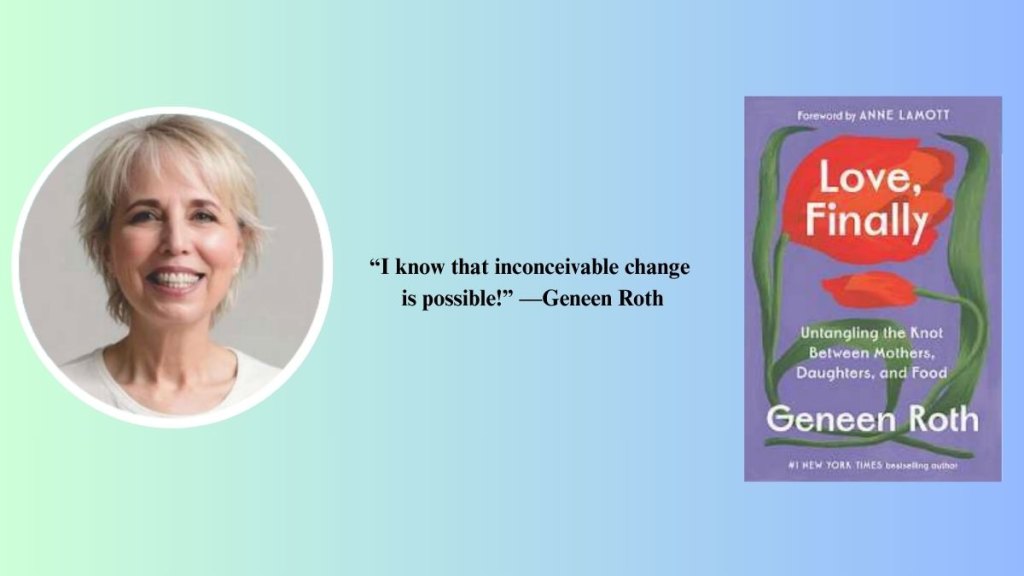
Geneen shares the complete journey of her transformation in her new book, Love, Finally, where she offers even more guidance on rewriting your story and finding lasting peace with food and your body.
Science proves this compassion-based approach works
Obesity medicine specialist Betsy Dovec, MD, is working to erase shame-based narratives that are holding women back from achieving their health goals. She says, “Performing more than 6,500 bariatric surgeries has taught me that every patient carries a story far heavier than the number on a scale. True healing begins the moment you feel safe, believed and supported.”
Geneen’s mental trick for beating compulsive eating is research-backed. Dieters who received compassion-focused therapy showed significant improvements in depression, emotional eating and self-criticism compared with standard obesity treatment alone, finds a 2026 PLoS One study.
And healing can happen remarkably fast. Just one 15-minute session of self-compassion improved feelings of body image shame and boosted self compassion in women, finds research in Behavioral Therapy.
What you can do today to start healing from compulsive eating

True healing from compulsive eating is within your reach—starting today. You don’t need to wait for the perfect moment or the perfect plan. Geneen’s journey proves that healing is possible and joy is available to you when you address the stories in your head, not just the food on your plate. “I know that inconceivable change is possible!” Geneen promises.
And Dr. Dovec confirms she sees patients fully heal. “When shame is lifted, people advocate for themselves and finally live fully.” By adding mindset work to other weight related tools, “we see life-changing results.”
A version of this story originally appeared in the June 29, 2026, issue of Woman’s World
Conversation
All comments are subject to our Community Guidelines. Woman's World does not endorse the opinions and views shared by our readers in our comment sections. Our comments section is a place where readers can engage in healthy, productive, lively, and respectful discussions. Offensive language, hate speech, personal attacks, and/or defamatory statements are not permitted. Advertising or spam is also prohibited.