After 32 Years of Painful Boils, This Unexpected Treatment Cleared My Skin When Nothing Else Worked
Hidradenitis suppurativa can trigger chronic bumps that may lead to permanent scarring

Key Takeaways
- Hidradenitis suppurativa causes recurring painful lumps, but needs different treatment.
- Laser hair removal may reduce HS severity, especially early before scarring sets in.
- A doctor says early diagnosis and treatment can reduce flare-ups and scarring risk.
Picture a golf ball: hard and solid on the outside, with softer layers compressed beneath the surface. Now imagine that golf ball lodged under the skin of your armpit, feeling like a knife blade twists inside of you every time you move your arm. That’s the closest way I can describe what hidradenitis suppurativa (HS)—a chronic skin condition that causes painful, boil-like lumps on my skin—felt like when it first appeared in my body.
I was 12 years old when the first bump appeared on my inner left thigh. At that age, I didn’t have the words to explain what was happening. I only knew that it hurt tremendously. Every day it grew until it was the size of an orange. It was embarrassing—I walked funny until it burst open and thick fluid streamed down my leg. The first few times it happened, I self-treated with hydrogen peroxide, bacitracin and bandaids. But over the course of a year, one large lesion turned to six and affected both thighs.
Soon, similar lumps began forming under my arms. They looked and felt like boils, but grew far larger. Under my arm, a small lump could swell until the inflammation extended halfway toward my elbow. When it finally burst, it was like a volcano erupting. They would all eventually drain, but the relief never lasted long. Just as one area began healing, another lump appeared.
After the fourth onset, my mom was on a mission to find a doctor who knew what was happening. My primary doctor told me to stop eating sugary foods. A dermatologist said I needed to wash my skin better. A homeopathic doctor showed me how to use toothpaste and lemon juice on a gauze pad to try to dry it up. Nothing worked.

A diagnosis without treatment
I was eventually diagnosed with hidradenitis suppurativa at the age of 13, commonly called HS. Although HS lumps can look like ordinary skin boils, they’re not the same. A typical boil is usually caused by a bacterial infection in a hair follicle and may disappear after it drains or is treated. HS is a chronic inflammatory condition that causes painful lumps to return repeatedly, often in the same areas. This is why treating HS requires more than simply addressing each individual lump.
Research in the National Library of Medicine estimates that roughly 1 in every 70 to 150 people worldwide have HS. The condition causes lumps, boils and tunnels to form in areas including the armpits, groin, buttocks and underneath the breasts, reveals Steve Daveluy, MD, FAAD, professor and program director at Wayne State Dermatology.
“It’s not an infection,” Dr. Daveluy explains. “It’s an overactive immune system causing the spots.” Without treatment, the condition can progress and cause permanent scarring. One reason hidradenitis suppurativa is commonly overlooked is that each individual lump can look like an ordinary abscess. “If you only look at a single lesion, it’s easy to miss the fact that it’s actually a chronic, recurrent issue.”
But having a name for my condition didn’t make it easier to treat. In the mid-1990s, research on HS was limited, and the go-to treatment was antibiotics. The problem: Antibiotics were only a Bandaid fix. They’d resolve the immediate inflammation, but not treat the root of the problem.
Nothing seemed to help
Over the next 32 years, I saw more than two dozen doctors and specialists from Philadelphia to New York City. I was prescribed antibiotics every few months. I also underwent more than 10 surgeries. From emergency room lancings to cortisone and Botox injections, nothing worked permanently.
The physical pain was only part of how the painful boil-like lumps on my skin impacted my quality of life. HS can make you question everything you wear and everywhere you go. You wonder whether a lump will rupture at work or whether drainage will stain your clothing; the pain became chronic and made it difficult to function on most days. Because the condition develops in private areas, it can also feel almost impossible to discuss. For years, I quietly dealt with it while trying to appear as though nothing was wrong.
A dermatologist offered a different approach
Last year, I scheduled an appointment with a highly recommended dermatologist. He prescribed metformin, a medication most commonly used to lower high blood sugar and help manage type 2 diabetes. Dr. Daveluy says metformin can also help some HS patients because it has anti-inflammatory properties that may calm the overactive immune response. In one small study of 53 people with HS, 68 percent reported some clinical improvement while taking metformin, although researchers noted that more rigorous studies are needed.
My dermatologist made sure the prescription clearly stated that it was being used to treat HS so my medical and insurance records accurately reflected why I was taking it. He also offered me a choice of three different injectable biologic medications: adalimumab, secukinumab and bimekizumab. Dr. Daveluy says they have the strongest evidence of benefit and may be considered for moderate or severe disease.
“The earlier treatment is started, the better it will work,” he says.
But after decades of cycling through medications and procedures, I was hesitant to begin another ongoing treatment. I wanted to explore whether there was a more concrete way to prevent the boils from forming. My dermatologist then suggested something no doctor had recommended before: laser hair removal.
Can laser hair removal stop HS flare-ups?
Dr. Daveluy explains that laser hair removal can be particularly helpful during earlier stages of hidradenitis suppurativa, when patients have lumps and boils but have not yet developed extensive tunnels or scarring.
“At this stage of the disease, the hair follicle is where all the inflammation starts,” he says. “Removing the hair follicle with a laser helps stop the inflammation.” A 2024 analysis of 10 studies involving 227 HS patients found that laser hair removal consistently reduced disease severity across several types of lasers, generally with minimal side effects.
At first, I was skeptical. After more than 10 surgeries, could laser hair removal really make a difference?
Two months before beginning treatment, I counted nine active lumps along the back of my upper thighs. Some were new. Others had disappeared and returned so many times that I stopped believing they’d ever truly go away.
Though decades had passed since my first flare-up, I knew I had to try something different. So I began laser hair removal under my arms, then added the tops of my legs and the Brazilian area to my treatment plan. The process typically requires six to eight sessions, spaced about six weeks apart.
For people with darker skin tones, Dr. Daveluy says the Nd:YAG laser carries the lowest risk of discoloration, although other lasers can still be used. Laser treatment tends to work best in the armpits and groin, where more hair follicles are present.

How I made laser hair removal affordable
The biggest obstacle to this new treatment was cost. Laser hair removal isn’t always covered by insurance, even when someone is pursuing it because of HS. I found an unexpected workaround through Groupon. By searching for packages at reputable local laser centers, I purchased multiple sessions for much less than the standard price. On average, six sessions for the upper legs costs between $900 to $2,500. I was able to purchase six upper leg sessions for $250. Once you’re in the spa’s clientele roster, they offer more discounts. I purchased the Brazilian package for the same amount.

Metformin and laser hair removal may not work for everyone with hidradenitis suppurativa. HS varies greatly from one person to another, and Dr. Daveluy emphasizes that early diagnosis and treatment offer the best chance of preventing permanent skin damage.
The results were remarkable
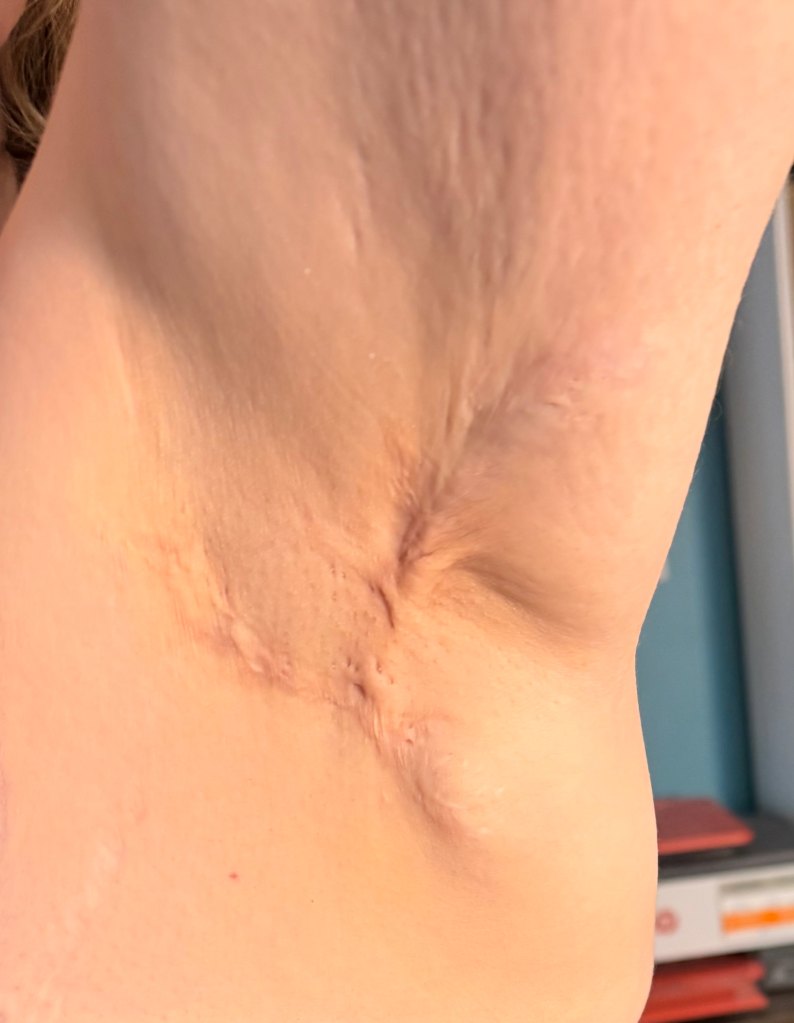
After just one session, the skin boils stopped forming in the areas being treated. My skin also looks healthier and smoother. After decades of scars, swelling and inflammation, seeing my skin improve has been emotional. I finally feel as though I am treating the source of the problem instead of reacting to the latest boil.
For the first time since I was 12, I am not wondering when the next one will appear. I am also no longer carrying a bottle of antibiotics with me “just in case” a flare-up begins. That freedom may be difficult for someone without HS to understand. For me, it’s life-changing.
Conversation
All comments are subject to our Community Guidelines. Woman's World does not endorse the opinions and views shared by our readers in our comment sections. Our comments section is a place where readers can engage in healthy, productive, lively, and respectful discussions. Offensive language, hate speech, personal attacks, and/or defamatory statements are not permitted. Advertising or spam is also prohibited.