Actress Sara Rue Swears by Functional Exercises—How DIY Projects Keep Her Fit (Exclusive)
Learn what makes her creative no-gym routine so effective—and how to recreate it

Key Takeaways
- Sara Rue uses functional exercises like DIY projects to stay fit without a gym.
- Everyday movements like lifting, squatting and climbing can burn calories and build strength.
- Functional fitness and NEAT movements boost both physical health and mental wellbeing.
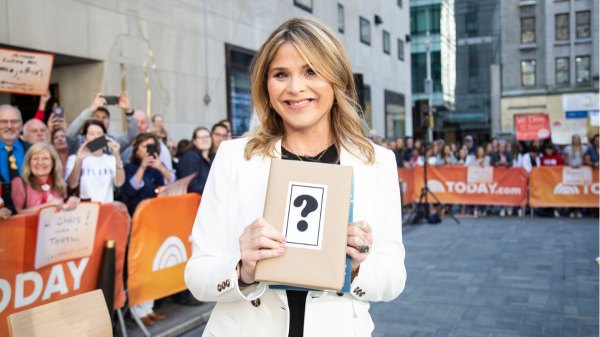
Sitcom star Sara Rue recently traded her traditional Peloton workouts for power tools, transforming home renovation projects into health-boosting exercise sessions. Here, she talks exclusively to Woman’s World about the crafty ways she sneaks in workouts these days while doing home renovations in Cape Cod—and why she’s never felt better. And don’t miss what the research says about using functional exercises to turn your household chores into effective workouts too.
You watched Sara Rue grow up on your TV screen
You may recognize Rue as a smiling face on some of your favorite sitcoms. She’s worked in Hollywood since the age of nine with prominent guest roles on The Big Bang Theory, Two and a Half Men and Will & Grace. She also starred in her own show Less Than Perfect and alongside Reba McEntire in Malibu Country. More recently, she became a fan favorite in Netflix’s A Series of Unfortunate Events, and teamed up again with her former costar Nathan Fillion on The Rookie.
Fans know Rue has dealt with health and body image issues throughout her long career. Now, she’s discovered a wellness approach that makes her feel stronger and more empowered than ever. Here’s how the sitcom queen became the DIY home projects and creative fitness queen too.
A cross-country move inspired a surprising wellness habit
When Rue, along with her husband and two daughters, moved from Los Angeles to Cape Cod a few years ago, she got interested in home improvement projects.
“I’m still the most proud of my laundry room renovation, because it was my first one,” she reveals. “The contractor quoted me $30,000 to basically gut a tiny 8×6’ room. It was insane, so I thought I’ll do it myself. I think my budget came in under $3,700 and I learned all these new skills!”
Since then, Rue has completed countless home reno projects: refreshing her deck, adding wood accent walls to a hallway and bedroom, wallpapering her entryway, creating a glam garage using free Facebook Marketplace cabinetry and building raised garden beds.
She replaced traditional workouts with crafty functional exercises
Through all that hauling, sawing and painting, Rue unlocked a creative way to burn calories, build muscle and boost her mood with her new hobby. And she couldn’t be happier. “I haven’t had time to do traditional exercise since I’ve been doing renovations. I was in Lowe’s recently, walking the aisles, and I got 3,000 steps,” she says with a laugh.
What are functional exercises? They are ones that model the everyday movements of life: lifting groceries, jogging to the mailbox, bending to empty the dishwasher, lunging to carry laundry up the stairs. All that movement adds up. It’s how people generations ago, before gyms existed, stayed fit by working in the fields and completing physical household chores.
Fitness legend Denise Austin explains, “Your muscles don’t know if you’re in a fancy gym or right in your own home.”
Why all movement counts as exercise
Rue explains it perfectly: “We’re conditioned to think exercise is when you step on a treadmill, step into a yoga studio or take a Pilates class. And the truth is, it’s all movement.” She adds, “I had to retrain my brain to give myself some grace.”
This way of staying active with creative home renovation projects is all part of her philosophy to “Rue-It-Yourself”—like “do-it-yourself.” And she’s never felt more empowered.
She teases, “Yes, I love to Rue-It-Myself. I just opened a pro account at Home Depot under Rue-It Myself!”
How you can start your own functional fitness routine today
Want to try it for yourself? Here are some examples of functional exercises Rue does during home projects:
Squats (floor work): Rue doesn’t have a traditional workshop, so she says, “The amount of squatting I’m doing on the floor, hammering things in—that’s a good workout.”
Heavy lifting (rocks and materials): “I built this little rock wall. And I can tell you that I have never been so sore and tired from any traditional exercise as I was the day after moving rocks. I was really spent.”
Reaching and climbing (wallpapering and painting): She often climbs ladders installing wallpaper. “The type of sore you get from holding your arms up over your head—I can feel it in my body.”
Speed walking (shopping): To get her heart rate up, Rue often runs through big box stores collecting supplies. She’ll speed walk to the correct aisle, stand to pick out the perfect screw or lightbulb, then speed walk to the next spot on her shopping list. “There’s a lot of stop and start,” she says. “So I do try to move fast in the moments when I move.”
Interval training (stop-start movements): Could that fast-slow, fast-slow walking pattern mimic fitness intervals? Rue gushes, “I would love for that to be true!”
How creative fitness helps mental health too
Rue started renovating as a creative outlet, but she stuck with it for the mood-boosting side benefits. “Home projects do the same thing for me mentally as a 30-minute speed walk around the neighborhood. It clears my mind. I’m focused on something that I find super satisfying.”
“At the end of the day, I’m just trying to create pretty spaces, because there is a lot of chaos right now in the world, and so many things that are outside of our control.” But she can control sanding a piece of wood and nailing it in place.
That sense of accomplishment is exactly what makes functional exercise so powerful for mental health. Rue says it allows her to “make a teeny, tiny, little piece of the world beautiful and calm.”
For busy women juggling multiple responsibilities, Rue’s approach offers a realistic solution. “All of us have so little time, especially those of us who are parents. So I think, how can I spend that time keeping my body moving to stay healthy? It’s about finding that balance.”
Embracing the shift toward functional movements

Does housework really count as exercise? The science says yes. This form of non-traditional exercise has a name. It’s called NEAT (non-exercise activity thermogenesis), the energy expended from non-exercise activities like scrubbing the shower or mowing the lawn. Research shows that cleaning a whole house can equate to two HIIT workouts, burning around 1,300 calories in four hours. And a BMC Public Health study categorized housework as moderate-to-vigorous physical activity that can make up 35 percent of a person’s weekly exercise routine.
What’s next for Sara Rue?
Rue isn’t slowing down anytime soon. Fans can follow along on her next fixer-up home renovation (where she hopes her parents can stay when they visit) on social media. She’ll be replacing the fireplace mantel, learning to retile a shower (“Demo-ing it first is the fun part!”) and giving the kitchen a little, affordable facelift with stick-on backsplash tiles (“Because renovations are so expensive right now”). Her ultimate goal with her handy hobby: “It’s basically just a way to lure all the people we love to Cape Cod!”
Now it’s your turn. Get inspired to finish that home repair or closet decluttering project you’ve been dreaming about. Start making your daily movements work harder for you!
Conversation
All comments are subject to our Community Guidelines. Woman's World does not endorse the opinions and views shared by our readers in our comment sections. Our comments section is a place where readers can engage in healthy, productive, lively, and respectful discussions. Offensive language, hate speech, personal attacks, and/or defamatory statements are not permitted. Advertising or spam is also prohibited.