Chronic Back Pain? Sitting Just a Little Bit Less Can Help, a New Study Suggests
Back pain increases with age, but that doesn't mean you have to suffer through it

Back pain is one of the most common complaints among adults, and it’s no secret that our modern, sedentary lifestyles play a big role in it. Now, a new study suggests that making small changes to your daily routine—such as reducing the amount of time you spend sitting—could help prevent back pain from worsening. But how exactly does sitting impact back pain?
We asked Christynne Helfrich, PT, DPT, OCS, a Physical Therapist Consultant at Hinge Health to weigh in. She shares why we experience back pain, the benefits of reduced sitting time and simple strategies you can incorporate throughout the day.
How less sitting may ease lower back pain

The study, published in the journal BMJ Open on September 28, focused on 64 adults aged 40 to 65 with a body mass index (BMI) indicating overweight or obesity. Participants were also considered at risk for diabetes and heart disease due to metabolic syndrome, a condition linked to increased insulin resistance.
Over six months, participants were split into two groups: one group was encouraged to reduce their daily sitting time by one hour, while the control group maintained their usual sedentary habits.
At the end of the study, the intervention group showed a notable difference in how their back pain progressed compared to the control group. Those who made the effort to sit an average of 40 minutes less each day—while also adding 20 minutes of moderate physical activity—didn’t see any worsening of their back pain. Conversely, the control group experienced a significant increase in back pain over the same period.

Limitations of the study
While the findings are promising, the study does have some limitations. “It’s a small sample size and it was a short duration in which they followed these members,” says Helfrich. “The eligibility criteria was also not standardized. The study also relied on self-reported measures which can influence the outcomes.”
Still, this new study highlights the potential for small changes in daily activity to prevent back pain from worsening. “While there are some drawbacks, as there are in a lot of studies, this still gives us some valuable information on how more activity during the day can influence how we feel in the short term, which is important!” adds Helfrich.

Why is back pain so common?

According to the World Health Organization (WHO), lower back pain is the single leading cause of disability worldwide, and most experience it at least once in their life. “Back pain is common due to things like anatomy, lifestyle factors and health conditions,” explains Helfrich. “Because the spine is built to protect the spinal cord, support the weight of the body, be strong and also flexible for virtually all movements of the body, it is predisposed to aches and pains.” This makes back pain a multi-factor problem and difficult to address.
While Helfrich says some factors are out of our control, like our anatomy, medical conditions, injuries and genetic predisposition, there are many risk factors we can reduce. Most fall under our lifestyle habits and choices, including sedentary behaviors, weight management, poor posture, smoking, footwear choices, overworking muscles, sleep positions and even stress.
Sitting for long periods can increase pressure on the lower back and reduce circulation to the muscles that support the spine, leading to stiffness, discomfort and even injury. Prolonged sitting can also weaken core and back muscles, which makes individuals more susceptible to pain over time.
The health benefits of reduced sitting time
“There are so many benefits to reducing your sitting time, no matter your age,” emphasizes Helfrich. “Some of those benefits include improved strength and mobility, decreased back pain, improved cardiovascular endurance and health, improved blood circulation, decreased overall blood glucose levels, increased energy levels and reduced fatigue.”
Reduced sitting time also supports weight loss and metabolic health. In addition to physical benefits, Helfrich also says “increased movement during the day has also been associated with improved mood, reduced anxiety and [a] lowered risk of depression.”
Tips to reduce your sitting time
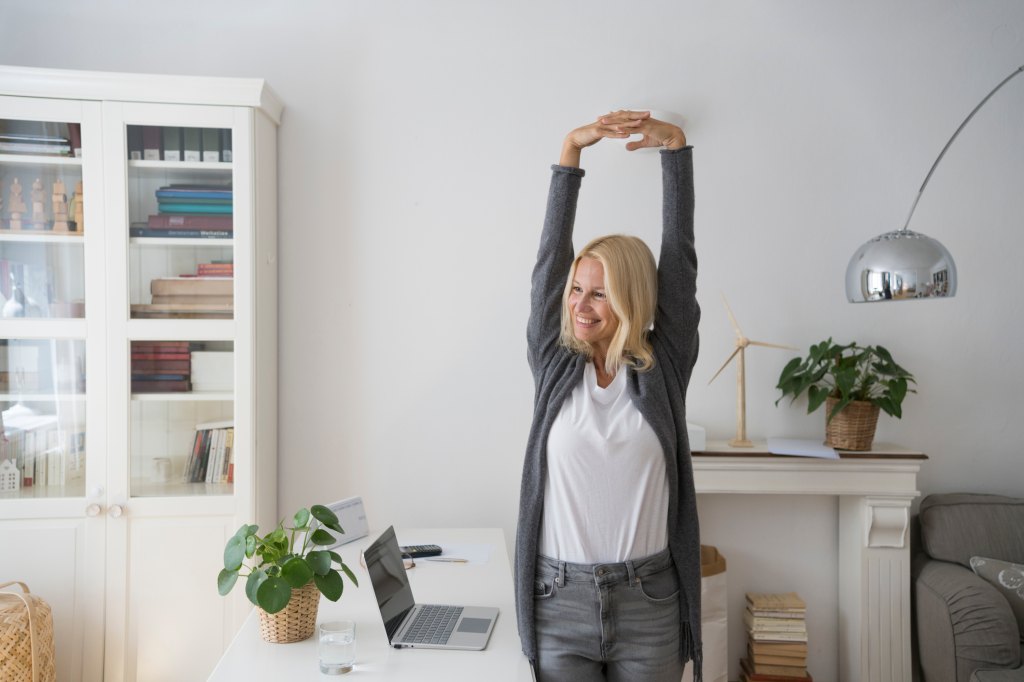
“Finding practical ways to get more movement into your day does not have to be overwhelming. Doing little things can have a large impact, so take baby steps,” advises Helfrich. Below, she outlines some simple strategies to try:
Stretch frequently
“You can even start with some stretches and movements that you can do while sitting in your chair,” says Helfrich. “Stretches for your shoulders and neck can help relieve pain and improve mobility.”
Set an alarm
“I also recommend setting an alarm or timer for every 60 minutes to try to get out of your seated position,” she notes. This way, you don’t forget during a long work day.
Walk more

“Going for a five to 10 min walk around the block, your house or your office” can make a big difference. “If possible, take work calls on a walk. Take the stairs when you can,” adds Helfrich.
Use a standing desk
If your work requires long periods of sitting, or you work remotely, using a standing desk can help reduce the strain on your back.
Strengthen these muscles
Many people have weak core muscles and back muscles, which help offset the pressure that causes back pain. Adding exercises that target these muscle groups can improve stability and reduce back pain in the long term.
Conversation
All comments are subject to our Community Guidelines. Woman's World does not endorse the opinions and views shared by our readers in our comment sections. Our comments section is a place where readers can engage in healthy, productive, lively, and respectful discussions. Offensive language, hate speech, personal attacks, and/or defamatory statements are not permitted. Advertising or spam is also prohibited.