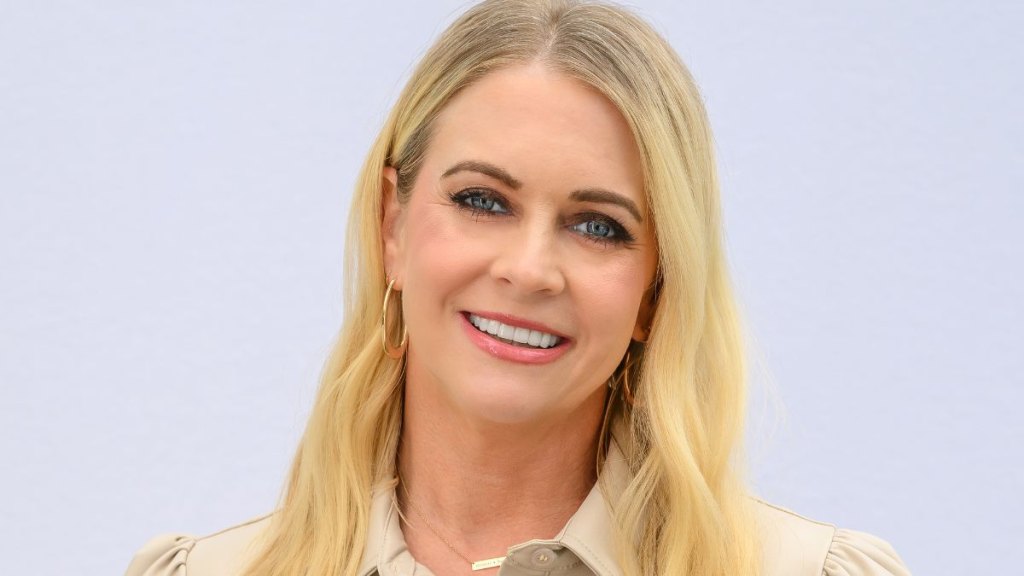
Melissa Joan Hart, 50, Gets Candid About the Hot Flashes That ‘Hit With a Vengeance’
Experts weigh in on treatment options and at-home remedies that help tame hot flashes
Key Takeaways
- Melissa Joan Hart opens up about her experience with hot flashes and night sweats.
- Hart is raising menopause awareness through her new partnership with Bayer.
- Experts say treatment options and at-home strategies can help manage hot flashes.
When you experienced your first hot flash during perimenopause or menopause, it might have felt strange, uncomfortable or perhaps even isolating. And you wouldn’t be alone. In an exclusive interview with Woman’s World, iconic ’90s actress Melissa Joan Hart, 50, shared that she also experiences hot flashes and is shining a light on them through her new partnership with Bayer’s “Life Doesn’t Stop for a Hot Flash” campaign. So what has Hart experienced, and what do doctors want you to know about hot flashes? Keep reading!
Melissa Joan Hart’s hot flashes were ruining her sleep
Hart told Woman’s World she’s most impacted by night sweats. “I like to sleep under a weighted blanket and have all my pillows around me and whatnot. And man, when those hot flashes hit, they hit with a vengeance.”
“These night sweats wake me up from my sleep, and that’s disruptive to my whole life, but it’s also just alarming when it happens,” said the Sabrina the Teenage Witch star. “What I learned through my partnership here [with Bayer] is that the ‘moderate-to-severe’ part is when you have to cease activity, and that includes sleeping. So because I was having to stop sleeping because of the hot flash, that meant it was severe.”

What are hot flashes?
“Hot flashes are sudden feelings of intense heat, usually starting in the chest, neck or face and sometimes spreading throughout the body,” explains Cory Rice, DO, chief clinical advisor at Biote. “They can cause sweating, flushing, a racing heartbeat and occasionally chills afterward.”
Diana Bitner, MD, MSCP, FACOG, chief medical officer and co-founder of true. Women’s Health, adds that hot flashes can strike just about anytime, day or night. “It’s one of those things that can be very unpredictable and it can last for a long time,” continues Dr. Bitner.
And just as bodies are different, hot flash severity can also vary from person to person. “Hot flashes can be divided into mild, moderate or severe,” explains Dr. Rice. “Mild hot flashes involve a noticeable feeling of warmth without significant sweating or disruption. Moderate hot flashes cause noticeable warmth and sweating, but the woman can usually continue what she’s doing without having to stop. Severe hot flashes involve intense heat and sweating that interrupt her daily activities, interfere with her concentration or wake her from sleep.” That’s what Hart said she experienced.
Why Melissa Joan Hart is spreading the word on treatment for hot flashes
While menopause and hot flashes are more openly discussed now, Hart, like many women, grew up in a home where menopause wasn’t talked about. “I just wish I’d known some more of the symptoms, some more of the struggles, some more of the options, other than just sticking your face in a refrigerator,” says Hart.
Her partnership with Bayer is giving her the chance to turn a new page in menopause awareness. “It’s the ‘Life Doesn’t Stop for a Hot Flash’ campaign, which I love the title of because life shouldn’t stop for a hot flash. Until I partnered up with Bayer, I didn’t realize that there were treatment options,” says Hart.
The campaign specifically shines a light on a medication called Lynkuet. “Lynkuet (elinzanetant) is a newer, FDA-approved, nonhormonal prescription medication developed by Bayer to treat moderate-to-severe hot flashes associated with menopause,” explains Dr. Rice. “What makes Lynkuet different from traditional hormone replacement therapy is that it doesn’t replace estrogen. Instead, it works directly on the pathways in the brain that are responsible for regulating body temperature.”
“We also want women to know that if they’re pregnant, they can’t take Lynkuet [as] it could risk pregnancy loss,” adds Dr. Bitner. “Women with significant liver abnormalities may also need to avoid it, since the medication can affect liver enzymes,” adds Dr. Rice, who says the medication is also not recommended for women with end-stage kidney disease.
Hart shared she isn’t currently taking Lynkuet but plans to talk about it with her doctor at her next appointment. And Dr. Bitner recommends all women take a page out of Hart’s book and talk to their medical provider about their menopause symptoms and which treatment options might be a good fit. “I want women to read our conversation and say, ‘Okay, I am going to bring it up to my doctor,’ because for so long it’s been, ‘I just have to suffer in silence,’ or ‘There’s not a treatment option,’” says Dr. Bitner.
3 expert-approved tips to curb hot flashes from home

While some women who are good candidates for Lynkuet may find it helpful, not every medication is a good fit for everyone. But know that there are things you can do right from home to help with hot flashes, whether or not you decide to take medication. We asked Dr. Rice and Alyssa Dweck MS, MD, FACOG, MSCP, chief medical officer of Bonafide Health and Menopause Society certified practitioner, for their top three tips:
- Identify hot flash triggers: “Women might identify and avoid triggers in diet or activity that bring on hot flashes, for example, caffeine or alcohol,” says Dr. Dweck.
- Keep things cool at night: “Ensuring one’s bedroom is cool for sleep can be beneficial to avoid night sweats,” adds Dr. Dweck. If you do sleep in pajamas, Dr. Dweck says opting for fabrics that are moisture wicking can also help.
- Shed extra pounds: “Working to reduce body fat, particularly abdominal fat, is one way to help combat hot flashes at home,” says Dr. Rice. “Research suggests that excess abdominal body fat can lead to more hot flashes.” We know losing weight is easier said than done, but these belly fat burning foods are a great place to start.

The bottom line on hot flashes
Ultimately, whether you decide to talk to your doctor about Lynkuet or give one of our other expert-approved tips a try at home, know that you don’t have to just live with your hot flashes.
“I think this has been a taboo topic for so long, and generations before us didn’t talk about it because it was looked at as shameful or personal,” Hart said. “But I think that since more than half the population goes through this at some point in their lives, it’s a really important topic to kind of get the cobwebs off of and say ‘let’s focus on this.’”
Ready for more inspiration? Subscribe to our YouTube channel for video podcasts, health tips and uplifting stories designed for women 40, 50, 60 and beyond.
Conversation
All comments are subject to our Community Guidelines. Woman's World does not endorse the opinions and views shared by our readers in our comment sections. Our comments section is a place where readers can engage in healthy, productive, lively, and respectful discussions. Offensive language, hate speech, personal attacks, and/or defamatory statements are not permitted. Advertising or spam is also prohibited.