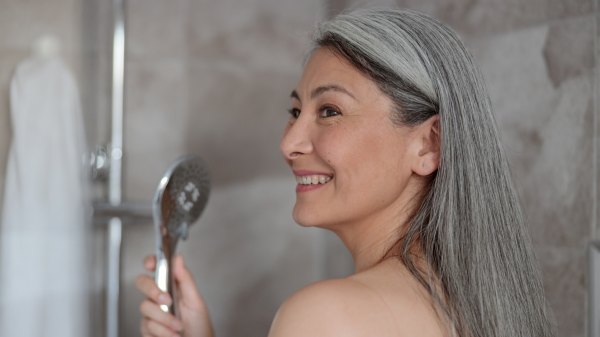
Off-Label Medication for Menopause? Doctors Say These Surprising Rx Options Really Help Symptoms
From hot flashes to insomnia, experts explain how off-label meds may bring real menopause relief

Off-label medication—drugs FDA-approved to treat one condition but often prescribed for another—are changing the game for issues as varied as ADHD and weight loss. Now, menopausal symptoms are joining the list of health challenges that can be eased with a surprising range of treatments. Here, top doctors explain the advantages of using off-label medications to help manage symptoms like hot flashes, insomnia and irritability.
What is off-label medication—and is it safe?
Sure, you know about see-sawing hormones during this stage of life, but you may be surprised by just how much your brain chemistry is affected. “During perimenopause and menopause, many symptoms are driven by changes in neurotransmitters in the brain, explains board-certified gynecologist Maral Malekzadeh, DO.
“Estrogen plays an important role in how our brain regulates temperature, sleep, mood and pain. As estrogen levels decline, those neurotransmitters don’t work as efficiently, and the central nervous system becomes more sensitive, leading to symptoms such as hot flashes, night sweats, sleep disruption and mood changes.”
That understanding led to the use of certain medications originally developed for neurological or psychiatric conditions. “Many of these drugs—often prescribed off-label—target the same neurotransmitter pathways involved in menopausal symptoms,” continues Dr. Malekzadeh. “While they don’t replace estrogen or treat every symptom, they can be very effective for specific issues, particularly temperature regulation and sleep disturbances.”
While the term “off-label” can sound concerning, it simply means a medication is being used in a way not specifically listed on its FDA approval—not that it’s unsafe. These drugs have already been tested for safety, and doctors routinely use them based on strong research and clinical experience. As with any medication, the key is personalized dosing and proper medical guidance from your doctor.
3 off-label medications that ease menopause symptoms
What’s it like on the frontlines of off-label meno-treatments? “I’m seeing a lot of women get real relief from medications they wouldn’t expect,” observes Amy Shah, MD, double-board-certified medical doctor, nutrition expert and author of the forthcoming book Hormone Havoc. Here, she and Dr. Malekzadeh weigh in on a few of the most promising options to talk to your doctor about.
Selective serotonin reuptake inhibitors (SSRIs)
One of the most common options is a class of antidepressants called SSRIs. These are typically used for women who prefer not to use hormone replacement therapy (HRT) or for whom hormone therapy is contraindicated because of other medical conditions.
“While SSRIs are classified as antidepressants, they work by modulating serotonin and norepinephrine in the brain, which helps stabilize the body’s temperature-regulation center,” explains Dr. Malekzadeh. “As a result, hot flashes, night sweats and sometimes mood symptoms like anxiety can improve.”

Gabapentin
Anti-seizure meds, such as gabapentin, can reduce night sweats and improve sleep, assures Dr. Shah. A study in the Journal of Women’s Health shows just that: Menopausal women taking gabapentin for hot flashes enjoyed significantly improved sleep at four and 12 weeks.
Clonidine
“Medications like clonidine [used to treat high blood pressure] can also help with vasomotor symptoms like hot flashes by affecting blood vessel responses,” says Dr. Shah. “It’s really about using what we know from other areas of medicine to give women actual relief when they need it.”
The case for low-dose testosterone for menopause libido
Unfortunately, some of the other symptoms in perimenopause and menopause are driven by hormones, for which SSRIs and medications addressing neurotransmitters won’t work, acknowledges Dr. Malekzadeh.
The good news is that one of these key symptoms, changes in sexual desire, can be managed by a targeted approach. “Sometimes a woman can’t use estrogen therapy, but if she’s experiencing changes in libido or energy, she may still be a candidate for low-dose testosterone,” she reveals. (Also check out the libido-boosting power of ‘pink Viagra.’)
“Research suggests that testosterone can support pathways involved in libido, energy and motivation.” Dr. Malekzadeh notes one caveat: Most of the evidence comes from smaller studies, and in the U.S., testosterone hasn’t been studied in large-scale trials because the Food and Drug Administration has not approved such studies. As a result, much of the available data comes from Australia and other international research.”
In short, she says, you may want to try low-dose treatment options before you jump into more extensive hormone therapy.

Off-label medication vs. hormone replacement therapy
Dr. Malekzadeh notes that the effectiveness of HRT, now known as menopausal hormone therapy, really depends on three main factors: the route (how the medication is delivered), the dose and having clear expectations about what it can and can’t do.

Perhaps most importantly, the best treatment comes down to knowing yourself. “Some people respond well to [hormonal] patches, others to estrogen creams—it really varies,” she notes. “How consistent will you be with the method we choose? For example, are you comfortable applying a cream every day, or changing a patch weekly?
I’m generally a proponent of a ‘low and slow’ approach. We start with a low dose, see how you respond and then adjust it if needed. Some previous studies used higher doses or different routes, which we typically do not use now. Starting low allows us to find what works best for you while minimizing side effects.”
The bottom line on using off-label medications for menopause symptoms
In the end, as Dr. Shah notes, there isn’t one magic bullet to treat menopause symptoms, but rather a constellation of strategies—including stress management, a healthy diet, regular exercise and, yes, potential off-label medications and HRT. “We want to find the treatment that fits the woman instead of forcing her to fit the treatment.”
Conversation
All comments are subject to our Community Guidelines. Woman's World does not endorse the opinions and views shared by our readers in our comment sections. Our comments section is a place where readers can engage in healthy, productive, lively, and respectful discussions. Offensive language, hate speech, personal attacks, and/or defamatory statements are not permitted. Advertising or spam is also prohibited.