This 2017 Brandon Sanderson Book Named Greatest Fantasy Novel of the Last 20 Years
Why Sanderson waited 15 years to tell the story behind the acclaimed ‘Stormlight Archive’ epic

Key Takeaways
- Brandon Sanderson's 'Oathbringer' tops Collider's 20-year fantasy ranking.
- Sanderson waited 15 years for the chance to tell Dalinar Kholin's story.
- The author approached the massive 'Oathbringer' like an entire trilogy.
With so many novels to his name and an interconnected Cosmere universe that can seem intimidating to the uninitiated, where exactly do you begin with Brandon Sanderson? According to a new ranking, one answer might be Oathbringer.
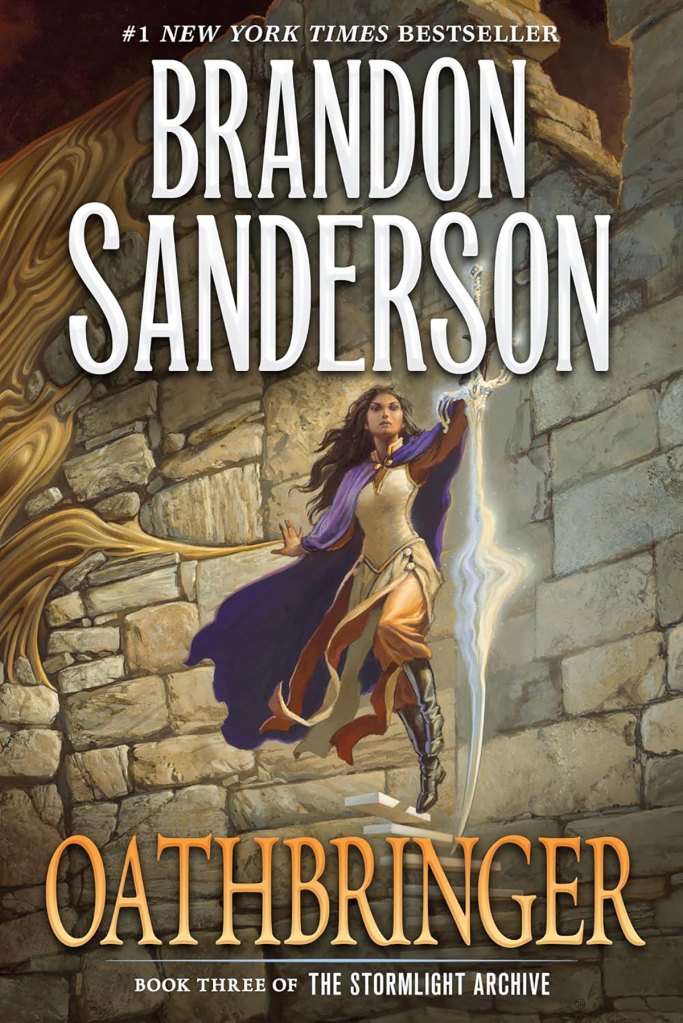
Collider has named the 2017 novel the greatest fantasy book of the last 20 years, putting it ahead of such acclaimed works as George R.R. Martin’s A Dance with Dragons, Scott Lynch’s The Lies of Locke Lamora and Mark Lawrence’s Prince of Thorns.
It’s an impressive claim for any book, but what’s interesting in the case of Sanderson is that Oathbringer is not a standalone novel or the start of a saga, but instead the third chapter of The Stormlight Archive, following The Way of Kings and Words of Radiance.
The Stormlight Archive follows a number of characters living in a world threatened by supernatural forces and increasingly devastating conflict. At the heart of Oathbringer is Dalinar Kholin, a former warlord attempting to become a very different man from the brutal warrior he once was while simultaneously trying to unite people who have reason enough not to trust either one another—or him. The novel moves between Dalinar’s increasingly desperate efforts in the present and revelations about his violent past. And that particular story was one Sanderson had been waiting a very long time to tell.
BRANDON SANDERSON: “When I came back to it years later, after working on The Wheel of Time, after growing a lot as a writer, I decided the method I would use to tell the story would be to focus on the backstory of one of the characters. That way I didn’t have to dive into the backstory of each character at once, I could keep focused, and I could give each book in the series its own soul and heart, so to speak. That’s a long, roundabout way of saying I have been waiting 15 years to be able to tell Dalinar’s story, which I finally get to do in this book.” (Deseret.com, 2017)
Dalinar wasn’t originally supposed to take center stage
What’s surprising is that Sanderson hadn’t originally planned to tell Dalinar’s backstory in Oathbringer; that unfolding story was supposed to happen two books later. But the more he worked on the third novel, however, the more he realized that the man Dalinar had been provided the perfect counterpoint to the man he was trying to become.
BRANDON SANDERSON: “What I wanted to have happen in these books is the character’s backstory offers insight, parallel or some sort of interweaving with the main plot that the characters are going through in the present in order to change your perspective both on the past and on the present by what you read in the character’s backstory. The back and forth between the person Dalinar is becoming in this book, and the person he used to be, the journey he began when he was younger, and is only now meeting his fulfillment in his middle age, that story paralleled so nicely.”

Then there’s the rather unavoidable matter of Oathbringer‘s size. Depending upon the edition, readers are looking at well over 1,000 pages.
BRANDON SANDERSON: “Big doesn’t mean better, necessarily, but what I can do in these books is I can really dig into a topic that you just can’t in a shorter book. I tend to plot these books like an entire trilogy, and each book had the plotting of a trilogy inside that single book. It’s a really different way to plot a book, just because there are so many moving pieces, so many different things going on, so many plot lines to cover, but also it’s really engaging and exciting to write because nothing else is like it.”

Sanderson essentially made the same point to Paste shortly before Oathbringer was published, but from the reader’s perspective.
There’s more going on than battles and magic
For all the elaborate world-building, supernatural powers and enormous battles, Sanderson has also said that the emotional experiences of his characters are ultimately what give the fantasy meaning. That becomes especially relevant to Oathbringer, which forces Dalinar and several other characters through some extraordinarily painful experiences.
BRANDON SANDERSON: “Books are a way for us as human beings [to] learn to deal with trauma and emotion in a safer emotional environment, even though they can be heart-wrenching. When you can elicit strong emotions in readers for things like this, it’s in a way, hopefully, what we’re trying to do—making it so that the person is able to cope with that better in the future when it happens in their own life. All great fiction is a reflection of our lives and trying to say something about it or the people that we meet or the experience of being human.”
Conversation
All comments are subject to our Community Guidelines. Woman's World does not endorse the opinions and views shared by our readers in our comment sections. Our comments section is a place where readers can engage in healthy, productive, lively, and respectful discussions. Offensive language, hate speech, personal attacks, and/or defamatory statements are not permitted. Advertising or spam is also prohibited.