‘Impossible Creatures’ Author Katherine Rundell Reveals the Magic Behind Her Bestselling Fantasy World
The literary prodigy shares the myths, childhood dreams and surprising links behind her popular book series

Key Takeaways
- 'Impossible Creatures' grew from ancient myths and Rundell's childhood loves.
- The author says writing for children comes with an enormous responsibility.
- Rundell calls 'Impossible Creatures' “the most joyful creative project” of her life.
When British author Katherine Rundell began imagining the world that would become Impossible Creatures, she didn’t start with a sprawling five-book fantasy series, a major Disney movie deal (she’s writing the screenplay) or even the menagerie of mythical beasts that would eventually populate the magical Archipelago. Instead, she started with a girl and a coat that occasionally allowed her to fly, the subject of a short story she wrote and then filed away until a future time.
Published in the U.S. in 2024, Impossible Creatures introduces Christopher Forrester, a boy who discovers the Archipelago, a hidden collection of islands where creatures of myth have survived alongside humanity. There he meets Mal Arvorian, the flying girl Rundell had first imagined years earlier, and is swept into an adventure involving griffins, dragons, unicorns and other creatures drawn from mythology and folklore.
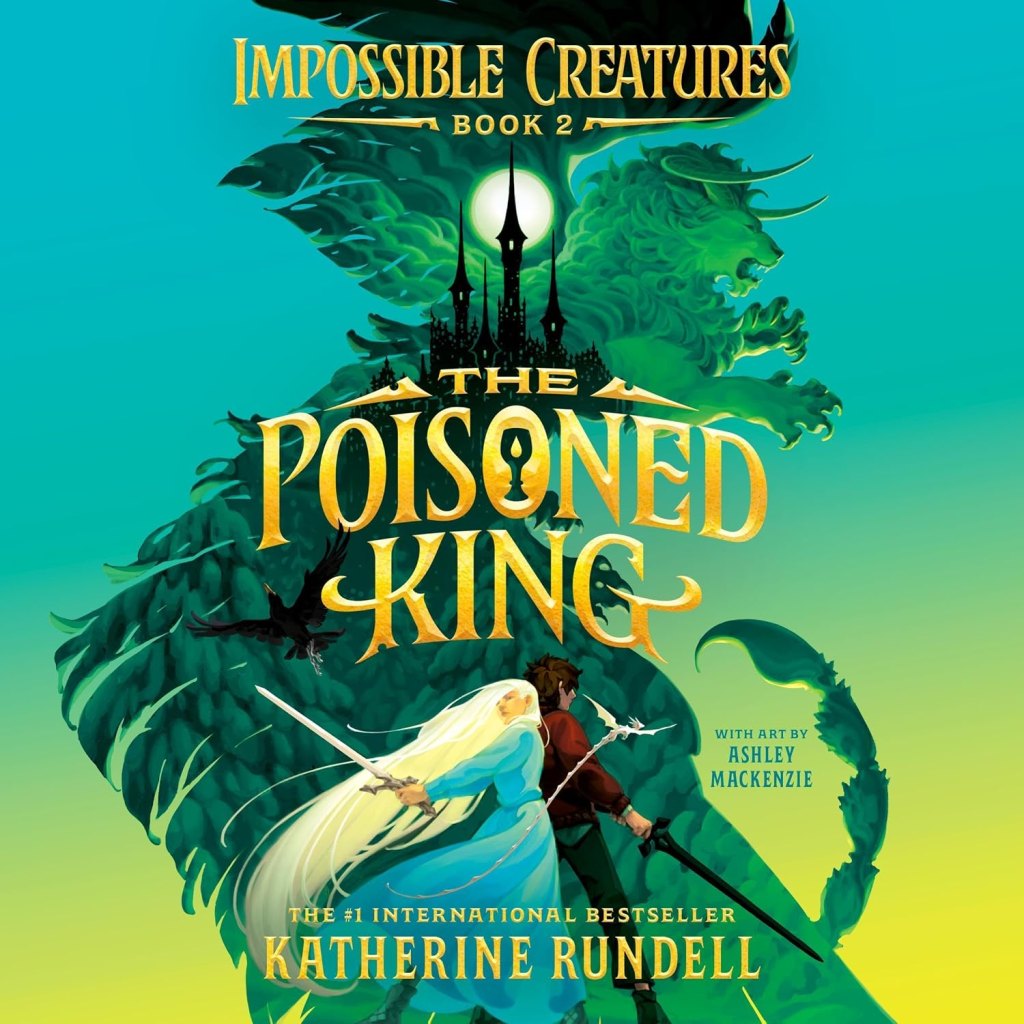
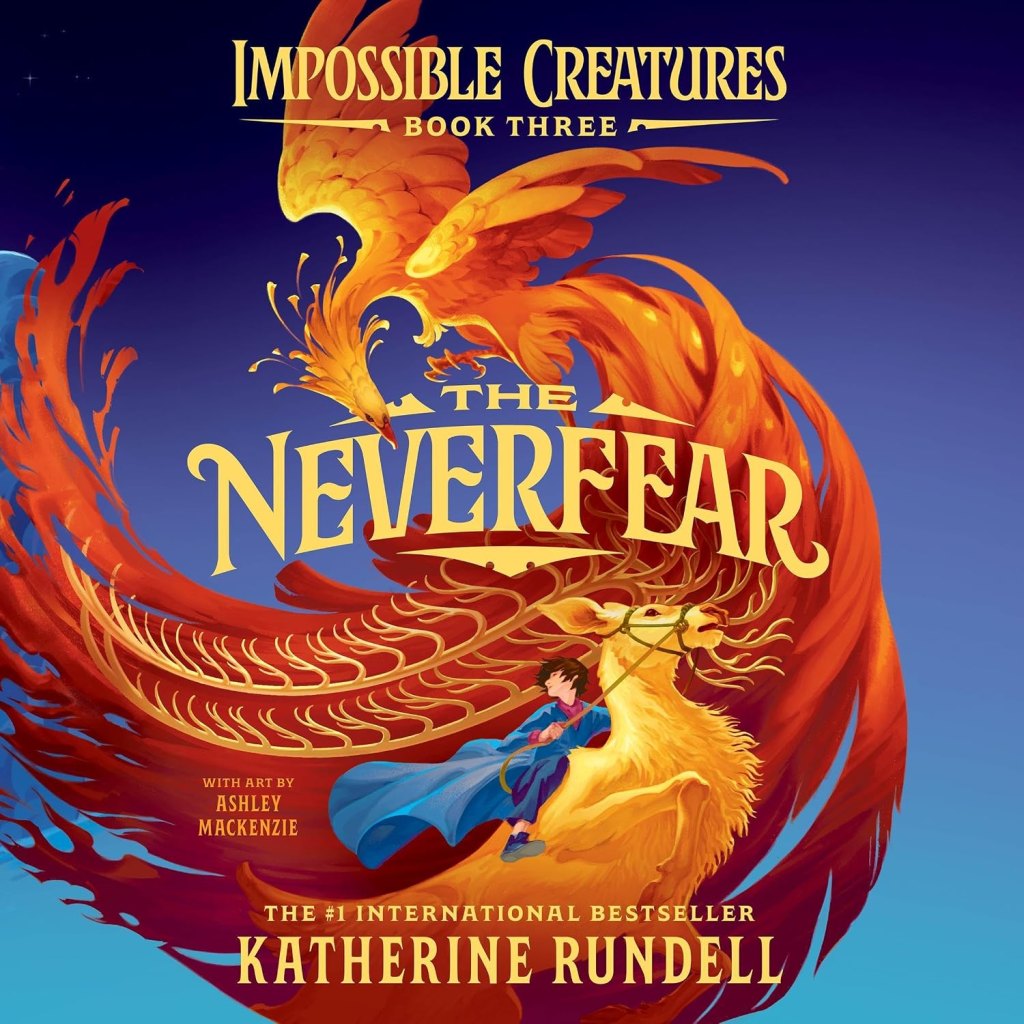
The series continued with The Poisoned King and now The Neverfear, the third installment in what Rundell says will ultimately be a five-book saga. Disney has acquired theatrical rights to the series, with Rundell writing the screenplays for the first two films.
To bring you up to speed, Rundell is an internationally bestselling author and academic whose work spans children’s fantasy and nonfiction for adults. Raised in Zimbabwe, Brussels and London, she studied English at Oxford and has built a parallel career as a scholar of Renaissance literature. Her children’s books outside of the Impossible Creatures series include Rooftoppers, Cartwheeling in Thunderstorms, The Wolf Wilder, The Explorer and The Good Thieves, while her adult nonfiction includes Super-Infinite: The Transformations of John Donne, which won the prestigious Baillie Gifford Prize for Non-Fiction. The first Impossible Creatures novel was named Waterstones Book of the Year in 2023; in 2024, she was named Author of the Year at the British Book Awards.
Yet for all that’s happened to her, when Rundell talks about Impossible Creatures‘ creation, she quickly goes back to the stories that fascinated her long before she started telling her own.
The importance of fantasy
She is not only an award-winning children’s author, but also an academic and fellow at Oxford University’s All Souls College. That background becomes important to the story of Impossible Creatures, because its roots extend far beyond contemporary fantasy.
KATHERINE RUNDELL: “I had always loved fantasy fiction. I’ve always loved its power to be able to speak to a lot that is at the heart of what it is to be a human, the way that you can turn to fantasy to find stories about power and grief and yearning and discovery and violence and, above all, care, endurance, doubt, love. Love, I think, runs through a great deal of fantasy.
“But you can go back thousands of years. You can go to The Odyssey, you can go to Beowulf, to The Faerie Queene, to Le Morte d’Arthur and then forwards to the Inklings and to Ursula Le Guin and Diana Wynne Jones. And so I had always loved what fantasy could give us. And then in 2016, I started thinking about a girl who had a coat that allowed her to fly, but only when the wind blows. And I wrote a very short story about her and thought I would love, at some point, to write a world that would be big enough for her to move through it.”
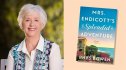
“Because I hold a fellowship at Oxford University, I spent a lot of time in archives when I was writing my book about John Donne, the Renaissance poet. And in archives, of course, you keep finding references to fantastical beasts, to impossible creatures, and every time I found one—an image, a manuscript, an old book—I would just take note of it and put it aside for the time when I would need it.
“So I had a fabulous dossier of accounts of things, people writing about griffins in the 16th century, people opining about the reality or otherwise of unicorns as late as 1600, the Borametz, the Vegetable Lamb of Tartary, which again people were discussing whether or not it could be true well into the 16th century.”
What our monsters say about us
The creatures Rundell discovered in those archives fascinated her for reasons that went beyond their strangeness. Human beings, after all, have spent thousands of years creating monsters, magical animals and supernatural beings.
KATHERINE RUNDELL: “I knew that these creatures can give us a lot, that they can give us, yes, a sense of delight. Often I think when we’re writing about impossible creatures, we’re writing about engines of joy, of ecstasy. Sometimes they are forms of control that we invented to make children not go beyond the fence or to shut up and go to sleep. And if you don’t, the [creature] will come for you. Sometimes we truly believed in them. Krakens make sense in a world in which whirlpools and giant squid and the great fear of the unknown ocean exist. Often they are a way, I think, of us talking about power and fear, about what we dread, about what we hope for. And so those things together began the story.”
But Rundell went a step further. Each installment of Impossible Creatures has roots in a much older work of literature. For the first novel, that meant returning to the very poet she had been studying professionally.

KATHERINE RUNDELL: “Each one of the books is based on a preexisting text. So book one is based on a poem by John Donne, who is my academic specialism, called Metempsychosis, which he wrote in 1601, in which he imagines a soul being born of the first apple of the first tree of knowledge. It’s called the transmigration of the soul and he imagines it migrating into a fish and a wolf and then a person. Then he realized that to write about reincarnation was illegal at the time, so he put away the poem and hid it. But then 400 years later, I read it and thought, ‘What if that soul had really existed from the very beginning of time? What would they know of us? What would they think of us? How would they judge us? How could they help us?’ And that’s the beginning of Impossible Creatures.”
Rundell continued the idea with The Poisoned King, drawing upon Shakespeare’s Hamlet. With The Neverfear, she found inspiration in The Labors of Hercules and the questing voyages of The Iliad and The Odyssey.
The characters are growing with the story
Although each Impossible Creatures novel has its own adventure, Rundell is also using five books to trace longer emotional journeys.
KATHERINE RUNDELL: “There is Nighthand, who is the berserker, the man who has never experienced fear, but decides to open himself to fear in order to open himself to love because a fighter may well discover that, in fact, the greatest weapon is love. The thing that will make you strongest and toughest and boldest and swiftest and bravest is love, not fearlessness. And so his love affair with the sort of scientist figure, Erian Gwyn, that will play out over the five books.
“And then Christopher, our main hero, the boy from our world through whose eyes we see the islands of Glimouria, we see the impossible creatures, we witness that which is strange so that he can discover it alongside us. He too, we will see grow.”
“Anya discovers that many women have berserker blood and perhaps don’t know it. She discovers what that will mean for her going forward. Because she was born a princess, she renounces her throne in the second book. And in the third book she says, ‘All my life I was taught that what I was told to be was pretty and polite and quiet, but what if, in fact, I was born to be brave?’ And this is going to be her journey.”
Why there will be exactly five ‘Impossible Creatures’ books
The series was originally pitched as “at least three” books, Rundell says, but that shouldn’t be mistaken for a story that simply grew because the first book became successful.
KATHERINE RUNDELL: “I always had the story and we originally pitched it as at least three, but I had written the end when I started writing the first one and knew exactly where we’re going. And it became clear by, I would say, the end of when I was writing book one, but certainly when I began book two, that there was no way that that could be three books, that the story needed to be five books. And it will be five. I won’t make it longer. I might well do other books in the world of Glimouria—I think that could be really exciting—but this particular series, I have now mapped it out so that it is five books.”
“The reason it is five books is that’s how many stories there are. I wanted it to be so that you could conceivably read it in any order. You could drop into The Neverfear as your first read. You would have to work out who these characters are, but they are introduced to us. We get to know this is the berserker, this is the boy from our world, this is the former princess, this is the tiny dragon who has outsized visions of his own importance. This is the talking squirrel-like creature, Ratatoskr, from Norse mythology. So we are introduced to them.
“Yes, there is running through it a villain who we will see return and who will be in books four and five as well, but I wanted each book to have its own coherent story that is entirely complete because that’s what I longed for in the books that I read as a kid. As a kid, I adored Narnia and the way that there is a thread where you see our characters grow older; you see Lucy Pevensie get older, but you also have these total narratives, each contained within the first and last page.”
What to expect from ‘The Neverfear’
The central adventure of The Neverfear (published on September 1) involves a kidnapping and ransom, with the characters forced to complete a series of tasks—a structure that allowed Rundell to indulge the sort of fantasy she would have loved as a child. And “indulge” may be the appropriate word.
KATHERINE RUNDELL: “I would love to hide in a giant bowl of custard or step into a giant candy floss or hide in the pit of a giant olive, to bounce up and down on an enormous marshmallow and to plunge yourself face first into a chocolate cake the size of your bed. These were things I longed for as a child. And in the same way, outwitting a pirate at his sort of bacchanalian party, going to an orchard where each of the apples, when you bite them, something different happens—whether they taste of your favorite, most exquisite taste, or they turn into a rat or catch fire or become poison. These are all things that I would’ve been so eager for as a child.”
There is, however, something quite serious underlying Rundell’s determination to make the books irresistible. Asked what a reader unfamiliar with the series should expect from The Neverfear, Rundell didn’t begin by talking about mythology, but instead children and the competition books now face for their attention.
KATHERINE RUNDELL: “We live in a moment in which a lot of children read less than they did 10, 20, but also even five years ago, as rapidly changing technology has an increasing grip on a child’s imagination and perhaps on a child’s time and space and childhoods themselves. Therefore I write with a sense that we must grip children with everything that we can possibly offer them to delight them, whether that is a sense of danger or a sense of home, a sense of feasting and delight, a sense of peril. I try to offer in the book both a sense of risk and thrill, but also the things that I often loved as a child: feasting, witty conversation.”
“I adored, for instance, The Hobbit, and I loved the big action scenes where they are captured in spiders’ webs or go floating in barrels down the river. But I also loved the feastings. I loved the hobbits’ breakfasts and second breakfasts. I loved the downtime. So I make sure that it is also a book with downtime, moments where they can pause on the boat or at the beginnings and ends. It is not a coincidence that the book opens and closes with a feast.”

“So I would say expect adventure. I hope expect thrills. It’s really important, in a children’s book, to offer jokes. Jokes are one of the ways that young people know they can trust you. A great academic used to say to me, ‘A great joke honors everyone.’ And I think this is true, so I try to put my best possible jokes into the book.”
There’s another audience Rundell has in mind when she writes: adults.
KATHERINE RUNDELL: “I also hope very much that it might be a book that parents would read with their children because we read to our children when they are young, before they can read. Once our children are old enough to read to themselves, we often allow them to move into that space entirely alone. But I think there is such joy, just deep, deep pleasure and potential for strengthening the intellectual and emotional bond that we have with our children in reading to them.
“And so when I write, I try to write both for a child audience, but also for me as an adult. I’m 39 and I want the books to please me. And I hope that mothers and fathers might find a book that could be read together, that will be a pleasure for both of them, because I do remember being read to throughout my childhood, often on the bus or at the dinner table, and that was a great, great source of joy for me.”
The responsibility that came with success

Impossible Creatures found the audience Rundell hoped for—and then some. But when asked how the series’ success has affected her emotionally, she didn’t talk about becoming a recognizable author or having Hollywood come calling. Instead, it was the sense of responsibility that accompanied success.
KATHERINE RUNDELL: “What has become very clear to me and what I feel most powerfully is the sense of the responsibility that everyone who writes for children—and particularly people who write series of books for children, where a child comes to know a world and to feel some ownership of it and to feel that if they can return to it over and over, it is like returning to a familiar place, to a loved place—I feel a great deal of responsibility not to let my readers down.
“I feel a lot of responsibility to try to offer my young readers the very best I can give them because it’s something I think about a lot, that when you write for a child, you are writing for someone whose intimate knowledge of books is relatively limited. Even the most bookworm child won’t yet have read perhaps a thousand books, so you have an outsize impact on the understanding of what books can do, whether they can be a source of boredom and tedium or the opposite, whether they can be a reliable source of freely available—because we have libraries—pleasure, knowledge, insight. There’s a responsibility not to offer children who are trusting you with their imaginations and their time anything other than your best work.”
Conversation
All comments are subject to our Community Guidelines. Woman's World does not endorse the opinions and views shared by our readers in our comment sections. Our comments section is a place where readers can engage in healthy, productive, lively, and respectful discussions. Offensive language, hate speech, personal attacks, and/or defamatory statements are not permitted. Advertising or spam is also prohibited.