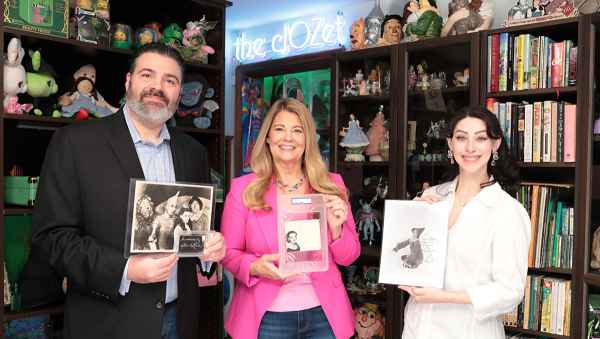
Charlton Heston’s Son Reveals the Truth Behind the Hollywood Legend—’The Ten Commandments’ and More
Fraser Heston shares what his father was really like beyond the screen as a man and as his Dad

Key Takeaways
- Fraser Heston reveals the private man behind his father's public legend
- The 1956 Epic 'The Ten Commandments' shaped Heston’s career and family life
- Charlton Heston avoided typecasting by constantly reinventing himself on screen
Charlton Heston’s public image was, for many, carved in stone. Whether audiences were watching him part the Red Sea in The Ten Commandments, confront a dystopian future in Planet of the Apes or command the screen in Ben-Hur, he projected authority, conviction and strength. Off-screen, his political voice only reinforced that perception. But as his son Fraser Heston makes clear, that image only tells part of the story.
Fraser Heston, who has built a career of his own as a writer, director and producer, has long maintained a close connection to his father’s legacy while also carving out his own path in the industry. Over the years, he has worked on a range of film and television projects, including producing and directing adaptations tied to his father’s work, such as Treasure Island (1990), in which Charlton starred. He also served as a producer on The Search for Michael Rockefeller and has been involved in preserving and presenting his father’s films and archives for new generations. That perspective—both as a filmmaker and as a son—gives Fraser a unique vantage point on the man behind the legend.
FRASER HESTON: “A lot of people say, ‘Oh, he must’ve been a very stern father, kind of an Old Testament figure,’ but he wasn’t. He was a fun-loving guy who enjoyed jokes and cartoons and liked to play tennis. One point I’ve often made is that there are two poles in his life that people remember him for. One is holding up the staff of Moses in The Ten Commandments, saying, ‘Let my people go!’ The other is him holding up a rifle for the NRA, saying, ‘You’ll have to take this from my cold, dead hands.’ Those are the two iconic goalposts in his life.”
What Fraser emphasizes is the distance between those two defining images and the far more nuanced life that unfolded between them. In his view, the decades separating those moments reveal a man whose interests, commitments and personal values were far broader than the shorthand often applied to him.
FRASER HESTON: “There was 50 or 60 years between both of those moments that defined him far more than either of them ever could. He led the arts contingent of the Civil Rights March on Washington for Dr. Martin Luther King. He was president of his union and was a union activist for nine or 10 years. He was instrumental in funding the American Film Institute through the National Council of the Arts when his friend, Ronald Reagan, wanted to make some cuts. So he did a lot of things that kind of went against type that he’s not as well-known for, including being a Shakespearean actor on the stage, which he saw as a great love in his life. So there’s a lot to the guy between Ten Commandments and the NRA.”
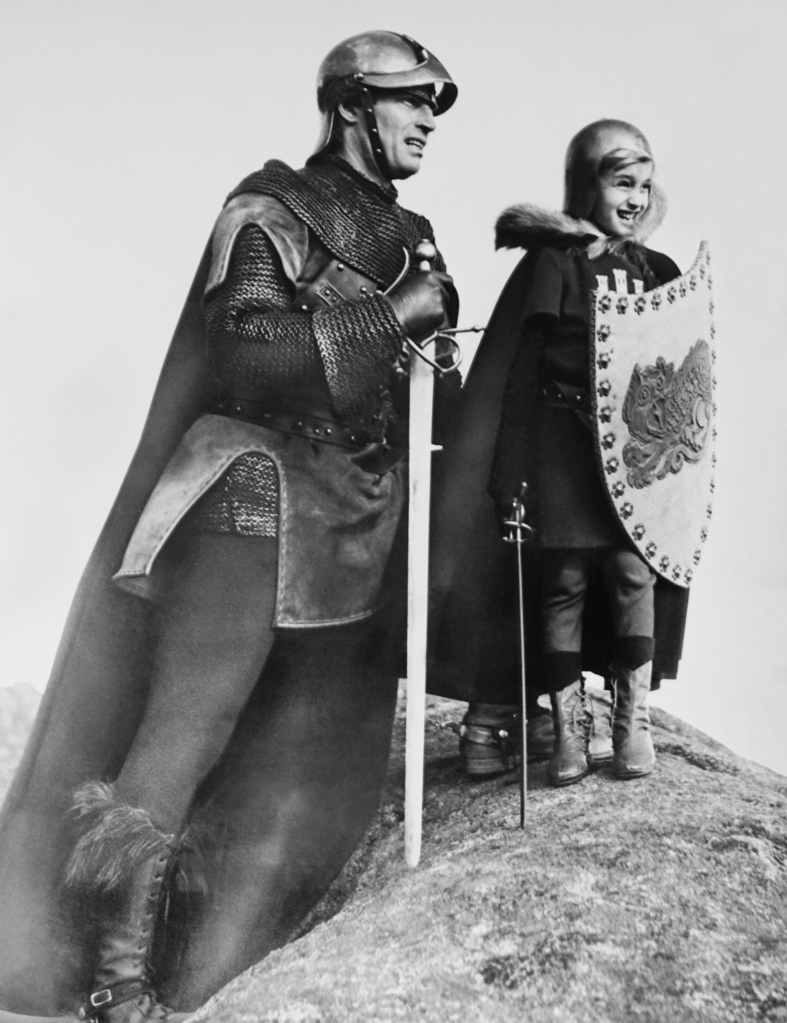
Beyond the headlines and public milestones, Fraser points to something even more central to his father’s identity—his role within his own family. Those personal relationships, he suggests, ultimately meant more to Heston than any professional achievement.
FRASER HESTON: “Not the least of which is the fact that he was a dad and a husband. A loving father, a great grandfather, a wonderful husband to my mother, Lydia. They were married for 65 years, which is pretty extraordinary by Hollywood standards. I think his life was enriched by those roles so much more than whatever fame and compensation that he received from his work as an actor.”
Charlton Heston’s personal connection to ‘The Ten Commandments’
While Charlton Heston’s legacy spans decades and genres, there’s little question that The Ten Commandments stands as the defining turning point. The 1956 epic didn’t just elevate him to another level of stardom—it set the course for the kind of roles and large-scale storytelling that would come to define much of his career. And, as it turns out, the production holds a uniquely personal place in Fraser Heston’s life as well.
FRASER HESTON: “Dad had done several movies before that, including The Greatest Show on Earth, which won the Academy Award for Best Picture, but Moses was clearly the role that set him off on, if you’ll pardon the expression, the epic journey that he enjoyed as an actor for the next 50 years—which took him to many different genres. He didn’t get stuck in any one genre. He went from epics to Westerns to science fiction to disaster films to World War II. But he was always able to sort of look back on his experience with DeMille as his sort of origin as an actor. I know he always credited him with a lot of his success.”
And Fraser’s connection to the film goes beyond simply being the son of its star. In one of those behind-the-scenes stories that feels almost too cinematic to be true, he quite literally made his screen debut in the production—as the infant Moses. But what might have been a charming footnote nearly became something far more dramatic.
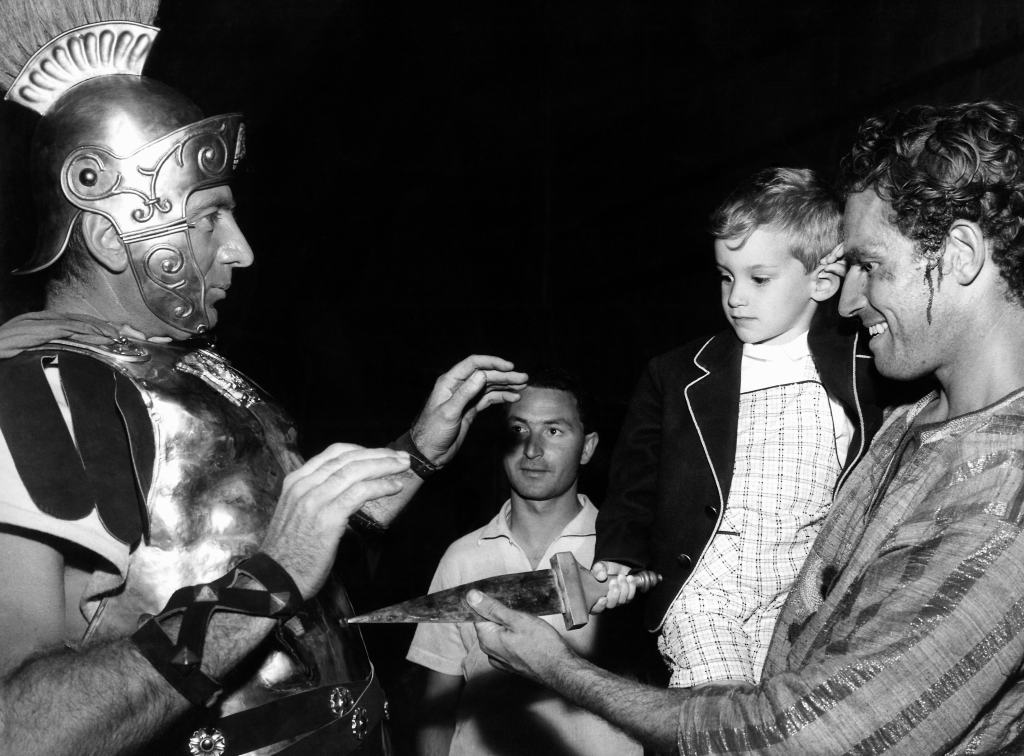
FRASER HESTON: “When I was born, DeMille sent my mom a telegram, ‘Congratulations, he’s got the part.’ But I almost ended my career early there, because the basket I was in started to sink. My dad had to run in and rescue me. The mandated social worker who was there took me away from him and said, ‘I’m the only one that can hold the baby.’ Here I am, squalling and sopping wet, and he turned to her—he told me the story later—he said with a voice he used for talking to Pharaoh, ‘Give me that baby!’ It’s not surprising at all that she actually did.”
Looking back, Fraser sees The Ten Commandments not only as a milestone in his father’s professional life, but as the moment where everything seemed to come into focus. It marked the beginning of a career that would continually evolve, allowing Charlton Heston to move across genres and reinvent himself over time, even as the image of Moses remained one of his most enduring.
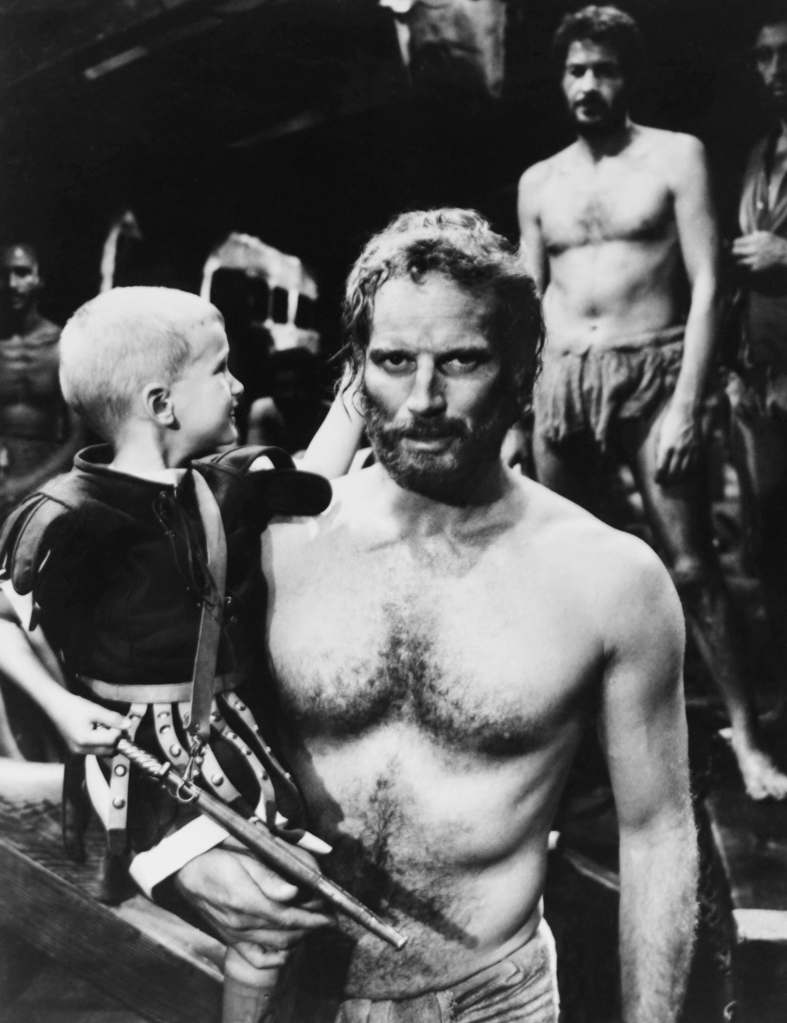
Rather than settling into a single type of role, Charlton Heston embraced opportunities that allowed him to challenge both himself and audience expectations. He resisted being boxed into any one identity—something Fraser believes was very much by design.
‘Planet of the Apes’
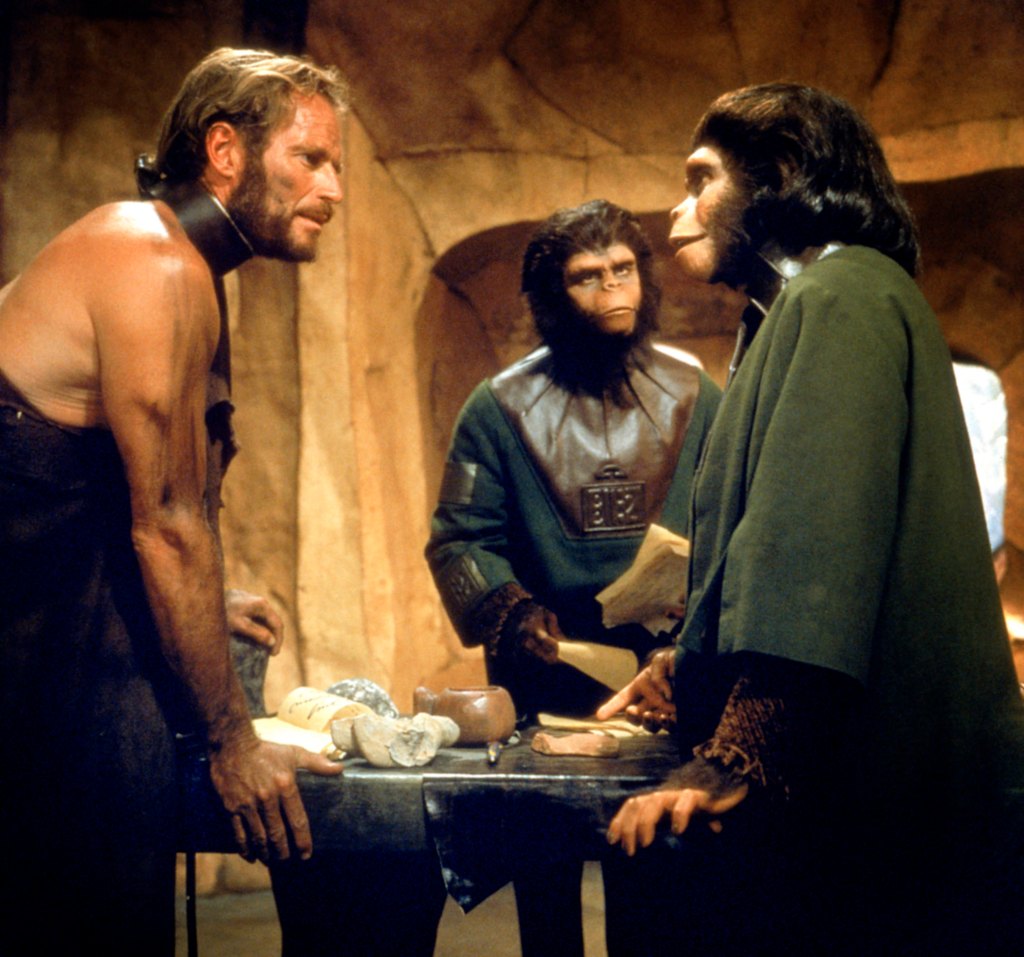
FRASER HESTON: “Because people brought him projects that were different from each other, he was able to reinvent himself about every 10 years, and he jumped into the science-fiction genre at a time when nobody was taking it seriously. Suddenly, along comes this wonderful novel by French writer Pierre Boulle—Planet of the Apes—with Rod Serling collaborating on the script. It was just this fantastic chance to go off and do something completely different and play a very unsympathetic character. This astronaut Taylor is not really a very nice guy; he’s selfish and cynical and a hard-ass, which couldn’t be more opposite of Dad.”
That willingness to step outside expectations extended even to projects he initially resisted. When the success of Planet of the Apes led to talk of sequels, Heston was far from enthusiastic. Yet his loyalty to collaborators—and his openness to new experiences—ultimately brought him back, even if only briefly.
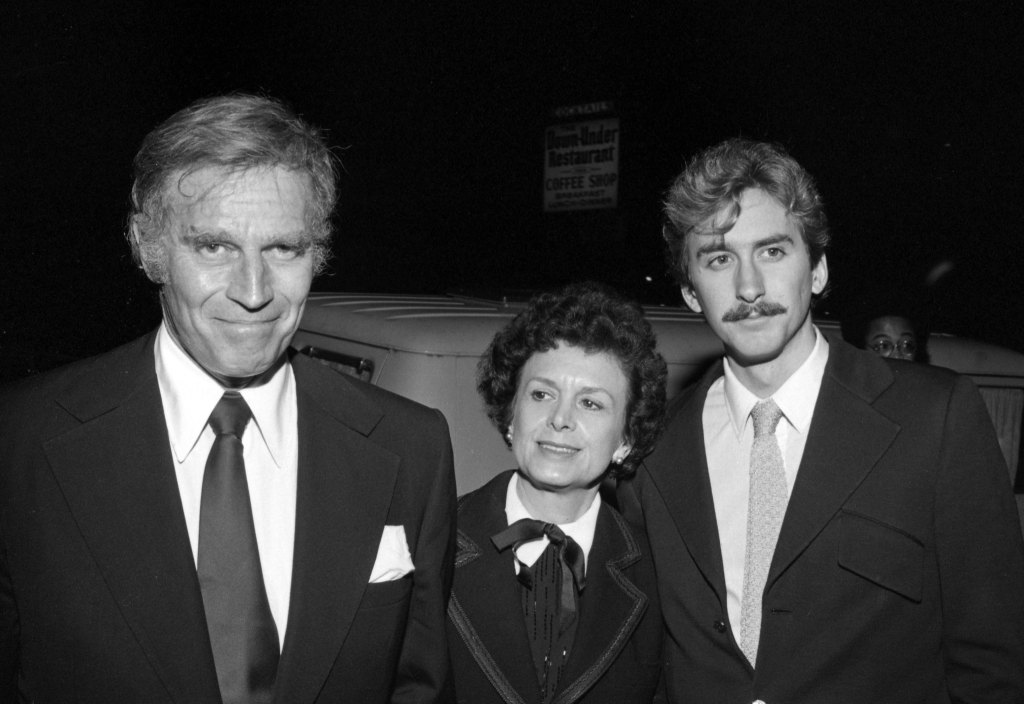
FRASER HESTON: “He famously hated the idea of doing a sequel to Planet of the Apes—he dismissed the idea as ‘More adventures among the monkeys’—and only did the first follow-up as a favor to producer Dick Zanuck, who gave the green light to the first film when everyone else said no. But then he played a chimp in Tim Burton’s 2001 remake. He had fun doing it. Again, he said, ‘Give me something new to do.’ He always wanted to do something different.”
At the heart of that philosophy was a simple truth: acting, for Heston, was about exploration, not repeating past successes. Even as his fame grew, he continued to see himself less as a movie star and more as a performer driven by curiosity and craft.
FRASER HESTON: “He called himself a shy kid from Backwoods, Michigan who liked to wear tights and wave swords, and he found a way to do that; to pretend to inhabit other lives, other worlds, other kingdoms and other characters.”
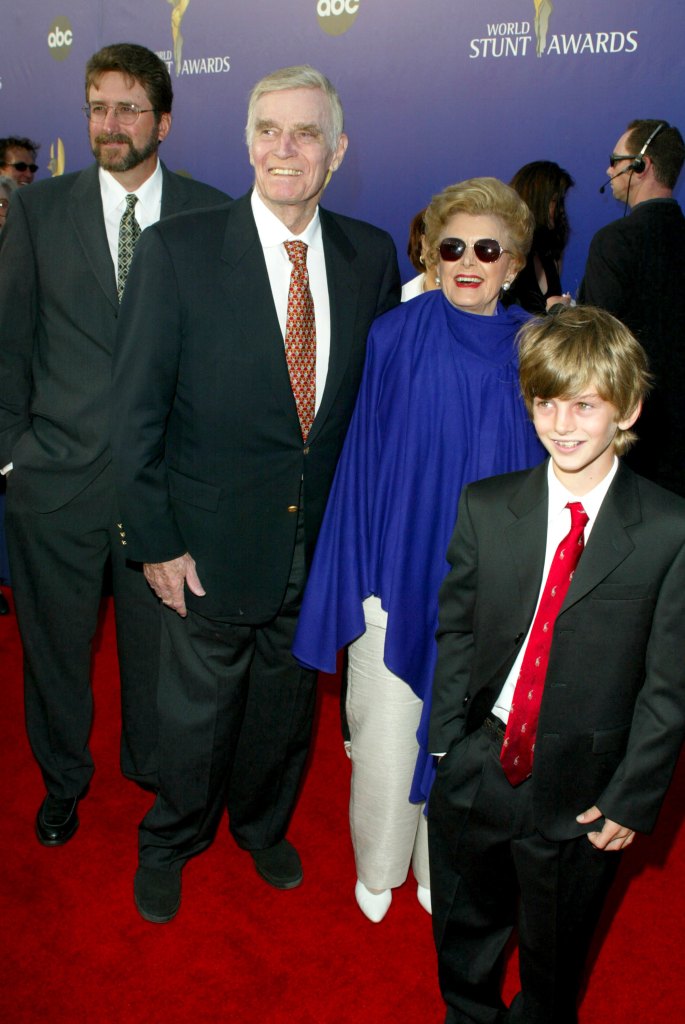
Through it all, Charlton Heston never lost sight of where he believed his artistic roots truly lay. For all the spectacle of his film career, he consistently saw himself first and foremost as a stage actor—someone grounded in the traditions of theater, even as Hollywood came to define his public image.

FRASER HESTON: “Generally, though, he didn’t want to get typecast and he didn’t want to do television until much later in life when he did The Colbys, which was a very successful spinoff of Dynasty. Because he wanted to challenge himself, his feeling was, ‘If I can’t get a film, I can always go off and do a play.’ He always viewed himself as a theatrical New York actor.”
That perspective helps explain why, even at the height of his fame, Heston continued to seek out roles that pushed against expectations. Whether it was stepping into morally complex characters or shifting genres entirely, his choices reflected an ongoing desire to avoid complacency.
At the same time, the legacy of The Ten Commandments never faded. Even decades later, the film remained a touchstone—not only for audiences, but for how Fraser viewed its place in cinematic history. In an era now dominated by superhero franchises and large-scale fantasy films, he sees a direct line between those modern blockbusters and the kind of spectacle that Cecil B. DeMille helped pioneer.
FRASER HESTON: “First of all, you’ve got one of the greatest stories ever told. And DeMille just embraced the available technology of the time to its fullest—things like the parting of the Red Sea. He loved doing anything he could to bring the illusion of something spectacular to the screen. I think he would have loved being alive today and working alongside James Cameron or Steven Spielberg or Quentin Tarantino. He would be very much a vibrant modern filmmaker, and I think all of those guys owe a big debt to Cecil B. DeMille for bringing those epics to the screen and making that such an important part of the Hollywood experience for the world.”
Conversation
All comments are subject to our Community Guidelines. Woman's World does not endorse the opinions and views shared by our readers in our comment sections. Our comments section is a place where readers can engage in healthy, productive, lively, and respectful discussions. Offensive language, hate speech, personal attacks, and/or defamatory statements are not permitted. Advertising or spam is also prohibited.