Celebrities

Remembering Demond Wilson: ‘Sanford and Son’ Star Passes Away at 79 After a Life of Faith and Comedy

The beloved Lamont Sanford actor leaves behind a legacy as a TV icon, wounded war hero and minister

Comments
TOP STORIES

Demond Wilson, who has passed away at the age of 79 after battling cancer, lived a life that didn’t really fit in a single category. To fans of classic TV, he was a sitcom icon—forever remembered as Lamont Sanford, the long-suffering straight man to Redd Foxx’s volcanic Fred Sanford on Sanford and Son. But Wilson’s story extended far beyond the show’s junkyard. He was also a wounded war hero and, later in life, a minister who redirected his purpose with the same intensity he once brought to television.

Born Grady Demond Wilson on October 13, 1946, in Valdosta, Georgia, he was raised in New York City, where early brushes with performing hinted at a future in entertainment. Yet his path took a sharp turn when he enlisted in the U.S. Army and served in combat during the Vietnam War, an experience that left him physically wounded and emotionally changed.

After returning home, he once again started focusing on acting, studying at the American Academy of Dramatic Arts. He worked on stage, in commercials and in small television roles—learning his craft in fits and starts. He appeared in series such as All in the Family, The Mod Squad and Mission: Impossible, steadily building a résumé.

‘Sanford and Son’

That changed in 1972, when he was cast opposite Redd Foxx in Sanford and Son. Adapted from the British series Steptoe and Son, the show placed Wilson at the center of one of the most electric comedic pairings in television history. As Lamont Sanford, Wilson became the audience’s anchor—reacting, enduring, and occasionally rebelling at Fred Sanford’s endless insults.

Week after week, viewers watched Lamont spar verbally with his father, caught between respect and personal dignity. His Lamont wasn’t merely a punchline, but, instead, was a man trying to build a life while being pulled back into chaos. That balance helped make Sanford and Son one of the most popular sitcoms of the 1970s and cemented Wilson as a television star.

Behind the scenes, the experience was more complicated. Working with Redd Foxx—an undeniable comedic genius—could be both exhilarating and exhausting. Wilson later spoke candidly about the pressures of the show, the tensions that arose, and the toll of carrying such a demanding role at a young age. Still, there was no denying the cultural impact of what they created together. For many viewers, Lamont Sanford became one of the most recognizable Black characters on television, representing a generation navigating changing social expectations with humor and resilience.

Sanford and Son opened the way for a lot of black people in the industry,” Wilson shared in 1982, “behind and in front of the cameras. It was the forerunner of the sitcoms that featured black people.”

‘The New Odd Couple’

When Sanford and Son ended its original run in 1977, Wilson continued acting, appearing in films like Full Metal Jacket—a role that carried echoes of his own military experience—and on television in projects including 1978’s Baby, I’m Back!, a short-lived attempt to recapture sitcom success.

“We did Sanford for six-and-a-half-years,” he reflected in the aftermath of the that show’s end. “After that amount of time, you’re tired from the inside—almost going through the motions, and that’s sad. I was really exhausted and I shouldn’t have done Baby, I’m Back! My mind was there but I wasn’t sharp and I knew it. Oftentimes your ego will take over because you have people who want to offer you large amounts of money to do certain things that really aren’t as good as they should be. But you have to learn from your mistakes.”

His next sitcom was 1982’s The New Odd Couple, which saw him assuming Jack Klugman’s role of sportswriter Oscar Madison opposite Ron Glass (late of Barney Miller) in Tony Randall‘s role of photographer Felix Unger.

“The big difference,” he offered of the changes between the 1970-1975 original and that version, “is two black men are in the lead roles. You know, a black slob is different from a white slob and a black neat guy is different from a white neat guy. Even if we stuck exactly to the old format, which we’re not doing, and read the old scripts verbatim, it would still come out different, simply because of the look of it. My feeling is that if people like the show and it becomes a hit, the characters will develop anyway as we go along.” Unfortunately, the show only lasted 17 episodes.

Finding God

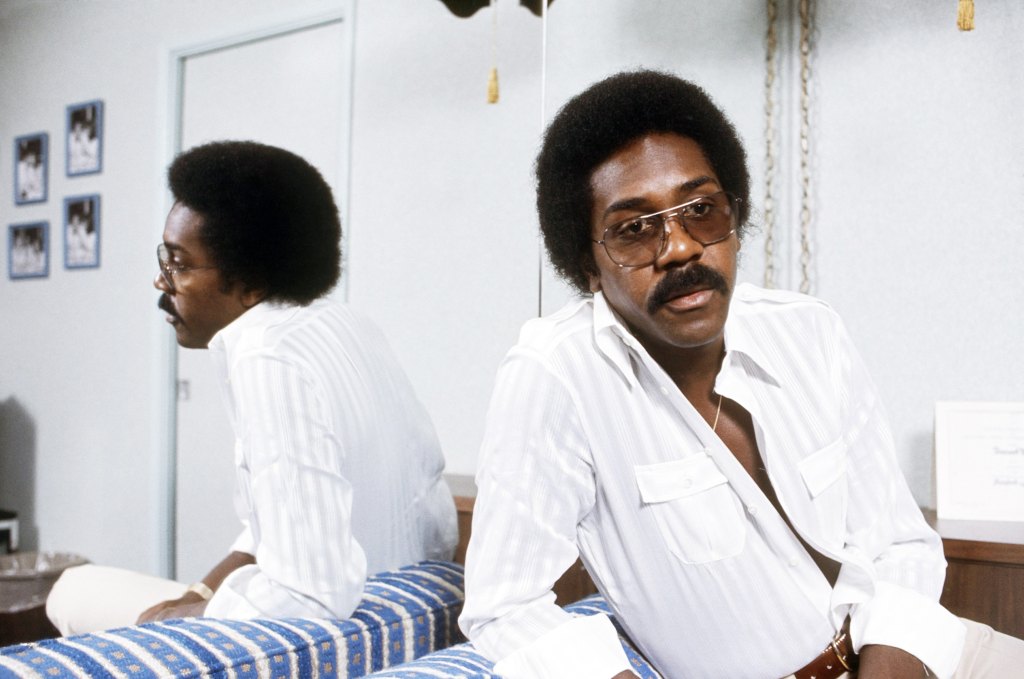
Demond Wilson, 1974.
Demond Wilson, 1974.Gene Trindl / TV Guide / courtesy Everett Collection

In 1984, Wilson underwent a profound religious conversion that altered his priorities. Stepping away from Hollywood, he became an ordained minister, dedicating himself to faith, family and outreach. It was a dramatic pivot—one that surprised fans but made sense to those who understood the depth of his wartime experiences and personal struggles. Wilson later authored books reflecting his spiritual journey, using his platform to speak about belief, redemption, and responsibility.

For years, Wilson was largely absent from the screen, a choice he made deliberately. He spoke openly about the darker sides of fame, the emptiness he felt during parts of his acting career and his belief that his new calling offered a more meaningful path.

When he did reemerge publicly, it was often to reflect on Sanford and Son and his relationship with Redd Foxx, acknowledging both the joy and the friction. Time softened some of the harder edges, allowing Wilson to appreciate the show’s legacy and the place it held in television history. Fans, too, welcomed him back warmly, eager to celebrate the work that had meant so much to them.

Demond Wilson is survived by his wife, Cicely Johnson, who he married on May 3, 1974, and their six children.

Conversation

All comments are subject to our Community Guidelines. Woman's World does not endorse the opinions and views shared by our readers in our comment sections. Our comments section is a place where readers can engage in healthy, productive, lively, and respectful discussions. Offensive language, hate speech, personal attacks, and/or defamatory statements are not permitted. Advertising or spam is also prohibited.


Use left and right arrow keys to navigate between menu items. Use right arrow key to move into submenus. Use escape to exit the menu. Use up and down arrow keys to explore. Use left arrow key to move back to the parent list.

Already have an account?