Margaret Kerry, Disney’s Original Tinker Bell, Still Tap Dances at 96—and Found Long-Lost Love at 90! (EXCLUSIVE)
The 'Andy Griffith' and 'Peter Pan' legend reflects on Disney magic, Mayberry memories and her story of love reunited

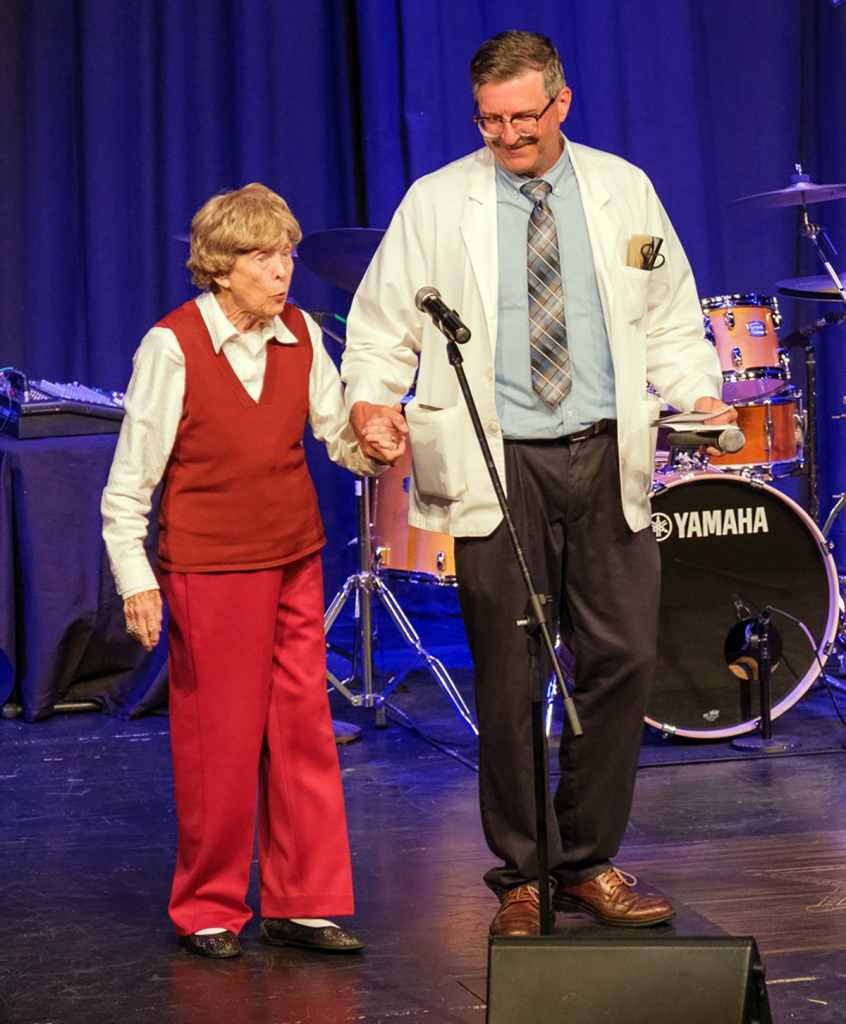
You don’t expect a 96-year-old to tap dance. Not because they don’t want to, but because life usually slows people down long before they reach that age. Then you meet Margaret Kerry at Mayberry Days, the annual celebration of The Andy Griffith Show, and she immediately changes your assumptions. She’s sharp, funny, curious about the world and fully present in every moment. She also still performs, still travels, still signs books, still tells stories and, yes, still gets up on a stage and taps for a theater full of fans.
She laughs about it, of course, and it’s a gently mischievous laugh that comes from someone who has been in entertainment long enough to know exactly how she affects people. But there’s also an unmistakable warmth to her. She’s not performing at you; she’s sharing with you. And that’s why a conversation with her immediately feels like sitting with a favorite aunt who has seen everything, done everything, remembered nearly all of it and is happy to walk you back through nine decades of it if you’ve got the time. As it turns out, we do.
We met at the 2025 Mayberry Days in Mount Airy, North Carolina, the annual gathering that honors the series and small-town charm it still brings to viewers 65 years after it first aired. Margaret, whose memoir can be ordered at her site, Tinker Bell Talks, was one of the special guests, and she fit right in. She talked with fans, posed for photos, told stories about Andy and Don Knotts, reminisced about working in early television… and then added, almost casually, “Oh, I’ll be tap dancing on Saturday night.”
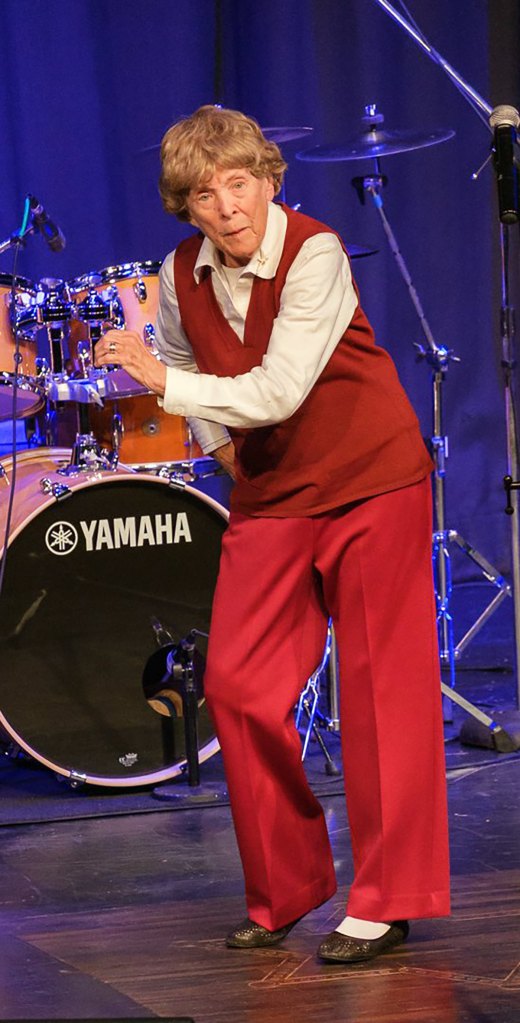
When asked how it felt to be part of something still so beloved, she didn’t hesitate: “It feels right.” Not nostalgic, not surreal, not odd, just… right. As though this place and these people were a natural extension of her life. “It’s the way life should be,” she said, and you believe her.
Talking with her, you understand immediately why so many fans line up to meet her, and why she still feels completely at home in this world. As it turns out, she has two careers: child actress turned Hollywood utility performer, and the iconic live-action reference model for Tinker Bell in Disney’s animated Peter Pan. And as becomes apparent, Mayberry Days feels like a celebration of both. People know her as Bess Muggins from the “Andy Forecloses” episode. Others recognize her from The Little Rascals (she appeared in three installments). Many come because she is Tinker Bell. And by the end of this chat, you realize she’s all of those things and something more.

She settles into a chair, smiling as she remembers a world before smartphones, streaming or television even knew what it wanted to be. “Where do you want to start?” she asks.
Where else? We start at the beginning.
A childhood in Hollywood
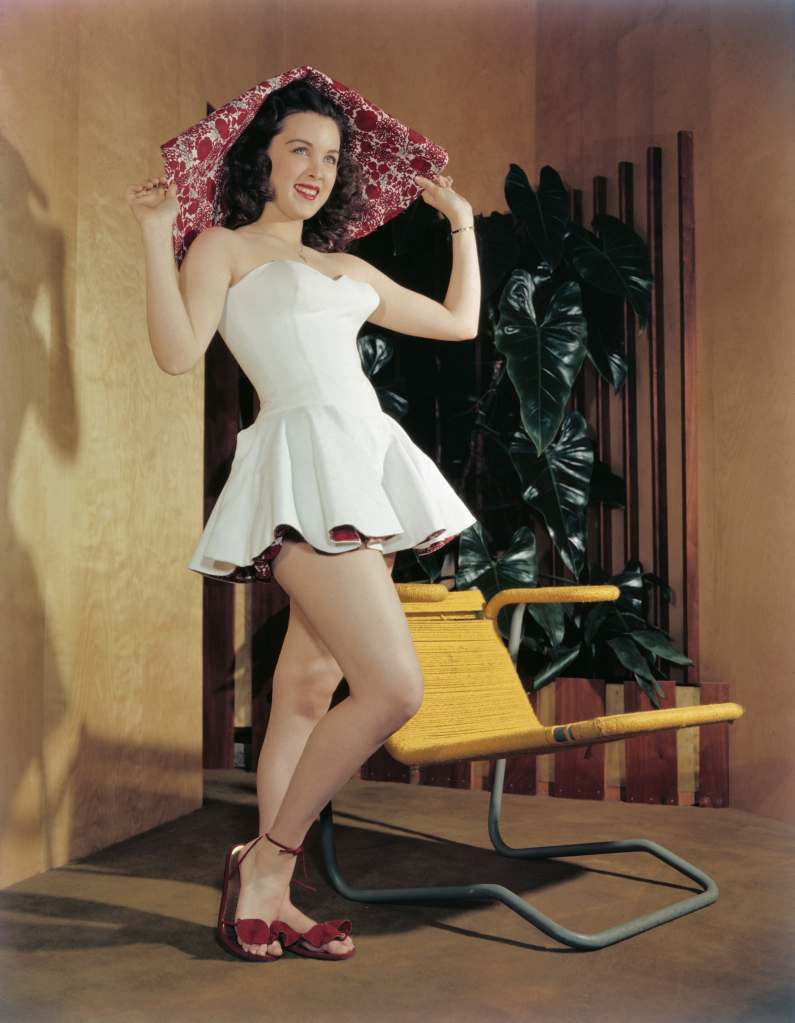
Margaret Kerry has been working since she was four years old, long enough that the timeline of her career mirrors Hollywood itself. Long before The Andy Griffith Show or Disney, she began as a child performer in the 1930s under her birth name, Peggy Lynch. She laughs when she says it now— “I was poor” — but there’s no self-pity in it. It’s simply the truth of a childhood in Depression-era Los Angeles, where work was work and you took every opportunity that came your way.
She was adopted as an infant by a couple old enough to be her grandparents. “They were born in 1883,” she said, marveling at the span of time between their childhood world and her own. Her father remembered the arrival of the automobile—“How fast could you get a message before that? As fast as a horse could run,” she points out—and lived to see her work in television, film and animation. He also lived long enough to see her take the trolley to auditions, long before the highways, talent agencies, or modern casting systems existed.
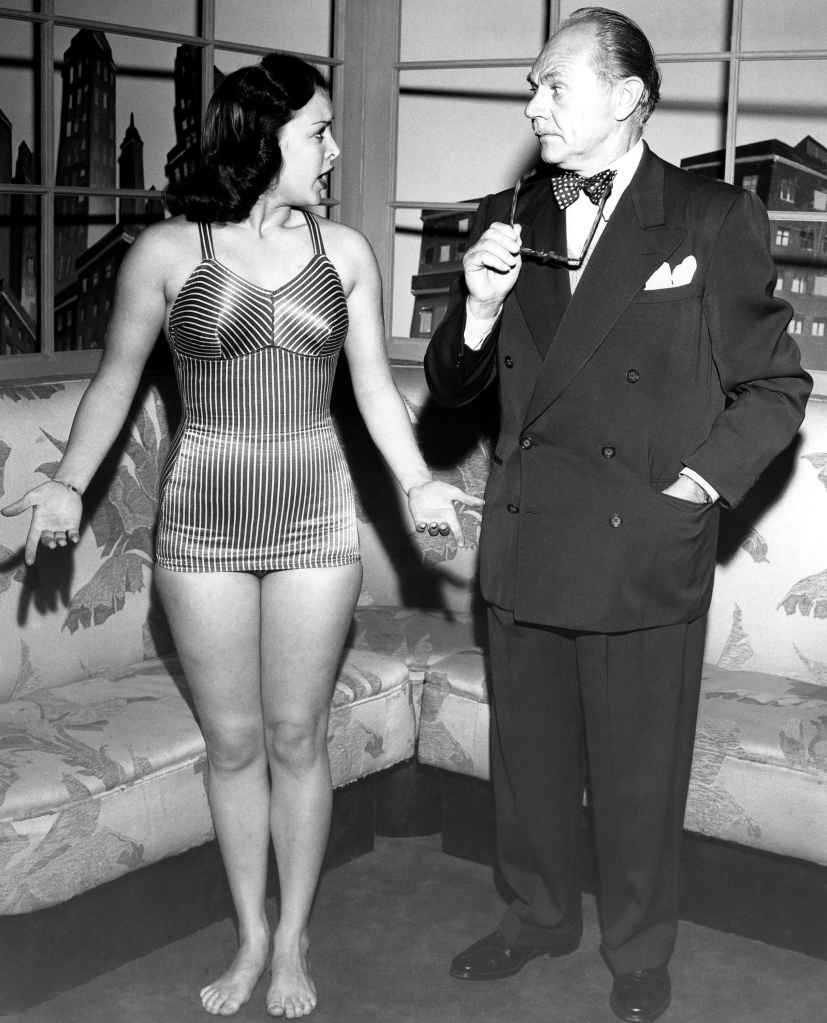
Her early credits piled up quickly. She danced in those Little Rascals shorts, and when she tells the story to schoolchildren, they explode with recognition. “They watch it all the time,” Margaret remembers. “I show them the poster and they go wild.”
In those days, she explains, you didn’t have digital submissions, self-tape auditions, or reels curated online. You had a directory—literally a booklet with your photo, your measurements, and your “skills.” Actors often learned only after they arrived on set that they’d claimed abilities they did not have. Margaret is the first to admit she did what everyone else did: “We all lied,” she says with a grin. “Every one of us.”
For one job, she listed horseback riding. When she arrived on the set of The Lone Ranger, she found herself staring at a live horse she was expected to mount and ride toward her injured on-screen father. She looked a crewmember straight in the eye and said, “I do not ride a horse.” She thought she’d be fired. Instead, they adjusted. “They said, ‘That’s alright. Can you dismount?’ I said, ‘I can do that.’ So they walked the horse two steps and let me off!”
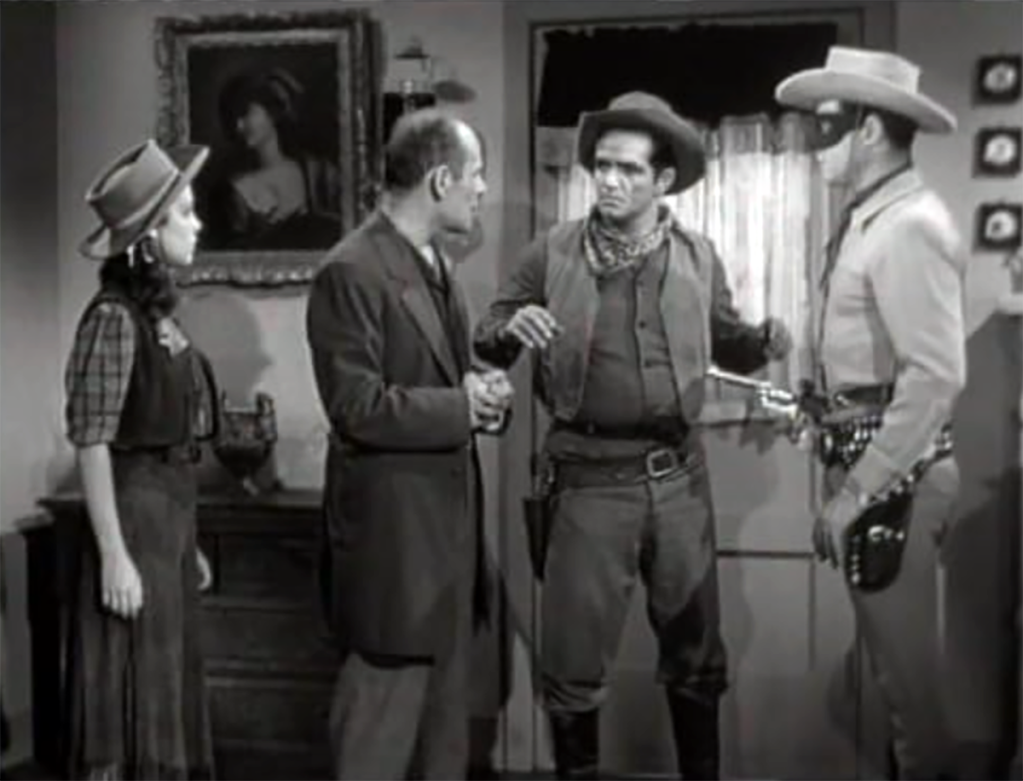
She laughs, telling the story, not out of embarrassment, but because she remembers exactly how things were done then. There was no time, no rehearsal space, no safety team and no retakes for fear of losing the light. “Everybody was doing it,” Margaret points out. “Actors saying they could swim, ride, jump out of an airplane—‘I don’t even need a parachute!’”
Through it all, she kept working. Radio dramas, film shorts, small roles in features. Eddie Cantor, the famed entertainer, gave her the stage name “Margaret Kerry” because Peggy Lynch “didn’t have any fizz,” as he put it. She was 17 when Cantor made the change, and suddenly she had a name that would follow her through the rest of her life, from television into Neverland.
What strikes you listening to her is that nothing about her tone is wistful. She doesn’t talk about being a child actor as though it was something done to her. Instead, she talks about it as something she’s still grateful that she got to do. And as she’ll tell you herself, the real magic came later, when she stepped onto a Disney soundstage in 1950, met animator Marc Davis, and learned she would be performing the movements for a little fairy who would outlive nearly everyone who helped bring her to life.
Becoming Tinker Bell
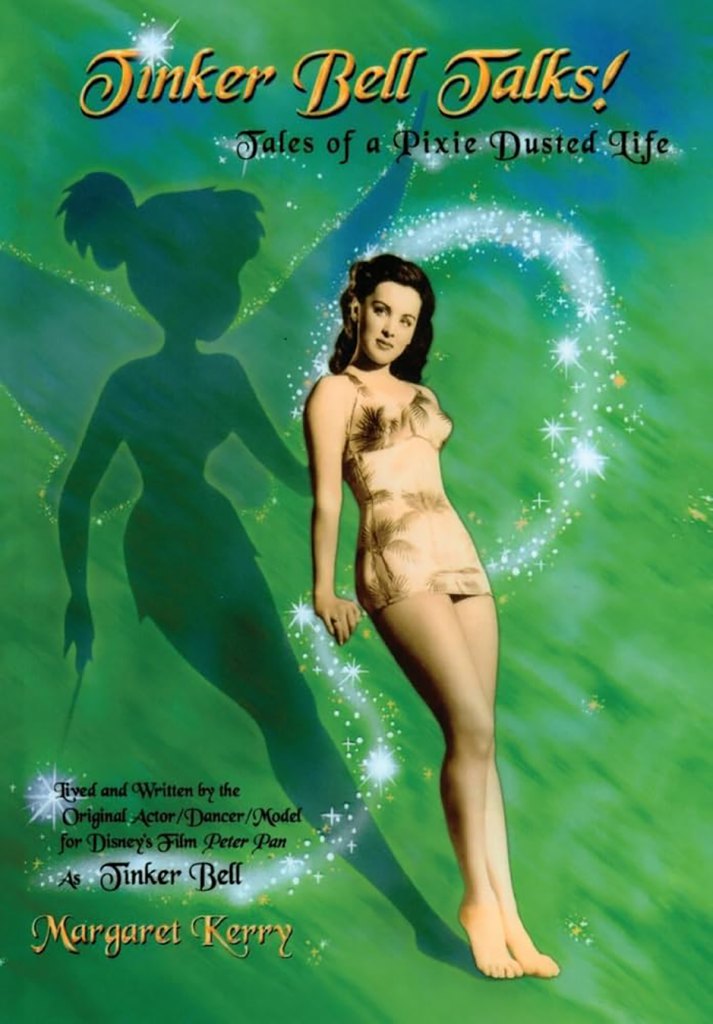
When Margaret talks about Peter Pan, she speaks with the matter-of-fact clarity of someone describing a job — and then, almost in the same breath, she sounds astonished that it has followed her for all this time. “It seems like a hundred years ago,” she notes, eyes bright. “But it was… what, 75? Almost 80 years ago now.”
In the early 1950s, Walt Disney was deep into the development of Peter Pan, and the studio was still working without any form of digital tools. “At that time, they didn’t have electronics. Everything was done by hand,” she relates. “So, they cast a person in the role and then filmed them with 35-millimeter film.” The setup was small and portable: “a man on a little cart with a pad that came out, and that was the camera.” He would roll it around her as she acted out scenes.
It took nine months to complete the live-action reference shoots for Tinker Bell, though Margaret wasn’t there every day. She was simultaneously working in radio and on ABC television. Still, when she went to the studio, she was expected to perform entire sequences in silence — gestures, pantomime, reactions and emotion, all without dialogue.
She remembers meeting Marc Davis, the legendary Disney animator and one of the “Nine Old Men,” who would become Disney’s foremost authority on graceful movement and female characters. She approached him with practical questions. “I said, ‘What do you want her to be? Ditzy like Betty Boop? Above it all like the Queen of the Angels?’” Davis wouldn’t let her overthink it. “He said, ‘Margaret, we want her to be you.’”
She beams, telling this story. “I said, ‘Golly, I can do that.’” And Davis, she stresses, let her shape Tinker Bell. “I turned her into a dancer,” she says. And it’s true: every gesture Tink makes reflects ballet fundamentals, including pointed toes, lifted posture and a dancer’s walk. Even the way Tinker Bell picks up an object — Margaret demonstrates this part — involves a graceful swoop rather than a simple grab. “There’s always a ballet move,” she says.
Once filmed, the reference footage went to the animators. “They would process the film, and then pick out the main frames,” she explains. “Marc Davis would do what he wanted with that frame and start the movement. And the in-betweeners would do each frame or every other frame, all by hand. Six hundred and fifty thousand pieces of art were done for that movie.”
The result was an animated character more alive than nearly any fairy—or human—who came before her. Tinker Bell had a personality that was a combination of mischievous, loyal, vain, jealous, heartbroken and heroic. Margaret’s movements gave animators a foundation that grounded Tinker Bell in a believable physical world. And people still remember.
“I could have been the actress who got her throat slashed in Psycho,” she says, reflecting on her career. “What do you do with that? Everything that I have done, people are enjoying today. That’s amazing.” At 96, she still tap dances, appears at events, meets fans who grew up and raised children on Tinker Bell and now bring grandchildren to see her.
‘The Andy Griffith Show’ and the warmth of Mayberry
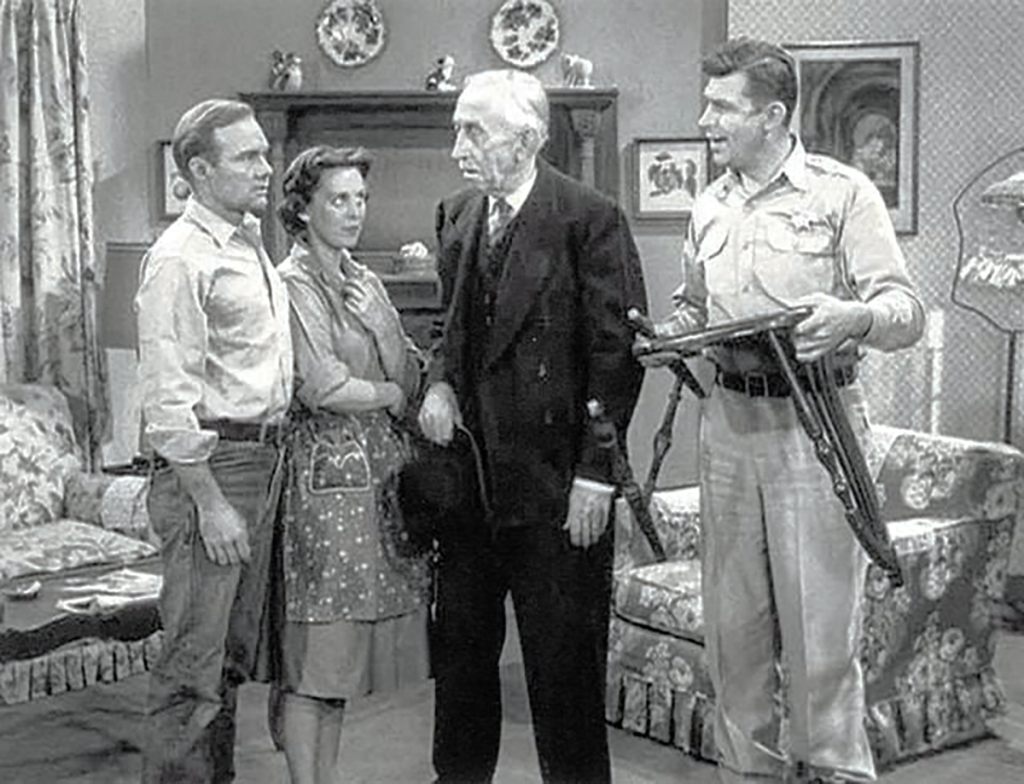
When Margaret Kerry smiles at the mention of The Andy Griffith Show, it’s not just fondness, it’s recognition, as though she’s stepping back into a room she once knew well. “The minute you said those words,” she shares, “I just… I smiled, didn’t I?” She had. It was immediate.
Her memories of the series remain vivid and affectionate. Even now, she recalls the atmosphere on that soundstage with clarity: the smooth rhythm, the respect among cast and crew and the welcoming tone Andy Griffith set from the moment she met him. Her agent brought her onto that stage to meet the actor, who was relaxed at first but then instantly professional.
“He walked over,” says Margaret, “tugs up the waist of his trousers, becomes very businesslike.” He looked her in the eye. “He said, ‘Welcome aboard.’ Just like that. No fuss. Just warmth.”
The set, she says, was unusually inclusive. Guest actors weren’t shunted to a corner or treated like outsiders. “You could go to different kinds of shows where the key players don’t mix,” she says. “Perfectly fine, but separate. But not with The Andy Griffith Show. You were part of it.”
She remembers Don Knotts sitting in his high chair between takes, reading. When the stand-ins were called in for lighting, he would remain in the shadows, checking his script. Then, right as the cameras were ready, “He’d say something just as he walked into the light and everyone would laugh. Andy laughed out loud. And Don would look around like, ‘What?’ And then he’d say, ‘Are we going to get to work here?’ The fun was allowed.”
In the episode “Andy Forecloses” (1960), she played a young wife facing eviction thanks to the relentless—and infamously unpleasant—store owner Ben Weaver. “Oh, he was nasty,” she laughs. “Always after us.”
She remembers reading the script, wondering how the family was going to avoid losing their home. The solution, of course, was Andy’s folksy strategy: he acted even nastier than Ben Weaver to force the man into discovering a little compassion. “It was a charming way to finish.”
What strikes Margaret most, all these years later, is how The Andy Griffith Show continues to speak to people, not out of nostalgia alone, but because of its emotional core. “How does it still connect?” she muses. “I think once they glom onto it… they see something different. Something nice. They recognize someone they knew. Or they say, ‘Oh, look how that turned.’ It touches their hearts. And their minds. And they think, ‘I want to watch this again.’”
That warmth is exactly why she attends Mayberry Days in Mount Airy, North Carolina — Andy Griffith’s hometown and the real-life inspiration for Mayberry. “When you asked what it feels like to still be here, celebrating the show after all these years,” she smiles, “it feels… right.”
She gestures at the crowds that fill Mount Airy each fall. “People don’t have to dress up. They can be themselves. They’re with their friends. They’re home.”
Her surprise love story—70 years later
One of the most unforgettable stories Margaret shares is how she reconnected with the man who would become her husband — seven decades after they first dated. When she was young, she briefly dated a USC graduate named Robert, a handsome man with, as she put it, “the most gorgeous speaking voice.” But life took them in different directions: he went to work for Mobil Oil, rising through the ranks, while she continued acting, dancing, and ultimately becoming Tinker Bell. They never saw each other again — until he was 94.
Robert was traveling through Amsterdam as a World War II veteran, preparing to attend the 75th anniversary of D-Day. With friends, he took an Uber through the city. As they drove down a street, he suddenly told the driver to stop. Across the road was a shop with lettering large enough to see from the car: “Tinkerbell’s Toys.”
“Out of nowhere,” she says, still marveling, “he told his friends, ‘Did I ever tell you I dated Tinker Bell 70 years ago?’ And they said, ‘No! Tell us!’”
One of the friends searched Margaret’s name on the internet and within days, Margaret received an email saying Robert wanted to reconnect. “I remembered him immediately,” she warmly reflects. “He was very special.” Two days later, she received a phone call — from France.
“You don’t think I wasn’t impressed?” she asks with a laugh. “I’d been a widow for 20 years. I wasn’t thinking of getting together with anyone.”
They planned to meet in Mount Airy during Mayberry Days. She joked that perhaps he could come up if he wasn’t busy. “He said, ‘Well, I have to have my 94th birthday party first.’”

Three weeks later, he drove eight hours to meet her. “It was love at second sight,” Margaret says joyfully.
Newspapers captured the reunion. Disney got involved, inviting them to luncheons and celebrations. They eventually married on Valentine’s Day, with Disney happily hosting them and offering hospitality to celebrate the union of “Tinker Bell” and a World War II veteran with a remarkable life story of his own. “He still drives,” she proudly states. “Does the best left-hand turns I’ve ever seen. He cooks, too. And he has a Costco card—which I can use.”
And the best part? “I proposed to him,” she says. “What else was I supposed to do? He wasn’t saying anything!” She laughs at the memory, delighted by the absurdity and the grace of it all. “That was God, that was Disney. And that was love.”
Conversation
All comments are subject to our Community Guidelines. Woman's World does not endorse the opinions and views shared by our readers in our comment sections. Our comments section is a place where readers can engage in healthy, productive, lively, and respectful discussions. Offensive language, hate speech, personal attacks, and/or defamatory statements are not permitted. Advertising or spam is also prohibited.