Eve Plumb, 67, Reveals the Emotional Toll of Her Jan Brady Fame: ‘I Was a Good Little Soldier’ (Exclusive)
The iconic actress discusses resilience, the loss of her parents and finding a new path

Key Takeaways
- Eve Plumb reveals how being a 'good little soldier' shaped her life beyond 'The Brady Bunch.'
- The Jan Brady star reflects on personal loss, calling grief a sudden and lasting 'sniper.'
- From child star to artist, Eve Plumb shares how she changed her life through painting.
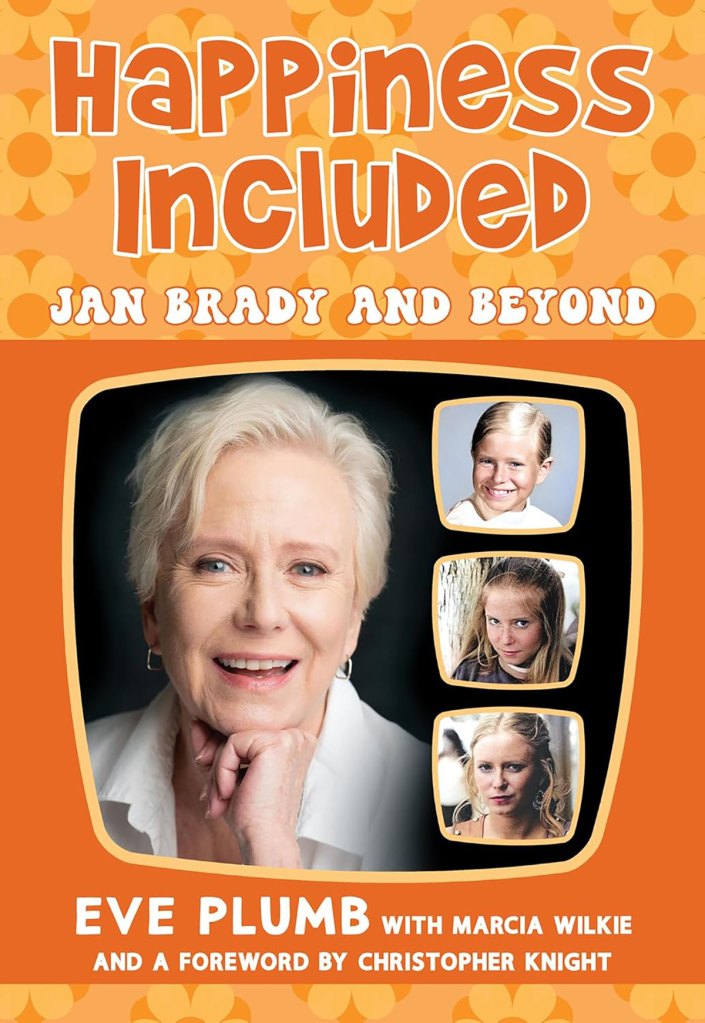
A recurring phrase in Brady Bunch star Eve Plumb’s memoir is one that, at first glance, sounds almost deceptively simple: “I was a good little soldier.” It’s a line that appears more than once, and the more it surfaces, the more it begins to feel like a throughline—not just for her years as a child actor, but for the life she has lived ever since.
“I think it’s a very telling phrase,” says Plumb, whose Happiness Included: Jan Brady and Beyond is being published on April 28. “There’s a lot in that phrase in that it goes to being obedient, but it also goes to having a job and knowing how to do a job and being proud of that job. I credit my dad—and my mom, too—but something about his upbringing gave him a strong sense of integrity and ethics. Not rigid, but just, ‘This is the line, this is what we do.’ I was never pressured. I wasn’t supporting my family like a lot of child actors were. It was just, ‘This is what we’re doing.’”
For audiences who grew up watching her as Jan Brady on The Brady Bunch, the assumption has often been that her story begins and ends there. But what emerges from her memoir is something far more expansive—and more personal. At its core is a life shaped not by dramatic reinvention, but by consistency: doing the work, adapting when necessary, and moving forward without losing sight of who she is. That approach extends even to the act of writing the book itself—something she resisted for years.
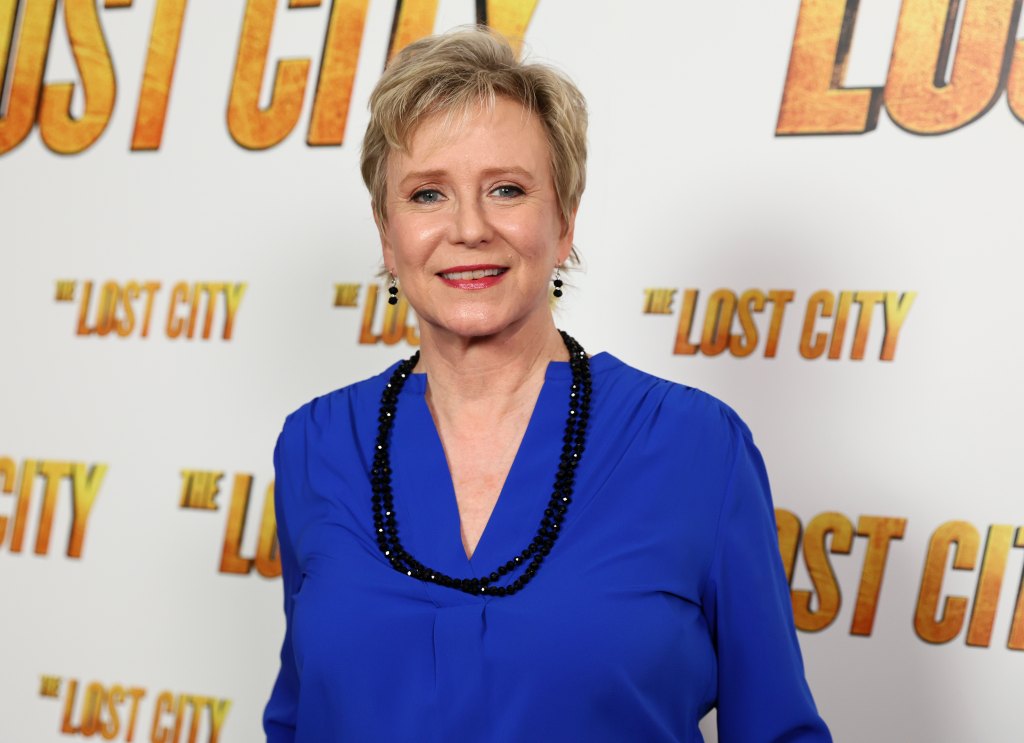
“A lot of people wanted me to share my stories with their book, or they’d say, ‘You should write a book,’” she explains. “And I’d think, ‘I’m not a writer.’ It’s not that I didn’t think people would care—I just didn’t want to do it.”
Part of that reluctance came from something that has defined much of her adult life: a desire for privacy. “As a public person, I’ve always wanted to keep certain things private,” she says. “I didn’t even want to tell people the name of my dog for a long time. You share so much of your life already.”
The turning point came not from a sudden desire to open up, but from a realization about control. “My husband Ken and I were in the car, and I said, ‘Here’s somebody else who wants me to share my stories in their book.’ And I thought, if I’m going to share my stories, I’m going to write my own book.”
Even then, the process didn’t unfold in the way she expected. “I thought it might bring things back, that I’d remember things I’d forgotten,” she says. “Not a bit of it. Not at all. I wish more had come up. I don’t have a great memory about my life. I like to tell myself it’s because I live in the moment. ”
Reflecting on loss
If “good little soldier” suggests discipline and steadiness, it also hints at something else that runs quietly through Plumb’s story: resilience. Not the dramatic, headline-grabbing kind, but the more familiar version that most people recognize—getting through loss, adjusting to change and finding ways to move forward when life inevitably shifts.
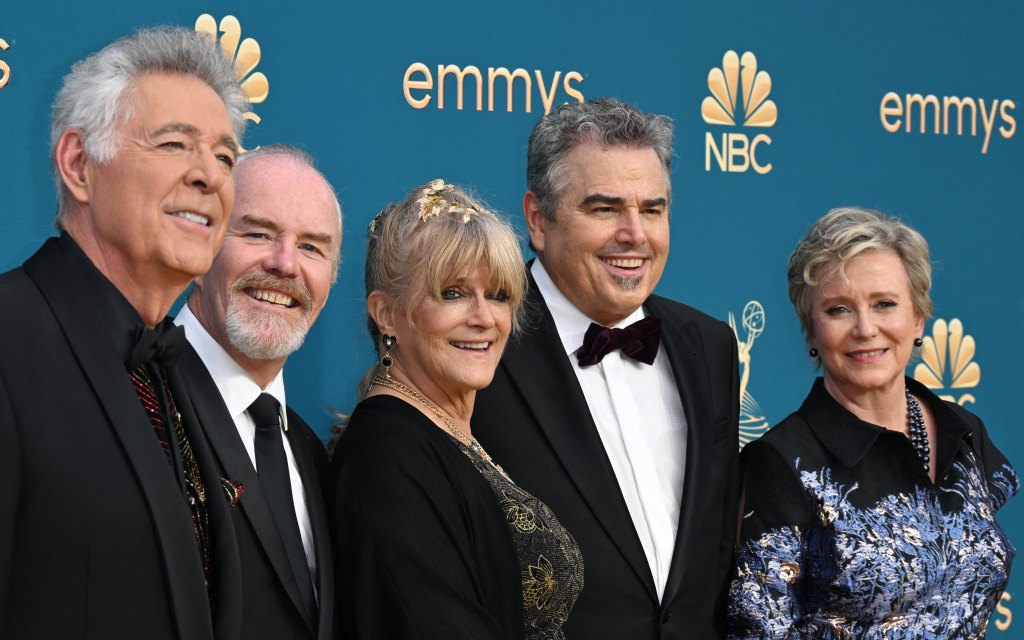
In her memoir, she writes about the deaths of her mother, father and sister—losses that, when read in sequence, can feel as though they come in quick succession, even if the reality was more spread out over time. “My mom died a week before our wedding, and that was 30 years ago,” she explains, referring to her 1995 nuptials with business and technology consultant Ken Pace. “My dad was not long after that, a year or two, and then my sister was several years after that. So it was much longer than it might seem.”
Even so, writing about those experiences proved to be one of the more difficult aspects of the book. “It is hard,” she says. “I said earlier that things didn’t come up, but that was revisited and revisited and revisited. I have a girlfriend who calls it a ‘grief sniper,’ where you’re just going along and then all of a sudden you’re hit with the memory and the grief. I mean, I can’t read the animal chapter at all without crying about the dog. So yeah, it is hard—it brings it all right back.”
That idea—that memory may not always surface on command, but emotion certainly does—runs counter to an earlier observation that writing the book didn’t unlock long-forgotten details. Instead, what emerged were the moments that already carried weight. “I wish more stuff had come up,” she admits. “I thought this might bring some things back that I’d forgotten, but not a bit of it. But the process itself was really wonderful. It was very gentle. The process of writing the book [with Marcia Wilke] offered something closer to reflection than revelation, like a therapy session where she didn’t have to challenge me at all. I just got to talk about myself and the things that I remembered. She would say, ‘Do you remember more about that?’ and I’d be, like, ‘Oh, I wish I did.’”
Those moments of reflection stand in contrast to the steadiness she describes elsewhere—a life not defined by extremes, but by persistence. “I’ve worked every year of my life on one thing or another,” she says. “And I think even the most famous person will tell you that it never ends. You’re always auditioning for the next job in one way or another. You’re always hoping for the next thing. I have a friend who says, ‘When is it going to get any easier?’ And I say, ‘It doesn’t. Life doesn’t get any easier. It’s a myth that at some age you can just coast.’”
Discovering new directions
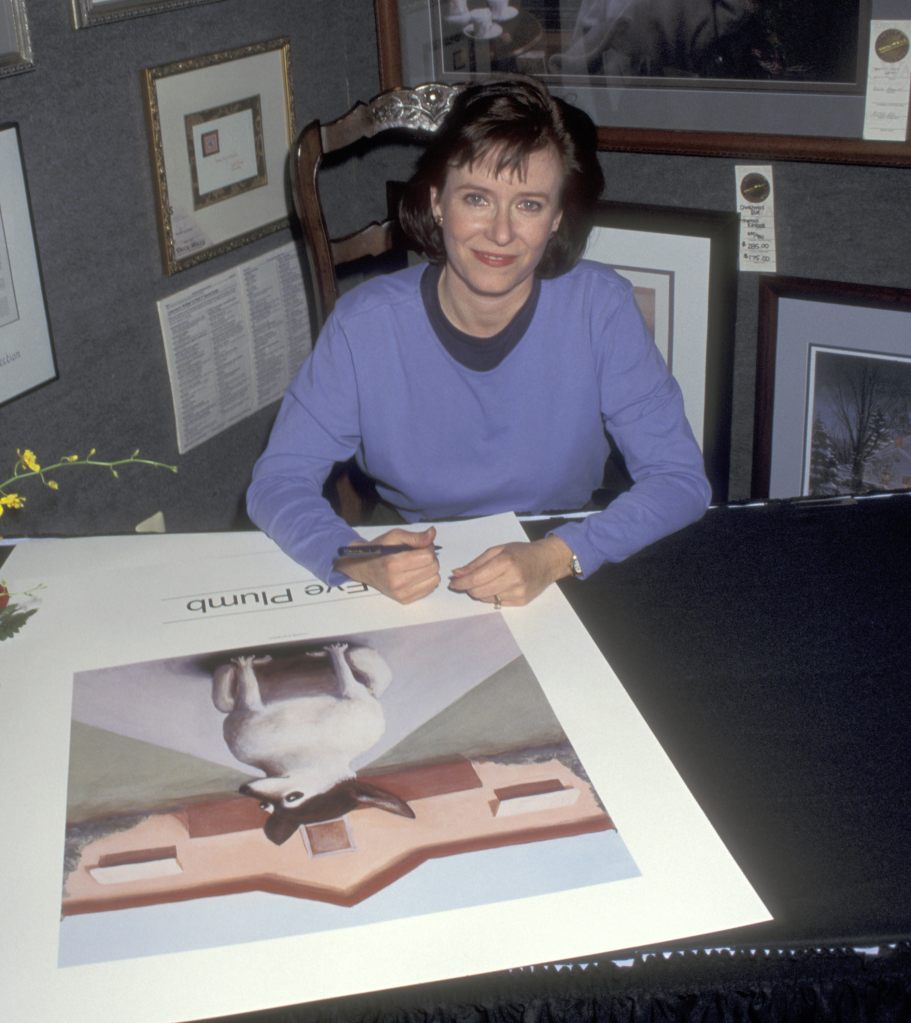
When acting had its ebbs and flows, Plumb discovered a different form of creative outlet that would ultimately grow into a second career. “It was very, very gradual,” she says. “It came out of having all this work and then suddenly being alone at loose ends and wondering what to do. So I started drawing. That was always what my mother would say when I was bored: ‘Here, draw me a picture.’”
With time—and the willingness to push through the difficult early stages—what started as a pastime evolved into something more disciplined and more personal. “Because I had the time, I decided to work at it,” she explains. “I started to teach myself techniques to get to the place that I wanted to. And it was very freeing, because I didn’t really care what people thought. If they didn’t like it but if I liked it well enough to put it up on the wall—and that’s true today—then that was enough.”
That independence from outside opinion stands in contrast to the pressures that come with a public career, and it’s something she recognizes as essential to the process. “People always have opinions,” notes Plumb. “I certainly have opinions about every piece of art I see. Some people sell and some people don’t. But when you’re learning anything, you have to get past the hard parts. I was just willing to get past the hard part and make myself happy with what I was doing.”
The fact that her work is now displayed in galleries and purchased by collectors is, in her view, less surprising than it might seem from the outside. “That’s great,” she says. “That’s the end game—that’s the applause—for somebody to buy a picture and have it in their house. I mean, that’s wonderful. And plus, they stack up like pancakes—you’ve got to move the merchandise.”
That same practical mindset carried over into a business venture she developed with husband Ken, turning her artwork into a range of products under the banner of Plumb Goods. What began as a traditional retail idea eventually evolved into something more flexible.
“I’d always liked the idea of having a store,” she says. “At first, I looked at doing it online and wholesale—jewelry, that sort of thing. But then I found out about print-on-demand, where you can put your own designs on things, and that opened it up completely. We started out with candles, where we had inventory and warehouse costs and pick-pack-and-ship, and that became pricey. So we went with this other model. When you order it, that’s when they make it. It’s the same with the coffee—you order it, that’s when they roast it and send it to you.”
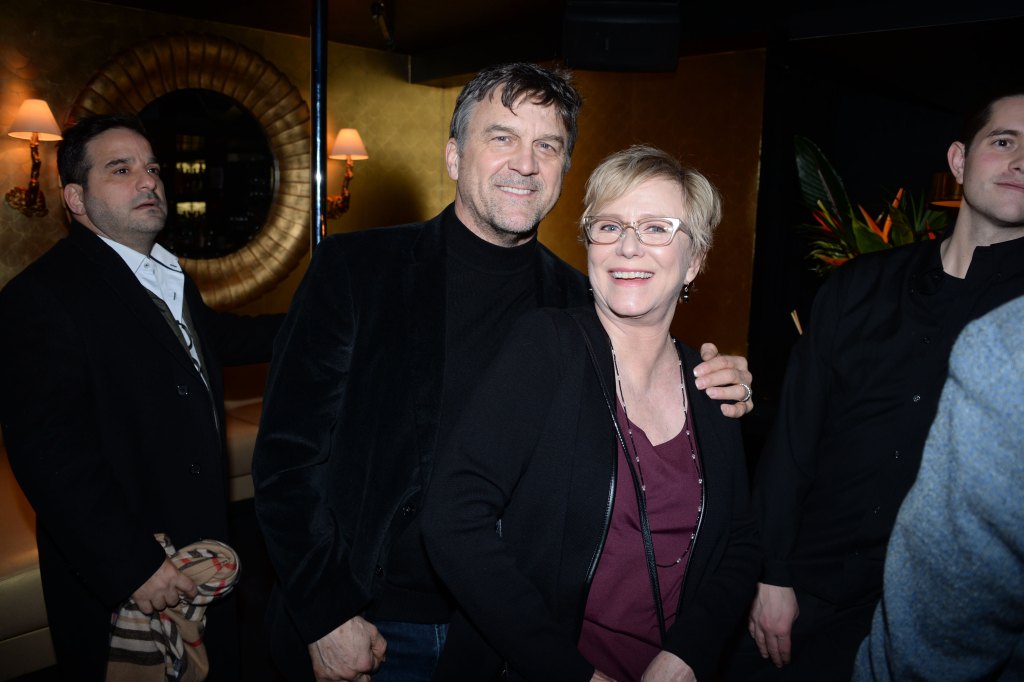
At the center of that evolution is her partnership with Ken, whose presence in her life—and in the book—offers a sense of balance that feels hard-earned rather than idealized. “He’s a great partner,” she says. “He’s very creative himself, and he’s very good at sticking at it. He figures out how to do things. He’s willing to get past the hard part.”
The challenge of sharing

Writing about that relationship, however, required navigating another line she has drawn for herself over the years: what to share and what to keep private. “I don’t talk about that a lot,” she admits. “Part of this book was that I really didn’t want to throw anybody under the bus—not my castmates, not anyone. I had to tell the truth about a few things, but I was cloaking it, for their sake and for mine.”
That instinct—to protect, to be respectful and to maintain boundaries—extends even to the Brady family, where the bond remains intact, but rarely public. “I think most of us realize there’s no need,” she says. “It doesn’t look good on me to trash them in public, does it?”
It should also be noted that for all the ways The Brady Bunch would come to define her in the public imagination, there were moments along the way when Eve Plumb deliberately stepped outside of that image—none more significant than her role in the 1976 television movie Dawn: Portrait of a Teenage Runaway. Looking back, she sees it less as a bold reinvention than as a necessary step forward.
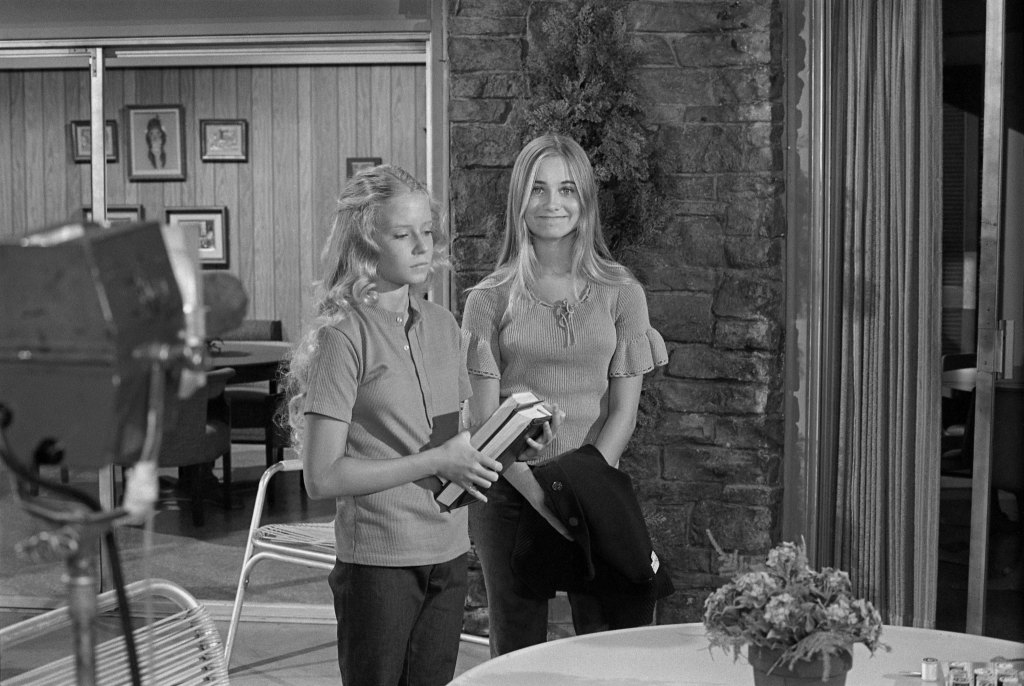
“I think it was probably why I continued to work as an adult actress,” she says. “I think that’s why my parents were for it, and I think it was wise. That’s why it was done. You know, ‘Let’s see Jan Brady on the streets of Hollywood.’ Of course, you don’t always realize, in the moment, what impact your decisions will have. You can only make the decision with the information you have at the time.”
It’s a perspective that ties back, once again, to the idea of being that “good little soldier”—doing the work in front of you, making the best choices you can and trusting that the results will follow. In that sense, her memoir isn’t structured around dramatic turning points so much as it is around an accumulation of experiences, relationships and lessons—some fully understood in the moment, others only becoming clear much later, if at all. Even now, as the book makes its way out into the world, she admits she hasn’t fully processed what she hopes readers will take from it.
“I haven’t thought about that,” she says with a laugh. “This is actually the first interview I’ve done with somebody who’s read the book. I don’t know—I’ll probably have a better answer the sixteenth time somebody asks me. But I hope they enjoy it. I hope they like the pictures.”
The balance between honesty and restraint defines the book as a whole. Rather than offering a series of dramatic revelations, it presents something she sees as more meaningful. “People always wanted secrets,” Plumb suggests, “and I didn’t get a big publisher because I wasn’t throwing anybody under the bus. But, to me, this is a very intimate book. This is what I was not telling people. It might seem gentle and simple and unimportant, but I haven’t shared it before—because to me, I’m being very vulnerable.”
Quick facts about Eve Plumb
-
Eve Plumb is best known for playing Jan Brady, the often-overlooked middle child on The Brady Bunch, a role that made her a recognizable face in TV and movie history.
-
As part of the iconic Brady family, she appeared alongside Maureen McCormick (Marcia Brady), helping define one of television’s most famous sibling dynamics.
-
Plumb reprised her role as Jan Brady in multiple spinoffs, including The Brady Brides and various Brady Christmas specials. She did not appear in 1977’s The Brady Bunch Hour.
-
One of her most notable non-Brady roles was in the TV movie Dawn: Portrait of a Teenage Runaway, which helped reshape her image beyond Jan Brady.
-
She also appeared in the controversial follow-up film Alexander: The Other Side of Dawn, further expanding her work in TV movies during the 1970s.
-
Early in her career, Plumb appeared in the film Now You See Him, Now You Don’t and the TV movie The Guide to Dating, Mating and Marriage, showcasing her range beyond sitcom roles.
-
Though forever associated with the Bradys, she has worked steadily in theater, including productions on the New York stage, building a career beyond television.
-
Plumb has long been based in Los Angeles, California, though her work and life have taken her across Southern California and beyond.
-
Despite being part of a show once dismissed by critics, The Brady Bunch has endured far beyond its original, relatively short-lived run, with Plumb remaining a key part of its legacy.
Ready for more nostalgia? Subscribe to our YouTube channel for video podcasts, health tips and uplifting stories designed for women 40, 50, 60 and beyond.
More about 'The Brady Bunch'
Meet the ‘Other’ ‘Brady Bunch’: Fake Jan, Fake Cindy and The Wild World of Fill-In Bradys!
The ‘Cougar’ Carol Brady That Never Was: Inside Florence Henderson’s Lost ‘Brady Bunch’ Reboot

Conversation
All comments are subject to our Community Guidelines. Woman's World does not endorse the opinions and views shared by our readers in our comment sections. Our comments section is a place where readers can engage in healthy, productive, lively, and respectful discussions. Offensive language, hate speech, personal attacks, and/or defamatory statements are not permitted. Advertising or spam is also prohibited.