How Actor Ken Wahl’s Traumatic Injury Led to a Life of Rescue Animal and ‘Pets for Vets’ Advocacy
The 'Wiseguy' star fought depression and found new purpose—connecting rescue animals with veterans
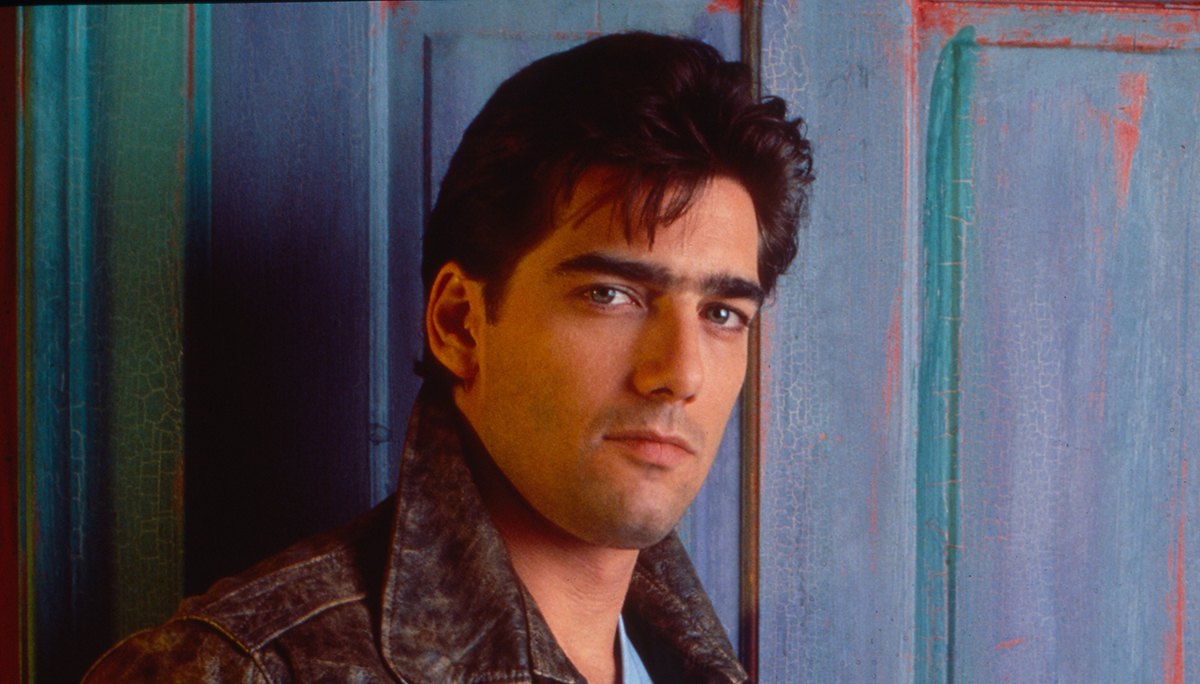
Life can change in a blink of an eye, but in some ways — which may take going through a kind of personal hell before it becomes apparent — you can come out the other side with a renewed sense of purpose. That was certainly the case with actor Ken Wahl, who was forced into early retirement due to a traumatic injury and whose road to recovery was a long one, and not without a lot of despair as he made his way down it.
Wahl had made his debut in 1979’s The Wanderers, moved on to co-star with people like Paul Newman in Fort Apache, The Bronx (1981), Bette Midler in Jinxed (1982) and Cheryl Ladd in Purple Hearts (1984), took the lead in the acclaimed 1987 to 1990 television series Wiseguy, which garnered him a Golden Globe Award in the process; and then, in 1992, fell down a flight of marble steps, resulting in a broken neck and damaged spinal column. Miraculously, he wasn’t crippled, but life as he knew it was over.
“I went through such a deep depression,” Wahl explains to Woman’s World in an exclusive interview. “I can honestly say I never felt sorry for myself, but what caused my depression was that I felt so useless, and I don’t like feeling that way. I’ve always been kind of the rock in my family, kind of the go-to guy. Not just financially, but emotionally, and, truthfully, I enjoyed being that. But that was gone in a fraction of a second, and that sunk me into a very deep depression for seven years.”

Seven years of feeling — again — useless, wrapped up with unhealthy doses of hopelessness and worthlessness, and while he emphasizes he was never suicidal, he was ambivalent about life. He would speak to God “or the forces of the universe, whatever you want to call it, and say, ‘If you’re ready to take me, go ahead, because I’m just a worthless piece of garbage now anyway. All I’m doing is taking up space and breathing and eating food that could go elsewhere to somebody more deserving.’ And that’s how I really felt for the longest time. I just completely withdrew from the human race for all that time, but I slowly worked my way out of it mentally and emotionally. But, man, those were dark, horrible days and I’m grateful, because a lot of people don’t come out of it. They eat a bullet or jump off a bridge or something.”
Ken Wahl’s advocacy for veterans


Explains Wahl, “I’ve had some criticism over the years, when I started helping with the animals, that I care more about animals than I do people, and I just want to say it’s not that, it’s about choosing animals for people. Anyone can look this up, but there has been so much success where comfort animals have helped veterans and other people with PTSD or TBI, traumatic brain injuries. So, it’s getting animals and people together; the synergy between them. And what got me really involved was my own personal experience after I got hurt. The animals in my life, the rescue cats and dogs, helped me enormously.”

The next step, an inherent need to help others, came in 2010 when he caught a newscast with a report stating that there were 22 veteran suicides per day on average, a figure he simply couldn’t comprehend.
“One per century is too many; how can we have 22 veteran suicides per day?” he asks rhetorically, his voice still registering that shock.

Feeling a need to do something, his wife asked a friend to set up Twitter (now “X”) and Facebook accounts for him to use as a platform for his charities. Says Wahl, “I just thought, and still do think, for the most part social media is ridiculous, but if I could use this forum to do something to get the word out to anybody that would care to listen, it would be worth it, because we had to do something about these 22 veteran suicides per day. And that figure is all-encompassing, going back to guys in their ‘80s and ‘90s who fought in Korea and World War II. To me, it was just unconscionable. So, I just started getting on Twitter and blasting out to whoever cared to listen, and I was amazed by the response. I’ve been doing it ever since and that has become my calling and my purpose in life.”
K9s for Warriors

His messages on social media were designed to spread the statistics and drive home the need to help, and those who replied to him did so immediately. There were people talking about their son in the Army in Afghanistan, husbands who had been in the Air Force and what each of them, no matter the branch or deployment, were going through. Those conversations have continued through to the present.
“My further purpose,” he explains, “is to help military personnel that have PTSD, which causes them a deep depression and then potential suicide, to connect them with animals. After I got hurt, animals to me were a great solace and a great comfort. So, I thought, ergo, if they are comforting to me, they might possibly be comforting to these poor souls suffering from PTSD.”

Insofar as he’s concerned, the best organization on this front is K9s for Warriors, noted for its success rate in bringing service canines to veterans suffering from PTSD, traumatic brain injury or military sexual trauma as a result of military service post 9/11. As they note on their site, their goal “is to empower them to return to civilian life with dignity and independence.”
On the animal rescue front, the efforts to spread the word — and the need to do so —continues, a point driven home in the aftermath of the recent hurricanes in North Carolina and Florida. While the human devastation borne out of those natural disasters is incalculable, failing to get any sort of serious attention has been the plight of animals affected by them as well. This is particularly true in the case of dogs, cats and horses.

“The hurricanes,” explains Wahl, “just intensifies the need for help. Anything that people can do to help is so appreciated, and organizations devoted to hurricane rescue animals include, for dogs, Red Dog Farm; for cats, Alley Cat Allies; and for horses, Fleet of Angels.”

On top of all of that, another organization he’s behind is the Salvation Wild Mustang Sanctuary, devoted to saving wild horses from slaughter. “Most people,” Wahl points out, “don’t realize our wild horses are becoming endangered in order to seize the land they graze on. The majority of Americans oppose helicopter horse roundups and over 83% oppose horse slaughter in general. We want wild horses protected, because they symbolize the embodiment of America’s freedom and independence.”

For Wahl, the gratification from all of these efforts comes from the knowledge that they’re working, and that these organizations, with the unions of animals with people, are resulting in real connections. He offers, “I’ve gotten so many responses saying things like, ‘My son was deep within PTSD and we got him a rescued black lab and his whole mood changed.’ It’s really amazing the therapeutic value of animals, whether it be physical, emotional or both. All of this reminds me of a Horace Mann quote that says, ‘Be ashamed to die until you have won some victory for humanity.’

“You know how people, when they do something charitable, say, ‘Well, if I could help one person, it would have been worth it’? I must admit, that’s not good enough for me,” he closes matter-of-factly. “You’ve got to figure if there are 22 veterans per day killing themselves, how many out there are in the depths of despair thinking about it? Obviously, those are the ones I want to reach. But the whole point is to try to prevent that number from going higher and, if possible, eliminating veteran suicides altogether. And the gratification that I have received from doing this exceeds anything I’ve ever done in my life by orders of magnitude.”
Conversation
All comments are subject to our Community Guidelines. Woman's World does not endorse the opinions and views shared by our readers in our comment sections. Our comments section is a place where readers can engage in healthy, productive, lively, and respectful discussions. Offensive language, hate speech, personal attacks, and/or defamatory statements are not permitted. Advertising or spam is also prohibited.