Inside Marion Davies and William Randolph Hearst’s 35-Year Love Affair and Their Life at Hearst Castle
Throughout their relationship, the two were also business partners and party hosts

Many people think of William Randolph Hearst as a newspaper mogul, but it turns out that in his heyday, he was known for a few other things: his lavish parties at his house, Hearst Castle, and his decades-long affair with Marion Davis. But what exactly is his castle, and how was he able to pull off such a long-lasting affair? Well, we dive deep into all of that and more below.
Who was William Randolph Hearst?
Hearst was a newspaper and magazine giant who is credited with creating Cosmopolitan, Town and Country, Harper’s Bazaar, Good Housekeeping and more.
He was born on April 29, 1863, in San Francisco, California, and grew up quite wealthy thanks to his father’s gold mining business. He was also constantly surrounded by art and even took a tour of Europe with his mother at age 10, which exposed him to more traditional styles of painting and architecture.
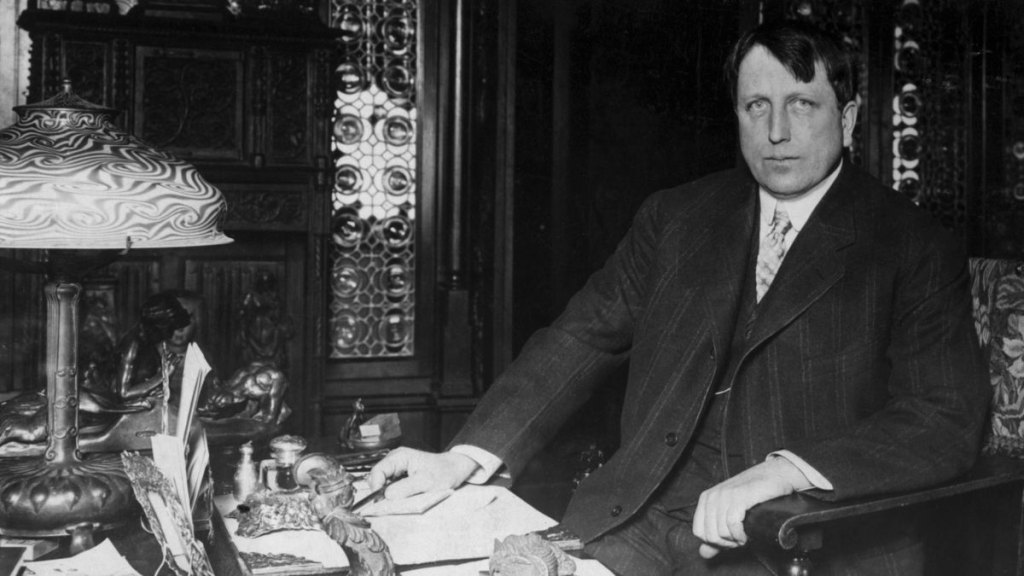
After his trip across the globe, Hearst came back to America and was enrolled in the best schools money could buy. He then went on to study at Harvard, where he fell in love with journalism. Soon after graduation, Hearst found himself in control of the San Francisco Examiner after being gifted it by his father, his media empire beginning to grow from there.
Aside from news, Hearst also owned several radio broadcasting companies and comic strips, and it’s widely believed that he was one of the first people ever to explore such mediums. He was also a Congressman for the state of New York in 1902 and even ran for president in 1904, but lost the Democratic seat to Alton B. Parker, who Theodore Roosevelt ultimately defeated.
Hearst died in 1951 from a stroke. He was 81 and had five children.

Who was Marion Davies?
Born Marion Cecilia Douras in Brooklyn, New York, on January 3, 1897, Davies always knew she loved to act. However, to get there, she had to drop out of school, become a model for several different painters and change her name.
Somehow it worked, and soon Davies was among some of the best Broadway actors of that time. Growing bored of the stage, Davies decided to write her screenplay, Runaway Romany, released in 1917 and directed by her brother-in-law George Lederer. It was 50 minutes long and had no dialogue.

From there, Davies continued her ascent and quickly became the most advertised actress in the world during the 1920s. In total, she starred in 46 films—16 of which had dialogue. She also produced a variety of movies.
Davies died in 1961 from stomach cancer. She was 64 and married to actor Horace G. Brown at the time.

Inside Davies & Hearst’s 35-year love affair
Davies met Hearst in 1916 while performing in the hit Broadway show Ziegfeld Follies. She was 19 at the time, and he was 53 —and married to Millicent Willson. Despite all of that, though, true love prevailed, and Davies and Hearst entered into a torrid love affair with one another.
Because of the time period, Hearst didn’t feel like he could legally divorce his wife, so instead, he left her in New York and brought Davies back to California with him to live in his home, Hearst Castle.
It was there that the two really solidified their bond thanks to their lavish parties, celebrity guests and beautiful weather.
Aside from love, Davies and Hearst also had a very well-known professional relationship. He bankrolled many of her films and even went as far as to create production companies for her. In return, Davies gave him $1,000,000 in the mid-1930s to keep his media empire from falling.

That check is also reportedly the reason that Hearst left Davies his company after he died in 1951—a decision which caused a lot of uproar within the Hearst family.
“I would do anything in the world to avoid hurting the boys [Hearst’s sons]. After all, they’re half of W.R. [William Randolph],” Davies said at the time. “I’m not the fighting type, but I don’t believe in disregarding W.R.’s wishes. He had a reason for having the agreement drawn up. He thought I was the one who understood best what his policies and principles were and that I could see to it that his ideas were carried out.”
“Gosh, I thought I’d have a peaceful time in my old age [51]. Now look at the spot I’m in!”
Throughout their 35-year-long affair, Hearst and Davies had one child together in 1919 named Patricia Lake. Hearst also had five other sons, whom he welcomed with his wife, Willson.
At the time of his death, Hearst was still living with Davies and legally married to Willson, although they reportedly hardly ever talked. Following his passing, Davies remarried, but Willson never did.
What was Hearst Castle really like in its glory days?
Hearst Castle—a.k.a La Cuesta Encantada or The Enchanted Hill—is a 127-acre home located in San Simeon, California, filled with timeless relics and priceless art pieces.
Prior to his passing, Hearst spent 25 years building it, along with his architect Julia Morgan, in the hopes of making it one of the country’s top destinations for art and celebrations.

And it was! During its prime in the 1920s and 30s, the castle hosted celebrities like Charlie Chaplin, F. Scott Fitzgerald, Clarke Gable, Winston Churchill, Franklin Roosevelt, Amelia Earhart and even Marie Dressler.
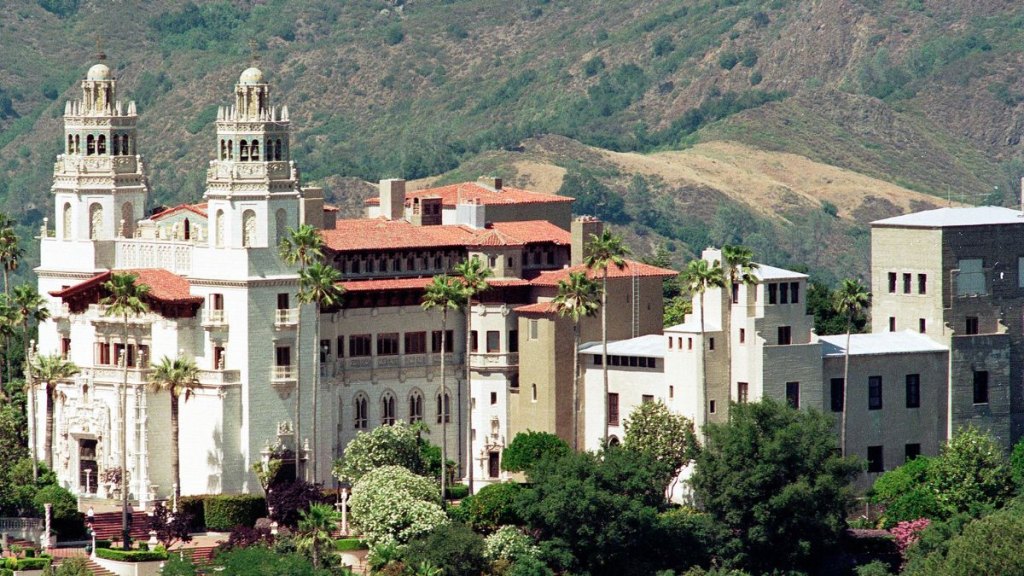
While there, guests could swim in one of the castle’s many pools, play tennis, go horseback riding, watch a movie in the home theater, play billiards or visit the zoo, which housed animals like zebras and polar bears.
They were allowed to stay for as little or as long as they liked, and there really were no rules at the castle except one: guests had to eat dinner with Hearst and enjoy a film with him afterward—usually one of Davies’s.
The castle still stands today and is open for tours year-round, allowing visitors to imagine what it was like to live there alongside Hearst and Davies.

Conversation
All comments are subject to our Community Guidelines. Woman's World does not endorse the opinions and views shared by our readers in our comment sections. Our comments section is a place where readers can engage in healthy, productive, lively, and respectful discussions. Offensive language, hate speech, personal attacks, and/or defamatory statements are not permitted. Advertising or spam is also prohibited.