Barry Livingston Reveals Why He Never Let ‘My Three Sons’ Define His Life (Exclusive)
The former Ernie Douglas reflects on Hollywood, family and a career spanning six decades

Key Takeaways
- Barry Livingston is still working with top filmmakers like David Fincher.
- He explains why 'My Three Sons' eventually felt out of step with the times.
- Lucille Ball and William Frawley, Debbie Reynolds and Jerry Lewis helped shape his career.
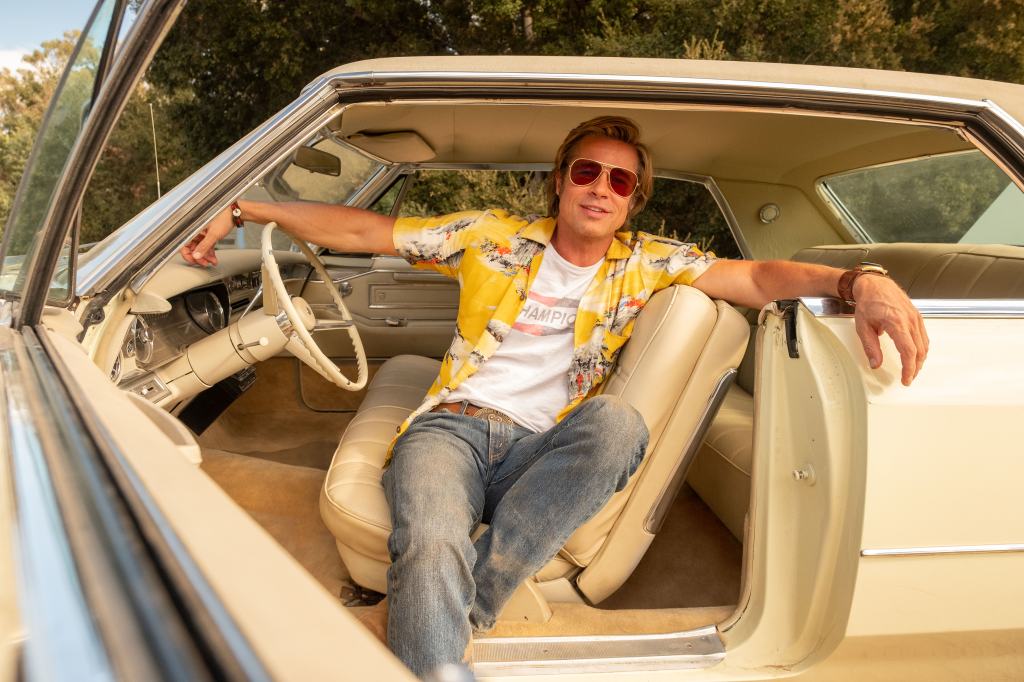
If you only know Barry Livingston as Ernie Douglas from My Three Sons, one thing may come as a surprise: he’s still working—and not by making the occasional convention appearance to sign autographs and reminisce about a television series that ended more than 50 years ago. In fact, his newest project has reunited him with director David Fincher for The Adventures of Cliff Booth, the forthcoming sequel to Quentin Tarantino’s Once Upon a Time in Hollywood, starring Brad Pitt.
And that connection goes back much further than most people would probably imagine. “Well, it started with an audition,” Livingston explains to Woman’s World in an exclusive conversation. “It was through David’s longtime casting director, a lady named Lori Mayfield, and it was a Heineken Super Bowl beer commercial. I forget what year, but it was easily 10 years ago, maybe more. Anyway, I booked the spot and it was kind of my introduction to David. The big ‘secret’ about that commercial was Brad Pitt was the star of that spot.”
One opportunity led to another. Livingston would later work on Zodiac, appear in an Orville Redenbacher commercial directed by Fincher and eventually find himself involved with the aforementioned Adventures of Cliff Booth.
Does this mean the former Ernie Douglas is pals with one of Hollywood’s most innovative directors? “There’s certainly a huge respect on my part for his abilities as a director. I think he likes me personally and that I deliver what he’s looking for without a lot of drama. He likes to do a lot of different takes—20, 30, 40 takes—which I’ve got no problem with. I seem to nail it with him in about the 10th or 12th take, which I take as a compliment because I’ve seen him do a lot of other things with people many, many, many more times. And I usually get a big thumbs up from him when he likes it. But there’s not a lot of off-camera hanging out, going to restaurants and bars. It’s purely a working relationship. But I think he knows what he’s gotten from me in the past and hopefully what I still bring to the table.”
Livingston is quick to emphasize that Mayfield has remained one of his strongest supporters. “His casting lady has always been my champion,” he says. “And I think when she has a project and if I reach out to her, which I did on this last one, she’s very open to it. You can’t do that with everybody. Casting people don’t like that. You know, stay in your lane, let the agents and managers do their thing. But Lori is very special. She’s always been receptive.”
Working with David Fincher
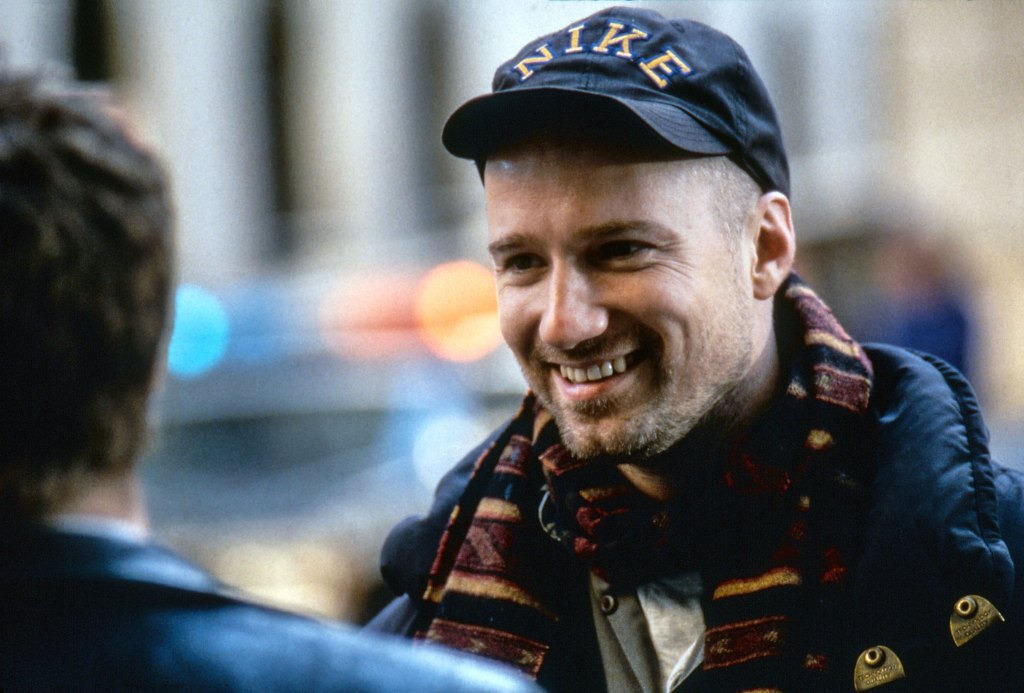
One of the things Livingston appreciates most about Fincher is his willingness to listen. During production, he found himself concerned about a particular moment in a scene. It would have been easy enough to simply perform the material as written and move on, but instead, he decided to speak up.
“I brought up something that I thought needed addressing in this particular scene,” he recalls. “Well, I’m not Brad Pitt. Brad can say anything and everything to David. I’m a supporting character at best, but I felt I had the wherewithal and a relationship with him to go, ‘This moment doesn’t ring true. I’ll do it however you want it, but I think it’s not the way it would be.’ David listened. He goes, ‘What do you mean?’ And I explained it to him. He goes, ‘Yeah, okay. What would you say? What would you do?’ And I said, ‘Well, I would say such and such and such and such.’ He goes, ‘Okay, good. Let’s do that.'”
“I prefaced it all by saying, ‘Look, if you want to do it the way it’s written, I got it. I can do that. That’s not an issue with me. I just want to tell you my perspective on this particular moment and why I don’t think it rings true.’ Sometimes they’ve got to work their way around things and that’s just the way the scene has to go. But he’s that kind of guy.”
More importantly, Livingston believes those moments demonstrate that he’s bringing something more than simply memorized lines to the set. “It wasn’t just somebody showing up to get a paycheck and hang out eating donuts at craft services all day long. I put a little thought into it. It’s all about getting the next job. Hopefully, there’ll be something in the future and he’ll look back and go, ‘Yeah, that guy works. He does what he’s hired to do. Not just say the lines, but bring something to the backstory and everything else.'”
That philosophy may help explain why Livingston has managed something few actors accomplish: he’s still practicing his craft more than 60 years after his career began. “You live long enough, you get philosophical and understand how things work and then you’re completely proven wrong by what you thought,” he says with a laugh. “So, yeah, it’s pretty rare and it’s not easy. The path that I’ve gone down, I’ve been lucky.”
‘My Three Sons’
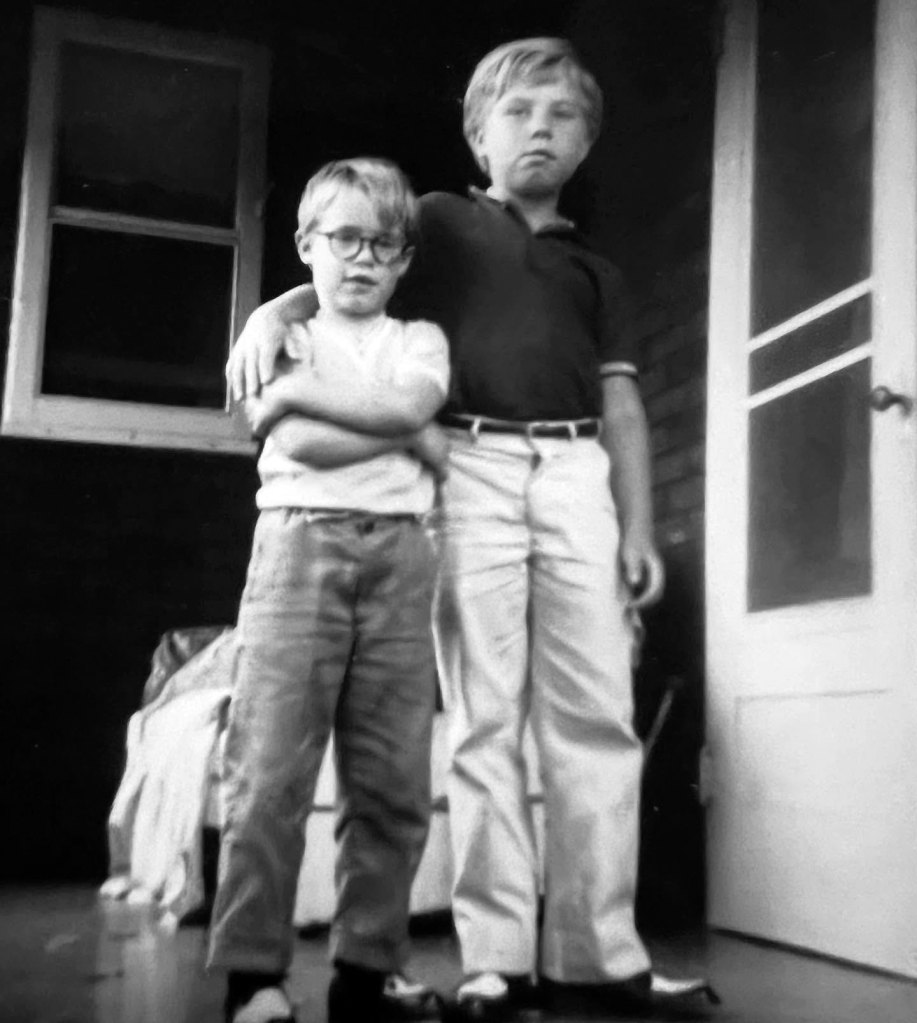
All of which translates to the fact that, despite the affection he has for My Three Sons, he doesn’t spend much time thinking about it. That may sound surprising coming from someone who spent much of his childhood and adolescence on one of television’s most enduring family sitcoms, but Livingston says his focus has always been directed forward rather than backward.
He reflects, “I didn’t think about it when my kids were growing up. If anything, I intentionally went, ‘I don’t want to make this a thing in their life that their dad is this famous guy.’ It’s hard enough being a father, let alone for them having this whole other kind of fame thing attached to your parent. And again, I’m happy I did it—obviously, I’m here still talking about it—but nonetheless, my focus has always been on the future and what I can do today.”
That doesn’t mean Livingston is unaware of what the role will mean to his legacy, and when it’s suggested that being remembered as Ernie Douglas is pretty unavoidable, he laughs. “Oh, you’ve got to live with that,” he says. “But it’d be lovely if it said, ‘Here lies Ernie and Dr. Rickert from some medical drama.’ But we’ll see.”
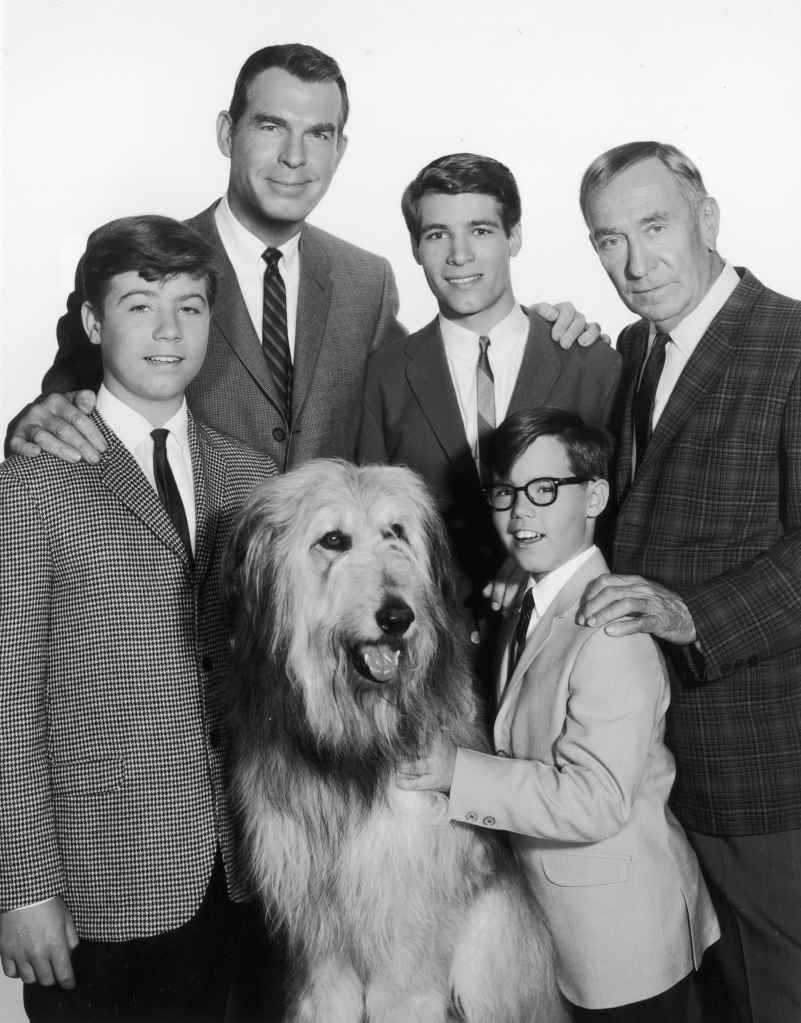
Today, it’s easy to view My Three Sons as a traditional family sitcom from a more innocent era. Livingston argues that when it debuted in 1960, it was actually something a little different. “In the very early years, it was kind of cutting edge,” he says. “It was a single dad and this was kind of in the era of Father Knows Best and the American family is the wife who stays at home in the apron, the dad goes to work and the kids are all perfectly fine children. But a single dad raising three boys, that was a novel idea back in 1960.”
The challenge as time went on was that America and television didn’t stand still, so that by the late 1960s, Livingston could feel the culture changing around the show. “In my mind, toward the end of the ’60s, it became a little more dated because the world had radically changed. By ’68 and ’69, the world had come a long way. We got The Beatles and Jefferson Airplane and psychedelics and the idea of ‘the man; don’t let the man control your life.’ And this show is sort of not representative of reality. We’re selling a version of life where problems in families are solved simply and cleanly and easily. That’s the way those shows were designed.”
Looking back now, Livingston believes My Three Sons was gradually becoming disconnected from the world outside television. “By the end of its run, in my mind, it was kind of out of time, but nonetheless, a lot of people still loved the show and it ran for 12 years.”
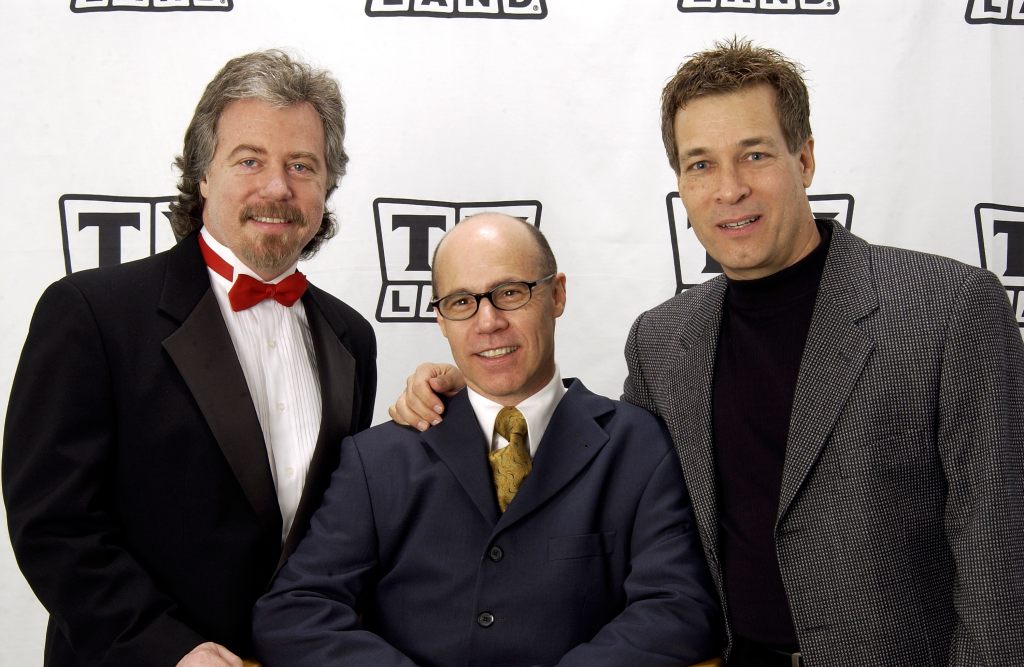
If there was a single program that symbolized television’s changing priorities, Livingston believes it was All in the Family. “They suddenly showed America another version of the American family. They were dealing with real topics. Cancer and marriages and divorces and things like that, which My Three Sons never touched on. So yeah, once that show came on, we really looked like the last living dinosaur on television.”
What’s significant is that Livingston doesn’t say this with bitterness. By the early 1970s, he was already looking toward what was happening on the big screen rather than on television. “When it was over, I wanted to be part of the New Hollywood, which was kind of in its infancy back in the early ’70s. That’s where I was putting my head. There were great movies being made all through the ’70s: The Godfather. Chinatown. The French Connection. Suddenly, you had a different way of looking at stories and characters. It was an exciting time to be in Hollywood and in films.”

Like many movie fans, Livingston watched as the New Hollywood movement briefly transformed American cinema before evolving once again. “It really kind of came and went,” he says. “Then populist films like Jaws and Raiders of the Lost Ark and all those movies started entering the picture. It wasn’t just all dark movies anymore. Up to that point you had things like Easy Rider and Bonnie and Clyde, and then suddenly the world opened up into these big event movies and special effects pictures. What was great is that you had both really going at the same time.”
The irony, of course, is that more than half a century later, people are still talking about My Three Sons. And as Livingston would later discover, even Hollywood couldn’t quite let it go.
His early journey
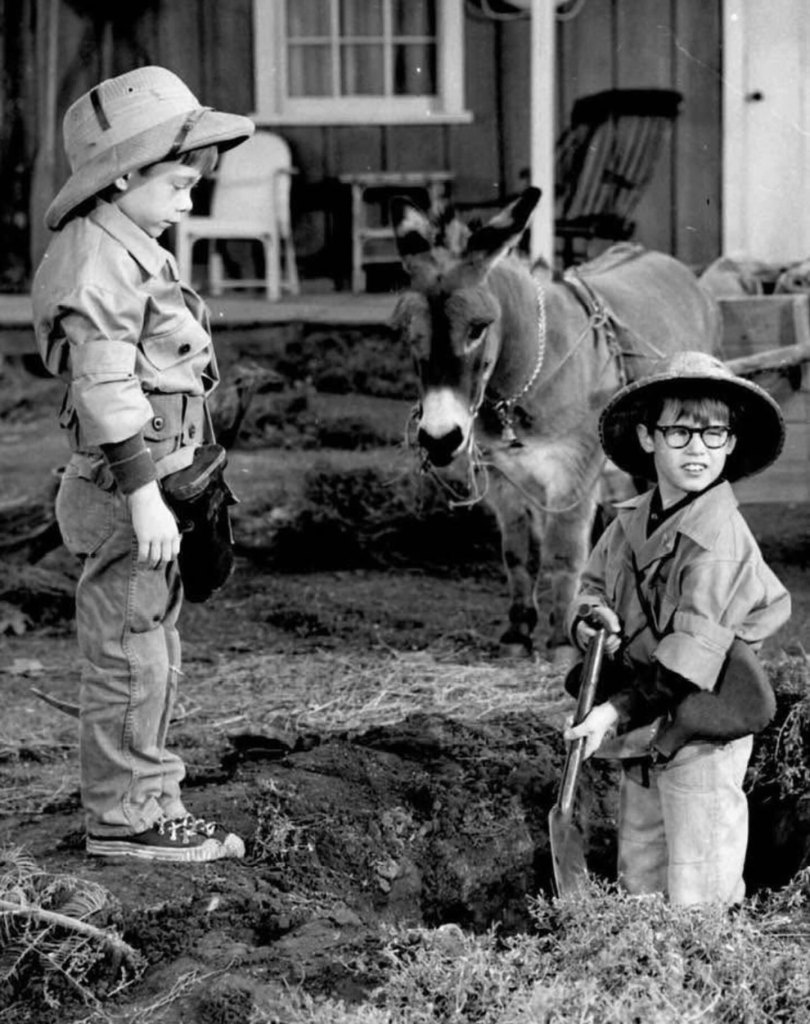
While My Three Sons occupied a large part of Livingston’s childhood, it wasn’t the only acting world he inhabited. Long before he became Ernie Douglas, he was already building a resume as a child actor, appearing on The Adventures of Ozzie and Harriet and in films with stars like Debbie Reynolds and Jerry Lewis. As a result, he found himself moving through a Hollywood that still operated very much like the old studio system, where a young actor could spend one day on a sitcom set and the next crossing paths with some of the biggest names in television.
And few were bigger than Lucille Ball. “She liked me,” Livingston says. “I’d already been pretty well established as a child actor. I had done 17 episodes of The Ozzie and Harriet Show and a couple of movies, My Six Loves with Debbie Reynolds and The Errand Boy with Jerry Lewis. So I was very shocked just knowing that she knew who I was. I mean, I was riding my bike around Desilu, which was her studio, a lot, and she’d come racing by in her golf cart heading from her office to the set and she’d go, ‘Hey, Barry.’ And I was, like, ‘Oh, she knew my name.’ That kind of shocked me.”
All of which led to recurring appearances on The Lucy Show. “I kept getting requests to come and play Gail Gordon’s son, Arnold Mooney,” Livingston recalls. “So she kept writing me into episodes.”
Unfortunately, his growing commitment to My Three Sons eventually brought those appearances to an end. “At some point the people that I really was under contract to from My Three Sons said, ‘He’s not available anymore.'”
Not that life around the Desilu lot was ever boring. And because The Lucy Show and My Three Sons were shooting practically side by side, Livingston and his brother Stanley (who recently spoke to Woman’s World) occasionally found themselves recruited into one of William Frawley‘s favorite off-camera activities. Frawley, of course, was pulling double duty, classic TV-wise at the time. While television audiences knew him best as Fred Mertz from I Love Lucy, he was also playing Bub O’Casey, the gruff but lovable Irish grandfather figure who helped Steve Douglas (Fred MacMurray) raise his sons during the early years of My Three Sons. Off camera, however, Frawley still carried some of the animosity that had marked his relationship with former I Love Lucy co-star Vivian Vance.

The friction between the actors had become legendary. Frawley reportedly bristled at comments Vance had made about their on-screen marriage, while Vance found Frawley’s hard-drinking, old-school personality difficult to tolerate. Although years had passed since they played Fred and Ethel Mertz, the two never fully buried the hatchet. According to Livingston, Frawley occasionally enlisted the brothers as accomplices in a series of harmless but mischievous pranks directed at Vance while she was working next door on The Lucy Show.
“We would collect these big metal cylindrical film canisters back in the day,” Livingston recalls. “Bill would get Stan and I to be co-criminals with him. We’d hear Vivian’s voice coming from the stage next door and he’d go, ‘Okay, it’s time,’ and we’d Frisbee these big old metal film cans in there and you’d hear, ‘Bang! Boom! Bang! Bang! Bang!’ And then you’d hear, ‘Cut!’ And Bill would go, ‘Let’s get the hell out of here. Come on!’ So yeah, we were little criminals in his organized crime.”
The power of classic TV
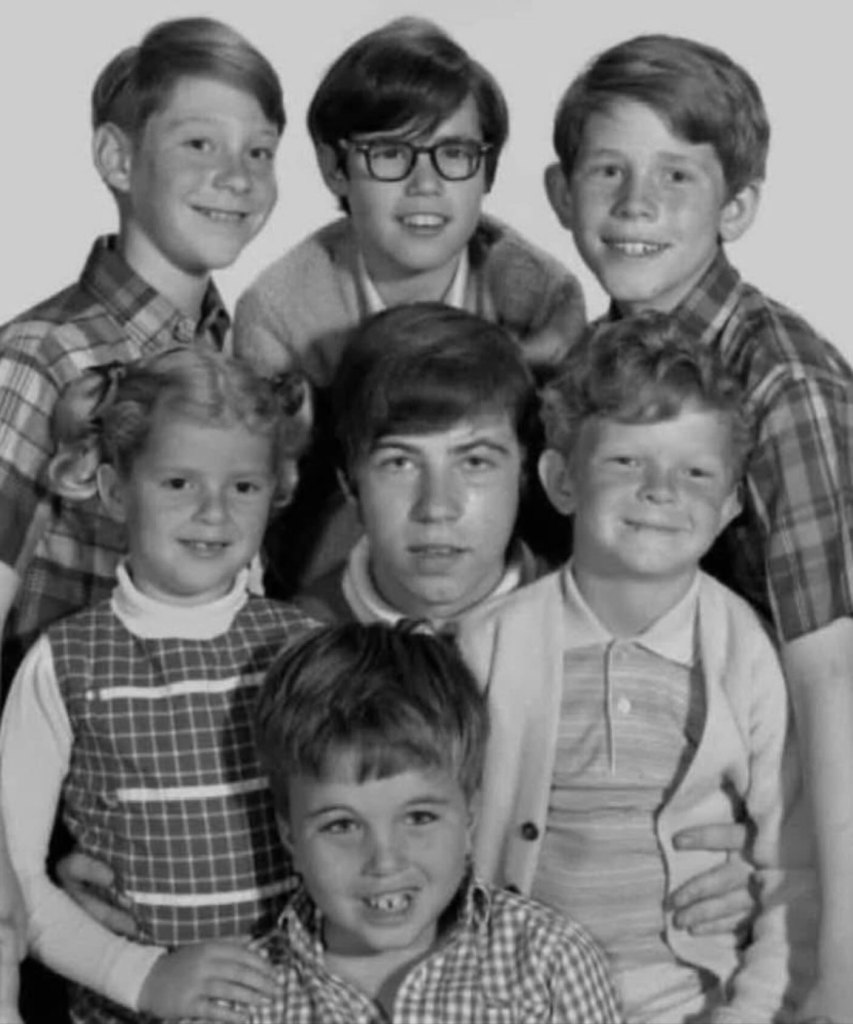
For all of Barry Livingston’s observations about My Three Sons becoming increasingly out of step with the culture by the end of its run, the fact remains that the series has endured in a way few television shows ever do. More than 60 years after its debut, viewers continue to discover it through reruns and streaming platforms, while longtime fans remain fiercely loyal to the Douglas family.
“It’s easily digested and it’s non-threatening,” suggests Livingston, author of the memoir The Importance of Being Ernie: My Three Sons to Mad Men, a Hollywood Survivor, as to the reason why. “If you’re just looking for escapism, just a half hour of good writing, good acting— MacMurray certainly brought it, and Frawley. Again, it’s just a very solid premise. The original premise of just a father trying to raise three boys was kind of a novel and fun idea and it did that well.”

As the conversation begins winding down, Barry Livingston considers a deceptively simple question: When he looks back on his life and career, what does he see? “I’m proud of the career longevity I’ve achieved on some minor level,” he offers after taking a beat to consider his response. “If you look at the guy who did it all supremely, it’s Ron Howard. Ron and I were contemporaries and his career just kept going up and up and up, from The Andy Griffith Show to Happy Days, and now he’s directing giant movies. And hats off to him—he’s the guy who maybe is the GOAT.”
At the same time, Livingston isn’t interested in measuring his success against anyone else’s. He recently appeared in a production of Cyrano de Bergerac at the Pasadena Playhouse, one of his favorite plays. He’s worked with Pedro Pascal on Disney’s Behemoth and, of course, there’s David Fincher’s The Adventures of Cliff Booth.
“I’ve been a journeyman actor and done a lot of work that I’m proud of and some things I’m not so proud of just because I needed a paycheck,” he admits. “And that’s good enough sometimes, just to keep working. Beyond that, I’ve luckily had a great family life with my wife of 43 years and two kids. That’s been the center of my life, really. Career is great, but it was never the end-all, be-all. You never know: better days may be ahead, I have no idea. But if it ended tomorrow, I’d go, ‘Good. I’m happy. I’ve got money in the bank. House is paid for. Still married. Kids are good. What more can you ask for?'”
Conversation
All comments are subject to our Community Guidelines. Woman's World does not endorse the opinions and views shared by our readers in our comment sections. Our comments section is a place where readers can engage in healthy, productive, lively, and respectful discussions. Offensive language, hate speech, personal attacks, and/or defamatory statements are not permitted. Advertising or spam is also prohibited.