Barry Livingston Reveals Why Michael Douglas Couldn’t Bring ‘My Three Sons’ Back to TV (Exclusive)
A failed revival attempt of 'My Three Sons' revealed the challenge of updating a beloved TV classic

Key Takeaways
- Michael Douglas seriously explored bringing 'My Three Sons' back to television.
- 'My Three Sons' Star Barry Livingston learned why the reboot never happened.
- The show's greatest strength became the revival's biggest obstacle.
Television has never met a reboot it didn’t like. From Hawaii Five-0 and Magnum P.I. to Night Court and The Wonder Years, networks and streaming services have spent years trying to recapture the magic of classic series for new audiences. Some have succeeded while others have disappeared almost as quickly as they arrived. But one television institution never made it back: My Three Sons.
For a brief period, actor/producer Michael Douglas explored the possibility of reviving My Three Sons, the long-running family sitcom that starred Fred MacMurray as widowed father Steve Douglas and ran for 12 seasons between 1960 and 1972. But the project never moved forward, and according to former cast member Barry Livingston, there was a very specific reason why.
Livingston, who joined My Three Sons as Ernie Douglas and was with the series for much of its run, learned about the proposed revival while guest-starring on Will & Grace. At the time, Douglas was attached to the project, and Livingston couldn’t resist asking about it.
“I’d read in the trades that he was rebooting the My Three Sons franchise,” Livingston recalls. “I thought, well, nobody contacted me about it, but here we are. This is great. I had a real nice role in Will & Grace and I thought I’d ask him what was happening with it.”
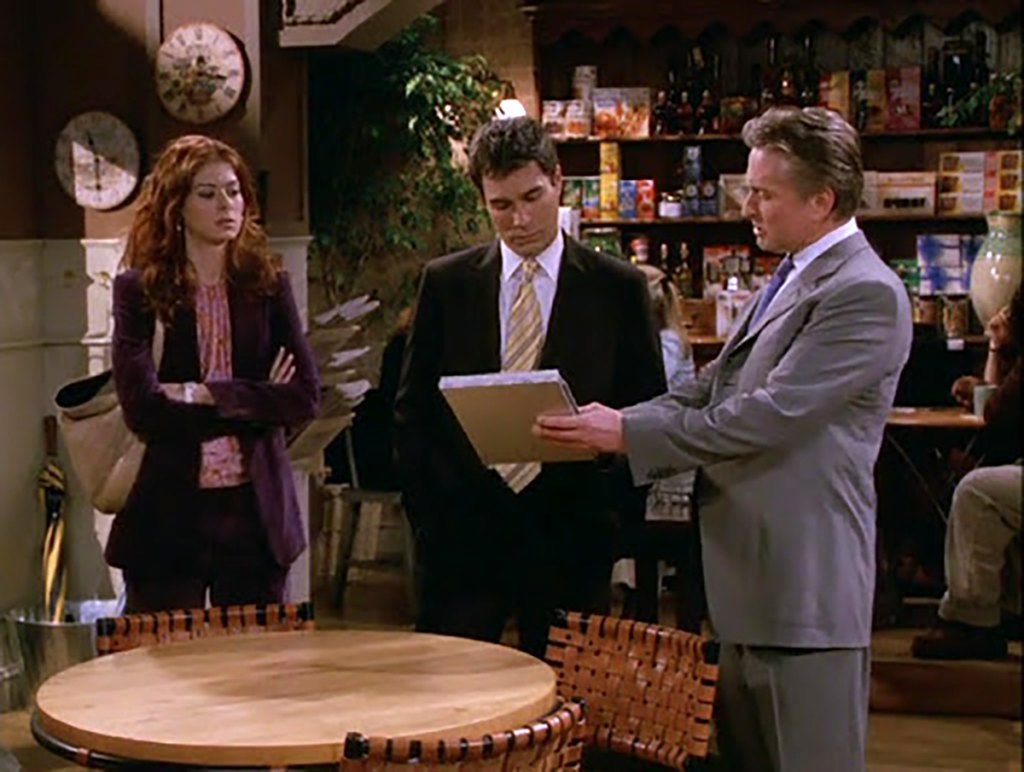
What Douglas told Livingston revealed the challenge facing not only My Three Sons, but many classic television properties. “He said, ‘Yeah, we tried to develop a script and here was the problem. I wanted to retain the fun, folksy, warm energy that the show originally had, but I wanted to introduce more modern problems and themes that are what the world is all about, really. And I could never merge the two. I could never have that old nostalgic kind of warm family unit and then introduce situations that teenagers today are really coping with.'”
It was a dilemma that ultimately proved impossible to solve. “And he said, ‘I just couldn’t get it. Couldn’t make it gel.'”
‘My Three Sons’ was of its time

Looking back, Livingston understands exactly what Douglas meant. Although My Three Sons remains beloved by generations of viewers, it was very much a product of its era. When the show premiered in 1960, he believes it was actually more progressive than people remember. “It was a single dad and this was kind of in the era of Father Knows Best and the American family is the wife who stays at home in the apron, the dad goes to work and the kids are all perfectly fine children,” he says. “But a single dad raising three boys, that was a novel idea back in 1960.”
By the end of the decade, however, America had changed dramatically. “We got The Beatles and Jefferson Airplane and psychedelics and that whole world. And this show is sort of not representative of reality. We’re selling a version of life where problems in families are solved simply and cleanly and easily.”
That tension is precisely what Douglas encountered when trying to imagine a modern version of the series. How do you preserve the warmth people remember while acknowledging the realities of contemporary life? That being said, the original intent was for the actor to play the primary on-screen role.

“He was going to play the character of Steve Douglas,” Livingston says. “It would’ve probably been the same thing in that he would’ve been a widower with three boys and trying to raise them, but do it maybe with a little more grit. Probably wisely, he just thought, ‘Nah, that’s not going to work.'”

Yet Livingston believes the failure wasn’t because there was anything wrong with My Three Sons. In fact, he thinks the show’s enduring popularity proves exactly the opposite. More than 60 years after its debut, viewers continue to discover the series through reruns and streaming services. “It’s easily digested and it’s non-threatening,” he muses. “If you’re just looking for escapism, just a half hour of good writing, good acting—MacMurray certainly brought it, and so did William Frawley. It was also really well written. There were a lot of interesting, funny little situations.”
Interestingly, Livingston points to another television revival as an example of how a classic property can successfully bridge the gap between past and present. The Brady Bunch Movie was a genius move,” he says, “because they could retain who the Bradys were. They hadn’t changed. So you could show the Bradys today in their never-never land that they lived in back then and now they’re still having the real world that they have to be confronted with and work around. And it’s all mind-blowing to them. I thought they grabbed onto a great melding of both concepts and it worked great.”
Conversation
All comments are subject to our Community Guidelines. Woman's World does not endorse the opinions and views shared by our readers in our comment sections. Our comments section is a place where readers can engage in healthy, productive, lively, and respectful discussions. Offensive language, hate speech, personal attacks, and/or defamatory statements are not permitted. Advertising or spam is also prohibited.