Betty White Almost Wasn’t Rose on ‘Golden Girls’—Inside the Decision to Cast Her as Blanche in a Wild Role Swap!
A last-minute role swap made TV history—and changed Rose forever. Celebrate Rose as MeTV's 'Golden Girls of Summer' marathon continues

Key Takeaways
- Betty White almost played Blanche before being cast as Rose on 'The Golden Girls.'
- According to a TV historian, Rose worked so well because Betty was incredibly smart.
- Betty's warmth, humor and connection with fans extended far beyond the screen.
After kicking off with Bea Arthur and Dorotny Zbornak, MeTV’s “Golden Girls of Summer” marathon event continues in week two with things shifting to Betty White and Rose Nylund, who many people have oftentimes viewed as more or less being the same person. Both project the sense of being endlessly cheerful, impossibly kind and able to find humor in virtually any situation. Jim Colucci, the author of Golden Girls Forever, that sort of assessment doesn’t give Ms. White the credit that she deserves as an actress.
Inside Betty White’s ‘Golden Girls’ last-minute role swap
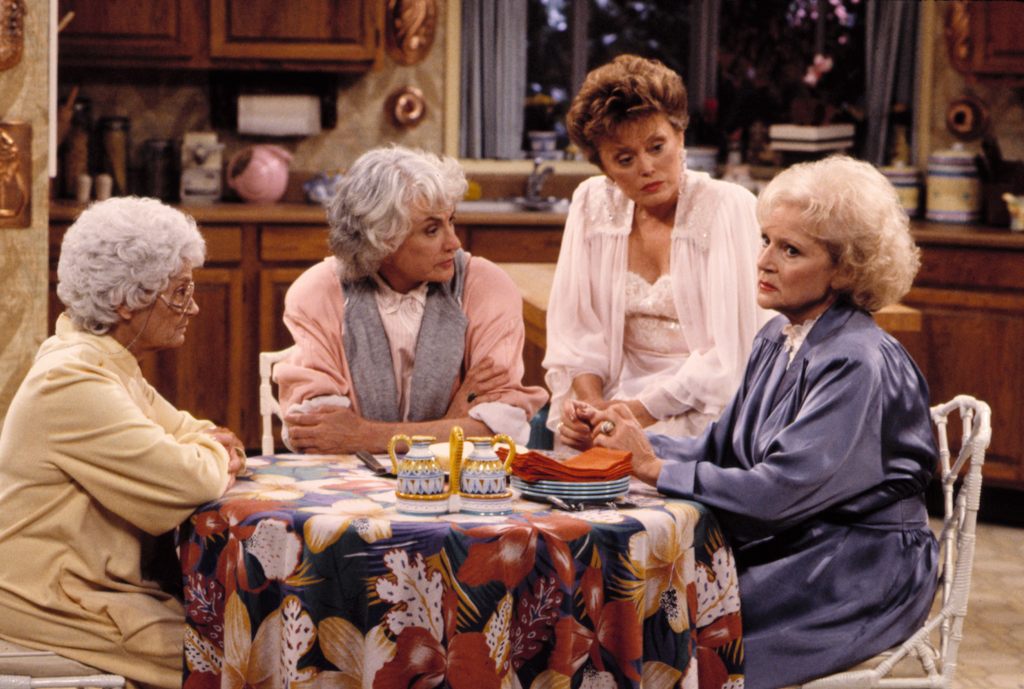
The irony is that the actress who became inseparable from Rose nearly didn’t play the character at all. “They knew older, talented women were out there and not getting work, so they’d be eager to do the show,” suggests Colucci. “They thought, ‘Why not take our pick of them?’ They started this really exhaustive search of women of that age and caliber and, ironically, ultimately came down to two of the most obvious choices—Betty and Rue McClanahan.
“They picked Betty first and they cast her as Blanche, kind of going along The Mary Tyler Moore Show lines and her character there, Sue Ann Nivens. By the time Rue got offered a chance to come in and audition, she had her heart set on Blanche, but they said to her, ‘No, that’s Betty’s role. If you want to do this show at all, you’d better read for Rose.’”
Having lost her choice role in a similar situation on the sitcom Soap, she decided that she would read for the Rose character. But, notes Colucci, “It was only a little bit into the process when the pilot’s director, Jay Sandrich, saw Rue read as Rose and said, ‘I’m going to ask you to do something unconventional. I’m going to ask you to go into the other room and study the Blanche lines and see what you can do with that.’ Rue was, like, ‘Okay!’ She happily did that and then they broke the news to Betty that they really wanted to recommend the switch. To Betty’s credit, she acquiesced, and so history was made really at the last minute there, too.
“Betty played Rose in a way that I don’t think anyone else could have and that’s why that role swap is so vital to the show’s success,” he continues. “Not that Rue isn’t brilliant and probably couldn’t have done something different with it, but I have always had this adage that it takes a brilliant person to play stupid. And Betty was one of the smartest people I’ve ever met. The fact that she played dumb so beautifully is because she’s able to process so many thoughts at one time, where she could remember her next line, hit her mark, play the attitude and, as she told me, ‘Keep the light out of my eyes.’ If you’re going to play somebody that naïve and innocent, you can’t have a twinkle in your eye that says, ‘I know what I’m saying with this risqué line.’ You have to seem like you’re saying it by accident. She had to keep that light out of her eyes for seven years—actually eight if you include The Golden Palace. It required that level of brilliance and Betty brought that.”
Why we love Rose Nylund
With Rose, Betty White created one of TV sitcoms’ most beloved characters. While Dorothy brought skepticism, Blanche brought confidence and Sophia brought mischief, Rose brought something equally important: optimism. Her innocence, kindness and unique view of the world gave The Golden Girls much of its heart. These are some of the reasons we continue to love Rose:
Her innocence never felt mean-spirited: Rose saw the best in people and usually approached life with trust rather than cynicism. Even when she was taken advantage of, her goodness remained intact.
The St. Olaf stories became legendary: No matter the topic, Rose somehow had a story about her bizarre hometown, and the increasingly absurd tales became one of the show’s favorite running gags (as did Dorothy’s reactions to them).
She was often smarter than people gave her credit for: Rose could be naïve, but she wasn’t foolish. Time and again, she revealed surprising wisdom, emotional intelligence and common sense when her friends least expected it.
Her optimism was contagious: When Dorothy was frustrated or Blanche was discouraged, Rose often found a way to see a brighter side of things. Her positivity helped balance the group’s dynamic.
She had impeccable timing: Thanks to Betty’s performance, Rose could deliver an innocent remark that left everyone else speechless. Some of the show’s biggest laughs came from lines Rose didn’t even realize were funny.
She loved deeply and completely: Whether it was her late husband Charlie, her children, her friends or even complete strangers, Rose cared about people with remarkable sincerity.
She wasn’t afraid to be vulnerable: Rose openly shared her fears, insecurities and heartbreaks, making her one of the most emotionally accessible characters on the series.
She reminded viewers that kindness is a strength: While other characters sometimes viewed her gentleness as a weakness, Rose repeatedly showed that compassion and decency require real courage.
She made us believe in the goodness of people: Through heartbreak, disappointment and life’s everyday challenges, Rose never stopped believing that people were worth loving and trusting—a quality that continues to make her inspiring decades later.
And for those wondering about the actress herself:
How old was Betty White when she was on The Golden Girls?: She was 63 years old when she first played Rose on The Golden Girls, and 71 when the spinoff The Golden Palace came to an end.
Getting to know the real Betty White
While researching Golden Girls Forever, Colucci had the opportunity to spend time with Betty White at her home. The experience only reinforced everything he had come to believe about her. “It’s funny that my interaction with each of the women was so typical to who they are,” he laughs. “Betty was so busy at 84 in 2006 that I had an hour with her, so I spent that hour with Betty in her butter-yellow living room at home with her golden retriever Pontiac lying on my feet. It could not have been a more Betty White experience.
“Betty is a pro at interviewing and even though we only had an hour, that was the equivalent of three hours with somebody else, because Betty could speak in perfect sound bites and give you what you need right away. Her memory was impeccable and she had funny thoughts about everything. What’s also funny is that looking at my tape recorder, you can hear at an hour and one minute her assistant come in and say, ‘I’m sorry, Betty, there’s no more time for today.’ That’s how scheduled she was. We ended up having some phone follow-up later, but that one hour ended up being almost enough time.”
Colucci points out that the experience was pretty much how any fan would hope it would be from someone whose public image had become synonymous with warmth and optimism—an image Betty understood better than anyone. “When I arrived at her house,” he smiles warmly at the memory, “I had come from another interview and had been at lunch and had had about 20 iced teas over the course of that interview. By the time I got to Betty’s house, I had to pee so bad that when I rang the doorbell, I knew I had a minute or two to set up my equipment and my computer, but the first thing I could think was, ‘Betty, I’m so sorry, but I need your bathroom right away.’
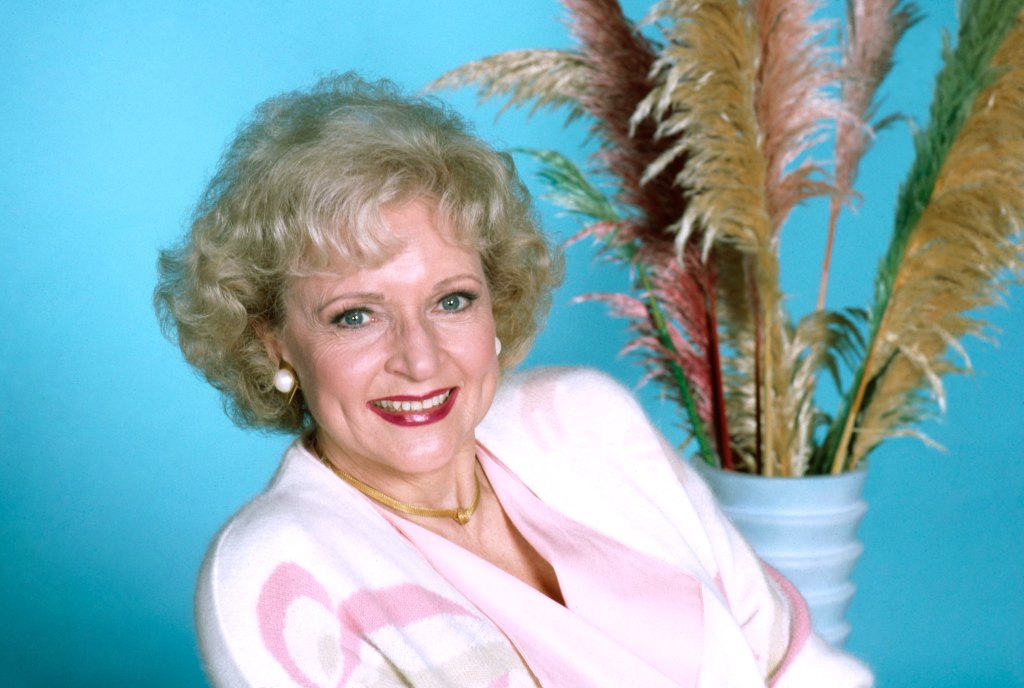
“She and her assistant answered the door and they stood in the doorway, and Betty jokingly partially blocked my way for a second and said, ‘Oh, I’m sorry, I don’t have one. I’m just so nice that I don’t go to the bathroom. You’ll just have to use the gas station down the street.'”
A few years earlier, Colucci had seen another side of White’s connection with people while attending a Golden Girls DVD signing with Betty, Bea Arthur and Rue McClanahan in New York. The event was supposed to be a routine promotional appearance. It turned into something much bigger.
“I had met them each in passing before, but this was really seeing the three of them in action. They were signing furiously. This line was overwhelming. They were such good sports because they could easily have claimed, ‘Hey, we’re in our 70s at this point. We’re tired. We need a nap before we go do David Letterman. We need to freshen up.’ They stayed and signed, and that line was wrapped so tightly around those blocks. I happened to be standing up near the three ladies taking pictures and the Barnes & Noble—if you remember, now it’s the Trader Joe’s in Chelsea—it’s all windows in that one section.”
Among the people gathered outside was one young woman who found a way to get Betty’s attention. “This girl with a poster board pressed herself up against the glass. I mean, it was like The Beatles were in there—and it wasn’t just a calm step-and-repeat line either. This was a line of people going crazy, especially when they could look in the window and get an eyeful of the girls. And so this girl with a poster board pressed herself against the window and the poster board said, ‘Betty, will you share cheesecake with me?’ Betty, who was sitting right by the window, turned to her and went like, ‘Oh, sorry, too full.’ And then smiled at the girl and blew a kiss. The girl fell backward. She practically fainted as though Paul McCartney had blown a kiss at her.
“On top of that,” he closes, “this was a girl who was, at the time, in her 20s. This was 2006. Do the math. These are young kids falling in love with these old ladies. Maybe they remind them of their grandmas or maybe they just remind them of the interplay they have with their own friends of, ‘You’re the one we call the slut. You’re the one who we call dumb.’ I think those relationships are perennial and we can all find ourselves in them.”
How to watch MeTV’s ‘The Golden Girls of Summer: Best of Rose Week’
Monday, June 15
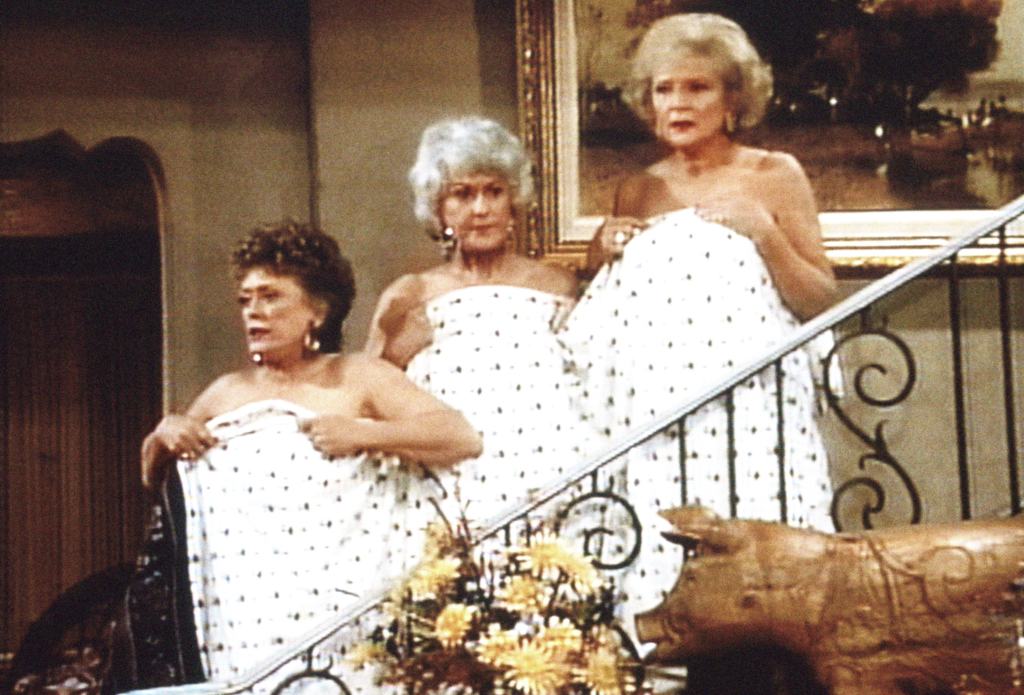
10:00 pm ET/PT—“Break In”: Rose feels unsafe in her own home after a burglary leaves her shaken and questioning her sense of security.
10:30 pm ET/PT—“In a Bed of Rose’s”: Rose surprises her roommates when she brings a man home and the two spend the night together.
Tuesday, June 16
10:00 pm ET/PT—“It’s a Miserable Life”: Rose’s campaign to save a beloved old tree sparks a feud with neighbor Frieda Claxton. When Rose angrily tells her to “drop dead,” the situation takes an unexpected turn.
10:30 pm ET/PT—“Bringing Up Baby”: Rose learns that her late uncle has left her his cherished possession known only as “Baby.”
Wednesday, June 17
10:00 pm ET/PT—“Nothing to Fear”: While preparing to deliver a eulogy at her aunt’s funeral, Rose must confront her lifelong fear of public speaking.
10:30 pm ET/PT—“Yokel Hero”: Rose returns to her St. Olaf roots when she becomes a candidate for the town’s prestigious Woman of the Year honor.
Thursday, June 18
10:00 pm ET/PT—“High Anxiety”: After Sophia accidentally sends her medication down the drain, Rose is forced to confront her growing dependence on prescription painkillers.

10:30 pm ET/PT—“Rose Fights Back”: When she loses her pension fund, Rose must face an uncertain future and consider returning to the workforce.
Friday, June 19
10:00 pm ET/PT—“Once in St. Olaf”: While admitting a patient at the hospital, Rose uncovers a startling secret that connects directly to her past.
10:30 pm ET/PT—“Hey, Look Me Over”: Rose receives an unexpected surprise when she develops old film she discovers in one of Charlie’s cameras.
Conversation
All comments are subject to our Community Guidelines. Woman's World does not endorse the opinions and views shared by our readers in our comment sections. Our comments section is a place where readers can engage in healthy, productive, lively, and respectful discussions. Offensive language, hate speech, personal attacks, and/or defamatory statements are not permitted. Advertising or spam is also prohibited.