Dennis Rush, ‘Andy Griffith Show’ Star, Didn’t Think Anyone Would Remember Him. Then He Read Ron Howard’s Book
Former child actor Dennis Rush reflected on Mayberry, Hollywood and the memories he treasured most

Key Takeaways
- Former child star Dennis Rush reflects warmly on days spent in Mayberry.
- Dennis Rush shares candid memories of working with James Cagney and Lucille Ball.
- 'The Andy Griffith Show' actor Dennis Rush, who played Howie Pruitt, died at age 74.
Former child actor Dennis Rush, best remembered by generations of viewers as Howie Pruitt on The Andy Griffith Show, died on May 9, 2026 at the age of 74. Looking back on his life during an exclusive one-on-one conversation at last year’s Mayberry Days celebration, Rush reflected not only on working alongside legends of the big and small screen, but on the surprising realization that audiences still remembered the little boy who once wandered the streets of Mayberry.
That may sound strange considering he spent much of the late 1950s and 1960s appearing on some of television’s biggest shows, co-starring with people like James Cagney, Lucille Ball, Ron Howard and Barbara Stanwyck. But when the organizers of Mayberry Days first invited him to the annual celebration devoted to The Andy Griffith Show, he honestly believed that no one would notice him.
“Tanya Jones, the sweetest lady in the world [who created and supervises Mayberry Days], contacted me and said, ‘Dennis, we do a little thing in North Carolina called Mayberry Days and I’ve chased you down and would you be interested in coming up?’ ‘Tanya, thank you, but no thank you.’ Really short and sweet.”

The following year, she tried again, and this time Dennis finally admitted what was really bothering him. “‘Tanya, let me tell you the truth. My biggest fear is I’m going to come back and I’m going to stand in a corner and people are going to go, ‘Who is he?’ That was my honest-to-God fear. ‘Those days are so far gone and I had a little part so many years ago. I have gone through college, gone through the Marines, I’m 40 years into the hospitality industry. These are my cherished memories, honest to goodness. You can’t take them away. I don’t share them. I don’t talk about them.’”
But Jones had an answer ready for him. “She says, ‘If this was a 500-piece jigsaw puzzle on my desk, I’m missing a couple of pieces. I’m never going to be satisfied until I get all the pieces. You’re one of the pieces.’ How do you argue with that? Then she said, ‘We are starting to lose people. We’ve lost Andy. We lost Barney, Goober, Gomer. We’ve just lost Aunt Bee. We are trying to keep this thing alive. We need that next generation.’” He was convinced.
He owes it all to James Cagney
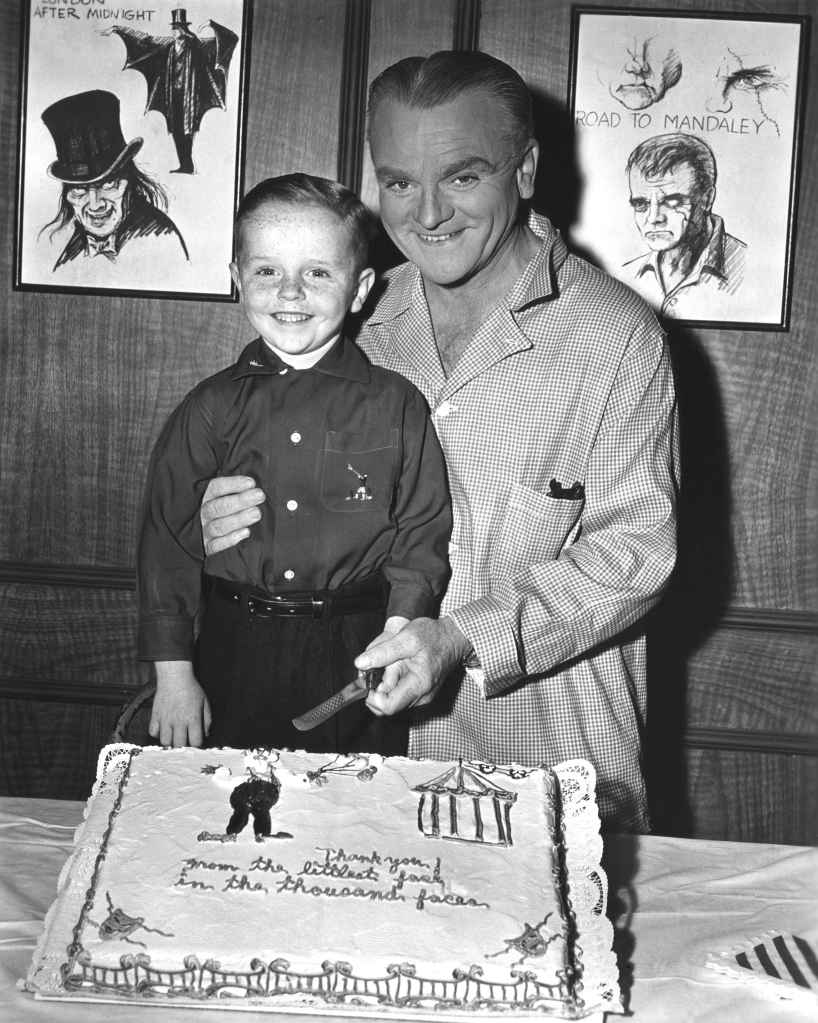
Long before Mayberry, Howie Pruitt, the Westerns and Disney productions, Dennis Rush was simply a kid tagging along with his father to lunch at Universal Studios. “My dad was a film editor. He comes out from Philadelphia with four little kids. My mom’s brother is in California already and he helps my dad get into Universal.”
Occasionally, Dennis would accompany him to the studio commissary. “As a kid, it was your turn, if you were good, to go have lunch with Dad at the studio. It was a big deal. So you go to the commissary at Universal and there are the cowboys and Indians still in full makeup and everybody’s having a good time, but more important to me was that I got quality time with Dad.”
That being said, one lunch changed his life. “A gentleman comes up, taps my dad on the shoulder and goes, ‘Excuse me, hate to interrupt you, but I’ve got to tell you, I’m looking for a little boy to play my son in a movie we’re doing. I just can’t find the right kid. But your son and me, we really look a lot alike.’”

The man making that pitch was James Cagney. “My dad goes, ‘No, no, no, he’s not an actor. He’s just here having lunch with me.’ And James Cagney said—and I remember it—‘Mr. Rush, trust me.’ You look at the picture, I look more like James Cagney than I did my dad.”
His screen test deemed a success, he was cast in Cagney’s Man of a Thousand Faces, the story of horror star and makeup maestro Lon Chaney, alongside him, playing actor Lon Chaney Jr. as a kid.
“In comes this black Cadillac limousine with Tippy the chauffeur and now everybody in the neighborhood is peeking out the door,” Dennis remembers of his days in the old neighborhood. “My mom and I get into the limousine and off to Universal we go, walking onto the set completely in awe.”
James Cagney immediately tried to put the young actor at ease. “He says, ‘Okay now, Dennis, I’m going to take you through the pieces of the film and remember, it’s just pretend.’”
But the moment Dennis never forgot involved the emotional centerpiece of Man of a Thousand Faces, when young Lon Chaney is taken away from his father and sent to an orphanage. “We’re filming on Christmas Eve and he’s just given me the biggest red push sports car. Then they take the car away and James Cagney takes me by the hand. We’re on the Phantom of the Opera stage at Universal and he says, ‘We need to go for a little walk.’
“And he starts building the scene for me. ‘Now Dan, this is just make-believe, but this little boy, he’s never going to see his dad and mom again.’ He knew I loved fried chicken and he says, ‘No more fried chicken. No more Christmases. You’re never going to see your brothers and sisters again. What do you think the little boy feels?’ Well, I was a wreck. Real honest-to-God tears. My hands were shaking. I’m sobbing through the lines of, ‘No daddy, no.’ And when you see that kid’s face up on the screen, those are real tears.”
When the scene was finished, Cagney walked Dennis back over to his parents. “He takes me by the hand and brings me back to my mom and dad and says, ‘He’s just had his first acting lesson. He’s a good little actor.’”
Birth of a child star
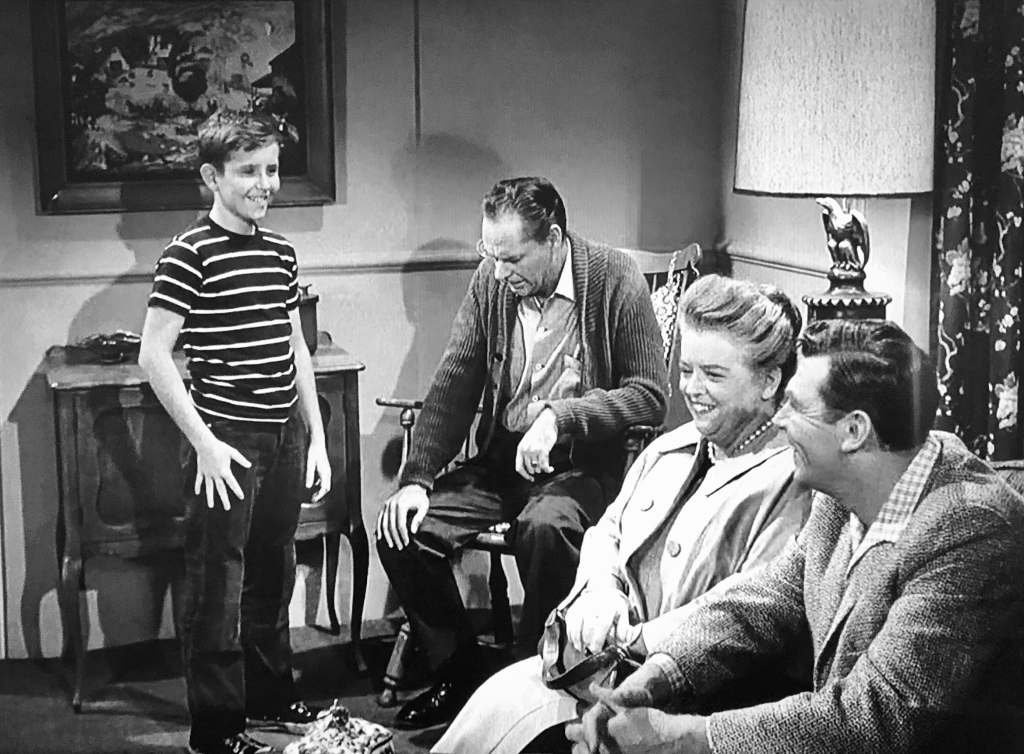
From there, he became one of those familiar child faces that seemed to pop up everywhere on television during the late 1950s and early ’60s. Commercials, Westerns, sitcoms, dramas—he worked constantly, though he admitted there was never any guarantee that an audition would lead anywhere.
“Commercials and then No Name on the Bullet with Audie Murphy, where I just had a little part. But one little role led to another and every couple of weeks you’d go on an interview. You might miss 10 in a row, but hey, it wasn’t that you were the worst kid. You’d go home and it was, ‘Okay, let’s go get a burger.’ No big deal. Then, instead of getting one out of 10, you started getting one out of five. Suddenly, it was you just went in and you were the only one they interviewed. That’s when you realized you were building a reputation.
“You’d go on these interviews and sometimes there were 10 kids and sometimes there were 300. Billy Mumy? Anytime you walked in and Billy was there, you knew it was going to be a tough interview. They were cattle calls. ‘We want to see every kid here.’ And it was like a machine gun: no, no, yes, no, maybe. ‘Okay, next group of 50.’ But after a while, directors remembered you. Bob Sweeney would look up and say, ‘Dennis, didn’t we work together last year?’ ‘Yes sir.’ He’d go, ‘This interview’s over. He’s not a brat. He knows his lines and he’ll do the job.’”
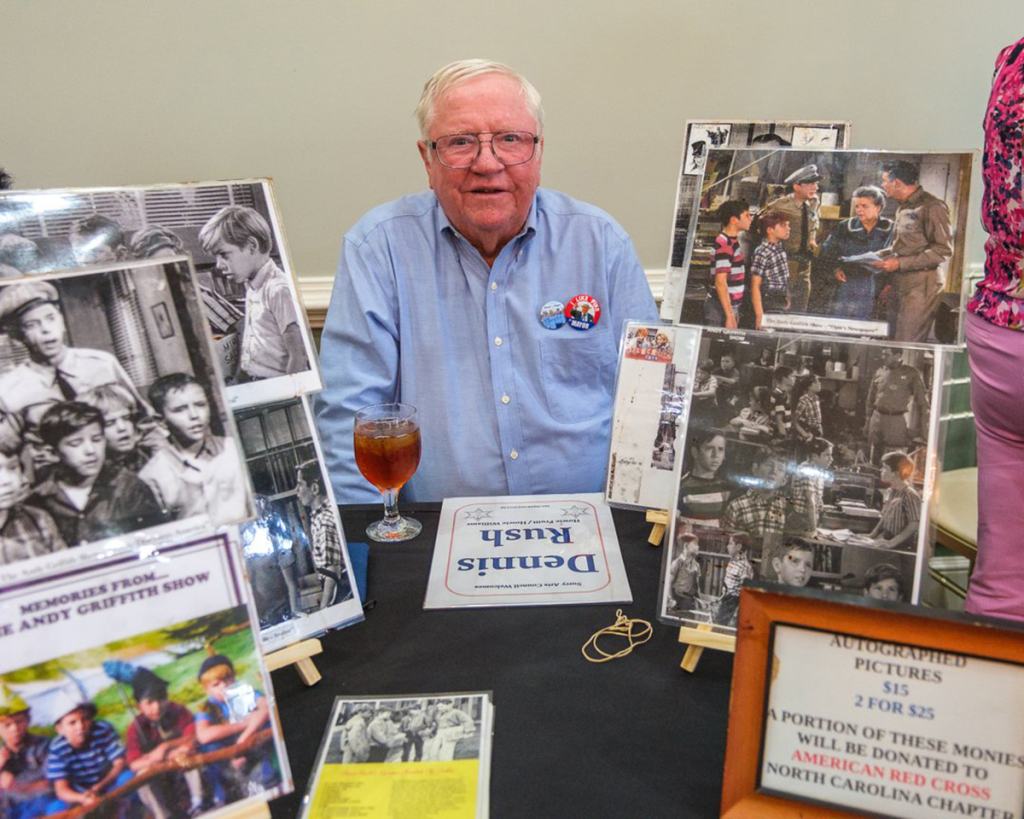
There were, however, problems with some other kids where people didn’t want to work with them. That even happened on The Andy Griffith Show with a young actor named Joey Scott, who had a problematic mother on set.
“He just passed away. He was a good little actor, but his mom… We were dress-rehearsing with Bob Sweeney and she comes over right in the middle and says, ‘Excuse me, my son only has two lines and Johnny Paul has three and Howie has three and he…’ Joey was with us on two episodes, ‘Andy Discovers America’ and then ‘Opie’s Hobo Friend,’ and by episode three, here comes Trey Bowden. Joey had been moved aside because they just didn’t have time to waste. And it was a shame because he did other things. He was a good little blonde-haired actor, cute as a button, but that’s how they looked at it. This was a business. We were treated like young adults and they needed you prepared. If you can’t hit this line or you can’t hit that mark on the floor and we start doing six or seven takes, that’s wasting money. They didn’t have time for it.”
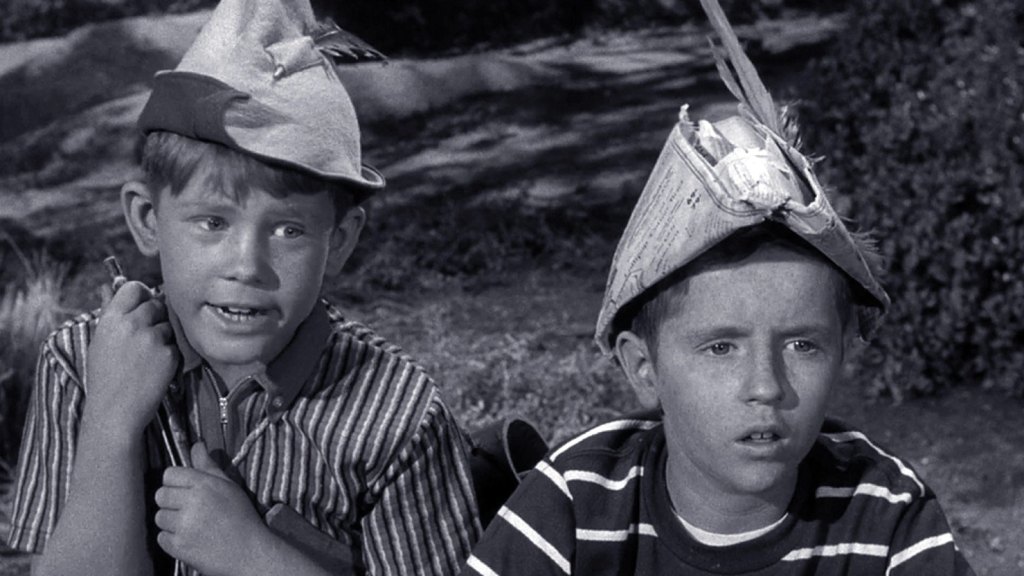
Dennis notes that he genuinely loved the Westerns that dominated television during that era, especially Wagon Train. “I had seven or eight Wagon Trains. Always a different character and I always got hurt. I had a wagon run over my legs one year. I came down with fevers, but I worked with Ward Bond, who seemed 10 feet tall. Powerful, but a nice guy.”
He also saw firsthand how dramatically the atmosphere of a series could change depending on who was leading it. “When Ward Bond passed away suddenly, all of a sudden John McIntire comes in and now he’s the trail master. Completely different feeling and scenario. He was much more the gentle grandfather type.”
And occasionally Hollywood itself could feel hilariously casual. “There was a time I was doing Wagon Train and they needed a kid to walk onto another set real quick and say, ‘Hey Sheriff, the stagecoach is coming.’ So I stayed in the same outfit, moved one stage over and did the scene.”
‘The Andy Griffith Show’
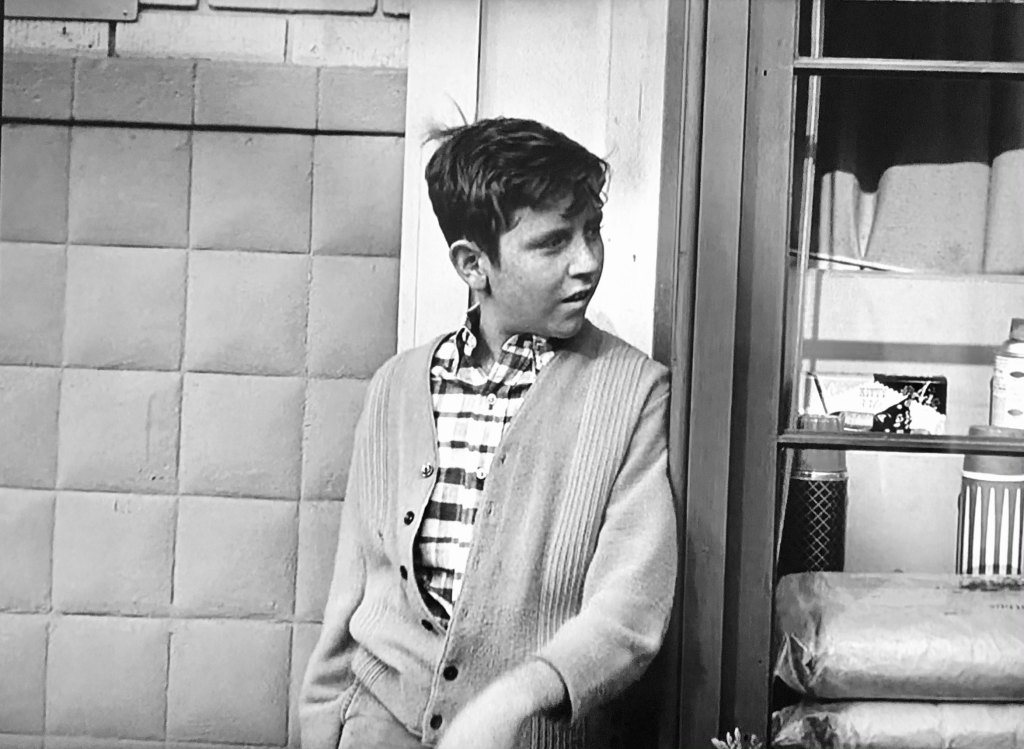
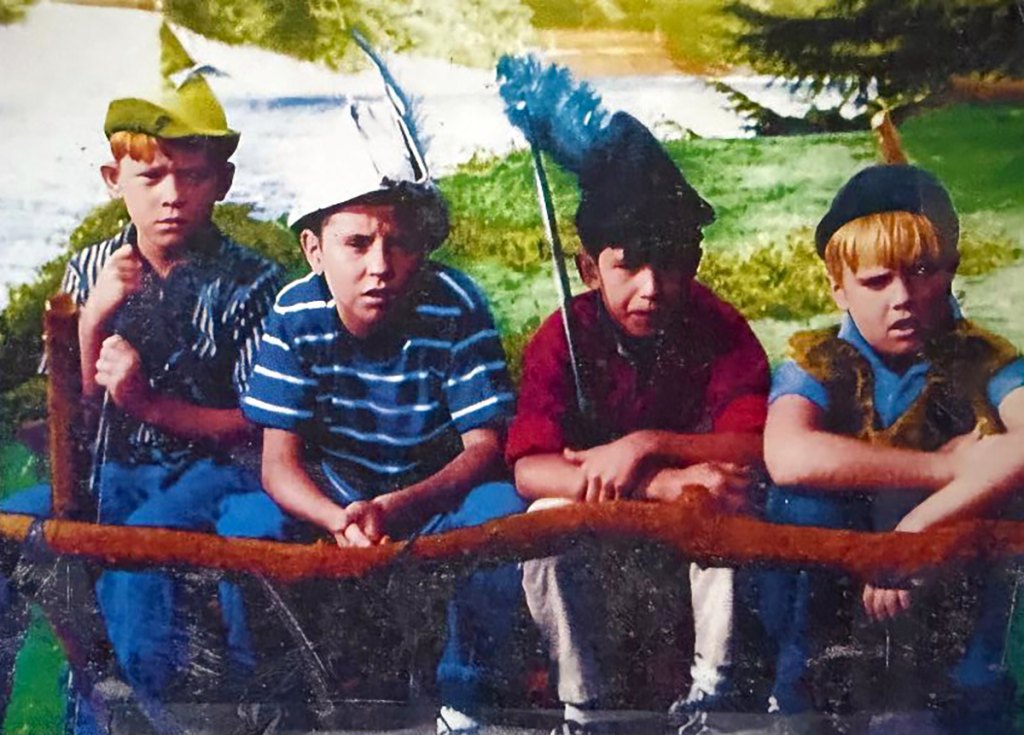
If Dennis Rush became recognizable from anywhere, though, it was Mayberry. Landing the role of Howie Pruitt on The Andy Griffith Show placed him alongside two of the most recognizable child actors on television: Ron Howard and Keith Thibodeaux.
“I remember vividly walking through the big sound stage and here is Little Ricky and here’s Opie Taylor and they welcome you aboard and I go, ‘Whoa, I’m working with two of the big kids in Hollywood.’ Now I worked with all the other kids that think they’re the big kids, but come on, this is royalty.”
The three boys immediately bonded. “Nicest guys in the world. We just hit it off and we played and that was our school teacher days. We gave Ms. Crump a hard time.”
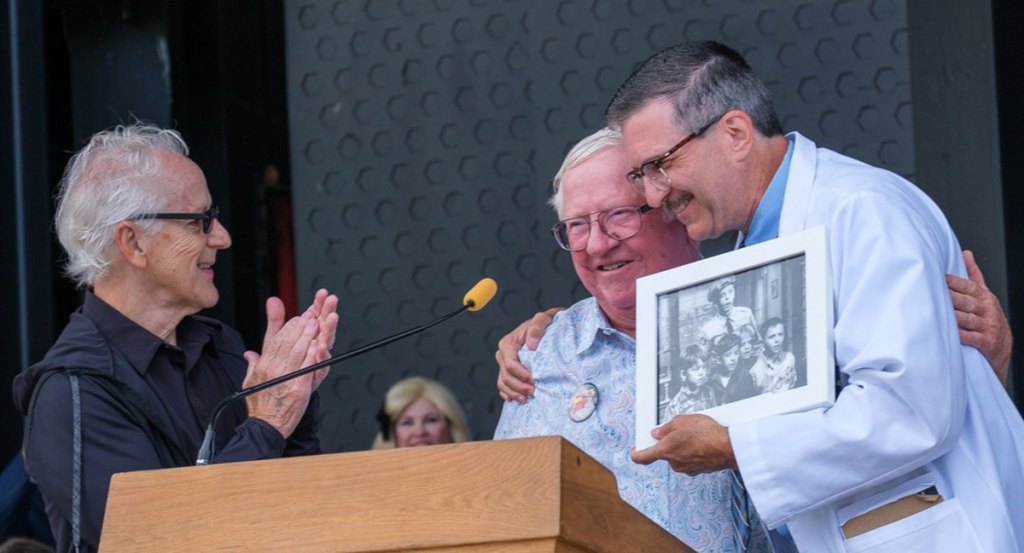
One of Dennis’ favorite memories involved the episode “Andy Discovers America,” in which the boys stumble across a moonshine still while playing in the woods. Years later, during Mayberry Days, Clint Howard handed Dennis a copy of the memoir he had written with Ron Howard titled The Boys. “Clint comes over and says, ‘Hey Dennis, my brother and I have just written a book. We’d like you to have a copy.’ Then he tells me, ‘You got to promise to read a good portion of it during your flight back.’ I get to about page 90 on the plane and I’m like, ‘Oh sh**!’”
The passage described how young Ron Howard had been pulled aside by director Bob Sweeney and his father, Rance Howard, because they felt he wasn’t fully concentrating during production. “Ron is bringing up this episode, ‘Andy Discovers America,’ because he wasn’t being bad or a jerk. I think he was just excited about having kids on the show with him and was acting up a little bit.”
Then came the part Dennis never expected to read.“Bob Sweeney and Rance take Ron aside privately and go, ‘Excuse me, Ron, you’re not cutting it. You’re not delivering your lines. You’re not hitting your marks on the floor. You’re really giving a half-hearted effort here and we don’t appreciate it. And just for you to know, you’re not even the best kid actor. That would be Dennis Rush.’”
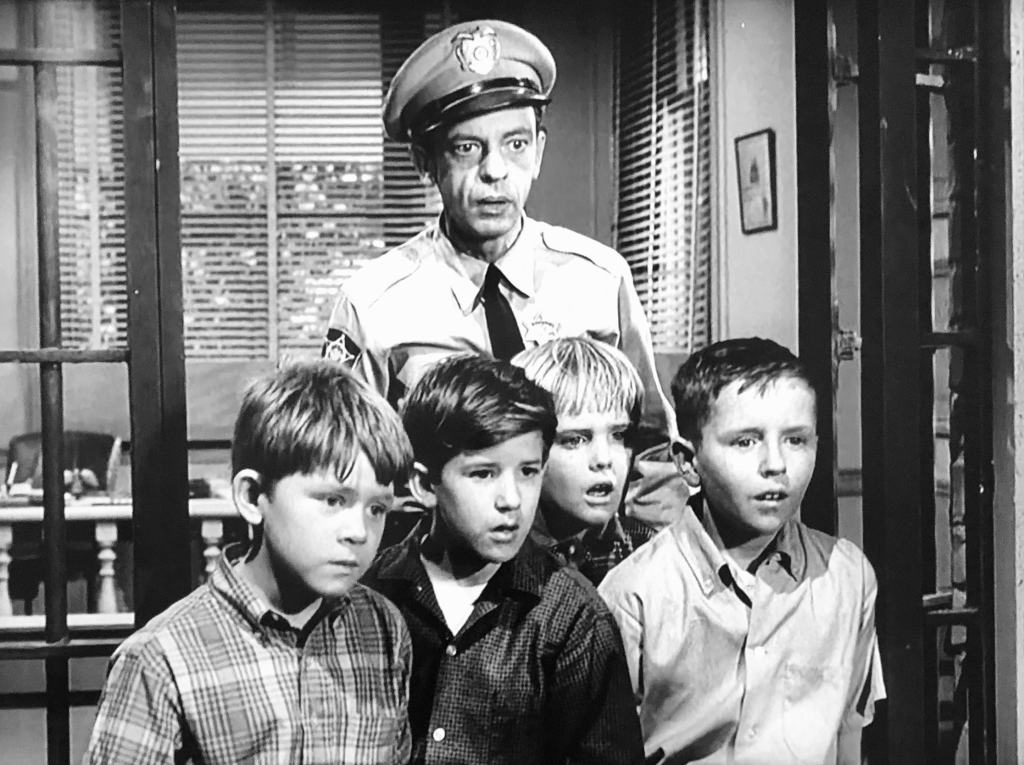
Dennis burst out laughing, remembering it. “That’s where the old ‘oh sh**’ comes from. Oh, I can never see this guy again.” But Clint Howard later assured him there was no embarrassment attached to the story. “Clint goes, ‘Dennis, that stuck with him because it was true.’ He said Ron was honest: ‘I wasn’t giving my best effort.’ And Ron uses that episode now to drive other actors by saying, ‘I know you’re not giving your best effort.’”
Dennis appeared in multiple episodes of The Andy Griffith Show and still remembered them vividly decades later. “We steal the food from our families and give it to the hobo and Andy and Barney find out it’s a con job. Then we’re trying to sell the bad Miracle Salve and that was the first time I got to work with Gomer. Then we go out into the forest when Barney and Gomer get lost and that was Jim Nabors’ last episode because that’s when he moved to Gomer Pyle U.S.M.C.”

He especially loved one behind-the-scenes moment involving Don Knotts. “Barney’s trying to hang himself in the closet. They’ve got his neck in a harness trying to stretch him taller for the physical. We’re rehearsing the scene and the dialogue is going rapid fire and suddenly I blank on my line and just ad lib: ‘Well, he’s hanging himself in your closet.’ Bob Sweeney—I thought it was a moment from The Exorcist the way he turned his head. Ron and Keith are completely thrown off and Bob just says, ‘Excuse me, what did you say?’ ‘Sir, I’m sorry, I forgot my line.’ But Bob says, ‘No, it’s a better line than what was in the script. Script lady, write it in. That’s the line now.’ The thing is, you didn’t change lines in those days. This wasn’t Robin Williams’ time. And you were a kid. I was 11 years old. So it normally would be, ‘How dare you? We wrote this script to be performed.’”
From ‘The Big Valley’ to ‘Lucy’

Dennis quickly learned that talent and preparation earned respect from adults who were already television legends. One of those people was Barbara Stanwyck, whom he first worked with on Wagon Train before later auditioning for her Western series The Big Valley.
“We’re doing a Wagon Train with Barbara Stanwyck. Four foot nothing. Looks like Margaret O’Brien. And I mean, she comes on the set, it’s quiet. It’s Miss Stanwyck. Years later I auditioned for The Big Valley and there she was, sitting in on the casting session. She looked at me and says, ‘Dennis, did we work together?’ I go, ‘Yes Miss Stanwyck, we did a Wagon Train a couple of years ago.’ She goes, ‘This interview’s over.’ Just because you weren’t a jerky kid. And wow, things like that built your confidence to no end.”
The same thing happened with Lucille Ball. Dennis had originally auditioned to become one of the regular child actors on The Lucy Show, but after an exhausting day of auditions, he didn’t get the part. “We were there all day and finally they’re saying, ‘Okay, you 295 kids, thank you but no thank you.’ We’re down to about four or five and then Lucy comes over and says, ‘Dennis, can I talk to you?’ I go, ‘Of course.’ And she says, ‘Now Dennis, you don’t look like me. You don’t look like Vivian [Vance]. But you’re a good little actor and I guarantee we’re going to work together.’ A month later, I get a script and now I’m the captain of the pee wee football team while Lucy’s pretending to referee the game.”
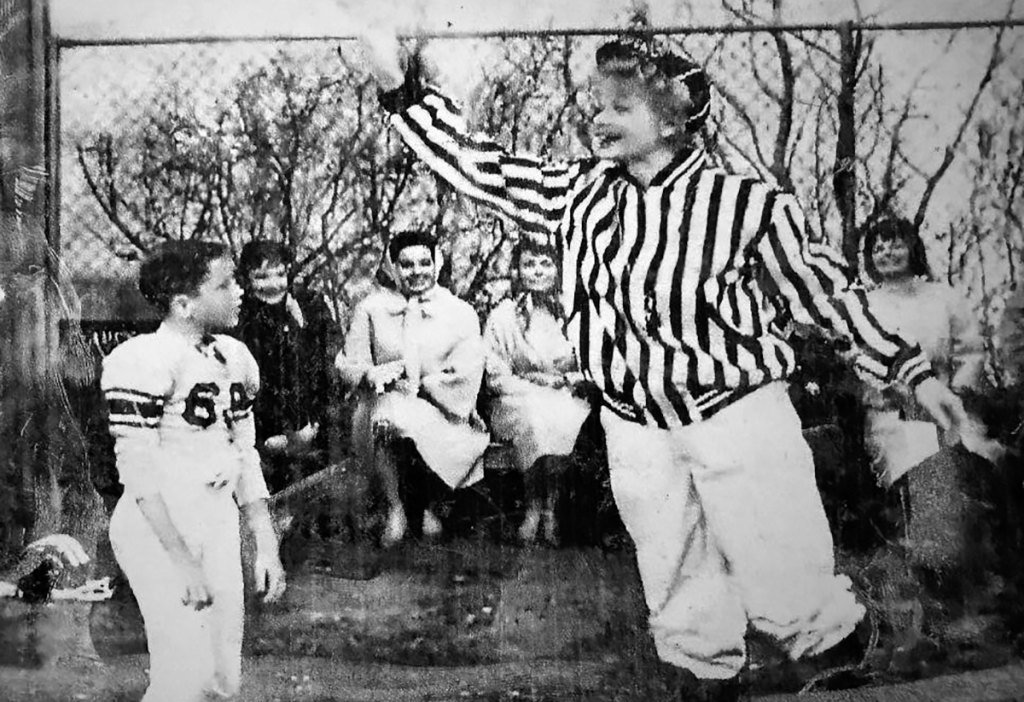
What Dennis remembered most vividly, though, was Lucy teaching him how to perform for a live audience. “I’m used to having the microphone right above your head and just talking normally. Lucy says, ‘Excuse me, do you see those seats up there?’ She’s wearing blue jeans and a flannel shirt with her hair pulled back. This is not Lucy-Lucy, this is Lucy the businessperson. And she says, ‘Come Thursday night, those people cannot possibly hear you.’ Then she gives me a little jab in the side: ‘You’ve got to project. Everybody’s got to hear you.’”
Live television, however, terrified him, and Dennis admitted he had already learned that lesson the hard way during an earlier appearance on a Christmas special hosted by Dinah Shore. “All I had to do was run around a corner in pajamas and say, ‘Grandpa, sing me a story.’ During rehearsal the audience was dark and empty. But then it goes live and suddenly there’s 800 people there, the lights are blazing and the camera’s in your face. Deer in the headlights. Oh my God, I froze. I could swear it lasted 30 minutes, but it was really only three.”
Fortunately for Dennis, veteran entertainer Burl Ives instantly rescued him. “Burl Ives, God love him, picks me up and says, ‘Timmy, do you want me to sing you a story?’ And I’m like, ‘Uh-huh.’ That was my first live performance. My grandparents are saying, ‘Oh, you were adorable.’ My dad’s going, ‘You blew the line.’ I knew it.”
Things continued from there, bringing with it the realization that he had become part of a remarkable generation of child actors. “I was jealous of guys like Jay North and Jerry Mathers because they had that one role everybody knew them for, but that was just kid ego. Later, Keith Thibodeaux and I would talk to other actors and they’d say, ‘God, you were lucky because you got to do so many different parts while we were stuck doing one character.’ And they were right. I got to do drama, comedy, Western—just a little bit of everything.”
Changing directions

For all the fun Dennis had as a child actor, there was also a side of the business that became far more complicated once he grew older. Unlike some former child stars who struggled with the transition into adulthood, Dennis insisted that acting faded from his life incrementally, so he was able to move on without bitterness. “For me, it happened at the right time. It was gradual. Instead of three or four interviews a week, suddenly it was one phone call a week and then it slowly started going away. But by then I was in high school and I had a life ahead of me.”
Sports was a big part of that life. “I was lucky enough to play on a very good baseball team with two All-Americans, so your life was already changing gradually anyway. It wasn’t some dramatic, ‘Oh, it’s over.’ But yeah, the calls stopped coming because now the 21-year-old is playing the 17-year-old and the parts start drying up. I’m thrilled for the kids who made what I call the crossover. In my time, that was Ron Howard. But for me, it was changing, it was ending and that was okay. It was good for me.”

That didn’t mean the adjustment was effortless. He still remembered how awkward it could be trying to navigate ordinary teenage life while carrying the label of “former child actor.”
“The worst thing in the world was being a kid actor in high school and the abuse you took. ‘Hey Beef! Hey Little Ricky!’ They didn’t even call me by name because I had a hundred different names from different shows. It was always, ‘Hey kid actor.’ And I was like, ‘Oh God, move on.’”

After high school, he joined the Marines for two years (“I made it safely through that craziness), after which he attended the University of San Diego while trying to devise what he wanted to do with his future. “I wanted to be a school teacher. I wanted to be Miss Crump.”
Eventually, financial reality pushed him in another direction. “I’m bartending, working in a very nice hotel while finishing my teaching degree and suddenly I realize I’m making more money bartending than I’d ever make as a school teacher. So then I’m teaching in the morning, bartending at night until finally I say, ‘I can’t do this anymore.’”
Hospitality ultimately became his second career, lasting nearly half a century. “I was morphing into the hospitality business and 49 years later, only because of a lousy bug [COVID], my boss—who hired me 36 years earlier—says, ‘How about if I give you a little golden parachute?’”

Retirement arrived during the pandemic, which Dennis joked was terrible timing. “Retiring during a pandemic? Don’t ever do it. Phone calls, Social Security, you couldn’t get anybody to answer the phones. Oh yeah, that was a three-month struggle.”
But perhaps the most painful transition of Dennis Rush’s life had nothing to do with leaving acting behind. It involved discovering what had happened to the money he earned as a child performer. “All along it was, ‘Don’t worry about college. Don’t worry about it. You’ve got a little nest egg.’ Then one night after I got back from the Marines, we’re sitting around the kitchen table and I say, ‘Okay, can I see the checkbook?’ And there is no checkbook. That was a wake-up call. Suddenly I’m in college and they’re saying, ‘We need a $1,200 check,’ and I’m going, ‘Wait, you mean I don’t have…?’”
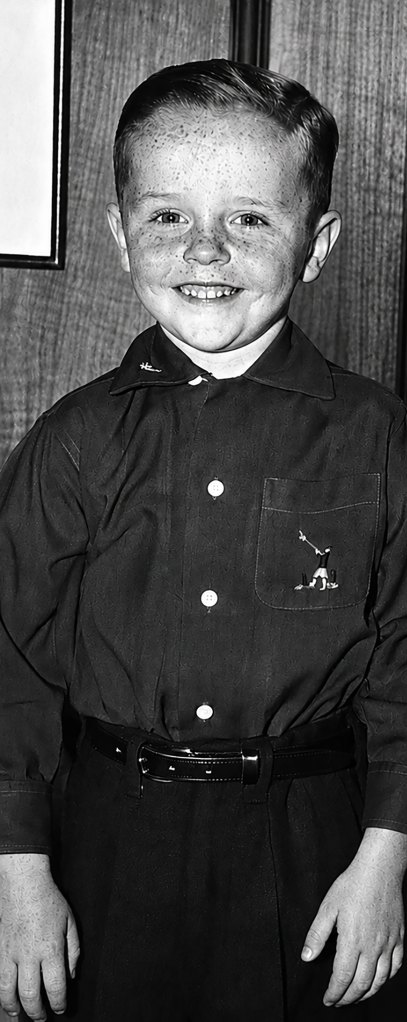
The resentment toward his father became intense and lasted for years. And what made the reality of the situation especially painful was that he genuinely believed his future had been financially protected. “I’d been told for years, ‘Don’t worry about college.’ Then you start getting Social Security information showing your yearly earnings and you go, ‘Whoa.’ I remember my mom coming into the room with this blue envelope. There were nine $100 U.S. Savings Bonds in it. She says, ‘Dennis, this is yours,’ and puts it in a drawer. Well, it wasn’t in the drawer anymore.”
Still, even discussing those painful years, Dennis refused to define his life through bitterness. “You’re not going to steal the memories that I have. Those are the cherished things.”

Though he and his father never fully reconciled before his death, Dennis eventually came to understand the complexity of the situation. “My mom was always saying, ‘Dennis, I’m so sorry we did this.’ But the truth is, I helped support the family. I helped with the grocery bills. Mom, it’s all good. I just wish we had talked about it when I was 16 or 17.”
And in the end, for all the television appearances, famous co-stars and memories of Mayberry, what he seemed to treasure less than a year before his own passing wasn’t fame itself, but the physical reminders of a childhood and career that had long since passed into television history. “Mom would gather photos whenever she could and back then, pictures weren’t easy to come by. This wasn’t everybody walking around with a camera. She’d put everything into a scrapbook and whenever Aunt Mary and Uncle Bob came over it was always, ‘Dennis, go get your scrapbook.’ And I’d go, ‘Oh, Mom, do I have to bring that thing out again?’
“But there isn’t a more prized possession in my life right now. It’s old and tattered and you open it gently, but it has everything I ever did.”
Conversation
All comments are subject to our Community Guidelines. Woman's World does not endorse the opinions and views shared by our readers in our comment sections. Our comments section is a place where readers can engage in healthy, productive, lively, and respectful discussions. Offensive language, hate speech, personal attacks, and/or defamatory statements are not permitted. Advertising or spam is also prohibited.