‘Doctor Who’ Launches ‘Circuit Breaker’ Multimedia Event and Fleshes Out the Fugitive Doctor
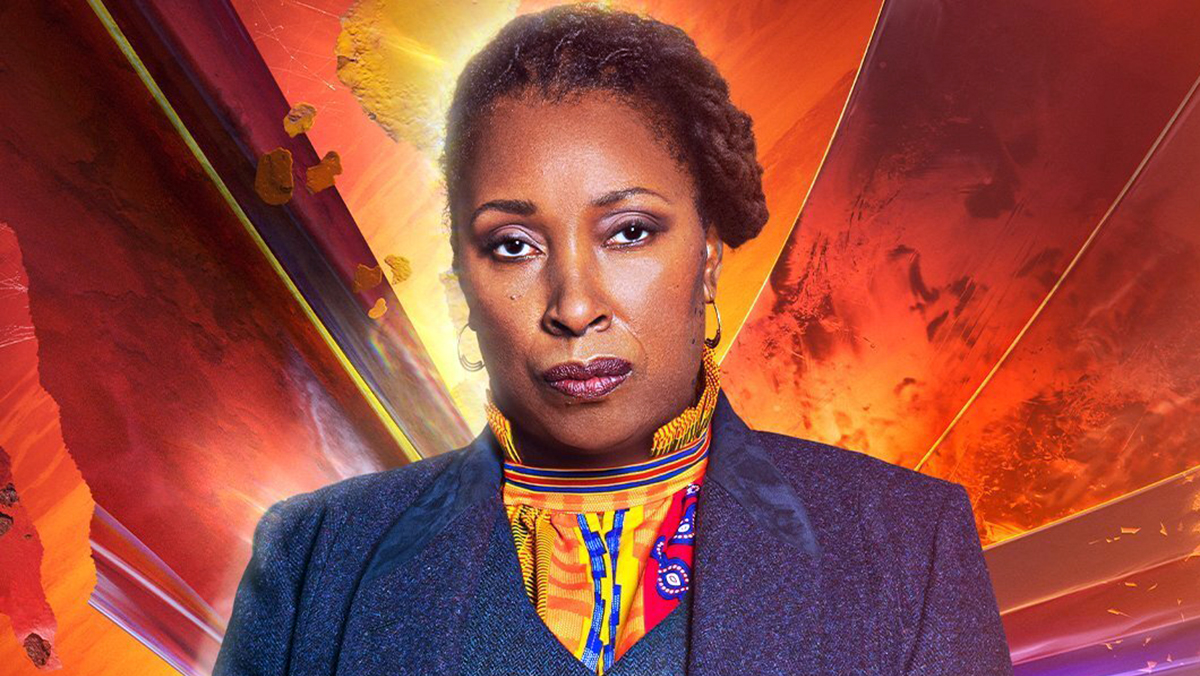
Jo Martin’s Fugitive Doctor takes center stage in Doctor Who’s ambitious new event, 'Circuit Breaker'
Key Takeaways
- Multimedia launch: Circuit Breaker debuts June 25, 2026, across books, audio and comics.
- Fugitive Doctor focus: The event centers on Jo Martin’s popular yet controversial Doctor.
- Expanded lore: The story explores the 'Timeless Child' mystery and unseen Doctor history.
When Doctor Who launches its new multimedia event Circuit Breaker on June 25, 2026, it won’t unfold as a traditional television season or even a single self-contained storyline. Instead, the BBC and its various licensing partners are constructing something far more sprawling: a connected narrative told across novels, audio dramas, comics, digital media and additional tie-ins spread throughout the summer. At the center of it all is Jo Martin’s Fugitive Doctor, one of the most intriguing—and controversial—incarnations the franchise has introduced in years.
For Richard D. Carrier, who has closely followed the evolution of Doctor Who’s expanded universe storytelling and guides the YouTube channel Clever Dick Films, Circuit Breaker represents less of a radical new direction and more the latest version of an experiment the franchise has already attempted several times before.
“This is the third time now that BBC Worldwide has put together a kind of multimedia Doctor Who-related event,” Carrier explains. “The first one they did was during Jodie Whittaker’s era, and it was a multimedia thing called The Time Lord Victorious, which was very much based around David Tennant being a popular Doctor.”
‘Time Lord Victorious’
That earlier event revolved around a darker emotional gap in Tennant’s Tenth Doctor era (specifically the period between his increasingly arrogant “Time Lord Victorious” behavior and the inevitability of his regeneration). According to Carrier, the project attempted to answer questions left unexplored onscreen.
“There’s a period towards the end of David Tennant’s time in his specials, just before he regenerates, where he goes a bit megalomaniacal and sort of goes, ‘I’m fed up of following the rules. I’m a Time Lord and I’m going to make things the way they want to be, the way I want them to be,’” Carrier says. “And he goes a bit crazy.”
To explore that unseen period, Doctor Who branched outward into multiple forms of storytelling simultaneously. “Because Doctor Who obviously is popular, there are several different businesses that are involved in making either expanded universe stuff or merchandise,” he says. “So you’ve got Titan Comics, Big Finish Audio Productions, BBC Books and even an escape room game was linked in.”

In theory, the idea mirrors what Star Wars once attempted with Shadows of the Empire — a large-scale multimedia event that creates the feeling of a major franchise installment without requiring a movie or television series to anchor it. Remembers Carrier, “LucasArts and Lucasfilm decided basically to do everything that they would have done for a Star Wars film, but not the film. So you got a game, you got a couple of games, you’ve got comic book, you got a novel, soundtrack, making of book, toys and everything.”
But as ambitious as the concept may be, Carrier believes these types of events can sometimes create unintended frustration for fans, particularly longtime collectors and completists. “I think fans by nature, certainly in my experience, we’re completists,” he says. “If I get a book in a series, I have to get every single one of them because I’m going to have a book missing otherwise.”
Accessibility can also become an issue. Carrier points to previous Doctor Who events that incorporated location-based experiences available only to fans able to travel. “There was also another live theater thing in London,” he recalls. “Which was quite interesting. My wife and I went to that, but that would be something that you wouldn’t have been able to go to, for example, because it was only in London. So it seems a bit exclusionary. That doesn’t mean that the people that are actually creating these things, the actual writers and artists, are themselves cynical. The Time Lord Victorious thing had some really good stuff, which you could enjoy standalone.”

A later multimedia event called Doomsday failed to generate nearly the same enthusiasm, something he partly attributes to the absence of a major Doctor actor anchoring the project. “I think because Time Lord Victorious had David Tennant either in the audios or on the cover of the book, there was a certain legitimacy,” he explains. “Whereas Doomsday, for one reason or another, didn’t have that.”
The Fugitive Doctor returns
This may explain why the BBC has now shifted its focus toward Jo Martin’s Fugitive Doctor. “I think they thought, ‘We want to do another one, but we haven’t got a current Doctor and we can’t do David Tennant again,’ Carrier muses. “One of the things that they thought would be good and that there’s a desire for is something that revolves around the Fugitive Doctor.”
For casual viewers, though, that immediately raises another question entirely: Who exactly is the Fugitive Doctor? The answer is complicated — even by Doctor Who standards.
“During Jodie Whittaker’s second series, there was a story where she encounters a woman called Ruth, played by Jo Martin,” he details. “And through the course of the story, it turns out that Ruth is actually an incarnation of the Doctor, but the Doctor, Jodie Whittaker, doesn’t recognize her.”

That revelation instantly created one of the biggest continuity mysteries modern Doctor Who had introduced in years. “If she’s a future incarnation, then why doesn’t she remember being Jodie Whittaker?” Carrier asks rhetorically. “And if she’s a past incarnation, which didn’t seem possible at the time, why does Jodie Whittaker not remember being her?”
The answer ties directly into one of the most divisive mythology changes in franchise history: the Timeless Child storyline. “It turns out through the course of Jodie Whittaker’s arc that actually she’s not quite a Time Lord, she’s not quite from Gallifrey. That actually she was, as a child, discovered on a planet next to this rift into another dimension.”
According to the storyline, the child who would become the Doctor possessed the natural ability to regenerate endlessly. Gallifreyan scientist Tecteun allegedly extracted that ability and used it as the basis for Time Lord regeneration itself.
The implications were enormous. Instead of William Hartnell being the Doctor’s true first incarnation, the series suddenly implied there had been forgotten lives and erased regenerations before him.
“It turns out that once this ability to regenerate was extracted, the leaders of Gallifrey then used her as a special operative who would do kind of like a shady CIA-type organization called the Division,” Carrier says. “And so that child grew up to be the first Doctor, William Hartnell.”
That hidden era is where many fans believe the Fugitive Doctor belongs. “It’s generally accepted that she’s a pre-William Hartnell Doctor. And a lot of people don’t entirely like it. Some people think it’s awful and terrible and the worst thing that’s ever happened to Doctor Who.”
Some critics objected because they felt the reveal undermined Hartnell’s historical importance as the original Doctor. Others simply felt the continuity became overly convoluted. Carrier himself has mixed feelings about the concept.
“My problem with it is that personally, I don’t quite like the idea that she called herself the Doctor before William Hartnell,” he says. “Because it was established that the Doctor chose that name when he was younger to remind himself that he wanted to help people.”
There’s also the issue of the TARDIS itself. “It is firmly established that he stole an old malfunctioning TARDIS and flew off in it. And in the very first story, it gets stuck as a police box and he never fixes it. But when we see the Fugitive Doctor, she flies in a TARDIS that looks like a police box. And if she’s from before William Hartnell, that doesn’t quite make sense. But as I said, it’s never been definitively stated that she’s from before Hartnell, so you can get away with it.”

And whatever continuity debates surround the character, Jo Martin herself made an immediate impact on audiences. “She’s quite a very popular character,” opines Carrier. “Some people actually prefer her, because she’s a little bit more angsty and a little bit more gritty,” Carrier explains. “She’s still the Doctor, but she doesn’t follow the rules as such. She’s not as nicey-nicey.”
Her importance extends beyond characterization alone. Martin became the first Black actor to portray the Doctor in live action, making the Fugitive Doctor a landmark figure in franchise history regardless of how much screentime she initially received. “She’s quite important,” Carrier points out, “because it’s further legitimizing her as a genuine incarnation of the Doctor.”
That legitimacy has continued to grow through expanded media appearances, particularly through Big Finish audio productions that are increasingly fleshing out her era and backstory.

“She’s started doing things for Big Finish to expand on her story because I think a lot of fans were hungry for her to have her own episodes,” suggests Carrier.
Which ultimately may explain why Circuit Breaker exists in the first place. The Fugitive Doctor occupies a unique position within Doctor Who. She’s mysterious enough to generate endless speculation, controversial enough to inspire debate and popular enough to support an entire multimedia event. Whether fans embrace every aspect of the Timeless Child mythology or not, Jo Martin’s Doctor has become impossible to ignore. And with Circuit Breaker, the BBC appears ready to finally push her from intriguing anomaly to central figure in the larger Doctor Who mythology.
Circuit Breaker launches on June 25th.
Conversation
All comments are subject to our Community Guidelines. Woman's World does not endorse the opinions and views shared by our readers in our comment sections. Our comments section is a place where readers can engage in healthy, productive, lively, and respectful discussions. Offensive language, hate speech, personal attacks, and/or defamatory statements are not permitted. Advertising or spam is also prohibited.