How Tom Baker Changed TV Forever as the Fourth Doctor Who: ‘I Became the Doctor’ (Exclusive)
A look at the actor's remarkable era, his acting choices, behind-the-scenes drama and lasting impact

Long before Tom Baker stepped into the TARDIS and became the most iconic face of Doctor Who, he lived several lifetimes’ worth of improbable experiences. Born in Liverpool (yes, the same city that The Beatles hailed from) in 1934 to a working-class Catholic family, Baker grew up amid scarcity. His reflections on that period often carried a mixture of humor and melancholy, shaped by the faith that permeated every corner of his childhood. “Being able to believe in miracles,” he once said, came naturally to him because that was what priests asked of him. His mother would remind him that “being poor was good fortune,” a worldview he absorbed deeply in his formative years.
That religious foundation guided the early direction of his life. At 15, he entered a monastery and spent six years as a monk. The discipline, ritual and philosophical intensity of that time would later influence his approach to acting—not in the traditional sense, but in his ability to treat the fantastical with absolute conviction. “Actors say, ‘Well, if I can believe that, I can believe anything,’” he explained. The training to accept mysteries without question became unexpectedly useful: “I would recall those amazing days of my faith and try to do the Doctor Who lines, which I never understood anyway.”
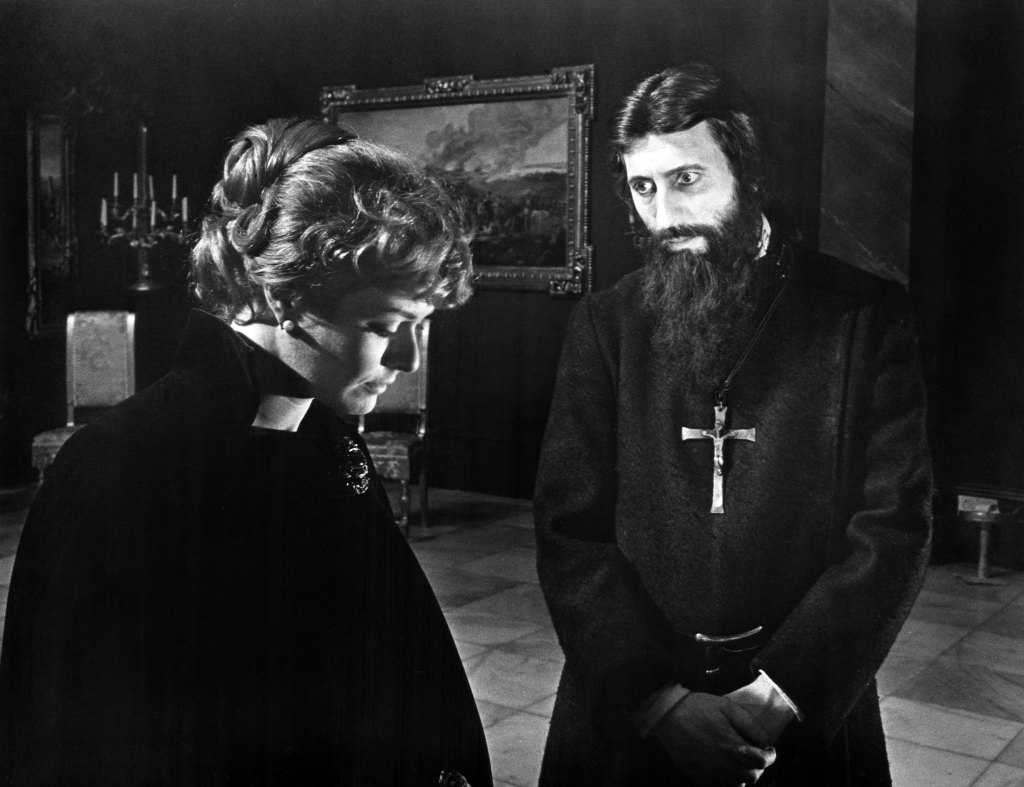
Leaving the monastery meant confronting a world he’d hardly known. He entered the army for National Service, then drifted toward acting as both a refuge and a possibility. He trained at Rose Bruford College, threw himself into repertory theater and eventually joined the National Theatre during Laurence Olivier’s tenure. Yet his career never found smooth footing. Roles came sporadically—sometimes promising, sometimes forgettable—and the gaps between work stretched long enough to undermine any sense of momentum.
When the call eventually came from the BBC to become the fourth Doctor, Baker wasn’t a rising star. He wasn’t even working as an actor—he was carrying bricks on a construction site, so this was an astonishing pivot from total anonymity to national prominence almost overnight. But the leap made a certain cosmic sense. Baker had always seemed like someone out of place in ordinary reality, the eccentricity audiences would soon celebrate simply being how he carried himself. Decades later, he openly admitted the role was never something he mastered in a traditional acting sense. “Actors often become confused,” he reflected. “I became the Doctor or the Doctor was me… it did become me.”
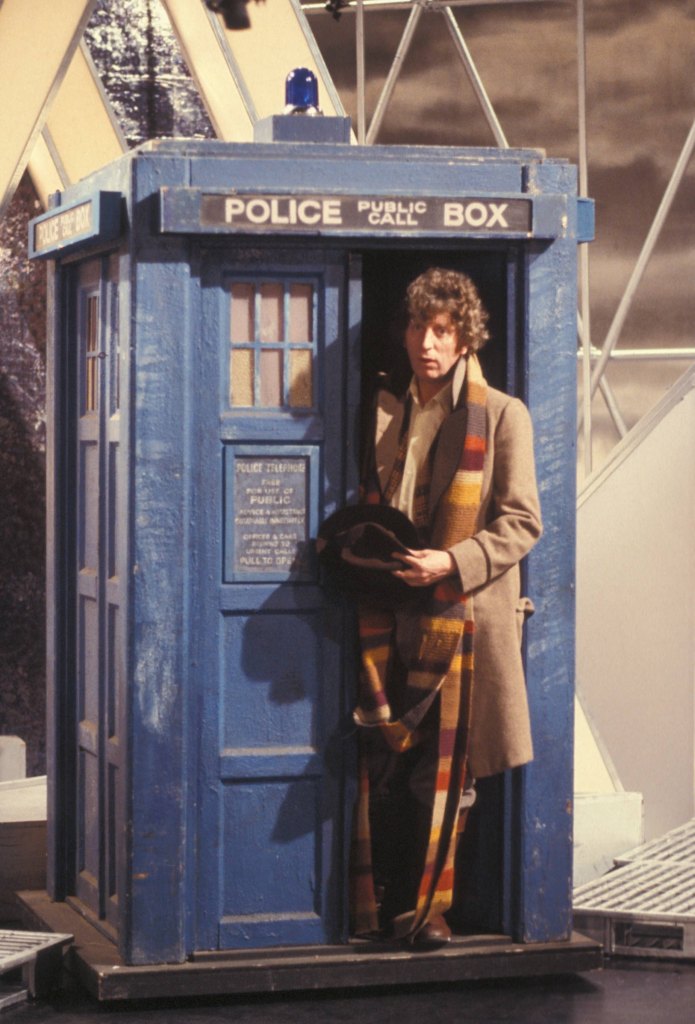
What drew him into the role so completely was the same impulse that had made him persuasive in the monastery and on the stage: the ability to embrace the impossible without hesitation. The Doctor’s universe of monsters, mysteries, time paradoxes and techno-babble made little literal sense, for what it was worth. “It doesn’t matter that actors don’t necessarily understand what they are saying,” Baker explained. “They just talk, and so I just said these preposterous lines and people believed them.”
By 1974, when Doctor Who began searching for its next lead, the series itself needed someone who could not only inhabit the part but transform it. Jon Pertwee’s departure ended a successful, stabilizing era for the show. Behind the scenes, BBC executives and producers were uncertain about how the series might evolve or whether it could sustain its popularity at all. Baker, arriving with no fanfare and no celebrity baggage, seemed almost too improbable to be the answer. But from the moment he stepped on screen, he looked as if he had been waiting for the Doctor his entire life.
Doctor Who before Baker
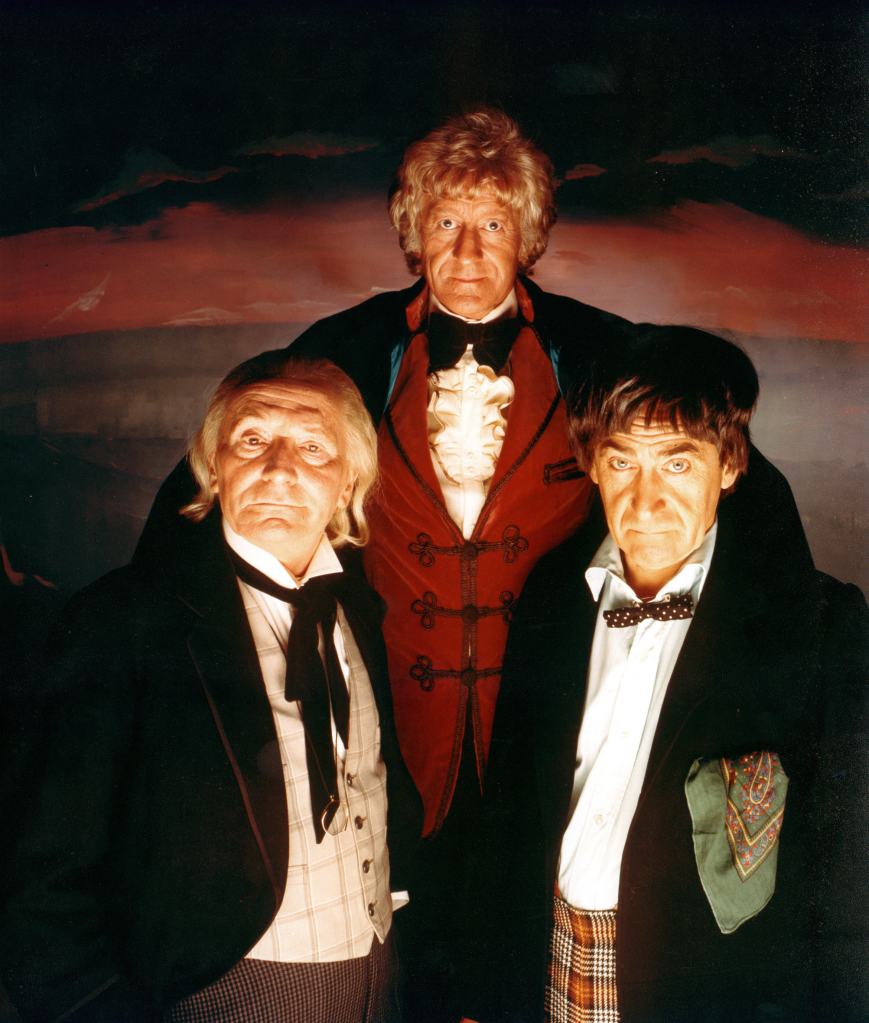
When Tom Baker arrived in 1974, Doctor Who was a television institution. The series had already survived two regenerations, each of which had completely redefined its tone. William Hartnell had played the Doctor as a prickly, mysterious patriarch, Patrick Troughton had reinvented him as a cosmic tramp with a mercurial heart and Jon Pertwee, dashing and velvet-clad, had brought action-hero swagger to the role, turning the series into a hybrid of science fiction and espionage adventure.
But by the time Pertwee announced his departure, the BBC faced a problem that had haunted the show since the late 1960s: would audiences accept another reinvention? The move to color had been expensive, viewership had dipped and executives debated whether Doctor Who should evolve or simply fade into nostalgic memory. It was in this atmosphere that Baker was cast.
And unlike Pertwee, he arrived without fame, without a name recognizable to the public and without the persona of a seasoned on-screen entertainer. That anonymity turned out to be one of his greatest strengths. Yet stepping into the role wasn’t seamless. Baker soon discovered that even though he was the new Doctor, the scripts still echoed the rhythms and cadences of his predecessor.
“Jon Pertwee jumped on this part and made it fantastic,” Baker recalled years later. “He was immensely stylish, so by the time I got there, the writers could not help themselves—they were still writing for Jon.” Baker could feel the mismatch immediately. The sarcasm, the quick-witted banter, the elegant verbal fencing—these were Pertwee traits, not his. His solution was simple and instinctive: change the performance, not the scripts. “I was aware they were still writing in this kind of quick, sarcastic, almost Holmesian way, which didn’t suit me at all. So naturally, I had a certain influence about wrenching things my way or rephrasing them, and gradually they began to write towards me.”
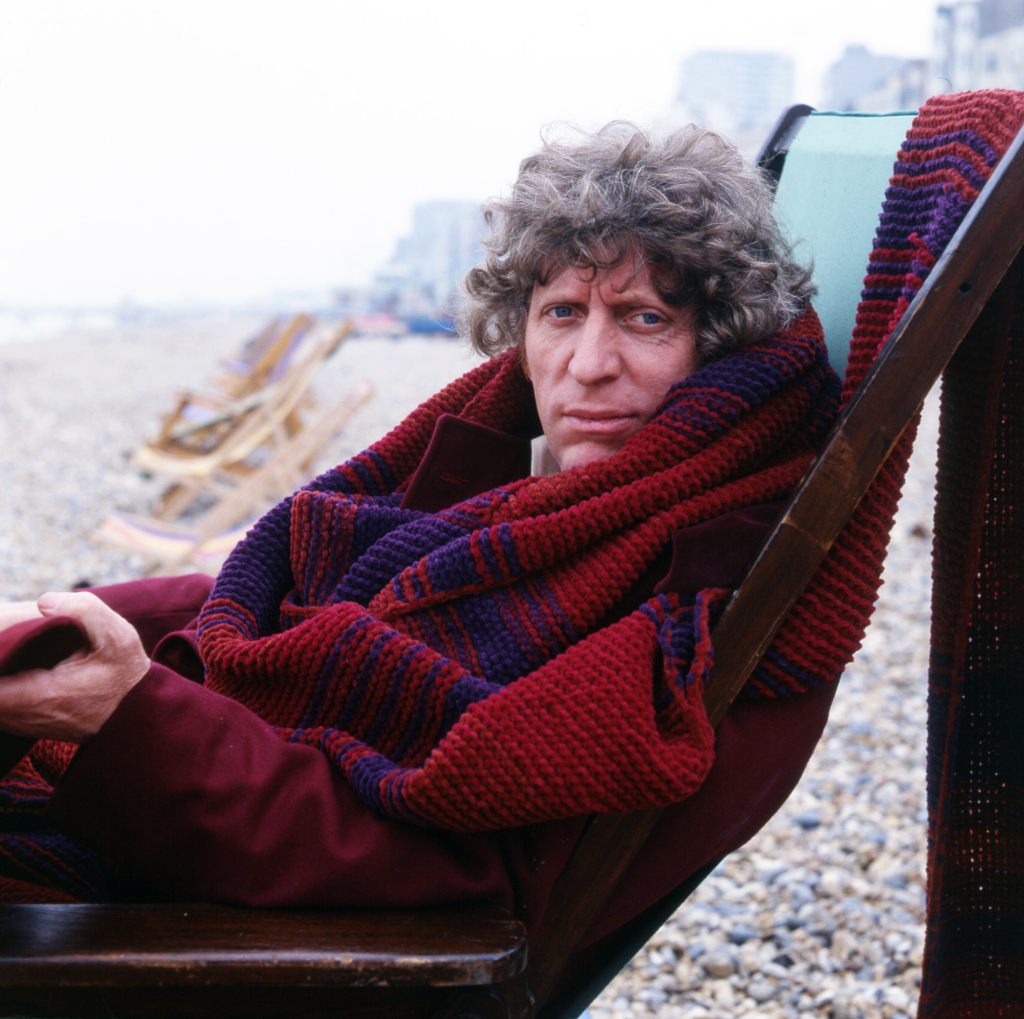
This decision—“I’ll just play him as me”—was a turning point not only for Baker but for the entire show. His interpretation was unlike anything Doctor Who had seen. He didn’t treat the Doctor as a human trapped in alien circumstances but as an alien pretending, unevenly, to be human. His wide eyes could signal delight or danger; his booming voice could shift from solemn authority to playful absurdity in a breath. He wandered through scenes with the unpredictable aura of someone who might hug you, scold you or hand you a jelly baby as a diversion.
Baker’s Doctor didn’t feel like someone written on the page, but rather as someone who had been living in the universe long before the cameras arrived. That authenticity resonated across the studio floor as well. Baker recalled the intensity of those early days with fondness. “I remember laughing a lot, enjoying the energy, and being the weekly reference point with new directors and new designers,” he said. “It’s an involvement which will probably never occur for me again.”
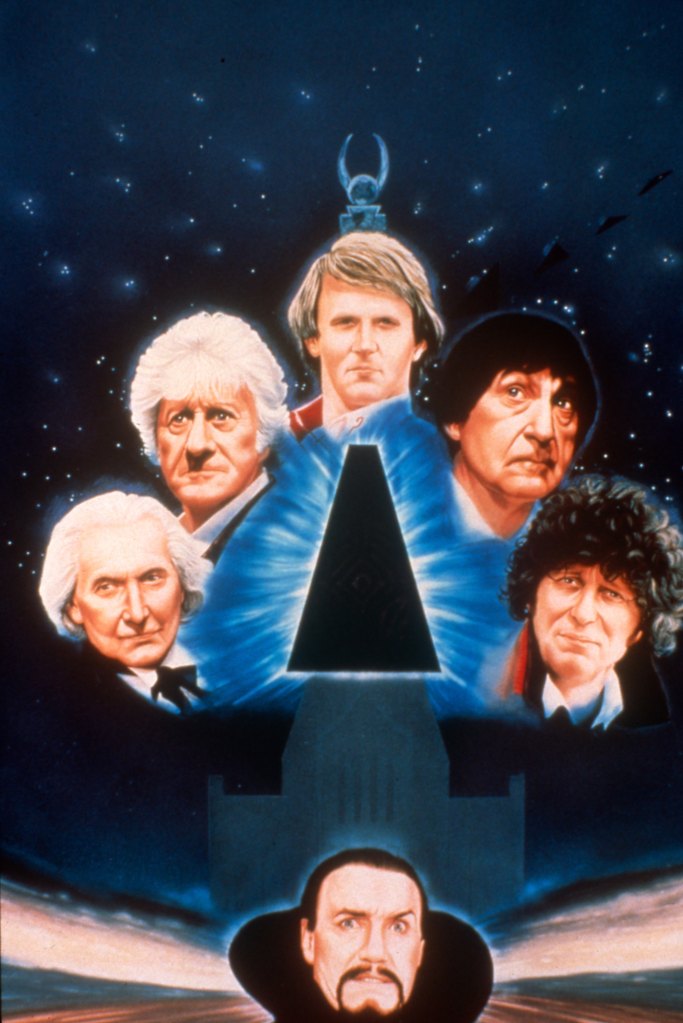
Part of that involvement came from the unique constraints of Doctor Who itself. Baker quickly realized that he was playing a character with limitations. “The Doctor wasn’t really an acting part,” he insisted. “Everyone in the audience knows all about him… nothing could change.” Television, particularly back then, he argued, freezes a character once the audience embraces them. Children, especially, want their Doctor to remain consistent—like a beloved uncle who shouldn’t suddenly show up bald or wearing a beard.
“The problem is how to be inventive within those very severe, daunting limitations,” he said. He delighted in testing the edges of the role—making alien logic feel spontaneous, finding humor in danger or offering kindness where menace might be expected. When it worked, the result felt magical. Viewers didn’t see the seams of performance or the constraints of the BBC budget. They saw a Doctor who was ageless, unpredictable, heroic, and deeply strange. But the full impact of his arrival wouldn’t be felt until the show underwent its next transformation—a creative and tonal shift that would lead directly into what many fans still call Doctor Who’s golden age.
The Fourth Doctor emerges
Audiences were captivated, but they were not the only ones who recognized how unique this interpretation was. As Doctor Who historian Richard D. Carrier (whose YouTube channel is devoted to all things on the subject) explains, “The casting of Tom Baker was a real win because he was so different to Pertwee. From the moment he came on the screen, there wasn’t any baggage. He arrived fully formed as the Doctor, and the lines between Tom Baker and the Doctor blurred so much that still to this day they’re kind of inextricable.”
This blurring intensified once producer Philip Hinchcliffe and script editor Robert Holmes took charge. Carrier notes that their approach “took Doctor Who in a slightly more grown-up direction… more gothic, slightly scarier,” drawing on Hammer films, classic monsters, and darker science fiction themes. For the early evening audience, this was startling. But Baker—capable of projecting both warmth and menace—was the perfect anchor.
Stories like “Pyramids of Mars,” “The Brain of Morbius” and “The Deadly Assassin” showcased this tonal transformation. Baker’s alien unpredictability made him ideal for confronting creatures and concepts rooted in horror. At his core, the Fourth Doctor remained an innocent—a wanderer who approached the universe with curiosity. And his relationship with the audience deepened accordingly. Baker adored meeting children who watched the show. “I was always very touched by the sweetness of their response,” he said. For many, he became a safe, familiar presence even when the monsters became terrifying. He understood this bond and protected it fiercely, shaping his public behavior so the illusion would never break.
Carrier observes that the first two or three years of Baker’s run “became appointment viewing,” and the show’s popularity soared to levels it had not reached since its earliest days. Important to note, the era was not static. As the cultural landscape shifted and new producers took the helm, the tone of Doctor Who would evolve dramatically, setting the stage for creative conflicts, shifting expectations and the eventual end of Baker’s extraordinary tenure.
Inside the creative evolution of Baker’s seven-year era
Carrier describes Baker’s seven-year run as not one era but three, each shaped by the producer overseeing it. The Hinchcliffe period, he explains, was defined by confidence: “Those first two or three years of Tom Baker became kind of a golden age. It was popular, and it became appointment viewing.”
When Graham Williams replaced Hinchcliffe as producer, the series moved toward a lighter, more comedic tone. Part of this was in response to concerns that the show had grown too frightening for younger audiences, and part of it stemmed from Williams’ own sensibilities. Douglas Adams—fresh off the success he would soon achieve with The Hitchhiker’s Guide to the Galaxy—served as script editor for a time, amplifying the humor. For Baker, whose natural instincts often skewed toward the comedic, this shift could be liberating, but it could also be destabilizing. As Carrier puts it, there were stretches where “the tendency sometimes was a bit unchecked,” allowing the farcical elements to overshadow the dramatic stakes.
Baker’s performance reflected the contradictions of this middle period. At times, he leaned so heavily into humor that the Doctor seemed to glide above the danger rather than confront it. Yet he never lost the emotional sincerity that anchored his portrayal. His Doctor remained someone who believed deeply in the value of life, the importance of moral choices and the joy of discovery. Even as the tone wavered, his presence kept the series from losing its soul.
A more complicated transformation awaited when John Nathan-Turner took over as producer near the end of Baker’s run. The arrival of Star Wars and the Star Trek feature films, as well as a new wave of science fiction in the late 1970s and early 1980s, reshaped audience expectations. Special effects became more prominent in the cultural conversation and, as Carrier notes, the BBC’s efforts—though pioneering—were often unfavorably compared to Hollywood spectacle. Nathan-Turner attempted to modernize the look and sound of Doctor Who, introducing new titles, new music, brighter visuals and a more polished aesthetic. This modernization created a distinctive, if controversial, “eighties” identity for the show.
But the shifting vision of the series brought creative tension. Baker had been the Doctor for years and the role had become entwined with his own sense of self. “I became the Doctor or the Doctor was me,” he admitted. “It did become me.” His proprietorial instincts, once an asset, began to clash with the new leadership. Baker acknowledged this himself, saying, “I thought I knew everything, because, of course, it was about me… I should have been brave and given someone else a chance earlier.”
Carrier explains that Baker’s personality—brilliant, eccentric, and sometimes overwhelming—could become frictional under a producer who refused to defer to him. Nathan-Turner had a firm vision for the show and “wasn’t going to really put up with the lead actor making demands or being proprietorial,” Carrier observes. Baker, meanwhile, was feeling the cumulative strain of seven intense years: the public appearances, the emotional weight of fan expectations, the demands of filming and his own personal life, including a whirlwind relationship with co-star Lalla Ward and lingering health troubles.
His emotional final season
On-screen, viewers noticed a change. The mischievous gleam that had defined Baker’s Doctor in him now flickered in shorter bursts. Carrier notes that “you can notice in his last season he does look noticeably more tired,” and that the pressures behind the scenes were beginning to show. It wasn’t that Baker no longer loved the Doctor. If anything, he loved the character too much. The idea of stepping away was painful, even terrifying. But by the dawn of the 1980s, circumstances were pushing him toward the inevitable. “You can’t do something forever,” he later said, “and I had to move on and try and do something else.”
His final season became an unexpected emotional farewell, one marked by the Doctor confronting an increasingly dangerous universe with a weight he had not shown before. And when the time finally came to regenerate, Baker’s expression—haunted yet peaceful—captured the complexity of a man leaving behind a role that had become inseparable from himself.
Why Tom Baker remains the ultimate Doctor Who
When Tom Baker finally stepped away from Doctor Who in 1981, he left behind not just a television role but an identity he had inhabited so completely that separating himself from it proved difficult. The sense of loss was immediate and Baker felt it acutely. “I had to move on and try and do something else. But I suspected it would be a disappointment afterwards, and of course it was. Nothing has been as successful as the Doctor.”
Carrier concurs that Baker’s immediate post-Doctor Who period was challenging precisely because of how completely he had fused with the role. “He didn’t have an established persona,” Carrier notes. “He wasn’t famous before he was the Doctor. People afterwards expected him to be the Doctor or be Tom Baker, the way we know him. He was also the Doctor longer than anyone else; he played that role for seven years, so for a whole generation, and maybe two, he was the Doctor of their childhood. That also helped to really indelibly imprint that in the mind of the public.”
Typecasting, which had haunted earlier Doctors, hit Baker particularly hard. In every project, audiences still saw shades of the Fourth Doctor rather than the actor trying to reinvent himself. For someone who prized his individuality and creativity, that was a difficult reality to navigate.
Yet his separation from the part wasn’t emotional rejection, but instead emotional self-protection. Carrier describes how Baker’s absence from the 20th anniversary special, The Five Doctor,s was often misinterpreted as ego, but the truth was more complicated. The special aired only two and a half years after he had left the show. Returning so soon felt to him like reopening a wound. “He had been so happy in the role,” Carrier explains, “that he couldn’t brave returning to it with strangers.” Baker admitted as much himself: he looked at the script, considered it, but ultimately “didn’t have the willpower to go back to something I had left.”
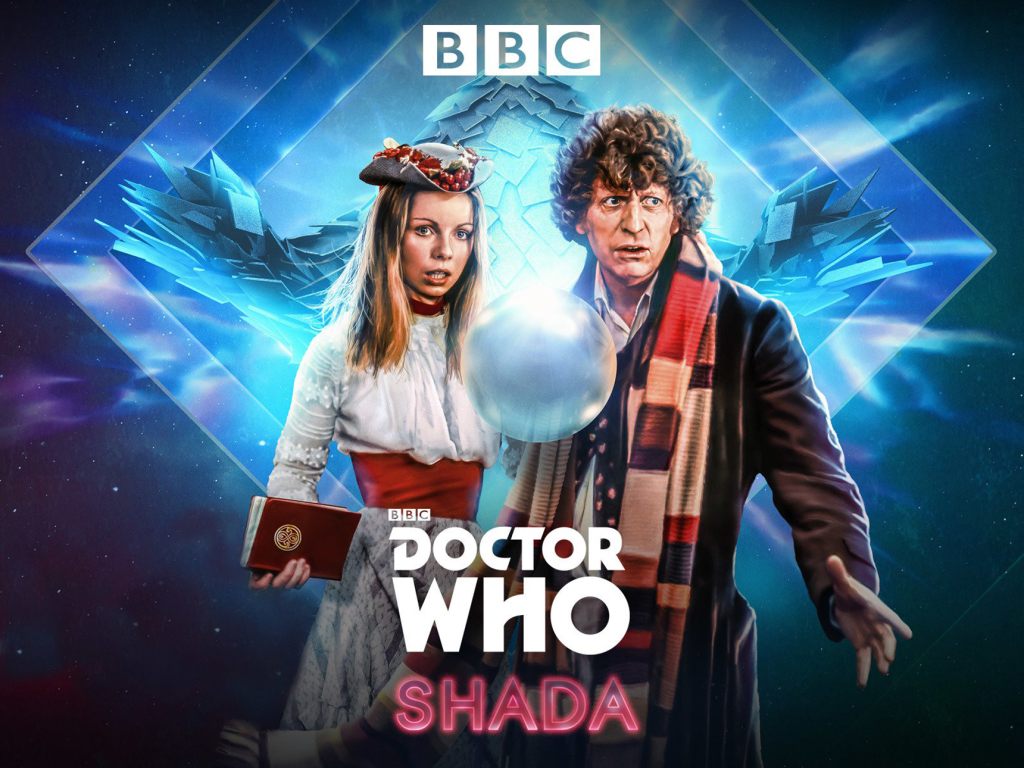
Still, his presence in that anniversary story lingered in a clever way. Unfinished footage from his uncompleted serial “Shada” was woven into the narrative, allowing Baker’s Doctor to appear without actually returning. It was a strange, half-haunting cameo—an echo rather than an appearance—and perhaps that made it all the more fitting for a Doctor who had become mythic.
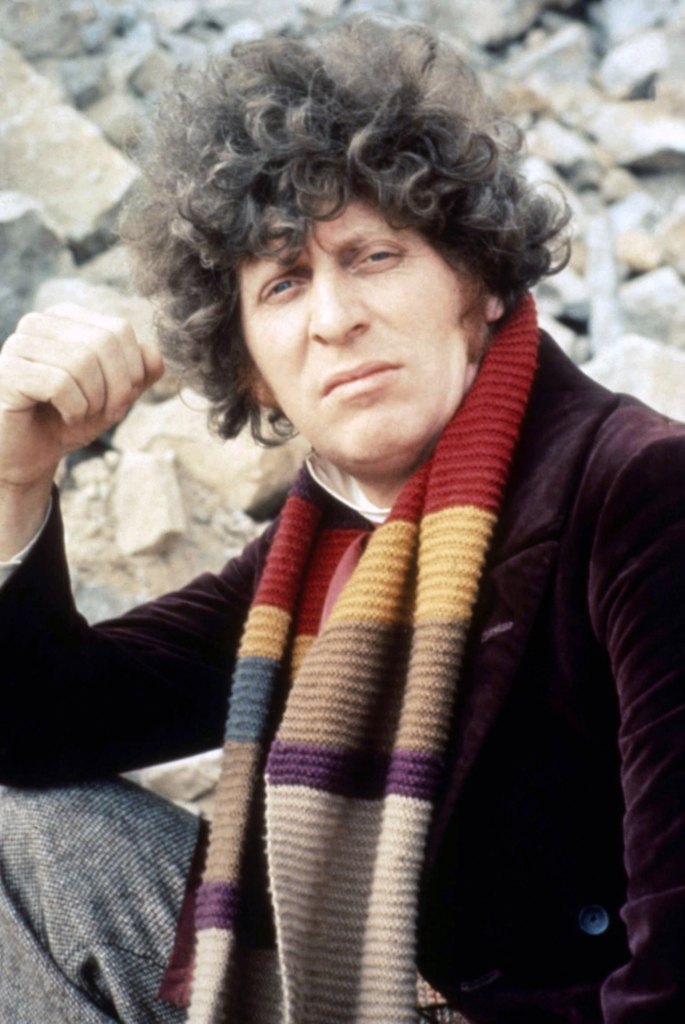
If British audiences felt Baker’s absence keenly, American viewers were only just discovering him. Carrier emphasizes that the late Pertwee and early Baker years marked the first time Doctor Who was consistently broadcast on PBS stations across the United States. For a whole generation of American fans, Baker was the Doctor—full stop. The long scarf, the curls, the hat, the grin: these became visual shorthand for the series itself. Carrier recalls that “there was this real impact—that was Doctor Who for America when it made its initial splash.” The point was underscored humorously years later in The Simpsons, where a cartoon version of Baker appeared among genre icons, his silhouette instantly recognizable even to casual viewers.
This transatlantic affection cemented his legacy. While later Doctors would cultivate their own American followings, Baker became the foundational figure as the Doctor who made lifelong fans out of curious channel-surfers in the late 1970s and early 1980s.

As the decades passed and fandom evolved, Baker’s relationship with the role underwent its own transformation. Carrier notes that Baker initially turned down opportunities to reprise the Doctor in audio dramas, partly out of uncertainty about their quality and partly due to lingering ambivalence about revisiting the past. But in time, he returned.
“The BBC had an audio company for a while,” he says, “and they produced some dramas with Tom Baker. He enjoyed that so much that he realized, ‘Hey, this is actually quite fun, I like doing this.’ When he was approached by Big Finish, he signed up and I don’t think he’s ever looked back. I went to a convention in L.A. last year and the question was raised: What’s the future going to be like for Big Finish? I mean, all these actors are getting to a certain age now and Tom Baker’s in his ’90s. But they said, ‘We’ve recorded enough audio dramas with Tom Baker to last another 10 years.'”
Reengaging with Doctor Who also rekindled his affection for the fandom. He became a fixture at conventions, where the same sweetness that once moved him in the 1970s continued to do so. One memory stayed with him: meeting a group of American fans who, after he asked what they wanted of him, cried out in unison, “Take us with you!” He found the moment a reminder of the deep emotional connection audiences had forged with his Doctor. “I was terribly touched,” he said, “and very happy to have touched so many people and been touched, in return, by the sweetness of their smiles.”
Conversation
All comments are subject to our Community Guidelines. Woman's World does not endorse the opinions and views shared by our readers in our comment sections. Our comments section is a place where readers can engage in healthy, productive, lively, and respectful discussions. Offensive language, hate speech, personal attacks, and/or defamatory statements are not permitted. Advertising or spam is also prohibited.