‘Doctor Who’ to Undergo a Reboot—If the Rumors Are True, It Wouldn’t Be the First Time (Exclusive)
Reboot rumors spark debate—but 'Doctor Who' has reinvented itself a number of times over the years

Key Takeaways
- 'Doctor Who' reboot rumors echo a history of reinvention built into the show.
- Doctor regeneration allows the series to refresh itself without starting over.
- Any reboot would likely be a soft reset—not a complete continuity wipe.
In recent days, a supposed “press release” began circulating online—originating on Reddit and quickly picked up by a handful of outlets—claiming that Doctor Who is headed for a major reboot through a new partnership involving AMC, Sony Pictures Television and BBC Studios. According to the document, the plan would involve a three-season relaunch of the series, complete with a new creative direction, refreshed cast and an expanded global rollout beginning as early as 2027. As such, it reads like a standard corporate announcement, complete with executive quotes and carefully worded ambitions about “a bold new era.”
There’s just one problem: as of now, none of it has been confirmed by the BBC or any of the companies named in the document, which raises a more interesting question than whether the press release is real or not: what would a Doctor Who “reboot” actually mean?
To get a clearer sense of that, Woman’s World turned to Doctor Who historian Richard D. Carrier, creator of the YouTube channel Clever Dick Films that is devoted to the Doctor, whose perspective cuts through the speculation and goes straight to the heart of how the series has always functioned.
‘It’s kind of baked into its DNA…’
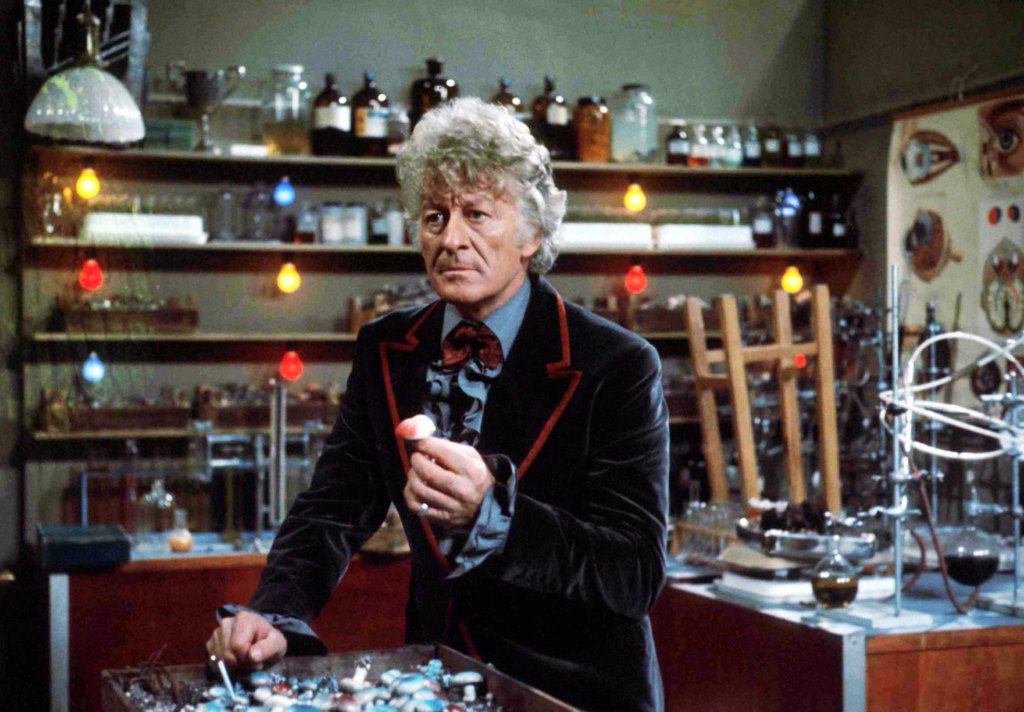
Carrier’s reaction to the idea of a reboot isn’t rooted in whether the rumor is accurate, but in how the concept itself applies—or doesn’t apply—to Doctor Who. “The thing about Doctor Who,” he suggests, “is that it’s kind of baked into its DNA in a way that it can be ‘rebooted.'”
First launched by the BBC in 1963, Doctor Who follows a mysterious alien known simply as the Doctor, who travels through time and space in a ship called the TARDIS—disguised as a British police box. Along the way, the Doctor teams up with human companions, confronting everything from historical threats to far-future dangers, with each new era bringing a different tone, cast and perspective.
Unlike most long-running franchises, Doctor Who doesn’t rely on a single version of its central character. The Doctor regenerates—literally transforming into a new person with a new face and personality—allowing the series to reinvent itself without discarding its past. And as he points out, depending on how you define the term, the show has arguably already done it and more than once.

“If you look at different eras of Doctor Who, there are points where you could argue that that was a reboot,” Carrier explains. “It didn’t delete… because it’s an ongoing story and it didn’t start with an origin as such. You could argue that there’s several points where the show has been sort of rebooted. Like when Jon Pertwee became the Doctor in 1970, you didn’t need to have seen previous seasons of Doctor Who,” Carrier says. “Not until three years in did they really reference the fact that there were prior Doctors. So if you came in at that point and you hadn’t seen the others…”
The implication is clear: the show was designed to be accessible, even to viewers with no prior knowledge. Part of that was practical. “In those days it wasn’t repeated,” he notes, referencing the realities of British television in the 1960s and ’70s. “TV programs were made to just be seen once and might never be seen again. So they couldn’t rely on people having this kind of deep lore that they would bring to it. The nature of the show is that when you start a new story, you didn’t really need to have seen the previous ones,” he says.
The reboot that almost was
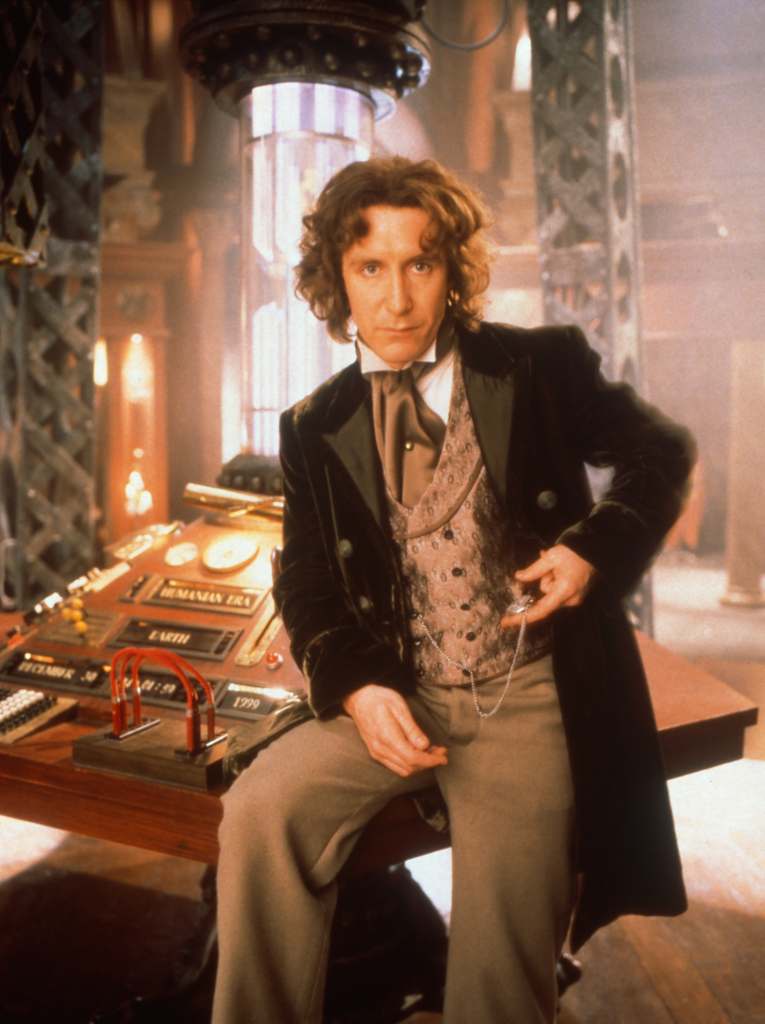
That flexibility became even more apparent in the 1990s, when the BBC partnered with Fox on a television movie starring Paul McGann. “There was the one-off TV movie, which originally was planned to be a complete reboot,” Carrier explains. “A complete reintroduction and basically just cherry-picking all the lore and mashing it together. What emerged in the end was essentially not quite perfect, but kind of a middle ground where there were elements left over from the kind of ideas of rebooting it, but overall, it was a continuation of the program.”
That balancing act—honoring the past while reshaping the present—has become something of a defining trait. The same approach carried through to the 2005 revival led by Christopher Eccleston. “When it came back in 2005, it was very much conscious that this was for an audience who may never have seen Doctor Who at all,” Carrier says. “But because it was a new Doctor and a new companion and a new kind of aesthetic to the program, they could do all that. So you could argue it’s a reboot, but it didn’t say outright that any of the stuff that had gone before never happened.” Over time, the show even began reintroducing elements from its earlier years, weaving them into the new continuity as audiences became more invested.
A ‘soft reboot,’ not a reset

Which brings us back to the present—and what the BBC would actually do if a major relaunch were on the table. “If this is true, what I would hope, and what I think the BBC would probably insist upon, because it’s their IP at the end of the day and their bread and butter, is that it’s not treated as a long-forgotten show that needs to be resurrected,” points out Carrier. “They know how valuable it is and how loyal the fan base is, and I think that they would probably insist that it be a continuation, but not an explicit continuation in that sense. They’ll probably just start with the premise again as if the audience is not familiar with it, but they won’t just say, ‘We’re going to get rid of everything that came before.’ I suppose they’d call it a soft reboot these days and just try to capture the essence of what came before.”
That “essence” is something the show has been refining since its very first episode, with Carrier pointing to the 1963 debut as a blueprint that still applies today. “The very first episode of Doctor Who is a really strong piece of drama and science fiction storytelling. You’ve got this lovely mystery where these two teachers are suspicious about this student and they follow her home. It turns out her address is a junkyard,” he says. “In this junkyard is this big police box that shouldn’t be there, and then they burst in and enter into Narnia essentially. They step through the magic doors.”

That idea—the ordinary person stumbling into the extraordinary—has been repeated again and again. “The person who goes on to be the companion will stumble into the Doctor’s life and world,” Carrier explains. “And when you do a new companion, it’s essentially a reboot.”
More like James Bond than a traditional reboot
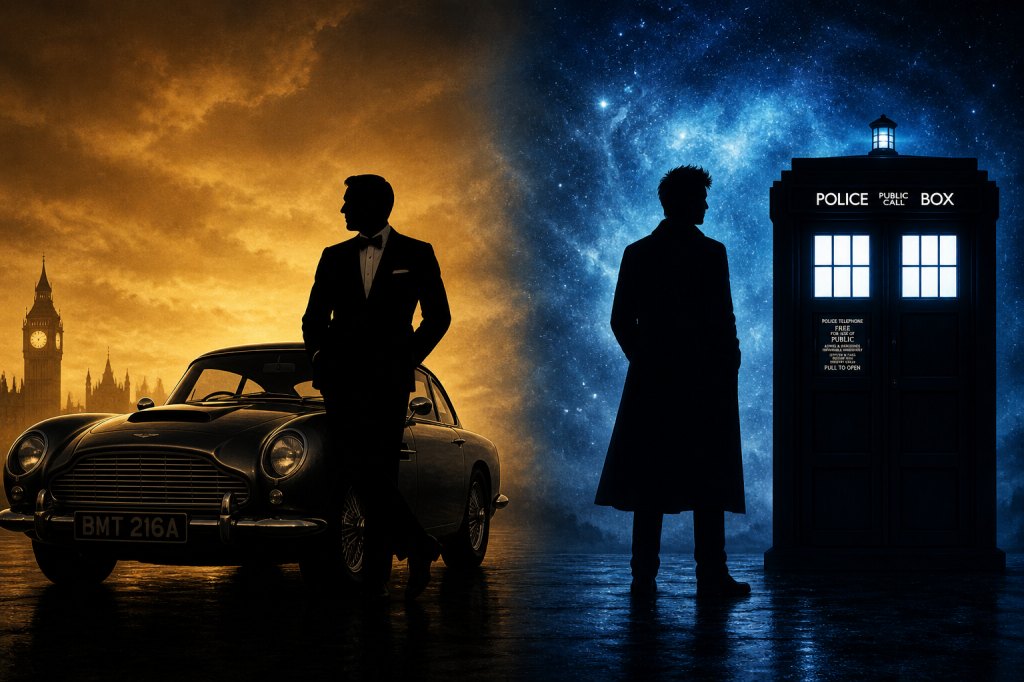
If there’s a better comparison for how Doctor Who operates, Carrier suggests looking at another long-running British franchise: James Bond. “It’s similar in that way, isn’t it?” he says. “You’ll have fans who can go back and you can also have people to come to it fresh. And you don’t need to have seen the prior James Bonds,” he adds, noting that only rarely does the series explicitly reference its own continuity. “The enjoyment of Doctor Who is that accessibility and its ability to regenerate in a more straightforward way than a lot of other shows.”
But the question remains: is a reboot coming? At this point, that remains unclear. The Reddit-sourced “press release” continues to circulate, but without confirmation from the BBC or its partners, it should be treated cautiously at best. What Carrier’s perspective makes clear, however, is that the term “reboot” may not mean what people think it does—at least not when it comes to Doctor Who.
Conversation
All comments are subject to our Community Guidelines. Woman's World does not endorse the opinions and views shared by our readers in our comment sections. Our comments section is a place where readers can engage in healthy, productive, lively, and respectful discussions. Offensive language, hate speech, personal attacks, and/or defamatory statements are not permitted. Advertising or spam is also prohibited.