The Heartbreaking Truth Behind Don Knotts’ Laughter: How a Traumatic Childhood Created an Icon
Before he was Barney Fife on 'Andy Griffith,' Don Knotts was a terrified boy outrunning his past

Before America ever laughed at Don Knotts, fear had already shaped him. Long before Barney Fife trembled his way into television history on The Andy Griffith Show, Knotts had learned how to survive by paying close attention and staying small when it mattered most. Those instincts took root early, in a childhood marked by instability and terror, and were later reshaped thousands of miles from home during World War II, when the Army gave him something he had never known before: an audience willing to listen.
For Knotts, comedy was not an escape from those experiences so much as an extension of them. The same sensitivity that once kept him quiet became the engine of his performances, allowing him to turn anxiety into connection and vulnerability into laughter. His wartime service didn’t erase the past, nor did fame cure it outright. Instead, each stage of his life built on the one before it, gradually transforming survival instincts into a comic voice that felt unmistakably human.
DON KNOTTS: “I think any character you create is an extension of some part of yourself. Most of us are made up of many things. When you are an actor, your sensitivity allows you to explore these other things. There was once a great actor who stuttered when he was off-stage, but never when he was on. When he was expressing himself as himself, he was insecure. When he submerged himself in a character who was not himself, he was not afraid. When you are being someone else, you have less inhibition. This character frees you from personal anxiety or personal inhibition.” (Tampa Bay Times, 1964)
Born Jesse Donald Knotts in Morgantown, West Virginia, on July 21, 1924, he was the youngest of four boys. His mother, Elsie Moore Knotts, was already 40 when he was born. His father, William Jesse Knotts, struggled with schizophrenia and alcoholism, conditions that in that era were poorly understood and rarely treated. Those struggles played out not quietly, but violently. During Don’s earliest years, his father’s psychotic episodes could erupt without warning, sometimes escalating to the point where the young boy was terrorized with a knife held to his throat. It was an environment that allowed no sense of safety—only vigilance.

DANIEL DE VISE (author, Andy and Don: The Making of a Friendship and a Classic American TV Show): “Three decades later, Elsie Knotts would ask Don, ‘Do you remember when you were in nappies and your father used to hold a knife to your throat?’ Don did not. Only in therapy did the memories come flooding back. Don spent his first years living in fear of the monster on the couch. Jessie Kotts harbored a primal jealousy toward Don, the unexpected baby who drew Elsie’s attention away from her bedridden husband. From the day Don arrived, he competed with his father for his mother’s care.”
“Over years of shrewd observation, Don learned to divine his father’s moods, to read his face and voice. In this effort, Don developed a preternatural power to interpret body language and vocal tics. Perhaps Don’s hyper-vigilance was a source of his comedic gifts: What was the Nervous Man, after all, if not an ensemble of twitches and quirks?”
The “Nervous Man” was a character Knotts would make famous years later as part of The Steve Allen Show and portraying Deputy Sheriff Barney Fife on Andy Griffith, though he expressed further inspiration for it years later.
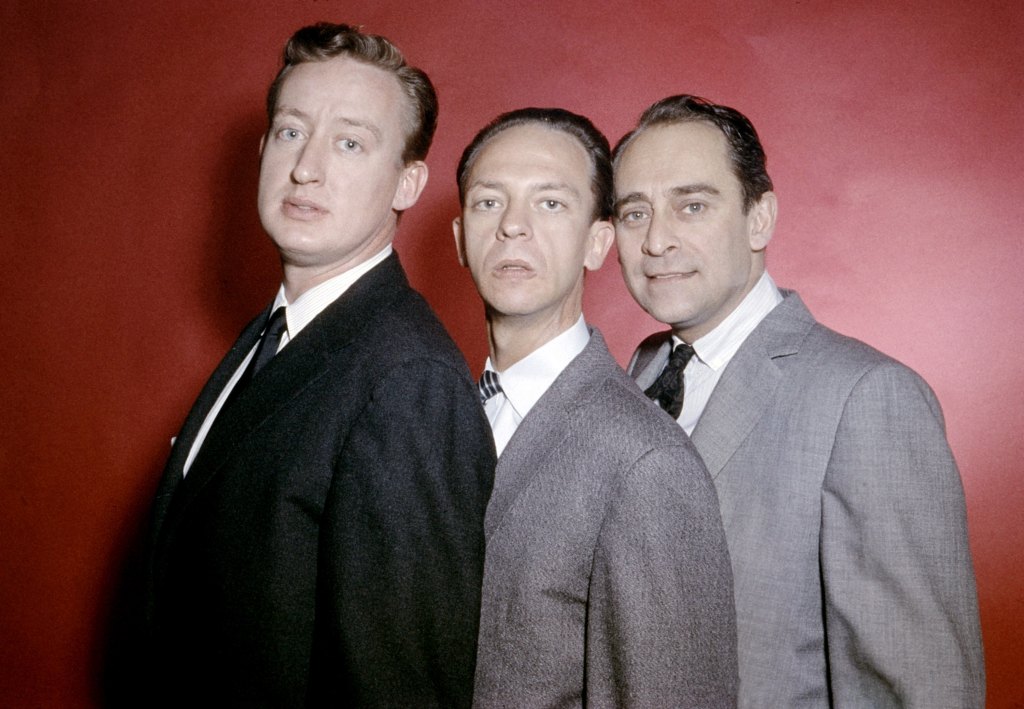
DON KNOTTS: “I got the idea for my nervous character while at a banquet in West Virginia. They had one speaker who was pretty shaky. The poor guy shook like a leaf. His voice quavered and he made things even worse by spilling water and dropping his notes. It came to me that, as a small, slim type, I could develop a character that everyone who had ever suffered through the speaking ordeal could identify with. I sort of thought about it and came up with two full-length nightclub routines about nervous after-dinner speakers.” (Newsday, 1957; The Columbia Record, 1973)
KAREN KNOTTS (daughter): “All of those experiences turned him into the funny person he was, although he was always naturally funny. Here’s the thing about my dad. He had this funniness that was just completely, insanely natural. Even when he was dying, he was making us laugh in hysterics. My stepmother and I got into fits of laughter, and I had to run out of the room. I thought, ‘I don’t want to be standing there in front of this man, my dearly beloved father, who’s dying.’ I was telling this story to Howard Storm, who’s a big director, director of Mork and Mindy and all that, and he said, ‘You should have stayed and laughed out loud. That’s what comedians live for!’ And I thought that was wonderful. He was right, I should have just stood there and burst out laughing.”
“It was something that was just so natural. A gene? I don’t know what it was; it was just this natural funniness and it was just out of control. I can’t explain it. I’ll tell you this, too, that my dad was burdened by all these problems with his father, and then he also had problems with an older brother who tormented him, because they were alcoholics. When his father passed, he was 13 years old. That huge burden lifted off of him, and he became old enough that he was able to get the other brother under control, so he was no longer terrorized at home.”

While in the aftermath of his father’s passing, the immediate threat was gone, the imprint of those years nonetheless remained. Yet he pushed forward, focusing his attention on the skill of… ventriloquism.
KAREN KNOTTS: “He saw ventriloquism as a way for him to get out of his impoverished surroundings and into show business, because he listened to Edgar Bergen on the radio and was absolutely thrilled by his routines with his dummy. My father was just thrilled by this as a boy, and when he saw in Boy’s Life, or one of those kinds of magazines, an ad saying, ‘Be a ventriloquist. Send away for this device so that you can throw your voice,’ he sent away every penny he could scrounge up. They were so poor, but he did manage to get 10 cents or whatever and sent it in. The device that came back was, of course, completely a fraud, but it came with a booklet that explained how to manipulate your tongue and your mouth to throw your voice. He studied that book and learned to do this and things started to happen for him. He was always practicing around the house, making his mother giggle with voices coming out of apple pies and loads of laundry.”
DANIEL DE VISE: “One day, a neighbor asked him to perform at his party. They passed the hat, and Don returned home with nearly a dollar in change. ‘I was in show business at last’ he recalled. Word spread and soon Don was performing at other parties. A local handyman crafted Don a professional-quality dummy in his workshop. Elsie sewed him a tiny outfit. Don named him Danny.”
Where it felt life had really begun to turn around was when he attended Morgantown High School, which was the time, Karen notes, that he really began to “blossom.”

KAREN KNOTTS: “He said those high school years were the best years of his life. He was class president every year, he had a column in the yearbook that was called ‘Dots and Dashes by Knotts.’ He was the most popular boy and he had this best friend, and they got into all of these adventures. The world was his oyster, and that was the first time that he’d ever experienced such complete happiness, where all his problems fell away and there he was, living the beautiful life. Of course, things came back to haunt him later because he always had a lifelong condition of hypochondria, which he battled. In the end, he even conquered that, too.”
After high school, in 1941, Knotts and a friend decided to head to New York in an effort to break into show business, but he failed to make any inroads, so he returned home and started to attend West Virginia University.
DANIEL DE VISE: “He thought his theater days were over. He applied for an announcer job at the campus radio station and was told he lacked a radio-quality voice, an ironic rebuff for the future radio star. Don parlayed his ventriloquism act into free entry to the Phi Sigma Kappa fraternity, entertaining at parties and representing the chapter at talent shows. But the fire had gone from Don’s belly; this was not the same boy who had blazed through Morgantown High School. ‘My ambition evaporated, and I became withdrawn,’ he recalled. ‘If it hadn’t been for the war, I most probably would have become a teacher of dramatic arts.’”
Knotts entered the U.S. Army on June 21, 1943. Assigned to the 6817th Special Services Battalion, he was designated a non-combatant Performing Arts Specialist, a role that placed him far from the front lines but squarely in front of fellow servicemen who needed distraction and relief. Rising to the rank of Technician Fifth Grade, the equivalent of a corporal, Knotts toured the Western Pacific Islands as part of the G.I. variety show Stars and Gripes. Night after night, he performed as a comedian and ventriloquist, using his dummy Danny “Hooch” Matador. Over time, however, he began to sense that the puppet was holding him back rather than helping him forward. Encouraged by fellow soldiers who recognized the strength of his timing and presence, he made a decisive break—famously throwing the dummy overboard into the South Pacific and committing fully to performing on his own.

Though his wartime role emphasized morale rather than combat, Knotts’ military record reflects the seriousness with which he approached service. He was awarded the Asiatic-Pacific Campaign Medal with four bronze service stars, the Philippine Liberation Medal, the World War II Victory Medal, and earned an Army Marksman Badge for the M1 Carbine. That last distinction would later take on an ironic resonance. Long before he became television’s most famously anxious lawman, perpetually restricted to a single bullet in his pocket as Barney Fife, Knotts had proven himself a capable and disciplined soldier. And, without him realizing it, he had become prepared for the career that ultimately lay before him.
DANIEL DE VISE: “Most of the entertainers from Stars and Gripes had endured what amounted to a two-year setback in their professional careers. For Don, the military had the opposite effect, honing the skills and restoring the confidence he’d lost in that first, demoralizing visit to New York.”
After being demobilized from the Army, Don Knotts returned to West Virginia University and completed his degree in 1948, a milestone that marked his determination to build a life beyond wartime service. He soon married Kay Metz, and the couple relocated to New York City, where Knotts began trying to turn his long-held comedy ambitions into a career. The move proved pivotal. Contacts he had made while performing in the Army’s Special Services Branch helped him find early opportunities, and he began working wherever he could—doing stand-up comedy in clubs and landing radio work. One of his most notable early roles was on the radio Western Bobby Benson and the B-Bar-B Riders, where he played “Windy Wales,” a fast-talking, know-it-all character that hinted at the nervous comic persona audiences would later come to love.
Knotts’ first real exposure to television came in 1953, when he was cast on the daytime soap Search for Tomorrow, appearing regularly through 1955. His career took a major leap forward in 1956 when he joined Steve Allen’s variety show as a member of Allen’s repertory company. There, Knotts found a national audience playing his signature role in Allen’s mock “Man in the Street” segments, usually as an intensely anxious, tightly wound man struggling to get through even the simplest interaction. He remained with Allen through the 1959–1960 season, while simultaneously building his stage credentials. From 1955 to 1957, Knotts appeared opposite Andy Griffith in the Broadway production of No Time for Sergeants, playing multiple roles and establishing a creative partnership that would prove career-defining. In 1958, he made his feature film debut in the movie adaptation, reprising his role as a high-strung Air Force test administrator whose orderly world is thrown into chaos by Griffith’s wide-eyed recruit—an early showcase of the comic chemistry that would soon make both men television icons.
The spark that led Don Knotts to Barney Fife can be traced back to the Andy Griffith Show’s backdoor pilot, which aired on The Danny Thomas Show in February 1960 as the episode “Danny Meets Andy Griffith.” In the episode, Griffith appeared as small-town sheriff Andy Taylor, a widowed lawman raising his young son in the fictional town of Mayberry.
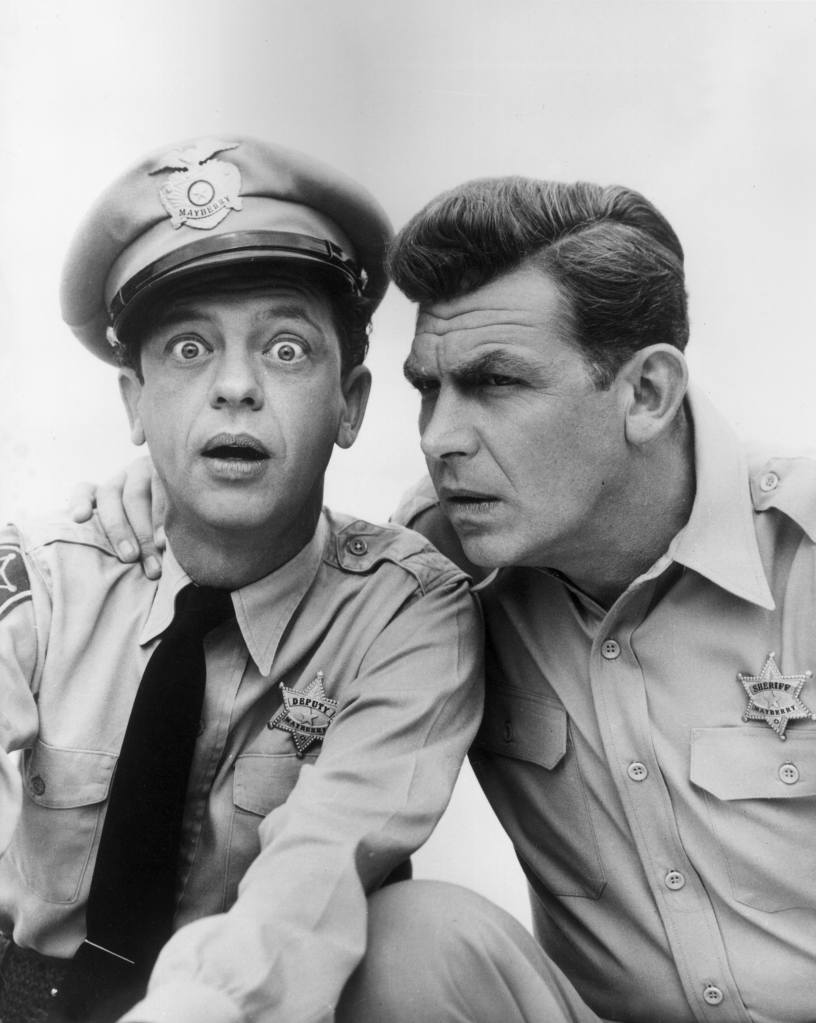
DANIEL DE VISE: “Andy was probably playing it close to the vest that he was going to be doing this show. Don saw that episode of Danny Thomas when he was playing bridge with Pat Harrington—television’s Schneider from One Day at a Time—and says, ‘Holy crap, that’s Andy!’ And then he calls him and suggests himself for Andy Taylor’s deputy and Andy thinks it’s a great idea. The rest is history, because the connection between them was instant. In the play No Time for Sergeants, they only had one or two scenes with each other, but they were so powerful together. They had an immediate kind of comedic duo sort of chemistry even then, which is why Don gets hired to do the film as well. There’s like one guy from the play who’s still alive that I interviewed and he said, ‘Oh, yeah, those two guys… that scene just crackled.’ And by the time they got together for the Griffith show, surely Don understood—and I’m sure Andy did, too—that they had the makings of a brilliant comedy team like a Martin and Lewis. You can almost look at the scenes they do together, as I do throughout the book, separate from the show itself, as the work of a great comedy duo.”
All of which makes Don Knotts’ eventual success feel anything but accidental—and yet hardly inevitable. The comedic partnership that would define his career grew out of years marked by anxiety, frustration and emotional scars that never fully disappeared. His wartime experiences, early struggles in show business and constant self-doubt didn’t vanish once fame arrived; they simply became part of the machinery that drove his work. Knotts found his place alongside Andy Griffith, but the personal cost of getting there—and staying there—remained very real.


KAREN KNOTTS: “My dad was mercurial. In other words, he had a lot of different kinds of moods. He fought a lot of depression, and I helped him, or thought I did, because I could see how he had this endless loop of thinking that would always lead to a downward spiral. I would try to break through that, and I was like Pollyanna, pointing out the positives. Of course, I couldn’t do much; I was a kid. He had a great psychiatrist who was able to help him a lot. He was also a very loving father, though he was a very internal kind of person. So many comedians have a depressive stream about them, but it’s because comedy is a drug. It makes you laugh and the laughter boosts you out of your depression. Thinking of funny things helps you get out of that sadness, and if the audience is laughing at what you’re doing, your drug is intensified. That feeling of euphoria is intensified by all those people laughing.”
“I do find it interesting that people want to stay connected with him. I think he’s become an important touchstone for people who have an identity of coming from a small town or a small community, which still comprises the majority of our country. People’s fear of losing that identity is one reason why, apart from the brilliant performances and characters, they’re drawn to Mayberry and what it represents to them. So many people go off to a big city and become a success, but—guess what?—many of them come back to their hometown and use their skills to make things better. It’s like the old cliche: you can take the boy out of Mayberry, but you can never take Mayberry out of the boy.”
Conversation
All comments are subject to our Community Guidelines. Woman's World does not endorse the opinions and views shared by our readers in our comment sections. Our comments section is a place where readers can engage in healthy, productive, lively, and respectful discussions. Offensive language, hate speech, personal attacks, and/or defamatory statements are not permitted. Advertising or spam is also prohibited.