Burt Reynolds’ Time on ‘Gunsmoke’: The Role of Quint Asper That Forged a Hollywood Legend
Before he became a movie icon, Burt Reynolds made his mark in Dodge City on 'Gunsmoke'
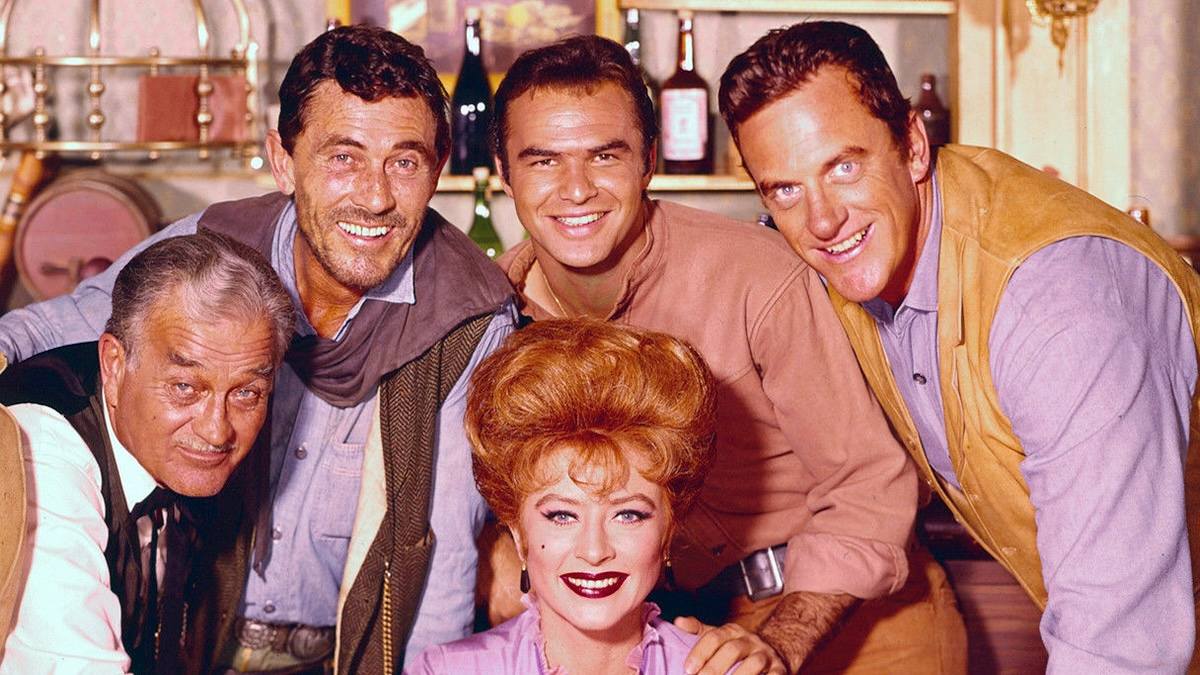
Before he ruled the box office in the 1970s with Smokey and the Bandit, The Longest Yard and Deliverance, Burt Reynolds was pounding iron in Dodge City.
Reynolds is remembered today as a magnetic movie star—all swagger, smirk and speed—but one of the pivotal stepping stones on his path to cinematic superstardom came in the early 1960s, when he joined the cast of Gunsmoke, television’s longest-running Western. His role as the brooding, half-Comanche blacksmith Quint Asper (he did claim to have Cherokee ancestry himself) not only gave Reynolds national exposure, but it also planted him firmly in the television landscape long before he became one of the biggest movie stars in the world.
David Greenland, author of The Gunsmoke Chronicles: A New History of Television’s Greatest Western, offers, “By 1959, Burt Reynolds was working on such television series as Naked City, The Twilight Zone, Schlitz Playhouse of Stars, M Squad and The Lawless Years. His first steady job was on NBC’s Riverboat, co-starring Darren McGavin, with whom Reynolds did not have the greatest relationship.

“If his Riverboat experience had made him reluctant to seek steady work on another series,” he continues, “Reynolds’ attitude changed once he joined the Gunsmoke family and was immediately accepted by his co-stars. As he wrote in his 1994 autobiography, ‘Between takes, Jim [Arness], Amanda Blake and Milburn Stone sat on director’s chairs on that wooden sidewalk and traded some of the best, funniest stories I’d ever heard.'”

A new kind of character

In 1962, Dennis Weaver (Chester Goode) announced he would be leaving Gunsmoke, prompting producers to consider a new character to join the ensemble. Enter Burt Reynolds. The St. Louis Globe-Democrat reported at the time that Reynolds was selected from a pool of 50 contenders, noting, “He was chosen for a job that could make his name a common commodity with TV fans who never miss the doin’s in Dodge City.”
Initially, Reynolds believed his appearance would be a one-off. As he later recalled in Gunsmoke: An American Institution by Ben Costello, “I thought I was just doing a guest star part.” But his performance struck a chord with the show’s creators—and apparently with CBS brass.

“I was asked to make an episode when Chester (Dennis Weaver) said he was leaving the program,” Reynolds told The Buffalo News in 1962. “When he decided to return, the idea of using me was dropped for a few days. But someone decided to look at the episode again and I was signed to do eight shows. It’s a wonderful cast. It won’t be easy for me to become a regular… If the public accepts me, I stay.”
Reynolds’ Quint Asper was no Chester clone. While Chester was bumbling and loyal, Quint was volatile, guarded and deeply shaped by his biracial heritage. “Quint Asper is half Comanche Indian and half white man,” Reynolds explained at the time. “In the storyline, Matt Dillon saves Quint’s life and he agrees to take the blacksmithing job to show his gratitude.”

But unlike other residents of Dodge, Quint didn’t frequent the Long Branch Saloon or joke with Doc Adams. “Quint is a wild man,” Reynolds admitted. “The type of guy who you know would go right back to hunting heads if it weren’t for his new friend, Matt Dillon. Quint is a loner, too. Down in his shop—pounding away—while everybody else is up in the saloon drinking beer with Miss Kitty.”

The rough edges made the role compelling, especially for Reynolds. “Then we could deal with the prejudice and all that kind of stuff that was going on at the time,” he said, later comparing Quint to Nevada Smith from The Carpetbaggers. “Raised by one Indian parent and really thinking of himself as more of an Indian than a white man.”
As the show evolved, so did Quint’s position. Though Weaver returned briefly, Reynolds’ place in the cast solidified. “I was scared to death the Gunsmoke audience would have pegged me the biggest villain ever seen on TV—for taking the job,” Reynolds joked to the Globe-Democrat. “But this way I’ll be in 15 of the shows and Dennis will do 15 as Chester. If he decides to bow out later, I won’t be cast as the heavy in the public mind.”
By the end of his first season, Reynolds had been fully embraced. “I’ve been accepted by God, by CBS and the rest of the cast,” he added with characteristic charm. “I figured I got a shot at a job in a top show and if I’m lucky, the public will handle it from there.”
Learning from the best

Reynolds appeared on Gunsmoke from seasons 8 through 10 (1962–1965), and later described the experience as formative. “Every actor in town loved doing the show,” he reflected in Costello’s book. “Because it was a family… I don’t think anybody in town, before or since, ever had the generosity of spirit that they had on that show in terms of being an ensemble group. It was Kitty’s turn or Doc’s turn or Chester’s turn or whoever’s turn. It was a great place for young actors to learn some manners and behave, because, number one, Jim Arness and Milburn [Stone] wouldn’t put up with it.”
He added, “Some of the happiest years of my life were on that show.”
Still, by 1964 Reynolds was itching to move on. “I’m tired of standing around with that ‘I am virile’ look,” he told the Dayton Daily News. “I feel as if I’ve served my apprenticeship and that I’ve grown enough as an actor to go on to other things. I’d really like to do comedy.”
In an interview with the Palm Beach Post just before leaving the show in 1965, Reynolds explained his thinking. “I’ve always gambled on myself and I just thought it was time to gamble again.”
How ‘Gunsmoke’ shaped Burt Reynolds’ Hollywood stardom


Jim Arness, he once recalled, had told him, “You know, we’ve been on seven years and, hell, we’ve probably only got another year.” That forecast, of course, turned out to be wildly off — Gunsmoke ultimately ran until 1975, making it one of the longest-running scripted shows in TV history.
In hindsight, Reynolds occasionally wondered what might have happened had he stayed. “Quite honestly,” he said in Costello’s book, “in spite of the fact that I had an incredible, very lucky motion picture career, I’ve often wondered what would have happened had I stayed for the whole run of the show.”
Says Greenland, “Following his long movie career, his first regular series was B.L. Stryker, a 1989 to 1990 private eye show that aired every few weeks as part of The ABC Mystery Movie. Much more successful was the CBS sitcom Evening Shade, which ran for four seasons and earned him an Emmy. The show was shot at CBS Studio City, where he had spent his last two seasons as Quint Asper. When feeling sentimental, he would wander to where the exterior set of Dodge City had stood before being dismantled in 1988. ‘It’s all torn down,’ he told a reporter, ‘but I’ve walked around with great feeling for those days. I was very happy then.”
Conversation
All comments are subject to our Community Guidelines. Woman's World does not endorse the opinions and views shared by our readers in our comment sections. Our comments section is a place where readers can engage in healthy, productive, lively, and respectful discussions. Offensive language, hate speech, personal attacks, and/or defamatory statements are not permitted. Advertising or spam is also prohibited.