The Rise, Regret and Legacy of McLean Stevenson: Why the ‘MASH’ Star Walked Away from Greatness
As Henry Blake on 'MASH,' McLean Stevenson won hearts—then made TV’s most infamous career move

McLean Stevenson’s run as Lieutenant Colonel Henry Blake on M*A*S*H should have been the kind of role an actor spends a lifetime searching for. As the affable, slightly overwhelmed commanding officer of the 4077th, he brought warmth and dry wit that played beautifully against Alan Alda’s Hawkeye and Wayne Rogers’ Trapper John. The audience loved him, as did his castmates, but Stevenson was restless. By the end of the show’s third season, he made the fateful decision to walk away, convinced he needed to be “number one” on his own series.
“He didn’t get it,” actress Loretta Swit mused to Woman’s World shortly before her passing, “but he was number one. It had nothing to do with billing. He was so rich and wonderful in that role, but he needed to go.” It was a move that spoke to both ambition and insecurity—understandable for a performer who came into acting later in life, but one pop culture history would judge harshly.
Early on, Stevenson’s life looked nothing like Hollywood. Born Edgar McLean Stevenson Jr. on November 14, 1927, in Normal, Illinois, he grew up in a family where achievement was practically hereditary. His cousin was Adlai Stevenson II, the two-time Democratic presidential nominee and former governor of Illinois—a connection that would follow McLean for years. Pop culture historian Geoffrey Mark points out that the family resemblance gave him “a bit of a spotlight,” and while “McLean was a very handsome man,” he wasn’t quite the Hollywood heartthrob type. “He looked like someone’s very handsome dad,” Mark observed, “not a matinee idol, but familiar and approachable.”

Dale Sherman, author of The M*A*S*H FAQ, notes that Stevenson’s roots were actually in medicine: “His father was a cardiologist, his mother a nurse and young McLean initially seemed destined to follow in their footsteps. But his time serving in the U.S. Navy medical corps during the closing days of World War II changed that. Witnessing the human toll of war up close convinced him to chart a different course. When he returned home, he earned a theater degree at Northwestern University in Evanston, Illinois—a decision that his parents frowned upon.”
Stevenson tried to appease them with a series of “nine jobs in eight years,” as he later put it, ranging from insurance clerk to salesman to even campaign staffer for cousin Adlai. None stuck. “I didn’t like any of them,” he admitted.
Quick facts about McLean Stevenson’s role in ‘M*A*S*H’
- Who was McLean Stevenson? McLean Stevenson was an American actor best known for playing Lt. Col. Henry Blake on M*A*S*H (1972–1975). His blend of warmth and humor made Blake one of the most beloved characters in television history.
- Why did McLean Stevenson leave M*A*S*H? Stevenson left the show after three seasons because he wanted to be the star of his own show. He reportedly said, “I’m tired of being one of six. I want to be one of one.”
- What happened to Henry Blake on M*A*S*H? In the 1975 episode “Abyssinia, Henry,” Blake’s plane is shot down over the Sea of Japan. The shocking twist—kept secret from both cast and audience—became one of TV’s most unforgettable moments.
- Did McLean Stevenson regret leaving M*A*S*H? In later years, Stevenson admitted it was a mistake, saying he had believed fans loved McLean Stevenson when they really loved Henry Blake.
- What did McLean Stevenson do after M*A*S*H? He starred in several short-lived sitcoms, including The McLean Stevenson Show and Hello, Larry. Although none matched M*A*S*H‘s success, he remained a familiar and well-liked television personality.
- When did McLean Stevenson die? Stevenson died of a heart attack on February 15, 1996, at his home in Los Angeles. He was 68 years old.
- What is McLean Stevenson’s legacy? Stevenson’s portrayal of Henry Blake helped redefine what a sitcom could be—mixing comedy with genuine emotion. Over 50 years later, his performance remains one of television’s most cherished.
How did McLean Stevenson break into entertainment?

Acting wasn’t Stevenson’s first calling, but once he made the pivot, he threw himself into it with a mix of curiosity and self-deprecating humor. Sherman traces his turning point to the early 1960s, when Stevenson saw the Broadway musical Do Re Mi and decided to pursue show business full-time. “He earned a scholarship to the American Musical and Dramatic Academy, began working cabarets and summer stock and soon found his comedic instincts translating naturally to television.
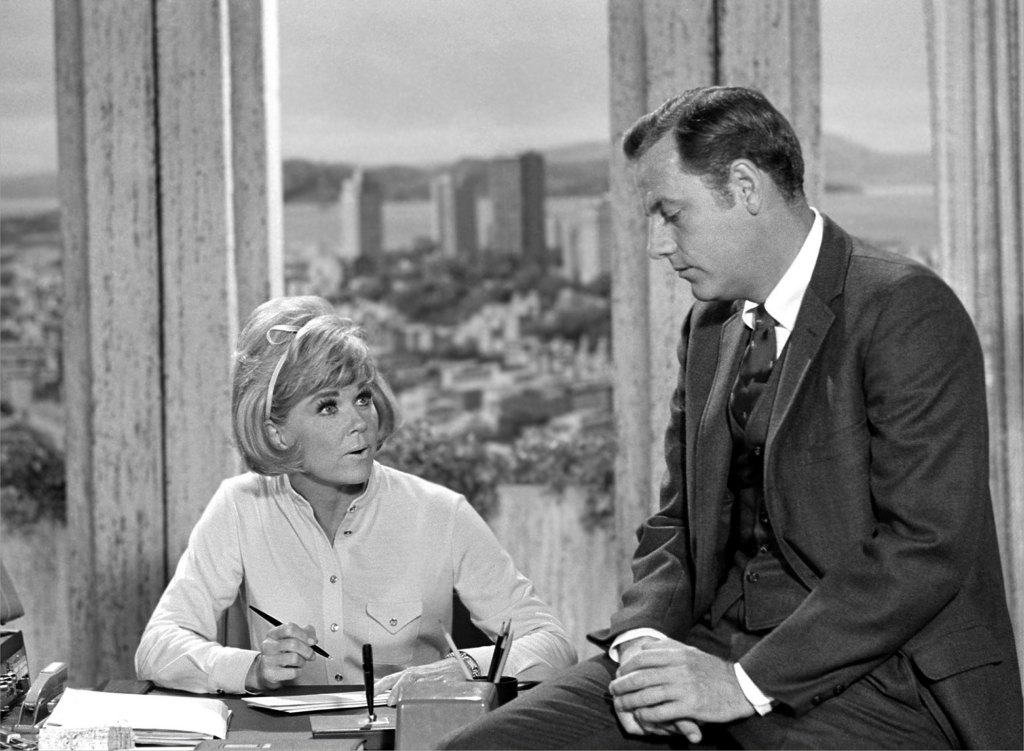
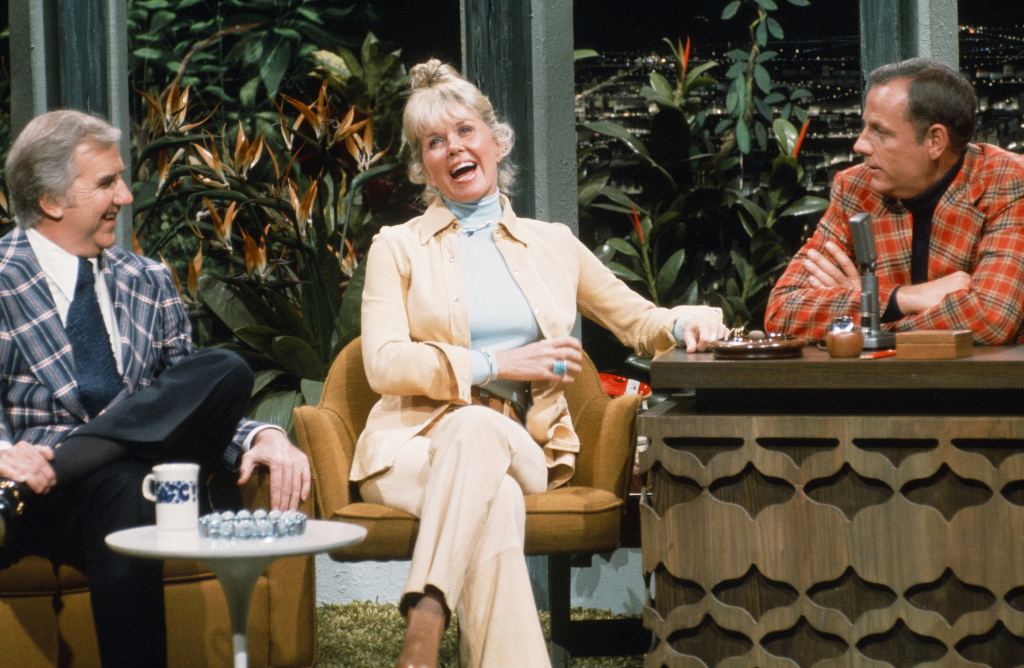
He wrote and sometimes performed on That Was the Week That Was, where a young Alan Alda also appeared, and The Smothers Brothers Comedy Hour, developing a reputation for his dry timing and improvisational ease. Geoffrey Mark adds that Stevenson “did commercials and really did not break through until he got cast on The Doris Day Show,” which, as he wryly notes, “was not a happy experience.”
Mark’s firsthand Hollywood anecdotes provide essential texture: Doris Day, he recalls, didn’t even know her husband had signed her to do the CBS show until she found the contract in his belongings after his death. “Six weeks later,” he says, “she had to be on set filming this thing. He’d signed her away.” Stevenson joined the cast in Season 2 as Mr. Nicholson, Doris’ boss. But as the series evolved—shifting settings, rewriting characters and gradually erasing supporting players—Stevenson’s role all but vanished. “If you watch the episodes,” Mark explains, “Doris and McLean have zero chemistry. He wasn’t written out officially; there was just less and less of him. He’s there, but he’s like a chair.” By Seasons 4 and 5, the entire concept had changed and “McLean Stevenson is gone. And immediately, he goes into M*A*S*H.”
Why did Stevenson struggle to find his place before ‘M*A*S*H’?
Like many mid-career actors trying to find their niche, Stevenson faced an identity problem in 1960s Hollywood. He wasn’t quite the romantic lead type and not old enough yet to play the seasoned patriarchs populating network television. Dale Sherman observes that producers didn’t know what to do with him—“too old to be young, too young to be old.” Still, Stevenson’s everyman presence became his hidden strength and his rumpled charm, ordinary warmth and low-key humor would later make him instantly believable as Henry Blake.
Geoffrey Mark underscores that Stevenson “had comedy chops—he could act,” but “he was one of those show business people who was forever shooting himself in the foot. He had the talent and the likability but lacked the assertive drive or the right management to capitalize on either.”

When M*A*S*H co-creator Gene Reynolds—who had previously met Stevenson while casting Room 222—was putting together a television adaptation of Robert Altman’s 1970 film, he remembered the actor’s mix of warmth and wry humor. Stevenson initially auditioned for the part of Hawkeye Pierce, but the producers had already chosen Alan Alda, with Wayne Rogers as backup. “The doctors had to look somewhat younger,” Sherman explains, “and while Stevenson wasn’t old, he looked exactly as he was—a middle-aged man of 44. That made him perfect to play the 4077’s leader, Lt. Col. Henry Blake.”
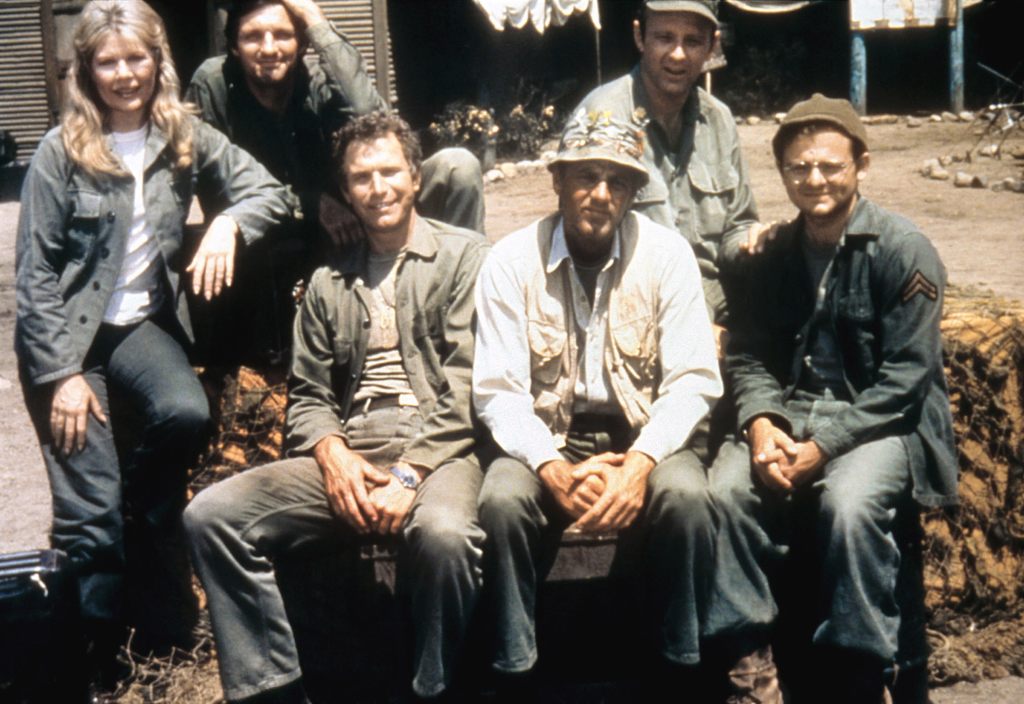
Even so, Stevenson hesitated, with Sherman noting that he “worried the show would quickly fall into becoming a typical military comedy,” and feared he’d end up another stock sitcom stooge. The producers assured him that M*A*S*H would aim higher, mixing satire, drama and human truth. It was enough to convince him and the rest, of course, is television history. Stevenson brought to Henry Blake what few others could: the soul of a small-town doctor thrust into chaos, leading through decency. His comedic looseness and gentle humanity anchored the early years of M*A*S*H, setting a tone that balanced the absurd and the heartbreaking.
What made Henry Blake work so well?
The magic of Stevenson’s performance was that he never played Henry Blake as a fool. He might have been forgetful or overwhelmed, but he was never incompetent or unkind. Says Sherman, “The M*A*S*H producers quickly realized that the character, as originally conceived in the novel and film, was too much of a cipher—in control in name only. Stevenson changed that. He turned Blake into a man who knew he was out of his depth but did his best anyway, the small-town doctor doing his duty in impossible circumstances.”
Early episodes leaned toward broad humor, even the occasional “drunk” cliché, but that evolved as Stevenson and the writers found the character’s heart. Sherman highlights the pivotal episode as “Sometimes You Hear the Bullet,” where Blake’s talk with Hawkeye about detachment and loss revealed unexpected depth. “Stevenson showed that Blake was a man who could foul up, but would always try to do the right thing and attempt to guide others as best he could.”

That honesty was the key to Blake’s appeal. His scenes with Radar O’Reilly (Gary Burghoff) in particular became some of the show’s most memorable, the easy chemistry between Stevenson’s weary commander and Burghoff’s boyish clerk giving the show its human core. As you watched Radar anticipate Henry’s every need, you believed in their friendship.
Stevenson also brought a subtle improvisational energy to the set. Sherman points out that his pauses, asides and spontaneous gestures often cracked up fellow cast members on camera. He contributed scripts, too, writing “The Trial of Henry Blake” and co-writing “The Army–Navy Game.” Off-camera, he was known for protecting crew members, standing up to directors who mistreated extras and lobbying for better working conditions during grueling summer shoots.
How audiences responded to Henry Blake

From the beginning, audiences responded to Henry Blake as the everyman in the chaos; a good soul caught in a bad situation. Critics praised Stevenson’s understated charm, and within three seasons he became one of the show’s most beloved figures. But even as M*A*S*H’s ratings grew, something else was shifting. Geoffrey Mark describes Stevenson as “a man with comedy chops who could act,” but notes that the ensemble structure of the show created tensions. “It was supposed to be equilateral,” he explains, “with episodes about Hawkeye and Trapper John and Henry Blake. But Alan Alda was a force of nature. In not very much time, the show became ‘starring Alan Alda and everybody else.’”
Stevenson admired Alda but grew uneasy watching the balance of power tilt toward his co-star. He’d been promised focus episodes and an equal share of attention, but found himself increasingly sidelined. As Sherman recounts, “Both he and Wayne Rogers had been brought into the program with assurances that the show would focus on their characters in a good number of episodes, only to find it sliding back toward Hawkeye being the center.”
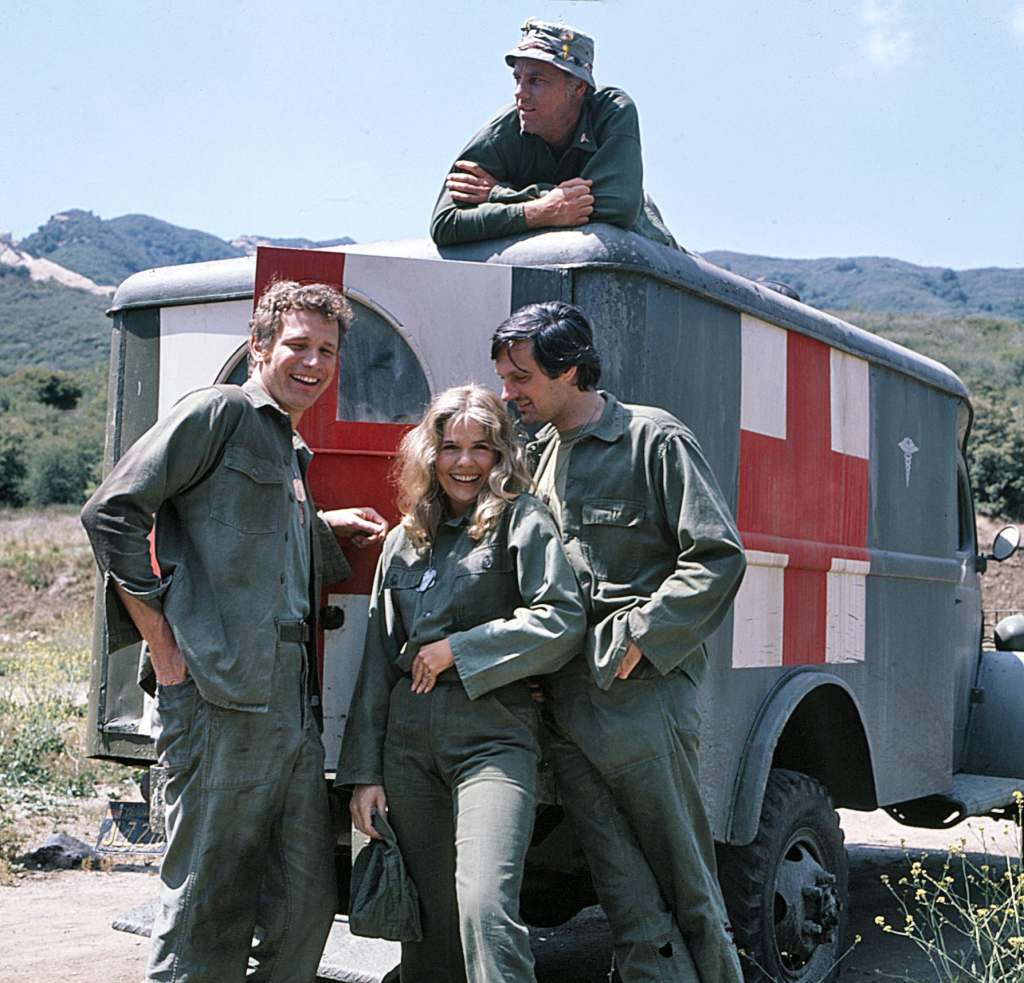
By the start of the third season, Stevenson’s frustration was no secret. He’d told TV Guide, “I’m tired of being one of six. I want to be one of one.” His hosting stints on The Tonight Show Starring Johnny Carson had gone so well that there were rumors NBC might be grooming him as a backup in case Carson ever stepped away. Film offers and TV movie leads started rolling in.
Mark likens the situation to what later happened on Cheers or One Day at a Time, which were shows that thrived by evolving their casts. Stevenson, however, wanted to break free entirely. “He really believed M*A*S*H had made him such a huge star that he could write his own ticket. It was a bad move for McLean, but one of the best things that could happen to M*A*S*H.”
As Alda took on writing and directing duties, the ensemble tilted further toward his perspective. Sherman confirms that Stevenson and Rogers both felt hemmed in by the creative shift. The irony, of course, was that Stevenson’s warmth and humor had been essential to defining that ensemble in the first place.
Did he think about leaving before he did?
Yes—and by the end of the third season, the decision was made. Stevenson was convinced he needed to be “number one” on the call sheet. He’d worked too long in other people’s shadows and believed his growing visibility could sustain a solo series.
Sherman recalls that while producers hoped to persuade him to stay, “it was no surprise that the end of the season would see Blake given orders to head home.” What no one expected was the twist awaiting in his final episode, “Abyssinia, Henry.”
When it came time to film Blake’s departure, Stevenson was told his character would finally get to go home. The episode was shot as usual—except for one final scene. According to Mark, “The actors were brought into a scene in the operating room that they didn’t know was coming. They were given their lines with almost no rehearsal. Radar enters and says Henry’s plane has crashed into the Sea of Japan. Their reactions are real.”
Sherman adds that Stevenson initially balked at killing off the character, calling it “vindictive,” but later admitted it was “one hell of a show and one that a lot of people won’t forget.” As Mark puts it, the decision also ensured “they didn’t want to leave any room for him coming back.”
The reaction to his exit
The episode aired in March 1975 and became an immediate cultural flashpoint. Viewers were stunned, CBS received thousands of letters and newspapers debated whether a comedy had the right to deal such a devastating blow. “People were upset,” Sherman recalls, “saying that a comedy series should not do such a thing to viewers.” But, he adds, it “showed that comedy could be dangerous. Nothing was safe, even in a show with a laugh track guiding us to stay amused.”
The death of Henry Blake transformed M*A*S*H. It signaled that the series would no longer shy away from the darker realities of war, opening the door to more nuanced, emotionally driven storytelling. Mark credits the show’s brilliant writers and directors—many of them veterans of Broadway and prestige drama—for navigating that tonal shift. “It allowed them to dig deeper into the psyches of the characters as it continued,” Sherman explains. “And that would simply not have been the case without ‘Abyssinia, Henry.’”
Did McLean Stevenson regret leaving ‘M*A*S*H’?
In later interviews, Stevenson admitted that leaving M*A*S*H had been a mistake. He often said he’d underestimated what he had and overestimated what was waiting for him. “I made the mistake of believing that people were enamored of McLean Stevenson,” he once reflected, “when the person they were enamored of was Henry Blake.”
Sherman calls that conclusion “sadly whimsical but also erroneous,” arguing that the audience’s affection for Blake was inseparable from Stevenson’s performance. Without him, there was no Henry Blake to love.
NBC wasted no time capitalizing on his newfound fame. Stevenson signed a lucrative deal and quickly launched The McLean Stevenson Show (1976), though despite heavy promotion, it lasted only one season. Unbowed, he tried again with Hello, Larry (1979–80), a spinoff of Diff’rent Strokes that cast him as a divorced radio host raising two teenage daughters. Critics were brutal and audiences ignored it. As Geoffrey Mark bluntly puts it, “They were terrible shows. Bad concepts, characters that hardly existed, almost like retro ’50s sitcoms—but not even as well written and cast as those were.”
Stevenson gamely fulfilled his NBC contract, then shifted to guest appearances on Match Game, The Love Boat and talk shows. “That’s what I mean by shooting himself in the foot,” Mark says. “He had the looks and talent, but he didn’t have the business acumen needed in show business—or his management was very stupid and looking for fast money.”
Part of the problem was timing and perception. To millions, Stevenson was Henry Blake and every attempt to rebrand himself—father figure, talk-show host, or genial sitcom lead—felt like a diluted version of what he’d already perfected. The gentleness that had charmed audiences on M*A*S*H didn’t always translate to the faster-paced, more cynical sitcoms of the late ’70s.
Geoffrey Mark distills it simply: “Show business is more business than show. No matter how creative you might be, if you don’t understand the business and how to navigate it, it can be disastrous. And that’s what happened to McLean.”
McLean Stevenson’s life offscreen and lasting legacy
Off camera, Stevenson retained much of the same geniality that defined Henry Blake. He was married three times, finding lasting happiness with his third wife, Ginny Fosdick, whom he wed in 1980. The couple had one daughter, Jennifer. Despite career disappointments, he valued family life above everything else.
He stayed in touch with his M*A*S*H colleagues, and even those who felt his departure hurt the show spoke warmly of him in retrospect. Alan Alda often said Stevenson set the tone for kindness on set, and Gary Burghoff called their relationship “the heart of the early M*A*S*H years.”

On February 15, 1996, Stevenson died suddenly of a heart attack at his home in Los Angeles. He was 68. But now, nearly half a century later, Henry Blake remains one of television’s most beloved characters, and M*A*S*H‘s watershed moment—his death—still stands among the most shocking in TV history.
His later projects may have faltered, but the affection for Henry Blake endures. As Sherman reminds readers, “Some actors long to be remembered for one role. Stevenson not only did so with Henry Blake, but gave us excellent and often funny performances in a number of television shows, movies, and even game shows.”
Conversation
All comments are subject to our Community Guidelines. Woman's World does not endorse the opinions and views shared by our readers in our comment sections. Our comments section is a place where readers can engage in healthy, productive, lively, and respectful discussions. Offensive language, hate speech, personal attacks, and/or defamatory statements are not permitted. Advertising or spam is also prohibited.