Carolyn Jones’ Life, Tragic Death at 53 and the Devastating Secret She Hid Playing Morticia: ‘I Spent My Life Trying To Be an Actress, Not a Sexpot’
She was TV's most iconic gothic mom on 'The Addams Family'— but her real life held far darker secrets

Key Takeaways
- Carolyn Jones became a TV icon as Morticia, despite an acclaimed film career.
- Her determination carried her from a difficult childhood to Hollywood success.
- Even cancer couldn't stop Jones from acting until the very end of her life.
When Carolyn Jones accepted the role of Morticia Addams on The Addams Family, she wasn’t thinking about television history or creating one of the medium’s most enduring characters. Like many film actors in the mid-1960s, she simply wanted to keep working at a time when movie roles had become harder to come by. Comedy was also a departure from the dramatic roles that had defined much of her career, making the series an opportunity to try something different.
“I’m doing the series because I like to work. There aren’t enough movies being made anymore and I’m tired of sitting around doing nothing. I was a little nervous about it at first, but not anymore,” she said in 1964. “Personally, comedy is a lot harder to play than drama, but it’s a wonderful change of pace for me. [But] the show has brought me a whole new set of fans—the teenagers. As for getting typed, I’m not worried. I was a star in films before I was a star on TV. People should remember that. I hope.”
Born Carolyn Sue Jones on April 28, 1930, in Amarillo, Texas, the future actress endured a childhood that was often difficult. According to her official biographer, those early experiences helped shape the determination that would define her career. What follows is the story of her life, in her own words—and in the words of those who knew her best.
JAMES PYLANT (biographer, In Morticia’s Shadow: The Life & Career of Carolyn Jones): “She grew up in West Texas, in Amarillo, and she was always a misfit. I don’t think she ever felt like she really fit in. She was very close to her mother, Chloe, who was agoraphobic. There was no support from Carolyn’s father; Julius Jones is just completely out of the picture. He abandoned the family when she was very young, so she never met him, though I don’t think that ever held her back. And Chloe was unable to really hold down a job on a regular basis, so the two of them ended up living with Chloe’s mother and stepfather, depending on him to be the breadwinner. And they were all kind of cramped together in that house.”

GEOFFREY MARK (pop culture historian, author, The Lucy Book: A Complete Guide to Her Five Decades on Television): “Carolyn had lung problems as a child; so much so that like many young people she ended up in show business with the fantasy of it being an escape. All she could do was listen to the radio. She couldn’t even go to the movies, so she would read movie magazines. She aimed her life toward that, because, in essence, that was her reality.”
CAROLYN JONES: “As a child, my health prevented me from going to school. I was not well enough to play, so I was educated with tutors. My activity was mental rather than physical.” (1961)
JAMES PLYANT: “Acting was her burning obsession and it was not really relatable to people she was growing up with, so she was very much an outsider. Even as a child she was ambitious, her objective to get out of Amarillo and go to Hollywood. She was very driven.”
Her early journey
In 1978, Carolyn—known for “telling yarns”—offered a rather different background for herself to the Fort Worth Star-Telegram, explaining:
CAROLYN JONES: “In the second grade, my teacher, Mrs. Scott, told my mother that I had ‘natural expression’ and that I could reach all the way to the back of the classroom when I was reading books aloud. Because of that, my mother enrolled me in what used to be called ‘expression lessons.’ But it wasn’t what my father [actually her grandfather] wanted for me at all. He wanted me to be a doctor or a lawyer, but after I managed to be very good at declamation in high school, he began to see my interest. Finally, when he took me to SMU [Southern Methodist University] and I sat down on the steps of the Rotunda and cried that I wanted to be an actress, he gave in. He said, ‘If you must be, then be a professional and be the best that you can.’”
JAMES PLYANT: “In Amarillo, she didn’t really feel she had that much encouragement, but she had such determination and did very well in school plays, gaining a lot of confidence with that. She had lessons and managed to move to California and then went to the Pasadena Playhouse, and that’s what really changed things for her. She was free for the first time and in her own element. She never had employment outside of entertainment, except for a two-week period before she left Texas working for a stationery company.”
After graduating from high school in 1947, Jones headed to California to study at the famed Pasadena Playhouse, whose alumni included many of Hollywood’s biggest stars. Following three years of training and a summer performing in stock theater in Ogunquit, Maine—where, as one 1951 newspaper profile jokingly noted her musing, “We played to two bears and a snake”—her fortunes began to change. While appearing at the Playhouse, she caught the attention of a Paramount Pictures talent scout and soon signed a contract with the studio.
Working her way through Hollywood

Between 1952 and 1959, Jones appeared in 26 films, steadily building her résumé with roles opposite some of Hollywood’s biggest names, including Frank Sinatra in A Hole in the Head and Elvis Presley in King Creole. As she said while promoting the latter film in 1958, “The part is brilliant and I get to sing. Besides, think of the audience the Presley picture will draw. It’s Elvis’ last movie before the Army and that doesn’t hurt.” Yet despite the growing list of credits, breaking through as a leading actress proved far more difficult than simply landing roles.
JAMES PLYANT: “One of the things she had to do was get a nose job, which was very painful. And expensive. Her grandfather agreed to pay for that, because she could not have done that on her own, but she realized she was not going to get the job offers without it. Everything changed once that surgery happened; she was treated completely differently. That’s why, years later, she jumped at the chance to be in an episode of Dr. Kildare in a story about a woman who has a nose job. She related to that character so much. The story was about the aftereffect of the surgery and the character’s resentment over how men treated her differently, who used to reject her. She had that in real life, too.”

CAROLYN JONES: “Two things are of equal importance: working hard on your talent and your grooming, and being prepared physically and career-wise. Your appearance means so much in making a first impression, but you have to be able to deliver once the opportunity is presented. This applies to a lot of other things as well as being an actress. Making my hair blond, for example. It was an indefinite color and as soon as I became a definite blond, I was signed to a term contract at Paramount. My experience is that you get more attention as a blond, and this gives you a confidence and a chain of constructive reactions is begun.” (Abilene Reporter-News, 1953)
GEOFFREY MARK: “She began to get larger and larger parts right at the time when movies were changing, the studio system was falling apart and actors had to be more independent. There wasn’t any longer one studio that put you on salary and trained you and groomed you and wrote parts specifically for you. Those days were over. She began getting small parts in good films, but there wasn’t a lot of work. She decided to take a risk and cut her long golden hair really short, and dyed it jet black. With that, Hollywood noticed and started saying, ‘Wow, who is this girl?’ She began to be nominated for awards and did films with Frank Sinatra and Elvis Presley. Her fame began to grow. She wasn’t just a pretty blond anymore. She stood out.”

CAROLYN JONES: “When I was a blonde, people used to look at me and think I was sexy and feather-headed. But a brunette is a chase-and-conquer type girl. And as a blond, I was in competition with the Mansfields and Monroes. I spent most of my adult life trying to be an actress, not a sexpot. Now as a brunette, I feel I’ve come into my own.” (The Amarillo Globe-Times, 1956)
JAMES PLYANT: “She felt some resentment over the way people started treating her so differently than they had, first with the nose job, then by going blonde and, finally, by becoming a short-haired brunette. That resentment was not surprising, considering her acting abilities were always the same. When she was ill, she wrote in her diary that she felt she was passed over for some roles because she wasn’t pretty enough. I think she looked at people not being sincere with her because they suddenly wanted her when, previously, they had rejected her.”
Morticia and ‘The Addams Family’
Yet even those career breakthroughs—the image changes, stronger film roles and high-profile appearances alongside Frank Sinatra and Elvis Presley—didn’t guarantee lasting momentum. While Jones’ profile continued to rise, consistently landing substantial roles proved to be an ongoing challenge.
JAMES PLYANT: “Once she hit her mid-thirties, she felt like the roles were diminishing. You know how Hollywood was at the time: 35 was considered old for an actress and the quality roles just weren’t there. She wasn’t getting many offers, which is when television became more important in terms of her career.”
GEOFFREY MARK: “Like many actors who had gotten big movie breaks in the 1950s, by the 1960s she had to go to television and that’s where she became an icon on The Addams Family. She was not playing the girl next door, anyway. Her roles were always more edgy bad girls—I feel stupid saying that these days, bad girls. Women who weren’t virgins, women who drank, women who smoked, women who were Bohemian, women who were beatniks, women who were prostitutes. Those are the kind of parts she played, and she played them well. Then about 14 years into her career, along comes The Addams Family.”
Inspired by the single-panel cartoons created by Charles Addams for The New Yorker, The Addams Family turned the traditional TV family sitcom on its head by making the strange and macabre seem perfectly ordinary. Premiering in 1964, the series starred Carolyn Jones as Morticia Addams opposite John Astin’s Gomez, with Lisa Loring and Ken Weatherwax as Wednesday and Pugsley, Blossom Rock as Grandmama, Jackie Coogan as Uncle Fester and Ted Cassidy as the unforgettable Lurch.
GEOFFREY MARK: “Had she not been so well-versed in her craft, Carolyn would’ve not been able to pull Morticia Addams off. It was a very hard role to play, because she has to look like the drawings, as did everybody else on the show, but she also had to have a smoldering sexuality that was very uncommon on sixties television in general, never mind sitcoms. She had to be able to project that despite the absurdity of the character and the black humor. The character had to be totally comfortable in her own skin and warm and loving. That’s a lot to ask of an actor. She also needed to make Gomez look sexy, because John Astin was a great actor, but wasn’t known for being hysterically handsome. But Morticia was so turned on by Gomez that the audience knew that he had to have something going on.”

JAMES PLYANT: “She really did enjoy the concept of the show and her character. It wasn’t, ‘Oh, I need to take this role.’ It was something that she could very much relate to. Morticia had a sense of humor and there are little things that I know they wove into the dialogue because of her input. One in particular is that Charles Addams wrote to her and told her about wanting to introduce this character, Cousin Itt, and she said, ‘What side of the family is he from? Both sides, I hope,’ and that went into the script. The sexuality was surprising. You know, you’re coming out of I Love Lucy having twin beds and here they are being so romantic and Gomez can’t control himself around her. That was not done on television at the time.”
Carolyn was certainly defensive of the show, as she proclaimed to The Los Angeles Times in 1965.
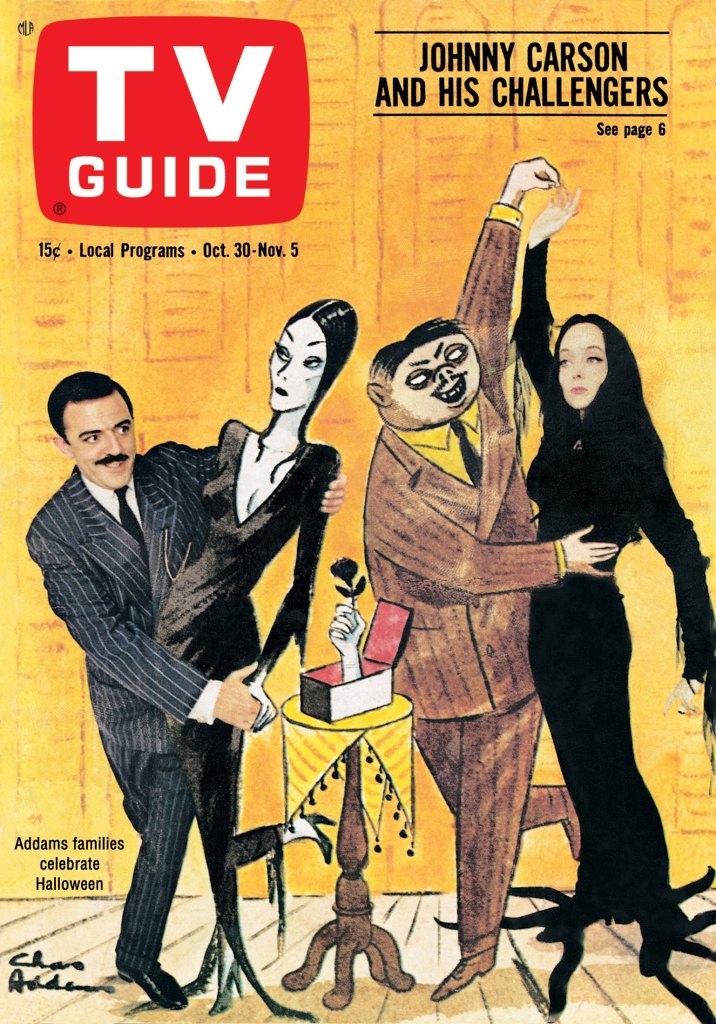
CAROLYN JONES: “Just name me one other domestic comedy where the kids honor and obey their parents. Do you ever see Pugsley or Wednesday talking back to Gomez and me? And Gomez thinks I’m the sexiest thing this side of Sophia Loren. We adore each other and instead of taking our violent tendencies out on each other, Gomez crashes trains and Morticia feeds her carnivorous plants.”
“Each character on our show is a fully-developed individual. Take Lurch, the butler, for example. He loves music. In other family shows, everyone is a one-dimensional being. Morticia loves her mother-in-law, asks her advice and never once has shouted, ‘Mother, I’d rather do it myself!’ No wonder our show seems wild and abnormal. I think people like that the Addamses love each other. I mean, if we carried on like other families on TV, we would have looked ludicrous.” (The Los Angeles Times, 1965)
“A lot of the character has come out of the costuming. My skirt is so narrow I can only mince along like Ming Toy Goldberg. So I developed a minimum of movement, which contributes to the feeling of calmness and elegance.” (The Corpus Christi Caller-Times)
‘The Addams Family’ vs. ‘The Munsters’
One of television’s strangest coincidences is that The Addams Family and The Munsters—two classic horror-comedies that have been linked together ever since—both debuted during the same week in September 1964 and aired their final network episodes during the same week in 1966. Despite the inevitable comparisons, the two series were very different in both style and tone.
GEOFFREY MARK: “The Addams Family and The Munsters were both funny; they were both peopled by very good actors, but The Addams Family had a sophistication and sexuality—two words that you cannot apply to The Munsters—with much sharper writing and direction. Carolyn had excellent actors to play with. Everybody on the show was so good.”
CAROLYN JONES: “The stories of The Munsters are more down to Earth and neighborhoody. Our atmosphere is more elegant, more hip. We aren’t bothered with workaday problems since Gomez doesn’t have to work. He is independently wealthy. As Charles Addams himself explained, one of his ancestors made a killing. The series lasted only two years, but in those days that amounted to 64 episodes. Today, that number would probably be about five years’ worth. But Morticia doesn’t haunt me. I have been very lucky. Producers don’t see me only as that character. I’ve been able to do a lot of different parts. I did them before The Addams Family and I’ve done them since. And I have been nominated for an Academy Award [for 1957’s The Bachelor Party].”

JAMES PLYANT: “I don’t think she sensed the typecasting right away, but the more she went out there, the more she discovered that everyone wanted to see Morticia. She gradually started to realize, ‘I’m Morticia forever,’ even though she loved the role. She also enjoyed her stint on the Batman TV show, where she played Marsha, Queen of Diamonds in five episodes. She was able to be over-the-top and beautiful in that role. Her sister Betty told me that it featured one of Carolyn’s favorite lines of all time, where she says, ‘Relax and worship me.’ You could see Morticia saying a variation of that.”
CAROLYN JONES: “Since The Addams Family, I wasn’t getting much in the way of offers and I’m not the kind of person to sit around and tend my roses. So I started to write a book, out of boredom. Also, I’d recently gone through a sexual crisis and there was a therapeutic effect in putting it down on paper.” (The Austin American, 1971)
A ‘dirty book’

By the early 1970s, with acting roles becoming less frequent, Jones looked for another creative outlet. In 1971 she published the novel Twice Upon a Time, a candid and highly sexual story that drew on her own experiences and observations of Hollywood. Intended in part as a satire of the genre, the book instead became a deeply personal exploration of relationships and sexuality. While it attracted considerable attention—and controversy—it ultimately did little to revive her acting career.
CAROLYN JONES: “Several people stopped talking to me because of it. Some are insulted because they’re not in the book and some because they are. And the funny thing is that one person was very upset because she wasn’t in the book, but she was. She just didn’t recognize herself. The novel started because I was sick of sex novels by inhibited women who didn’t know what they were talking about. Books you couldn’t believe, because they were so utterly dishonest. I decided to show them up, but the deeper I got into my put-on, the deeper I got into myself, my own problems. So the book turned out not to be a joke, but the most serious project I’ve ever attempted. I found I didn’t miss acting. I got my jollies, if you will, in the feeling of communicating directly with the audience with nothing in between, no camera, no crew, no devices—just me and the reader. I used to play to the camera like it was a human being watching me act. Now, somehow, it’s become depersonalized. There’s nobody there now.” (The Los Angeles Times, 1972)
JAMES PLYANT: “That novel did not go over very well with people. It was a thinly disguised indictment of Hollywood, and because it was so sexual, it also sort of spoiled the image some people had, because Morticia, even though she’s sexy, she’s also subtle with it and there’s no subtlety in this book. I think it offended Hollywood more than the general public, because they could recognize themselves in this book. It had some success, mostly out of curiosity, but it really didn’t do her career any favors.”
In 1977, NBC aired the reunion movie Halloween with The Addams Family, which reunited much of the original cast but failed to capture the magic of the ’60s series.

JAMES PLYANT: “When she did the reunion movie, Carolyn was really hoping it would spark a new version of the show. This is 1977 and her career was really flailing; she couldn’t get a decent role and she was hoping the network would have interest in that atmosphere of revivals. Unfortunately, it just wasn’t a well-done movie and a series never happened. I think what was going on with her at the time was a reminder of her days in Hollywood where she had to take what comes along. And she wanted to work. She had a very strong work ethic and took a lot of roles I’m sure she did not really want to take, but it’s what was available.”
GEOFFREY MARK: “I don’t think she was bitter about the Morticia situation. I think she was a level-headed woman who understood how the business works. Everyone I ever spoke to who worked on this show had nothing but praise for her. I felt that Morticia was the heart of The Addams Family and that Carolyn’s essence as a person permeated Morticia the character, because she was basically so nice and liked the other characters. And you liked the other characters, too, because of her in the same way that Edith Bunker was the heart of All in the Family. Archie Bunker was palatable because Edith loved him so much.”
Dinner theater and ‘Capitol’
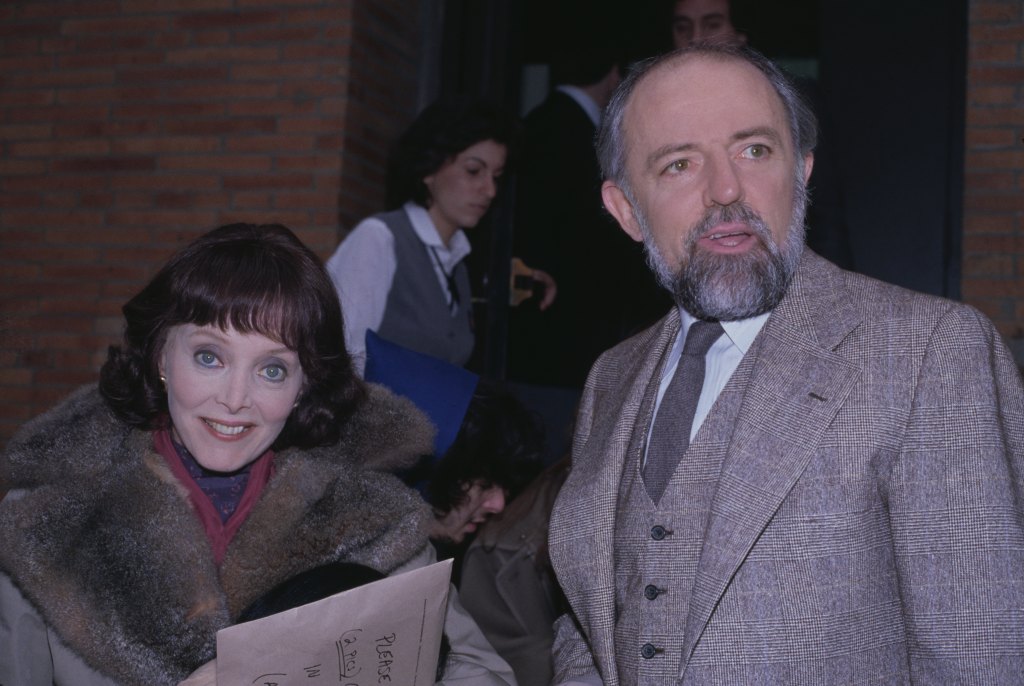
Towards the later part of the 1970s, Carolyn began finding work in dinner theater productions.
JAMES PLYANT: “I think she really enjoyed that and it reminded her of her Pasadena Playhouse days acting on stage.”
CAROLYN JONES: “It’s the new stock theater. It has brought together stock and nightclubs where young performers can learn and grow by giving them professional jobs. Stock only works on the East Coast anymore, but this works anywhere. It’s kind of wonderful. With TV or movies, you sit back and have it done to you without thinking. But with live theater, you have to become part of it.”
One of Jones’ last major opportunities came with the CBS daytime drama Capitol, where she was cast as the ruthless Myrna Clegg. Appearing on the series from 1982 to 1983, she relished playing a character whose ambition and ruthlessness made her one of the soap’s most memorable villains.
CAROLYN JONES:“Myrna is meaner than J.R. Ewing. She and J.R. are a matched set. Between them they could carve up the world. I based Myrna on three women I know and they’d kill me if I used their names.”
“The appeal of the show is that Washington is the glamour and scandal capital of the world. Every single day there’s some scandal or off-beat news out of Washington, where there’s more room for it. In Hollywood we have to work hard. Politicians don’t. People would be surprised to learn how many stars go to bed alone. I don’t think many senators do. They don’t have to be up at five in the morning with bags under their eyes to report to work.” (The Kilgore News Herald, 1982)

JAMES PLYANT: “When Capitol came along, she’d already been diagnosed with cancer. She also auditioned for other roles, including Mrs. Roper on Three’s Company, but she was turned down for that. I can imagine there she is, a talented actress with her body of work, and she has to audition at this point of her life. But Capitol came along and no soap opera had been done exactly like that before with several well-known stars attached to it. And she loved that role. She felt like she could really let loose with that character. The character was over the top: she was someone who had money and power and was ruthless. She felt that the character was a match for J.R. Ewing.”
Jones was married four times, but her best-known relationship was with actor-turned-writer and producer Aaron Spelling. The couple married in 1953, long before Spelling became one of television’s most successful producers, and remained together until their divorce in 1964. Before and after that marriage, Jones was also wed to Don Donaldson, Broadway musician Herbert Greene and Peter Bailey-Britton.
JAMES PLYANT: “When she met Aaron Spelling, neither one of them had any money, but they were both very hard workers. I think in the early days of their marriage, they were on the same level, both struggling and he supported her financially and emotionally and it’s the same way for her. She’s the one who really told him, ‘Forget about acting. You have a talent for writing and you’ve got to focus on this.’ As time went on, both became a little jealous or resentful of each other when they were successful. And when they were successful, it was not at the same time, so one was down a bit while the other’s career would rise and vice versa.”
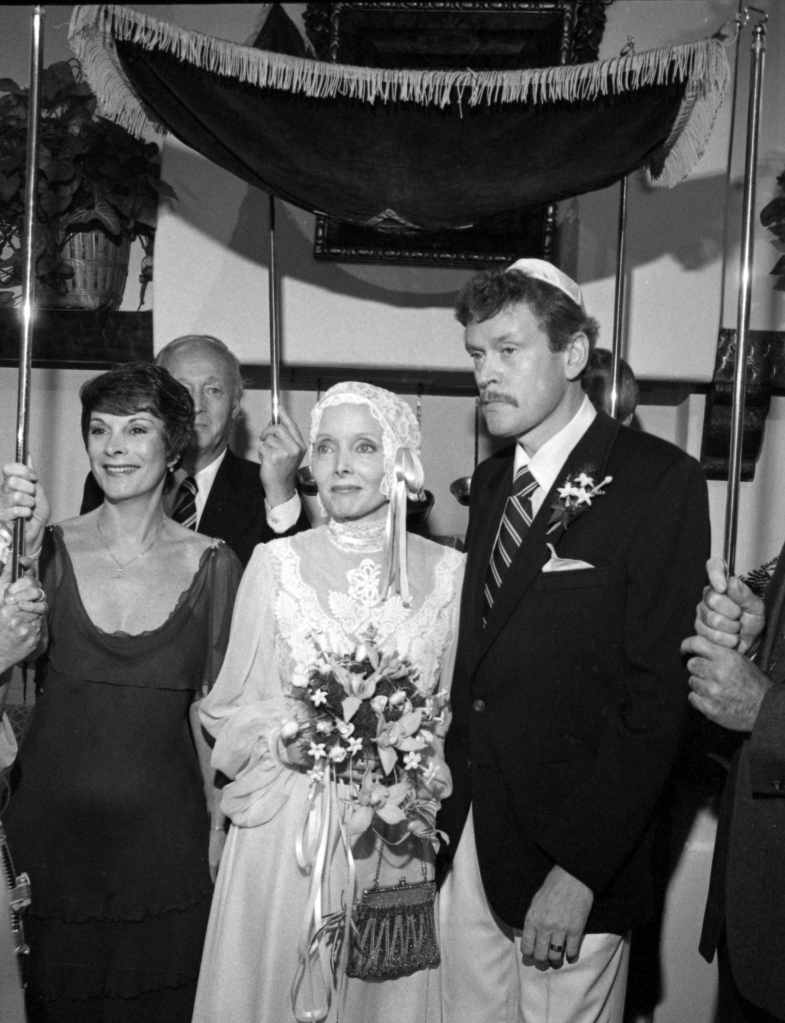
Carolyn’s feelings were obviously mixed about the marriage with Aaron Spelling. In 1961 she claimed that he instilled her with confidence.
CAROLYN JONES: “Lack of confidence is such a destructive emotion. It starts with little tears, giving too much importance to what people think, with an inability to handle disappointments until it can become the most destructive force in our life. The biggest boost in my life was the understanding and encouragement that came from my husband. His confidence in me helped me to face and lick problems that I felt I could never overcome. Then came the acceptance of me as an actress. We both sincerely tried to make the marriage work. The demands of our occupations, unfortunately, are such that we have been continuously pulled apart.”

In March of 1981, Carolyn was diagnosed with colon cancer, a fact she kept hidden from others, only telling them that she was suffering from ulcers. Although she worked on Capitol through much of her illness, in July of 1983 she slipped into a coma, dying from the disease on August 3 at the age of only 53.
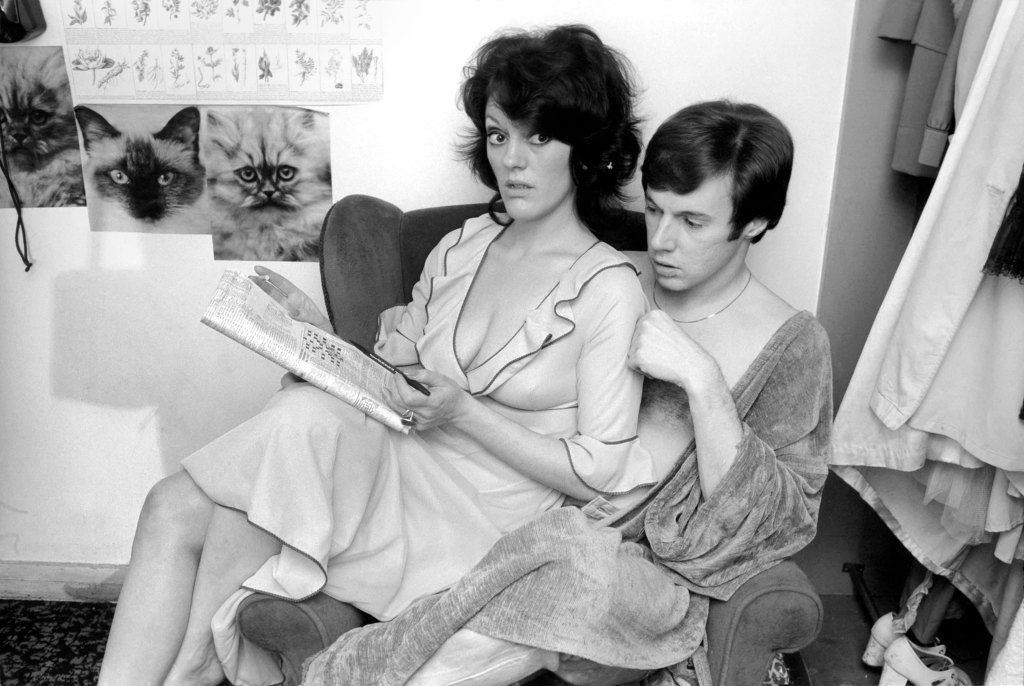
JAMES PLYANT: “Her death was very shocking and I think she was incredibly brave to keep on acting through all of that. She knew she was dying, but wanted to act as long as she could. And the fact that she took that role and did such a compelling job while undergoing chemotherapy and keeping it quiet at the same time is amazing.”
“Her legacy is her status as an icon. Her sister and I have talked about this many times. Carolyn would never have dreamt of how she would have such a following this many years after her death. A whole generation born after she died that follows her in movies and The Addams Family. She never would have thought that would be a possibility.”
Conversation
All comments are subject to our Community Guidelines. Woman's World does not endorse the opinions and views shared by our readers in our comment sections. Our comments section is a place where readers can engage in healthy, productive, lively, and respectful discussions. Offensive language, hate speech, personal attacks, and/or defamatory statements are not permitted. Advertising or spam is also prohibited.