The Forgotten Saturday Morning Cartoons That Starred The Beatles, Jackson 5ive and the Osmonds
How The Beatles, The Jackson 5ive & The Osmonds brought pop music to Saturday morning TV
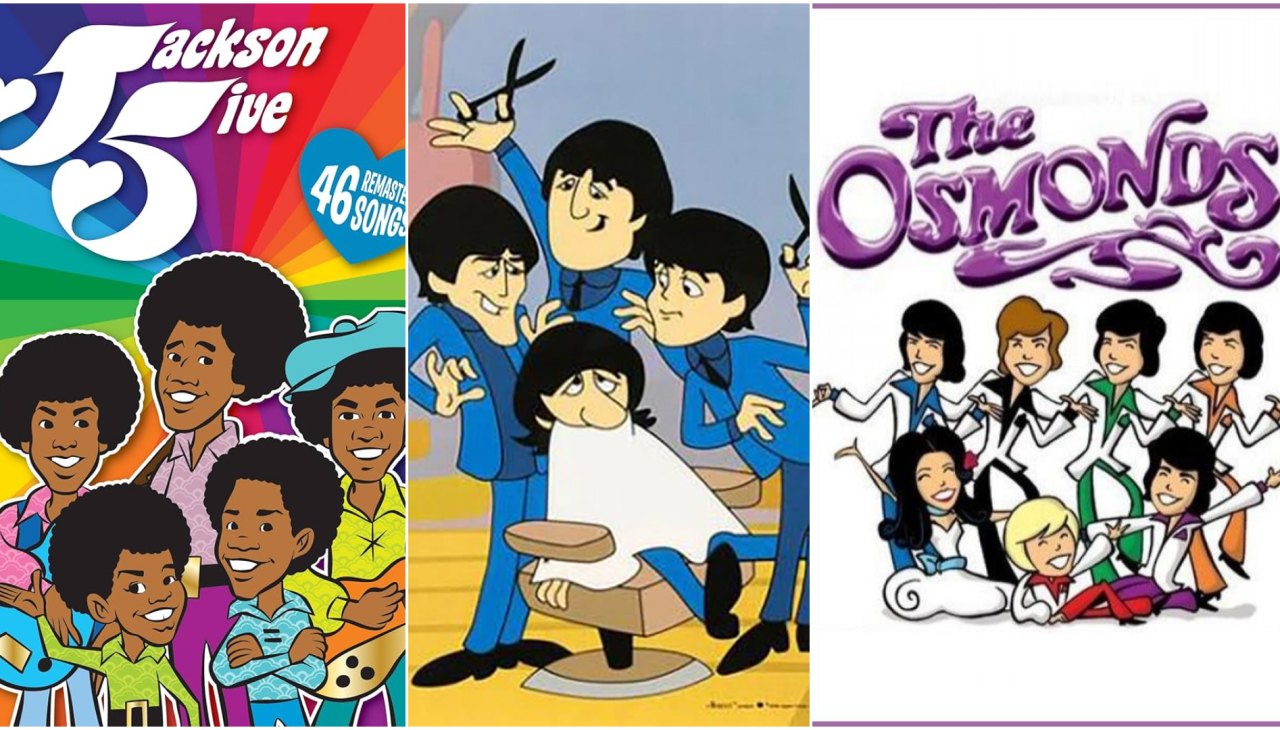
Long before reality TV blurred the lines between celebrity and character, Saturday morning cartoons were already doing it—with ink, paint and a heavy dose of bubblegum pop. Throughout the 1960s and early 1970s, three iconic musical acts—The Beatles, The Jackson 5 and The Osmonds—made the leap from record charts to animated hijinks. For a generation of kids, these shows were their first introduction to Beatlemania, Motown and Mormon siblings with a pop edge.
But ask most people today, and they barely remember the cartoons existed—which is exactly why animation historian Mark McCray was the perfect person to revisit these shows with. As the author of The Best Saturdays of Our Lives and a former animation programming executive, McCray has spent years documenting the highs, lows and head-scratching moments of Saturday morning TV. And as we dove into these curious bits of musical animation history, one thing was clear: it all started—as so much did—with The Beatles.
“The Beatles cartoon was riding the wave of Beatlemania,” McCray explained. “After the Ed Sullivan appearance in 1964, the ratings exploded. I mean, we’re talking a 51 share of the audience. I don’t even know what that means now because no one talks about share anymore—but it was huge.”
For context: that Ed Sullivan performance in February 1964 was reportedly seen by 70 million viewers, yet when a writer first pitched the idea of a Beatles comic strip to King Features, it was rejected. “The editor thought The Beatles were just a fad,” McCray said. “He didn’t think it would last.”

Luckily, Al Brodax—who’d produced the made-for-TV Popeye cartoons—was listening in. “He said, ‘Why not do a cartoon instead?’ They lined up sponsors and pitched it to ABC. Edward Vane at ABC gave it the green light, and when it debuted, it broke all known records. It was the number one Saturday morning cartoon.”
Vane, as McCray pointed out, is one of those unsung figures in TV history. “He greenlit The Dating Game, The Newlywed Game, and later Good Morning America. But people hardly know his name.”
The Beatles’ cartoon: a pop phenomenon with a surprising longevity
The Beatles cartoon—questionable voice acting aside—had real talent behind the scenes. Writers included Jack Mendelsohn, who worked on everything from Rowan & Martin’s Laugh-In to Sabrina the Teenage Witch, and Dennis Marks, who later developed Spider-Man and His Amazing Friends. “Marks also worked on the old DC cartoons like Aquaman and Batman, and even the King Features trilogy: Beetle Bailey, Krazy Kat and Snuffy Smith,” McCray noted.
The Beatles’ animated series may have debuted in 1965 as a bit of a novelty, but it turned into a genuine Saturday morning juggernaut. While superhero shows would eventually eclipse it in the ratings—particularly The New Adventures of Superman in 1966—the Fab Four managed to hold their ground for several years, even as the TV landscape shifted under their feet.
Still, The Beatles cartoon wasn’t going anywhere just yet. Even after losing their top spot, ABC doubled down on the show, ordering a second season composed mostly of reruns from Season 1, with a handful of “refresher” episodes peppered in to give it some new life. “Maybe six or seven new episodes,” McCray noted. “But the show still performed really well. It had legs.”
ABC ordered a third season and even slightly updated the show’s opening, while the episodes themselves remained mostly in the same comedic fantasy vein. “Al Brodax was really good at delivering the show on time,” McCray said. “He’d done all those Popeye cartoons and knew how to manage fast turnarounds with studios around the world.”

Still, despite the success, the series never made it to DVD—and likely never will. “There are music rights issues,” McCray said of this oddity: “They release everything else, but not this. It’s never even been issued in the UK.”
Part of that may have to do with the show’s voice cast—British in name only. Lance Percival played Paul and Ringo while Paul Frees (a beloved American voice actor) voiced John and George. “There’s a theory,” McCray added, “that if they’d used actors with real Liverpool accents, American audiences might not have understood them. But that logic kind of falls apart when you remember kids were already listening to actual Beatles records.”
Even as the show entered its fourth season, ABC still saw enough value in The Beatles to keep it on the air. But it had been moved to Sunday mornings—what McCray calls “the overflow schedule.”
“That’s when the network’s basically saying, we’re not ready to cancel you, but we’re thinking about it,” he said. “Sunday mornings were a dumping ground. CBS might have Tom and Jerry and one other show. NBC didn’t even bother. ABC made more of a go of it.”
In the end, The Beatles paved the way for what came next: animated stardom for the Jackson 5—and a bubblegum boom that would define a generation.
The Jackson 5ive: a new kind of Saturday morning star
If The Beatles kicked open the door for animated pop acts, The Jackson 5ive moonwalked straight through it. Premiering in 1971, the ABC series came at the height of the group’s fame, capitalizing on their massive teen and pre-teen fanbase. But unlike The Beatles—who were voiced by actors using exaggerated accents—the Jacksons were replaced for practical reasons.
“They were just too busy touring to do their own voices,” Mark McCray explained. “But as a kid, I thought it was actually them. I had no idea actors were doing the voices.”
The show made a splash in the ratings and even featured animated versions of Berry Gordy and Diana Ross—though neither voiced themselves. “Still, it was cool to see them included,” McCray said. “And the character designs were done by Jack Davis, who was a big deal—MAD magazine, movie posters, TV Guide caricatures. He was one of the best.”
Davis’ designs gave the show a vibrant, stylized look, especially in the animated music videos that were folded into each episode. “The visuals really popped,” he points out. “You could tell the animators were giving it a little extra something.”
The show’s format mirrored that of The Beatles: light, episodic adventures mixed with songs. One particularly memorable episode, “Drafted,” had Michael mistaken for a military recruit, leading to a USO performance and the inevitable musical number that tied it all together. “Everywhere they toured, there was some kind of situation,” McCray exclaimed with a laugh.
Compared to The Beatles, McCray found the Jackson 5’s stories a bit more grounded. Not by much—but enough. “The Beatles had them going into space or visiting other planets. It was all music video-driven. The Jackson 5ive had similar energy, but I think the stories were a little tighter.”
What both series shared was a commitment to developing personalities for each member of the group—even if, in the case of the Jacksons, those personalities were largely invented. “We didn’t really know much about them offstage,” McCray said. “But the writers gave each brother distinct traits—like Marlon being the doom-and-gloom guy. It helped kids connect. It may not have been accurate, but it didn’t need to be. It was enough.”
The Osmonds: riding the bubblegum wave
As The Jackson 5ive entered its second season with strong ratings and more “refresher” episodes, another family band entered the Saturday morning fray: The Osmonds. Debuting in 1972, the show was clearly meant to capitalize on the same blend of pop music, animated antics and kid-friendly adventure. But while it shared some of the same ingredients, the results didn’t quite have the same cultural impact.
“There was this perceived rivalry between the Jacksons and the Osmonds,” recalled McCray. “It all stemmed from the song ‘One Bad Apple.’ A lot of people thought it sounded like a Jackson 5 knockoff—and that was the Osmonds’ theme song.”
While imitation may be the sincerest form of flattery, it didn’t help perceptions. “Older kids in the neighborhood would say the two groups didn’t like each other,” he added. “As a kid, I didn’t know any of that. I just liked the music.”
The Osmonds had begun their careers as a barbershop quartet on The Andy Williams Show, long before Donny, Marie or Jimmy became household names. But by the early ’70s, it was Donny and Jimmy who had become the breakout stars—and the animated series reflected that reality.

“The show leaned heavily on Donny and Jimmy,” McCray said. “The older brothers were there, but they didn’t get a lot of screen time or defined personalities. They could’ve been anybody.”
While the Jackson 5ive made a point of defining each brother’s traits—even if fictionalized—The Osmonds struggled to make the group feel distinct beyond its two youngest members. “Jimmy was kind of the Scrappy-Doo of the show,” McCray joked. “Always getting them into trouble. And Donny was this wannabe Romeo who was always trying to impress girls, though usually failing.”
Episodes leaned heavily into sitcom logic and cartoon fantasy. In one story, Donny pretends to be a bullfighter to impress a girl in Spain. And like the Jackson 5ive, musical numbers were peppered into the storylines. “Mike Curb—who worked with everyone in the business—was heavily involved with the music,” McCray said. “He curated songs from Donny’s solo albums, Jimmy’s solo albums and the Osmonds as a group.”

Surprisingly, Jimmy Osmond even had a solo hit: “Long Haired Lover From Liverpool,” which reached #1 on the UK charts in 1972. But despite the Osmond brand recognition, the cartoon never reached the popularity of its predecessors. It was renewed for a second season but didn’t receive any new episodes beyond the initial batch.
“The awareness just wasn’t there,” McCray said. “They weren’t as visible as the Jacksons, who were everywhere. The Jacksons had The Ed Sullivan Show. The Osmonds were more tied to an older generation’s TV.”
And unlike the Jackson 5 or Beatles, the Osmond brothers voiced themselves—though curiously, the credits didn’t always make that clear. “Paul Frees was listed in the credits, but there was no star billing for the Osmonds themselves, which is strange. You’d think that’d be in the contract.”
Despite its shortcomings, McCray still sees value in the show. “It was written well. Some of the episodes are genuinely funny, but there was nothing distinctive enough to make the cartoon version of the Osmonds stand out. They could’ve been any other generic band.”
The show even included a talking dog named Fuji—an odd houseboy/dog hybrid who served as comic relief and talked directly to the audience. Because… why not?
Saturday morning legacy
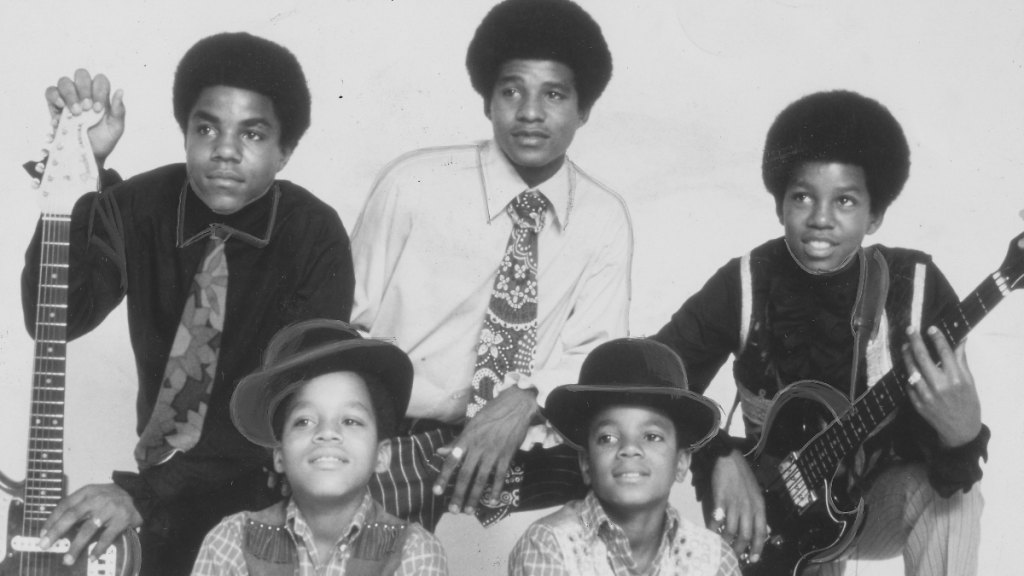

As for the legacy of these animated pop shows, the truth is that nothing quite matched the cultural flashpoint of The Beatles cartoon. “By the time the Jacksons and the Osmonds arrived, the impact wasn’t as seismic,” McCray said. “They were successful, but not revolutionary.”
Still, the influence of The Beatles cartoon can be felt in both shows’ format, animation style and episodic structure. “You see the same kooky adventures. The same anything-can-happen energy,” he stated. “There’s even a Jackson 5 episode where Michael dreams he’s Cinderella—called Cinderjackson. Total Beatles-style fantasy.”
In the end, The Beatles, The Jackson 5ive and The Osmonds all played their parts in turning Saturday mornings into a bubblegum-fueled blend of pop stardom and animated escapism. And for those of us who watched them as kids, the beat—if not the reruns—go on.
Conversation
All comments are subject to our Community Guidelines. Woman's World does not endorse the opinions and views shared by our readers in our comment sections. Our comments section is a place where readers can engage in healthy, productive, lively, and respectful discussions. Offensive language, hate speech, personal attacks, and/or defamatory statements are not permitted. Advertising or spam is also prohibited.