Richard Dean Anderson’s ‘Stargate’ Legacy: The Surprising Deal That Brought ‘MacGyver’ to ‘SG-1’
The untold story of how Jack O'Neill was reinvented, told through the words of the cast and crew

Before he ever stepped through the Stargate, Richard Dean Anderson had already lived several professional lives, one of which had turned him into a television icon. For seven seasons, Anderson was synonymous with MacGyver, the resourceful, soft-spoken hero who could dismantle a bomb with a paper clip and talk his way out of just about anything. The role made him a star, but it also boxed him in to the point that by the time MacGyver ended in 1992, he was keenly aware that carrying another long-running series would require a reinvention—one that arrived from an unexpected corner of sci-fi.
That opportunity came with Stargate, a property that began as the 1994 film of the same name, which was built around an ancient alien device that allows instant travel between distant worlds. While the film starred Kurt Russell as Colonel Jack O’Neil, its larger mythology—mixing military realism, ancient history and space opera—proved far richer than a single movie could contain. When the concept was reimagined for television by Brad Wright and Jonathan Glassner as Stargate SG-1, the creative team retained the film’s core premise but expanded it into an ongoing exploration of alien civilizations, interstellar politics and humanity’s place in the universe.
With Stargate SG-1, Anderson didn’t just headline a new franchise but, instead, reshaped it. Stepping into a revised version of Jack O’Neill (with two ls rather than the big screen’s single one), he infused the character with humor, skepticism and a self-aware edge rarely seen in science-fiction leads at the time. It was a performance informed by success, burnout and a clear understanding of what he would and wouldn’t do again.
Key Takeaways: Richard Dean Anderson and ‘Stargate SG-1’
How did Richard Dean Anderson end up on Stargate SG-1?
After MacGyver ended in 1992, Richard Dean Anderson took time to reassess his career before agreeing to star in Stargate SG-1, ensuring he would have creative input and the freedom to reshape the role.
Why was Richard Dean Anderson hesitant to join Stargate SG-1?
Anderson didn’t want to repeat the experience of carrying another long-running series alone and was concerned about playing a darker version of Jack O’Neill similar to the 1994 Stargate film.
What changed when Anderson was cast?
Once Anderson joined the project, the show’s tone shifted toward a balance of humor and drama, making Stargate SG-1 more accessible while preserving its science-fiction mythology.
How did Anderson influence the character of Jack O’Neill?
As both star and executive producer, Anderson infused the role with humor, skepticism, and empathy, shaping O’Neill into the audience’s point-of-view character.
Did Richard Dean Anderson ever distance himself from Stargate?
Although he later reduced his on-screen presence, Anderson has consistently embraced his association with Stargate SG-1, viewing it as a defining collaboration rather than a role he moved past.
Early days and ‘General Hospital’ (1976-1981)
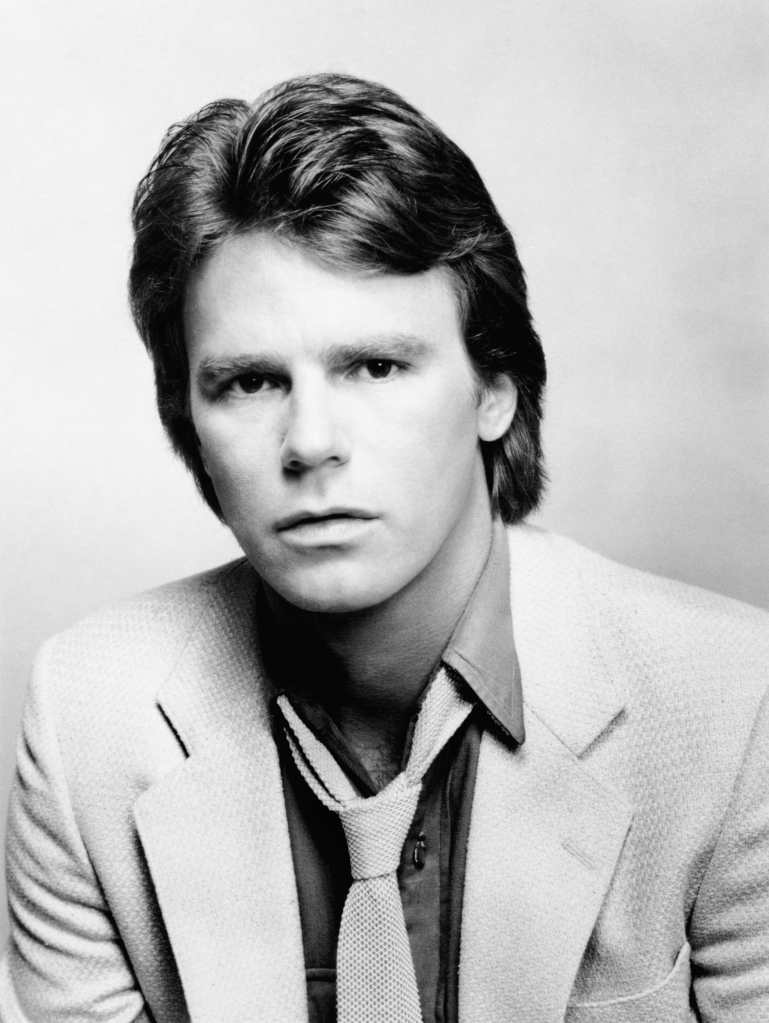
He was born January 23, 1950 in Minneapolis, Minnesota, the oldest of four sons. In his youth he dreamt of becoming a professional hockey player, which ended when he broke both of his arms. Interest shifted to such subjects as music, art, acting and the possibility of becoming a jazz musician. He ended up studying acting at St. Cloud State University and, then, Ohio University, though he dropped out before graduation.
Richard Dean Anderson (actor, “Jack O’Neill”): “I wanted to race cars when I was a kid. My dad turned me on to Formula One and I’ve been a fan of it ever since, but it was too expensive. We didn’t have money and I didn’t know how to do it back in Minnesota. So I adapted to the environment and wanted to ski at the Olympics, but my knees were shot so I couldn’t do that. At one point I was really interested in still trying to support the forest and trees and stuff. I wanted to be not like Smokey Bear, but someone similar to him, just because I like the woods and the mountains and that kind of stuff. Anything I could do to work and have a living, I wanted to do something like a forest ranger. At one point in junior high school we had to put together a project where you had to list three things you thought you wanted to be and write a treatise on each one. My three were dentist, motel manager and the third one I can’t remember.”
After his junior year in college, back in 1967 when he was 17, his life was seriously impacted by a bicycle trip to Alaska.
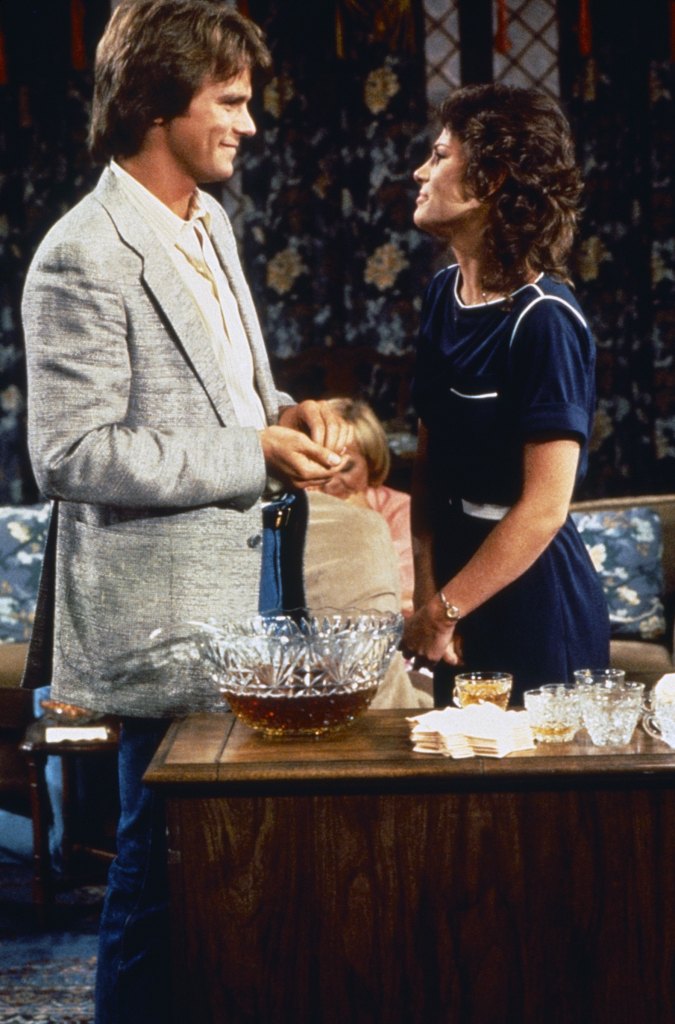
Richard Dean Anderson: “I started out from Minneapolis, my home, and rode up through North Dakota, Saskatchewan and Alberta all the way up to Skagway, Alaska. We then took boats down to Juneau and then Prince Rupert and eventually down to Victoria and then straight across. There were three of us that started out and after about, I think, a month, we all wanted to see different parts. I chose to go up to Dawson Creek and to Mile Zero, the Alcan Highway. My buddies went different directions. It’s through the Canadian Rockies, which is a little rough on a 10-speed bike. I learned to survive elements of the wild that I didn’t know that I could. Actually, I was ill-prepared for it, so I didn’t know that I would have to. I had 900 miles to go along the Alcan Highway to White Horse alone. I ended up having to camp just off the side of the road where there’s nothing but brush. It was a dirt road.”
“These are things that did change me. In fact, I awoke to the sound of what I’m sure were Grizzly Bears crashing through the woods around me and I’m in a mosquito mesh tent. Hearing that, I ended up having to change myself. Literally. Moments like that would happen too often, so I had to develop some kind of meditation, which I didn’t even know that’s what it was at the time, but I had to somehow give off ‘don’t hurt me vibes.’ Finally, I made it to White Horse. So it was three months, two of which I was alone, because the guys wanted to see other parts of Canada. I made it across trans-Canada and home again for my senior year in high school. Basically, just spending that much time alone, doing something like riding a bicycle for endless miles, there would be something wrong with you if you didn’t discover something about yourself. You’d have to be kind of callous. I wasn’t out there to self-explore, but I was forced to do it, because of my situation. So I developed a survival instinct, if that means anything, about how to take care of myself. All while riding a 10-speed Schwinn.”
Following his trip, he moved to North Hollywood, then New York City and finally to Los Angeles, where his jobs included handling whales for a marine mammal show, serving as a musician in a medieval dinner theater and as a juggler and street mime. Quite a mix, representing, as he put it, one of the happiest times of his life.
From 1976 to 1981, he played Dr. Jeff Webber (his first role) on the daytime soap opera General Hospital. After that he scored a guest starring part on The Facts of Life, followed by regular roles on Seven Brides for Seven Brothers and Emerald Point N.A.S.
The ‘MacGyver’ Era: Becoming a Global Phenomenon (1985-1992)
Seven years of MacGyver were next, playing Angus MacGyver, a spy with an innate ability to use whatever is at his disposable to get out of virtually any situation. The series was followed by a pair of TV movies—1994’s MacGyver: Lost Treasure of Atlantis and MacGyver: Trail to Doomsday—which he produced, having learned a great deal during the making of the series. He would also star in the 1995 sci-fi western show Legend.
Richard Dean Anderson: “The whole thing about the concept behind MacGyver was kind of based in methodical logical problem solving. It’s seeing a problem, looking around and seeing some potential possible solutions, gathering them, putting them together and see if it works. It was really hard, arduous work to put MacGyver together, because there was so much to the technical aspects of it and having to think ahead, which just taxes me terribly. There were different producers I worked with as well, which brought its own challenges.”
One of them was Michael Greenburg, who had been an executive producer of sports for ABC and NBC. He made the shift over to working on films when he was being asked to become a producer on MacGyver for a “couple of months,” but stayed there for years until the end of the run and into the TV movie follow-ups. His association with Anderson would carry over to Stargate SG-1.
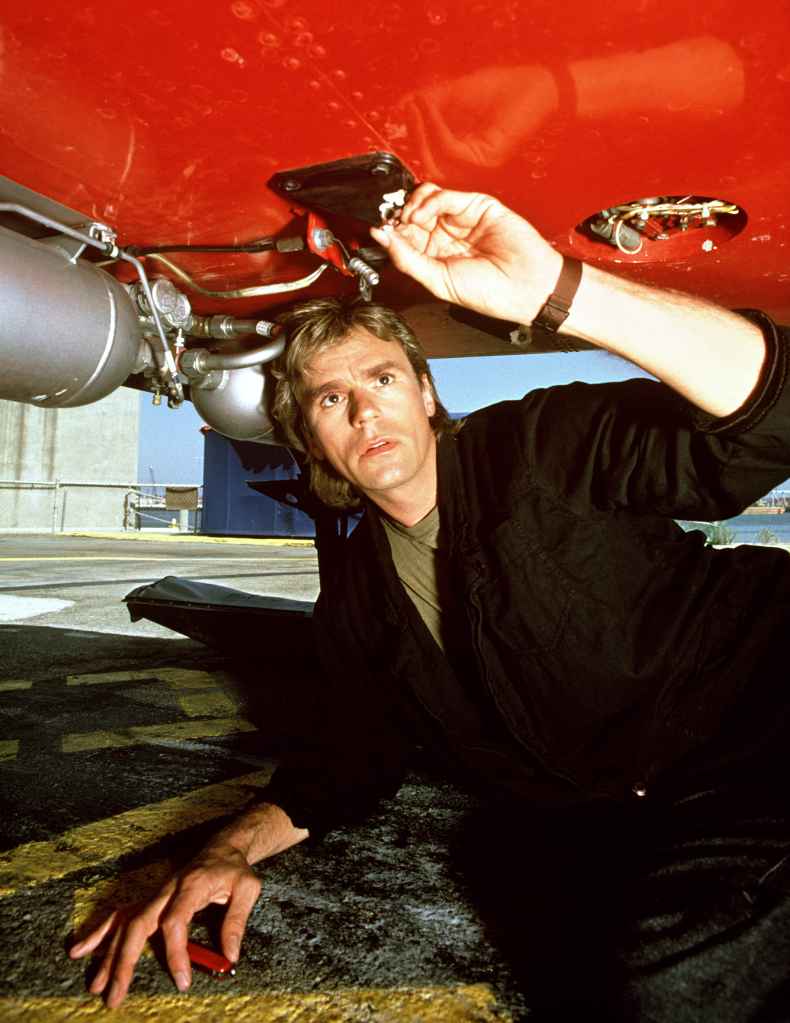
Michael Greenburg (executive producer, Stargate: SG-1): “MacGyver is iconic television show, and Rick made it what it was. His on-camera persona was television’s answer to Harrison Ford. I don’t think it would have been as iconic as it ended up being. I met him on MacGyver and the first day I was on the set, I went to his dressing room [and] introduced myself. I think Henry Winkler [who was producing] may have been there, too. We immediately hit it off, because the first thing I wanted to do was to get rid of all the voiceovers on the show. I just thought that was more indicative of a radio show. I think he got up and gave me a big hug, and said, ‘This is going to be great, because, yeah, I don’t want to do that anymore either!’ So I think that’s when we first hit it off, over the concept of where to take the show from that point.”
Transitioning to ‘Stargate SG-1’ (1995-1997)
Jonathan Glassner (co-creator, Stargate SG-1): “John Symes [from MGM] called and said, ‘Now, don’t jump down my throat until you think about this for a minute. What do you think of Richard Dean Anderson as Jack O’Neill?’ Brad Wright and I were both, like, ‘Are you kidding? We’d love him to play O’Neill.’ John said, ‘He wants to meet with you before he agrees to do it.'”
Michael Greenburg: “I got a phone call from John Symes. John was our executive at Paramount on MacGyver. He went over to become president of MGM and he called saying that they were making Stargate the movie into a television show, would we be interested? I’d seen the film. I think Rick’s first reaction was he didn’t see how he could do that character. But then Symes said, ‘What if I told you it was a 44-episode commitment?’ Then I said ‘That’s definitely something to think about! Rick looked at the movie, and [had] a couple of creative sessions with John and Brad and Jonathan, who showed Rick that he would have the ability to stretch the character and make it more like he is. Not quite as stretched as Legend, but at least he had room to work.”
Richard Dean Anderson: “John just called me and said, ‘Look, I want you to do this role.’ And that was my audition. John knew what he was talking about; SG-1 was on the air for 10 years.”
Jonathan Glassner: “We met with him and Rick said, ‘I don’t want Jack to be this depressing guy that he was in the movie. He’s got to have a sense of humor, or I won’t do it.’ We said, ‘That’s how we both write anyway. We can’t help but write with a sense of humor, so that’s not a problem.’ But that generated a much different tone for the show than it had been in the movie.”

David Read (host, Dial the Gate): “If you look at the pilot, ‘Children of the Gods,’ Rick is largely playing the Kurt Russell character in terms of attitude. It’s been a year since his son’s death and he’s figuring out how to cope with his existence now. Daniel Jackson gave him back his purpose, the Abydonian people have given him back his purpose. The only thing to do for him to move forward is to give him a greater purpose. SG-1, the unit, the team, provides him with that purpose. If you look at the show, you can see that the approach Rick took was clever in that he buries the grief of the death of Jack’s son through humor. I think most fans would agree with that interpretation. The product that we get from that is fantastic, and when the villains or one of his allies occasionally taps into that pain, he will, based on the situation, often explode or get very serious. And you can tell that that was kind of Rick’s idea.”
Peter Deluise (writer/director): “When Richard Dean Anderson had reservations, Brad Wright said, ‘Look, I’ve got it covered. You don’t have to do what Kurt Russell did. You and I, we’ll be the only ones who know this, but Kurt Russell is playing Colonel O’Neil, spelled with one ‘l.’ And you are playing Colonel O’Neill, spelled with two ‘l’s.’ It’s just saying that Richard could make the part his own.”
Brad Wright (co-creator, Stargate SG-1): “The concept for the show was pretty much what we intended and what we pitched. The one big thing that changed, happened when Rick was cast. When he saw the film he said, ‘I can’t do what Kurt did,’ and after he read the script for the TV show, he said, ‘But I can do this.’ It’s a line I’d written in the pilot when Teal’c says, “I have nowhere to go,” and O’Neill says, ‘You can stay at my place.’ That, to him, was the character. That, to him, is what he thought O’Neill was. Yes, he was running and shooting an alien weapon and helping people escape, but he needed the line ‘You can stay at my place’ for it to be the Jack O’Neill he wanted to play. Just a lighter touch at certain moments. Part of it comes down to the fact that I think Rick is a better actor than he thinks he is. He feels he needs a lighter touch so that he’s not too self-important and can be a little bit self-effacing in that way. In part, it’s his personality; it’s who he is. I think it’s embarrassing to him to try and do a dramatic scene and fall short in terms of how good he wants to be. So the humor gives a sort of built-in disclaimer, but, frankly, he’s naturally funny.”
Defining Jack O’Neill and the Stargate Legacy
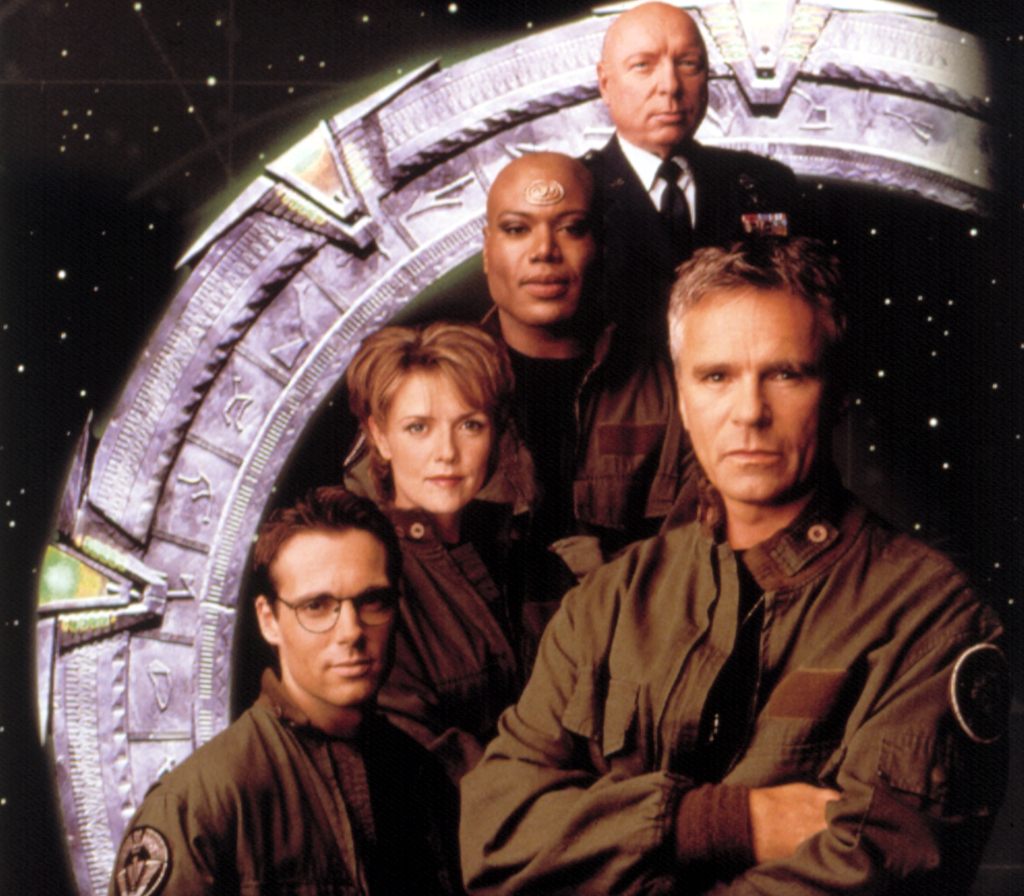
Richard Dean Anderson: “My sense of humor tends to be irreverent, sarcastic, at times cynical. But the character, and I guess my general approach, had to have some humor in it. Some levity to it. It worked out. People were happy with what they saw in the pilot and I played it ever since. My fellow cast members had to endure not just my eccentricities, but I guess my appreciation for the absurd as well.”
Brad Wright: “Rick’s humor clicked with me, because I can’t help myself either. The more dramatic the situation, the more I want to put a joke in and it’s for almost exactly the same reason. Additionally, it adds a dynamic and level of humor to a scene that ultimately makes Stargate, Stargate. There’s elements of that in Star Trek, too, obviously, but they kind of had an on and off switch. They would do ‘Balance of Terror’ and then ‘The Trouble with Tribbles’—I can’t believe I remember the titles of those episodes. But Stargate had that naturally; that banter between Daniel and Jack. That dynamic was the core of the show for us, at least at the beginning.”

Peter Deluise: “It was interesting to watch Richard as O’Neill become more and more lighthearted, and his job as the leader was to corral the experts. That’s one of the things that I always felt Shatner as Kirk did so well on Star Trek in that he had experts and would use whatever information they would give him—as leaders tend to do, and they then move forward with a strategy or plan. I’ve seen him do that. Plus, Richard Dean Anderson’s character’s knowledge of anything other than military was quite limited. He represented every man’s point of view. So what was suggested was, ‘I don’t understand what you’re saying, because you’re saying a lot of technobabble.’ So, naturally, O’Neill is going to go, ‘Huh?’ Or, ‘Can you just dumb it down a little bit?’ or ‘Daniel, speak English. Carter, please!’ We start it very sophisticated and almost immediately O’Neill would say, ‘Please.’ That was the shorthand for just dumb it down, and then they would simplify it for him and the audience.”
Richard Dean Anderson: “At that point in my career when Stargate came around, I was wise enough to make sure that I got to have more creative input than I did prior with MacGyver, so I became executive producer and that allowed me to make some decisions. I didn’t want to be the focus; when I had done MacGyver, I knew what it was like to carry a show and I just didn’t want to. And thankfully we had an impeccable cast where we kind of created a camaraderie and a kind of rhythm to our characters that fit really well to each other. So I didn’t have to carry anything.”
Joseph Mallozzi (executive producer, Stargate: SG-1): “Rick was the lead of the show and it survived as long as it did because of him. He had a certain sense of humor, which I loved, which really became his character, but also kind of seeped into everything. The show’s tone always kind of skirted that line. It always had an underlying sense of humor, which really appeals to sci-fi fans, but for some reason not executives, who tend to like the grimmer stuff. But I think that sense of humor is so key and Rick embraces that—to the point where the fandom began using the term “Dumb Jack,” in that he would basically either be clueless or tend to be clueless about stuff. I’ve always been a firm believer in humor going a long way in allowing fans to connect with characters and shows.”

Brad Wright: “People say, ‘What is a star factor? Why is one person just a good working actor and somebody else is a star?’ And it’s different for everybody, but for Rick it’s charm and it’s so natural. Even when he’s mean, when he’s angry in character, it feels real. I wrote an episode, which was a tough one, which was Daniel’s return in Season 7 called ‘Abyss.’ I was asking Rick to do scenes which were way more dramatic than anything he’d ever done. But because it was scenes with Michael — two-handers, just them with an intimate camera — it’s some of their best work. It’s just charm that’s so natural.”
David Read: “Rick is so much more of a comedic creature, and he provided subtext to Jack O’Neill going from a person who had lost his child and done God knows what in the Cold War, to coming out the other end as this kind of sarcastic individual who emerged after all of those years. It allowed him to play this level of humor that brought the show to life in so many ways that the Kurt Russell version just couldn’t have. Rick’s contribution to this franchise from that standpoint alone cannot be overstated.”
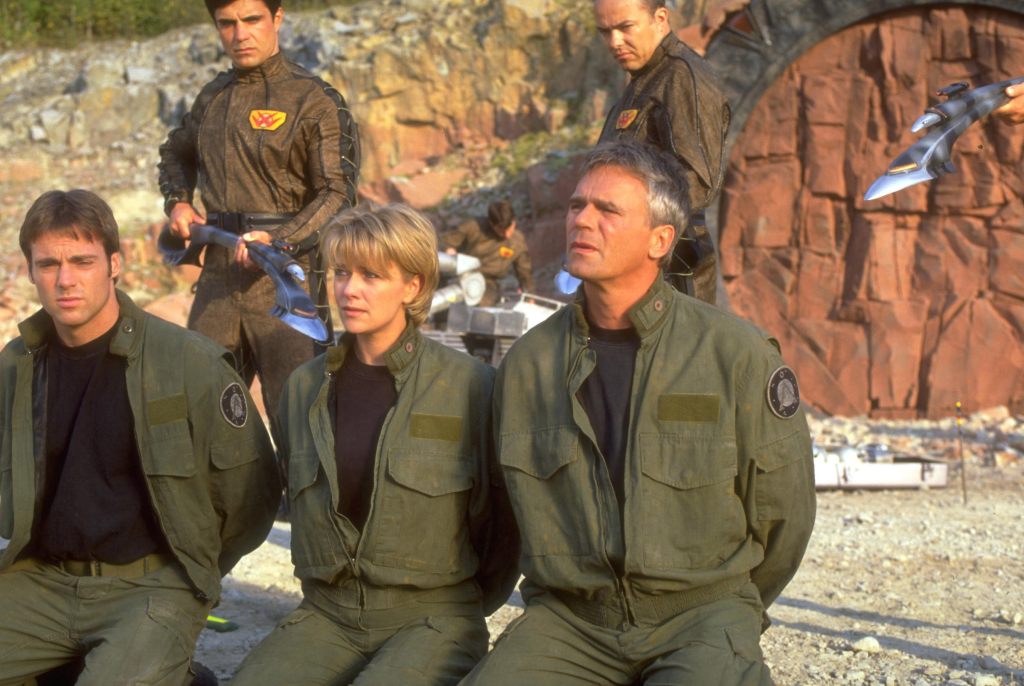
Michael Shanks (actor, “Daniel Jackson”): “When I first met Richard, he was a very private person, but once you get inside and spend so much time around him, you realize he’s like the biggest kid. He’s someone who has been through the wars and has all the wisdom of that, but at the same time he’s like an eight-year-old kid just busting to get out. If it wasn’t for the social propriety making him do these certain things, I think you’d see this whack job running around doing anything for a joke. That sense of humor we share, both on and off the set … we seem to be on a level playing field regarding a lot of different things. Our strongest bond is not only joking with each other off camera, but working with each other. We are always keeping each other laughing. Whenever we were working together, there was rarely a serious moment.”
Peter Deluise: “As good as Richard is, and I’m not speaking out of school because a lot of people know this already, he had a two-finger rule. Two-fingers are if you held up your two fingers to a script on Richard Dean Anderson’s dialogue, and if it ran longer than a two-finger space, it was too long. It’s like two fingers of Scotch. As a result, O’Neill’s responses were short and he could say them in one breath. Not a lot of people know that, because when you watch the show, it all seems very natural. But if he had more than that to say, if he had too much, he would start to say it and somebody would interrupt or provide some info and he would finish it off at the end. But, again, it was never more than a two-finger space at a time, which I always thought was amazing. And it didn’t even occur to me until I started writing that for him, and then I was told and I was, like, ‘Oh, I didn’t realize it could only be a two-finger space.'”
In detailing one of the few “conflicts” he had with Anderson, Wright points to a moment early in Season 2 when it’s believed that Daniel has died aboard an alien ship, but then he comes through the Stargate and he and O’Neill embrace.
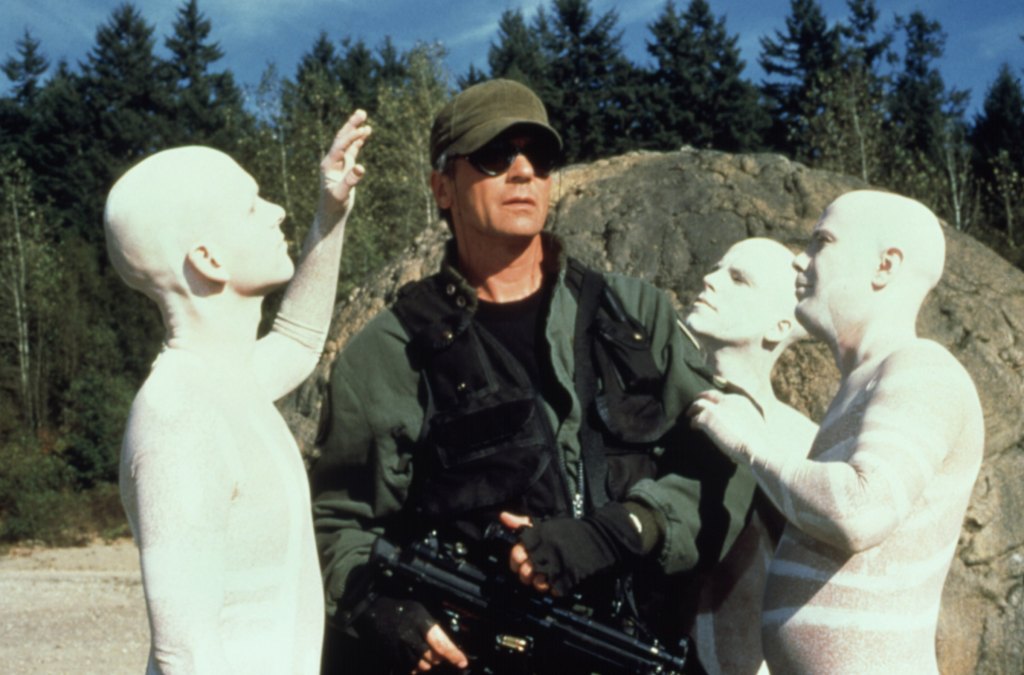
Brad Wright: “They hug each other and, for some reason, Rick ad-libs the line, ‘Space Monkey.’ Like a term of endearment, which I don’t think he ever intended for it to be in the final episode. I have no idea why he said it. We just kind of said, ‘Why don’t we just leave it in?’ And so we did. It’s an ad-lib moment, as was not uncommon in Seasons 1 and 2, but he learned to trust us eventually. Early on I would say, ‘Feel free to use the typewritten pages as an alternative, too.’ I would write a joke and he would write another joke that was very similar to that joke and in his mind, it would be him making it his own. And I’m, like, ‘Yeah, but it’s not as good. If you’re going to make it your own, make it better.’ I’m always open to that. And we hashed that out and he got it, but we actually had a bit of an argument in the trailer, because it was leading to everybody wanting to make up their own dialogue. And, it was like, ‘No, we have reasons for these words.'”
Richard Dean Anderson: “What I brought to the table reads of the scripts was the attitude that everything was potentially a setup for a funny line, which doesn’t make writers and producers very happy. In any case, these table reads are the first time we’re seeing the script. To me, those are just little seeds for going somewhere else. So during these table reads I’d be ad-libbing on what was a fresh script. Most of it was getting laughs, some didn’t, but it didn’t matter, because I wasn’t reading the words the way they were written. So Brad took me aside and took me into his office like the principal and said, ‘You know, you’re not doing the writers a great service by doing what you’re doing in those rehearsals. Every one of us works hard to write the script and when we first hear them, you guys read them. We’d actually like to hear the words.’ He basically chastised the hell out of me, which I deserved. And I told him so. And it occurred to me that I should be showing some more respect for the writers, who, to this day, I respect the most out of the whole process.”
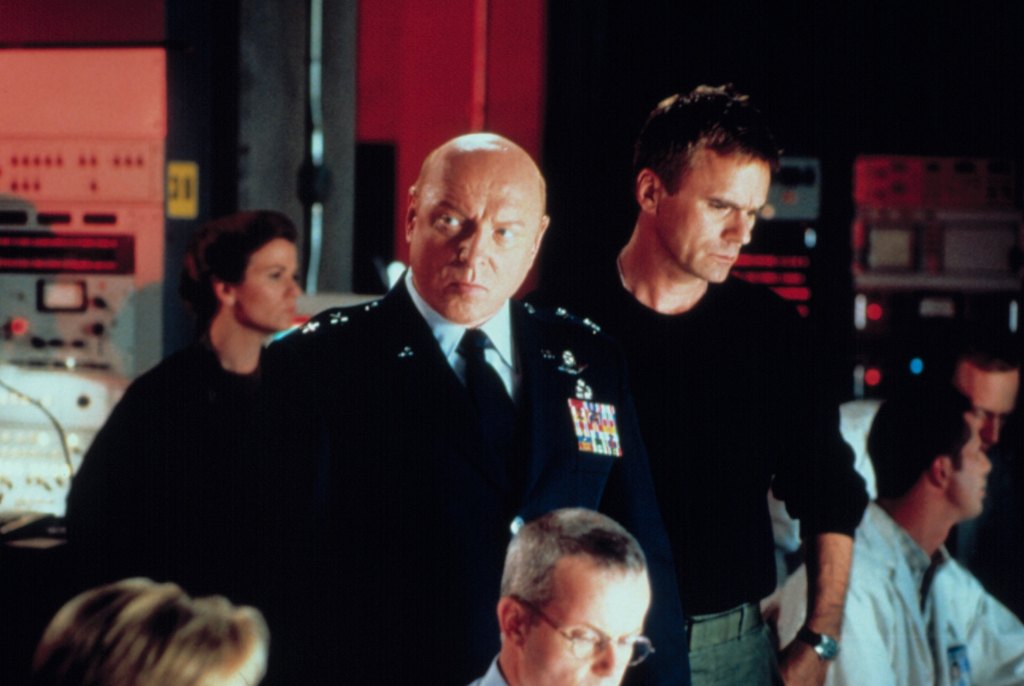
Brad Wright: “After that, it was great. He realized he could trust us. I think people who have been big stars are always wary of putting their fate in other people’s hands. But he was my guide.”
Amanda Tapping (actress, “Samantha Carter”): “Rick really paved the way to make the show, I think, a lot more accessible, because of his sense of humor. Because even in the most-dire situation, he ended it with a funny line, which was usually adlibbed by him. The hardest part was keeping a straight face.”

What emerged was a tone that balanced gravity with levity—a combination that allowed Stargate SG-1 to engage with loss danger and mythology without collapsing under its own seriousness. Anderson’s Jack O’Neill became the audience’s proxy, asking questions, undercutting jargon and grounding the extraordinary in the everyday.
Even as Anderson eventually pulled back from the series’ day-to-day demands, that connection never fully dissolved. He remained closely identified with the character and the franchise (which is going to be returning in an all-new series via Amazon/MGM set in the same universe), openly embracing his association with the show and its fans. Rather than distancing himself from Stargate, Anderson treats it as an essential chapter of his career—one he was proud of, protective of and always willing to acknowledge as a defining collaboration rather than something he simply moved past.
Brad Wright: “It was a very successful one-star show. He was the title card. And you can’t do this without him, basically. Name another television star who basically carried the whole show on their back to that extent, other than maybe Tom Selleck from the same era. And at a time when you were getting a 30 share when you aired. But like I said, he eventually trusted us with the character and I found his voice. He adapted to what I was trying to do with him and it ended up being a great partnership, because he was always a producer. And I had no problems with him being an executive producer. He knew how to use it.”
Conversation
All comments are subject to our Community Guidelines. Woman's World does not endorse the opinions and views shared by our readers in our comment sections. Our comments section is a place where readers can engage in healthy, productive, lively, and respectful discussions. Offensive language, hate speech, personal attacks, and/or defamatory statements are not permitted. Advertising or spam is also prohibited.