Meet the ‘Rudolph the Red-Nosed Reindeer’ Voice Cast—and the Untold Stories Behind a 60-Year Holiday Tradition
From the woman who voiced Rudolph to the Hermey/Spider-Man link, see the faces behind the 1964 magic

Billie Mae Richards (Rudolph the Red-Nosed Reindeer)
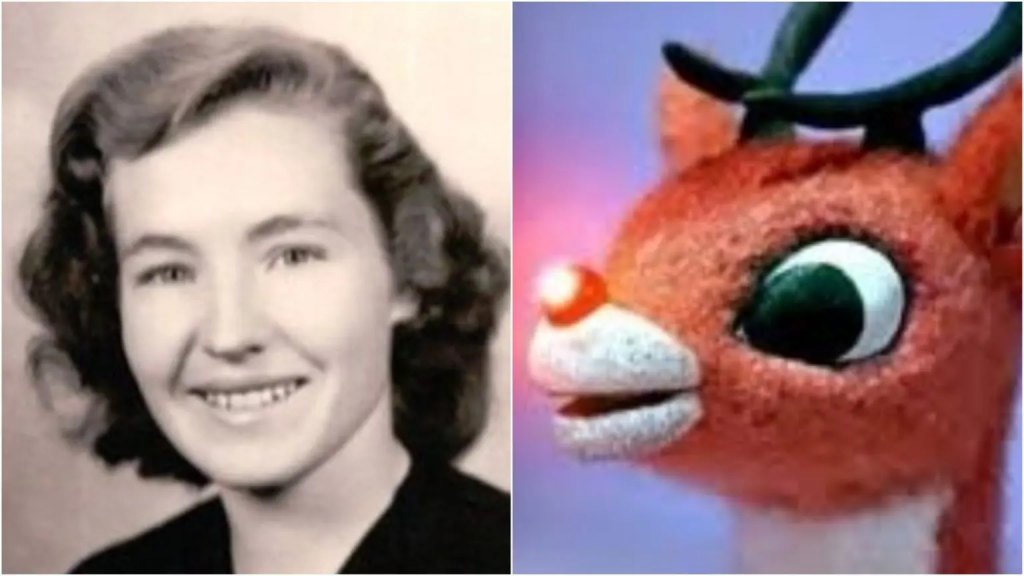
Billie Mae Richards, the voice who brought Rudolph the Red-Nosed Reindeer to life, began performing almost as soon as she could stand. Born in Canada, she was enrolled in dance lessons by her father at a young age and was already appearing on stage by age five, performing alongside World War I veterans. That early mix of discipline, showmanship and camaraderie shaped a career that would eventually span stage, radio, television and generations of holiday viewers.
During World War II, Richards enlisted in the Royal Canadian Navy and joined Meet the Navy, a large-scale musical revue that toured across Canada and Europe. The production was ambitious—a blend of morale-boosting entertainment and professional-caliber performance—and it gave Richards valuable experience in singing, acting and holding an audience.
Through the 1950s, she carved out a steady career in radio, acting and singing in dramatic programs from 1950 to 1956. But it was voice work that would ultimately define her legacy. Richards moved into animation and quickly became a familiar presence, even if audiences never saw her face. In addition to voicing Rudolph in the 1964 Rankin/Bass classic, she appeared in series like Spider-Man (1967), The King Kong Show and later on The Care Bears. She returned to the role that made her famous in Rudolph’s Shiny New Year (1976) and Rudolph and Frosty’s Christmas in July (1979), ensuring her interpretation of the little reindeer remained the definitive one.
Richards married musician Bill Richards in 1940, and the two remained together until his death in 1995. Their daughter, Judi Richards, followed the family tradition into a life of music as a singer-songwriter. Billie Mae Richards herself passed away on September 10, 2010, following a stroke. She was 88.
Even decades after Rudolph first aired, Richards understood the magic the character held for children and the delight in revealing she was behind that famous voice. As she told Filmfax magazine, “Kids won’t believe it when my grandchildren tell them that their grandmother is really Rudolph. But I can prove it: ‘Hermey’s my friend. He wants to be a dentist. We’re misfits together.’ As soon as they hear that, they’ll say, ‘You really are Rudolph!’ They can always recognize the voice.”
Burl Ives (Sam the Snowman)
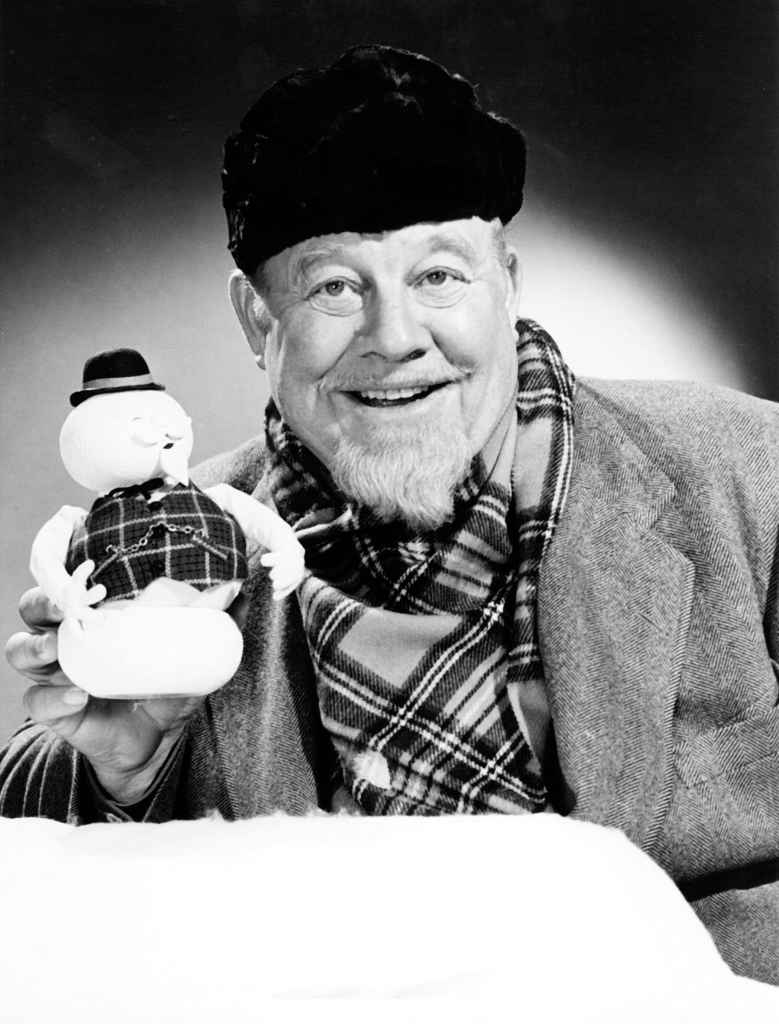
Burl Icle Ivanhoe Ives enjoyed a career that stretched from the Depression era into the early 1990s, touching music, radio, film, television and Broadway along the way. Yet for all of his accomplishments, it’s fair to say that a certain snowman may have secured his place in pop-culture immortality. His warm, homespun narration as Sam the Snowman in Rudolph—along with his indelible performances of “Silver and Gold” and “A Holly Jolly Christmas” and “Silver and Gold”—became holiday staples for generations. Not a bad legacy.
Long before his voice became synonymous with holiday cheer, Ives was a traveling folksinger, wandering the country with a banjo and securing gigs here and there. His break came in 1940, when he landed work at CBS Radio. From there, he leaned fully into music, building a prolific recording career over the next three decades. Between the 1940s and 1970s, he released dozens of albums and singles that blended folk traditions with country storytelling, helping define a distinctly American musical sound. Radio audiences heard him often, and he hosted or appeared on a number of programs and specials that showcased his easygoing charm.
Acting was another thread in his life, and not a minor one. Ives appeared in a wide range of stage productions, including weighty roles such as Big Daddy in Cat on a Hot Tin Roof, and guest-starred on numerous television shows and miniseries during the medium’s formative decades. On the big screen, he accumulated roughly 30 film credits, beginning with Smoky in 1946 and continuing all the way to Two Moon Junction in 1988. His career managed to weave between earnest drama, family entertainment and the kind of folksy storytelling that audiences instinctively trusted him to deliver.
Off-screen, Ives married twice and had one child. His life was not without hardship; a longtime smoker, he was diagnosed with oral cancer in 1994. Despite undergoing several surgeries, he passed away on April 14, 1995, at the age of 85.
Even near the height of his fame, Ives held a genuine affection for Rudolph. In a 1970 interview at Indiana’s Ball State University, he was asked whether he’d grown tired of the special. “No,” he said without hesitation. “I have watched it every year since we did it, and I will watch it again this year, God willing. This will be the 15th year. And I have seen it every year and it’s always nice. It’s amazing how well it holds up. I’m very pleased with it. It’s the oldest-running special and has had the greatest audience.”
Paul Soles (Hermey)
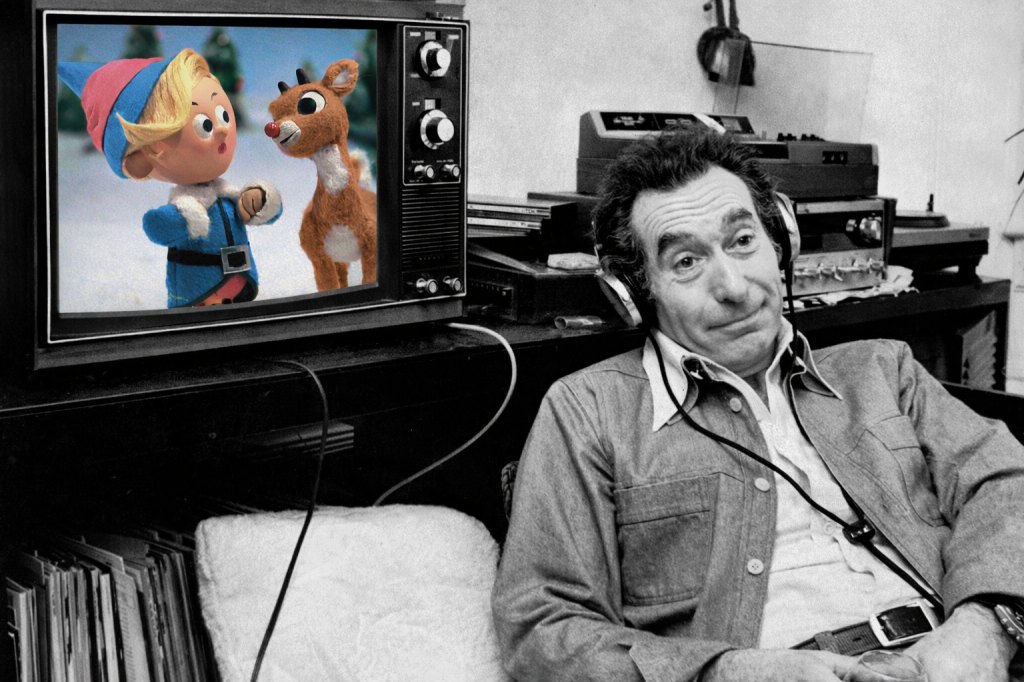
Paul Soles holds a rare place in animation history: he gave voice to not just one but two characters who left a lasting mark on pop culture. First, there was Peter Parker in the 1960s Spider-Man animated series as well as Hermey the misfit elf in Rudolph the Red-Nosed Reindeer. For millions of viewers, his gentle, slightly tremulous performance as Hermey helped define the character’s charm and vulnerability.
Reflecting on the role decades later in an interview with everythingzoomer.com, Soles noted, “Getting the role was no different than doing so in any other medium and insofar as what you bring to the character is you. Every actor faces the question of how do you relate to making this character as honest and therefore credible as you can?”
He went on to explain why the character resonated for so many people. “Hermey,” he continues, “was forced by nature into a role that he was not comfortable with. He didn’t want to make toys, he wanted to be a dentist. I hope I’m not making an obtuse point, but to me it’s very real, because it took a long time for me to quite understand this. I certainly didn’t when I was doing it. Hermey and Rudolph were characters forced into circumstances not of their own choosing and they were alienated, told they were outcasts. Everybody’s been excluded at one time or another in their life and I think that was essentially true of the Rudolph/Hermey story. They were ostracized for one reason or another and eventually, circumstances came about that they be accepted. We can all learn from that.”
Soles’ career stretched far beyond the North Pole. Born on August 11, 1930, in Toronto, he made his Canadian television debut in 1953, just as the medium was beginning to take shape. Over the next six decades, he appeared in a wide array of programs, from dramas and comedies to children’s entertainment. In addition to his prolific voice acting work, he hosted the late-night comedy talk show Canada After Dark and ventured behind the camera as a documentary producer.
Remarkably, Soles continued acting well into his later years, including a starring role in the 2016 digital series My 90-Year-Old Roommate, which introduced him to a new generation of fans. His career, like Hermey’s journey, demonstrated the value of embracing one’s own path, even when it doesn’t look like anyone else’s.
Paul Soles passed away on May 26, 2021, at the age of 90, leaving behind a legacy of characters whose warmth and sincerity have endured for decades and will undoubtedly continue to do so.
Stan Francis (Santa Claus)
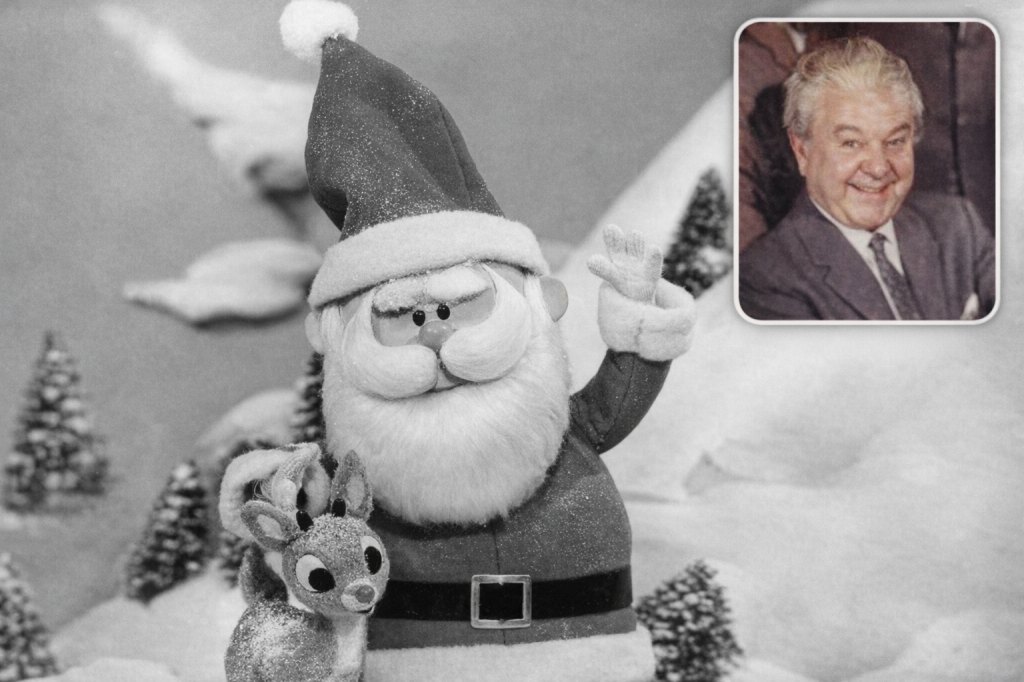
Stan Francis, the actor who gave voice to Santa Claus in Rudolph the Red-Nosed Reindeer, remains one of the more elusive figures associated with the classic special. His time in the entertainment industry was relatively short, yet he managed to leave a lasting impression through a handful of memorable performances.
Francis’ on-screen career began in 1957, when he appeared in several roles on the television adventure series Hawkeye and the Last of the Mohicans. From there, he worked steadily across Canadian television, taking on parts in programs such as On Camera, Encounter, The Adventures of Tugboat Annie and The New Adventures of Pinocchio. In the latter, he lent his voice to Gepetto, an early indication of his natural warmth and paternal tone, qualities that would later make him a perfect fit for Santa, which was his final credited role.
Though Francis never had a lengthy or high-profile acting career, his performance became part of a tradition revisited by families every holiday season. Sadly, he passed away on March 15, 1966, just two years after Rudolph first aired.
Larry D. Mann (Yukon Cornelius)
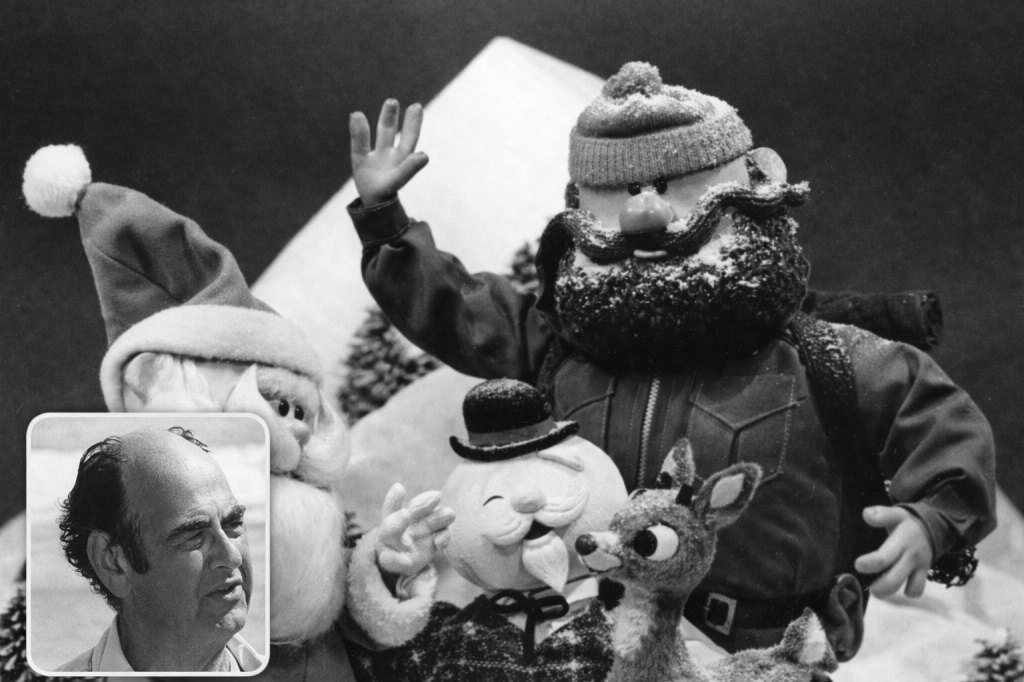
Larry D. Mann, the unmistakable voice behind Yukon Cornelius, brought a larger-than-life energy to Rudolph the Red-Nosed Reindeer that helped make the prospector one of the special’s most beloved characters. A Canadian performer with a long and varied career, Mann didn’t begin as an actor at all—he first broke into entertainment in 1949 as a disc jockey in Toronto, where his expressive voice became his calling card.
From there, Mann transitioned into acting and spent decades moving fluidly between live-action roles and voice work, working in both Canadian and American productions. His film debut came with the 1958 Western Flaming Frontier, and he continued to appear in feature films up through 1980’s The Octagon. His screen presence was just as steady on television. Between 1954 and 1959, he was a regular part of the children’s classic Howdy Doody, and over the following decades, he made appearances on a wide range of shows, from dramas to comedies and adventure series. His final TV role was a 1990 episode of MacGyver.
Larry D. Mann passed away on January 6, 2014, at the age of 91, leaving behind a career marked by versatility and a voice that generations of viewers still associate with one very colorful prospector.
Janis Orenstein (Clarice)

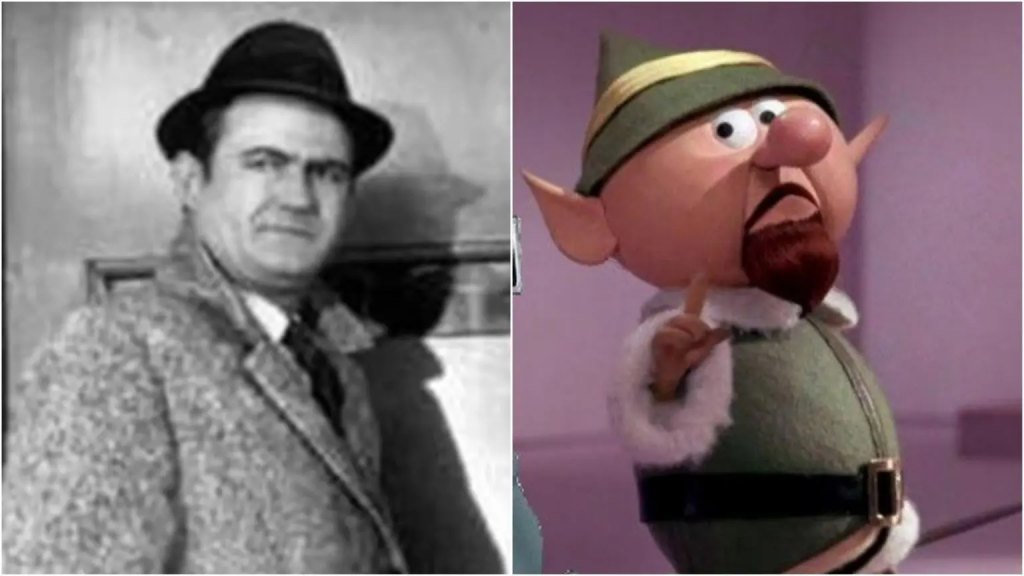
Carl Banas (Head Elf/Spotted Elephant)

Conversation
All comments are subject to our Community Guidelines. Woman's World does not endorse the opinions and views shared by our readers in our comment sections. Our comments section is a place where readers can engage in healthy, productive, lively, and respectful discussions. Offensive language, hate speech, personal attacks, and/or defamatory statements are not permitted. Advertising or spam is also prohibited.