Shelley Fabares Remembered: The ‘Donna Reed Show’ Star Turned Baby Boomer Icon
From 'Johnny Angel' to 'Coach,' a leading pop culture historian looks back at the actress who grew up with America
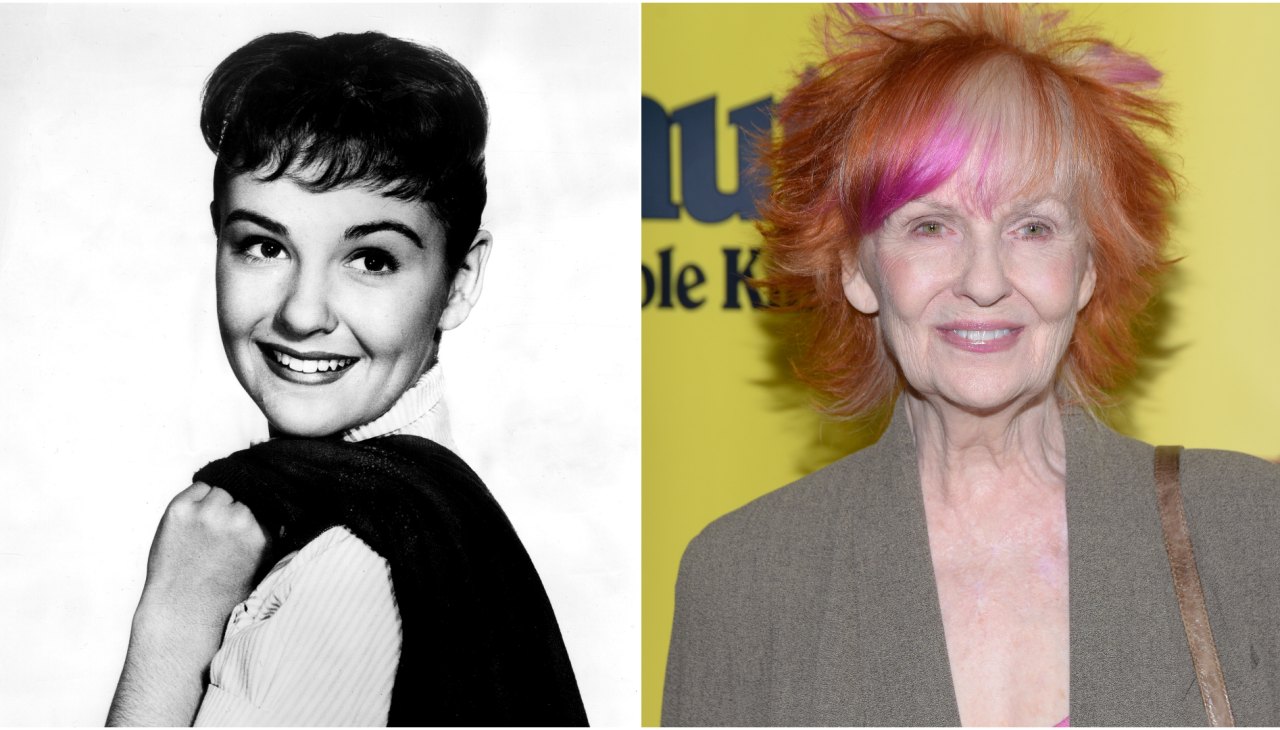
Key Takeaways
- Shelley Fabares became a Baby Boomer icon on 'The Donna Reed Show.'
- Her surprise No. 1 hit 'Johnny Angel' launched a recording career.
- Fabares successfully evolved from teen idol to Emmy-nominated 'Coach' star.
There are stars remembered for a particular movie or television series, others for a hit song and still others because they somehow came to embody a moment in American culture. Shelley Fabares, who died August 22 at the age of 82 following a brief illness, managed to do all three.
For one generation, she will forever be Mary Stone, the pretty and popular teenage daughter of Donna and Alex Stone on The Donna Reed Show. For another, she’s the young woman whose recording of “Johnny Angel” unexpectedly went all the way to No. 1. Movie fans remember her as Elvis Presley’s leading lady—not once, but three times—while viewers who came along decades later may know her best as Christine Armstrong, the smart, independent television anchor who fell in love with Craig T. Nelson’s Hayden Fox on Coach.
Yet pop culture historian Geoffrey Mark believes understanding Fabares’ appeal requires going back to the beginning and recognizing what she represented to the generation that grew up watching her. Mark met Fabares through his longtime friendship with her Donna Reed Show brother, Paul Petersen, and knew her aunt, actress and musical comedy legend Nanette Fabray, very well. More importantly for purposes of remembering Fabares today, he understood the place she occupied in the culture.
GEOFFREY MARK: “Shelley Fabares was to Baby Boomer TV what Ricky Nelson was to Baby Boomer TV. She was the female embodiment of what Hollywood was selling the suburban, pretty teenage girl should be, the same way they sold Ricky as the embodiment of all that was good about teenage boyhood and young manhood.”
Growing up in Hollywood

Born Michele Ann Marie Fabares on January 19, 1944, in Santa Monica, California, Shelley was hardly a newcomer when The Donna Reed Show turned her into one of America’s best-known teenagers. She had begun acting as a child, appearing on television and in films throughout the 1950s like The Bad Seed, Never Say Goodbye, Jeanne Eagels and Marjorie Morningstar, as well as a televised production of Our Town featuring Frank Sinatra, Paul Newman and Eva Marie Saint. There was also Disney’s Annette, which teamed her with another young performer destined to become an icon of teenage America, Annette Funicello. But it was The Donna Reed Show, which premiered in 1958, that changed everything.
At 14, Fabares became Mary Stone, older sister to Petersen’s Jeff and daughter of Reed’s Donna and Carl Betz’s Alex. If Donna represented the idealized television mother of the era, Mary quickly became something equally potent: an image of the ideal American teenage girl.
GEOFFREY MARK: “There had not been a strong teenage girl like her on television before. There were other teenage characters who were insecure and neurotic, but Mary was good in school, pretty, always popular, always being dated—10 feet wide and about a quarter-inch deep. The character was more concerned with how she was doing her hair or what she was wearing or her social life than really caring about what was going on around her. The character just floated in this teenage world of her own. Along the way she became the poster girl for that white, Protestant, upper-middle-class suburban teenage girl of America.”
And then something happened that nobody could have reasonably expected: Mary Stone started singing.
Enter ‘Johnny Angel’
In 1962, Fabares performed “Johnny Angel” on The Donna Reed Show. The song exploded, reaching No. 1 on the Billboard Hot 100 and turning an actress who never considered herself much of a singer into a genuine recording star. Mark remembers the irony of it all.
GEOFFREY MARK: “I don’t think I’m telling tales out of school that Shelley was no singer. They did God knows how many takes of the song and had to sew it together to make it work, but it worked and it became this huge hit. So Shelley is starring on a television show, has a hit song out and suddenly she’s moving into movies.”
Fabares would record additional material and release three albums, but nothing approached the phenomenon of “Johnny Angel.” The song’s success, Mark points out, also demonstrates just how powerful network television was at the time.
GEOFFREY MARK: “Having a song on a television show like that—today it sounds ridiculous, but back then a hit television show could have 40 million people watching every week. The wisdom of Ozzie Nelson was to make Ricky sing on the show. The hit music made young people watch the show, and the show made young people want to buy the hit music. The two fed each other. It did the same thing for Shelley.”
By the mid-1960s, Fabares was ready to leave Mary Stone behind.
Shelley Fabares meets Elvis Presley
Her transition to movies included Ride the Wild Surf with Fabian and Hold On! with Herman’s Hermits frontman Peter Noone, but the films that would permanently connect Fabares to another pop culture phenomenon paired her with Elvis Presley. She appeared opposite Presley in three movies: Girl Happy in 1965, Spinout in 1966 and Clambake in 1967, and it was quite a leap from the Stone family’s living room.
GEOFFREY MARK: “Shelley left at just the right time and blossomed into kind of a sex symbol of her time—not quite so white-bread pure. She was able to play more sophisticated characters. The teenage-girl model thing that I just spoke of kind of went away as she out-aged it very quickly. She couldn’t play, ‘Oh, she’s on the brink of womanhood.’ No. She was a woman.”
The hoped-for major movie career never quite materialized, despite working with one of the biggest stars in the world. Yet that may ultimately have worked in Fabares’ favor, because television gave her something more valuable than a short burst of movie stardom: an opportunity to reinvent herself.

GEOFFREY MARK: “Her movie career did not go where they all had hoped it would go, even with starring in the films with Elvis. And Shelley returned to television playing witty, sophisticated, bitchy characters that were still beautiful, but funny and layered and a little more real.”
That description fits Francine Webster, Fabares’ recurring character on the original One Day at a Time, particularly well. Introduced as a friend and professional rival of Bonnie Franklin’s Ann Romano, Francine allowed audiences who had grown up with Mary Stone to see just how good a comic actress Fabares had become. Mary had been the teenager everyone was supposed to admire; Francine could be competitive, manipulative, funny and exasperating.
Fabares had spent the years between those two characters working steadily. Among her most memorable dramatic performances was the 1971 television movie Brian’s Song, in which she portrayed Joy Piccolo, wife of Chicago Bears running back Brian Piccolo, opposite James Caan and Billy Dee Williams. There were regular roles on The Brian Keith Show, The Practice and Forever Fernwood, along with seemingly endless television guest appearances.
GEOFFREY MARK: “She was one of those wonderful comedy sitcom actresses who just went from show to show to show working. Her star never faded.”
And then came Coach.
Finding Christine Armstrong
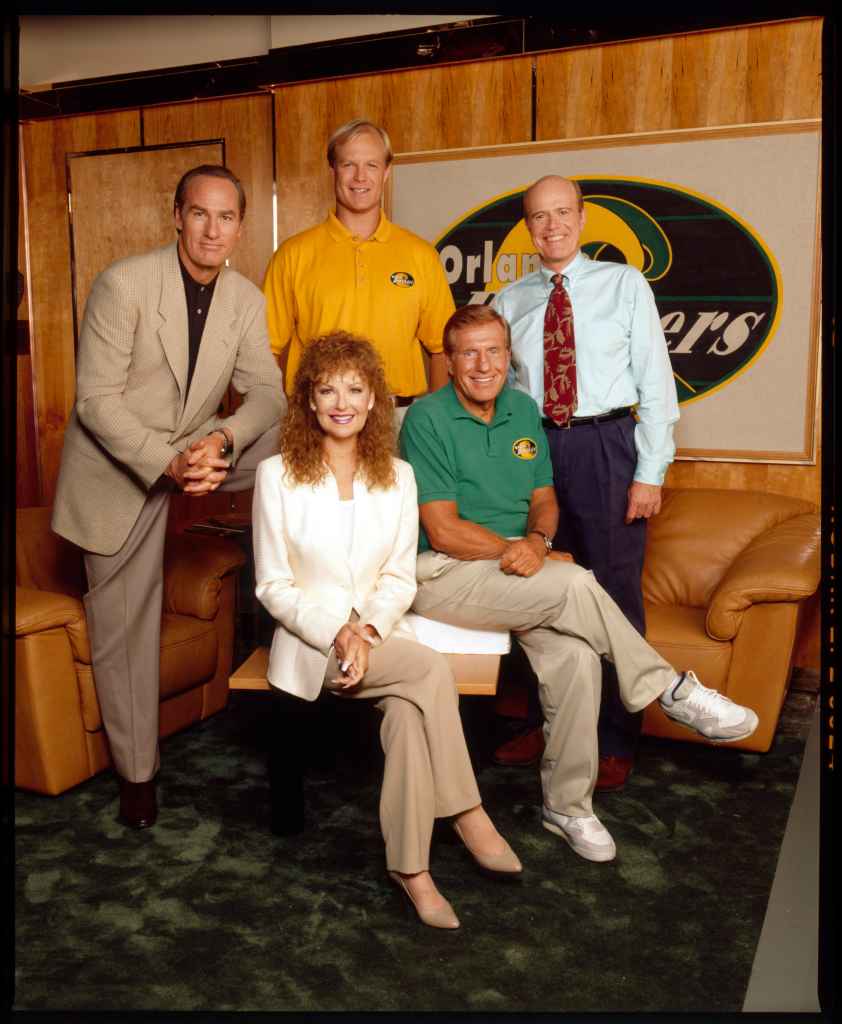
Premiering on ABC in 1989, Coach starred Craig T. Nelson as Minnesota State University football coach Hayden Fox, with Fabares as Christine Armstrong, the television news anchor who eventually became his wife. The role completed the journey that had begun with Mary Stone three decades earlier. Christine was attractive, certainly, but her beauty wasn’t the point. She was an accomplished adult woman with a demanding career, a strong personality and a relationship in which she was never simply an appendage to the male lead.
Fabares remained with Coach throughout its nine-season run, earning two Emmy nominations for her performance. The series introduced her to viewers who might never have seen The Donna Reed Show, heard “Johnny Angel” on the radio when it was new or bought a ticket to see her opposite Elvis. It also demonstrated something about her that her teenage stardom could easily obscure: Shelley Fabares was actually a very good actress.
Following her death, Nelson remembered his longtime co-star as an extraordinary woman and an important part of his life during their years together on the series.
A life beyond the screen
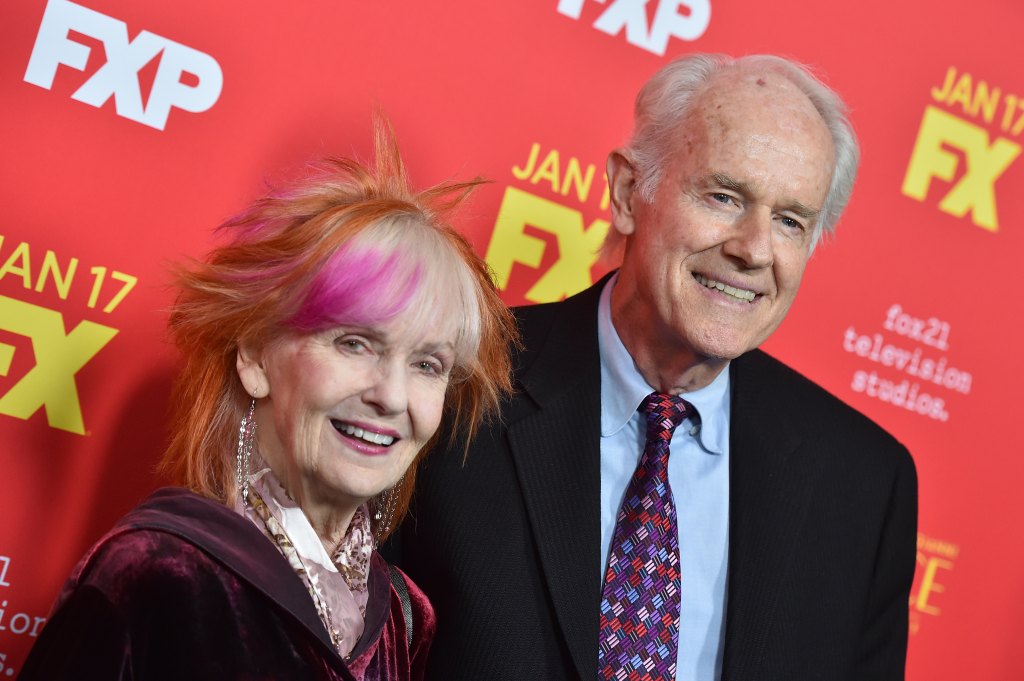
Offscreen, Fabares’ life had its own difficult chapters. Her first marriage, to record producer Lou Adler, ended in divorce. In 1984, she married M*A*S*H star Mike Farrell, beginning a marriage that would last more than four decades. She also became deeply involved in Alzheimer’s advocacy after watching her mother battle the disease.
Then came her own health crisis. In the late 1990s, Fabares developed severe liver problems caused by autoimmune hepatitis. Her condition deteriorated to the point that she required a transplant, which she received in 2000 after a lengthy wait. It’s that part of Fabares’ story that particularly impresses Mark.
GEOFFREY MARK: “She was given a death sentence a very long time ago. She outfoxed the whole medical community, living into her 80s when she was told she wouldn’t live past her early 60s. Tenacity, good doctors and luck.”
Her acting appearances became increasingly infrequent afterward. Among her later work was voicing Martha Kent in the DC animated universe, including Superman: The Animated Series, Justice League and, finally, Superman: Brainiac Attacks in 2006.
But by then Fabares had nothing left to prove. She had made the extraordinarily difficult transition from child performer to teenage star, from pop singer to movie leading lady, from former teen idol to character actress and, eventually, Emmy-nominated sitcom star. More than that, she had managed to grow older without spending her career trying to recreate Mary Stone.
Saying goodbye to Shelley Fabares

Which is probably why Shelley Fabares’ death feels like the loss of something more than another familiar television face.
There are performers whose characters become inseparable from the era in which they were created. For millions of Baby Boomers, Mary Stone was one of them, belonging to the same television landscape as Ricky Nelson, Annette Funicello and the other young stars who offered postwar America what was an idealized picture of what adolescence supposedly looked like. Fabares simply had the good fortune and talent to keep going after America stopped asking her to be that girl.
GEOFFREY MARK: “There were always these idols of youth and purity and energy, and Shelley fell into that. To Baby Boomers, she represented a type that the girls of America looked to. Everyone wanted to be just like Shelley Fabares in the same way every girl wanted to date Ricky Nelson and every boy wanted to be just like him. Baby Boomers are sad today because they’ve lost the icon of what the American teenage girl should be.”
Conversation
All comments are subject to our Community Guidelines. Woman's World does not endorse the opinions and views shared by our readers in our comment sections. Our comments section is a place where readers can engage in healthy, productive, lively, and respectful discussions. Offensive language, hate speech, personal attacks, and/or defamatory statements are not permitted. Advertising or spam is also prohibited.