David White: The ‘Bewitched’ Star Who Felt ‘Never Fully Appreciated’ Despite 191 Episodes
Beyond McMann & Tate: How David White’s career and family life were marked by talent and tragedy

Key Takeaways
- David White appeared in 191 'Bewitched' episodes—but rarely got top billing.
- He saw Larry Tate as insecure—and never played him for easy laughs.
- Off-screen, White endured personal loss that stayed with him for life.
When people think of Bewitched, they usually think of the basics first: a suburban husband (Dick York’s Darrin) trying to build a normal life with his wife—who just happens to be a witch. Elizabeth Montgomery’s Samantha could solve just about any problem with a twitch of her nose, much to the horror of Darrin and the constant interference of her mother, Endora (Agnes Moorehead). And then there were the scene-stealers, like Paul Lynde’s Uncle Arthur, popping in just often enough to stir things up. But there was another presence on the show—one that was there almost all the time, even if viewers didn’t always think about it. That would be David White.
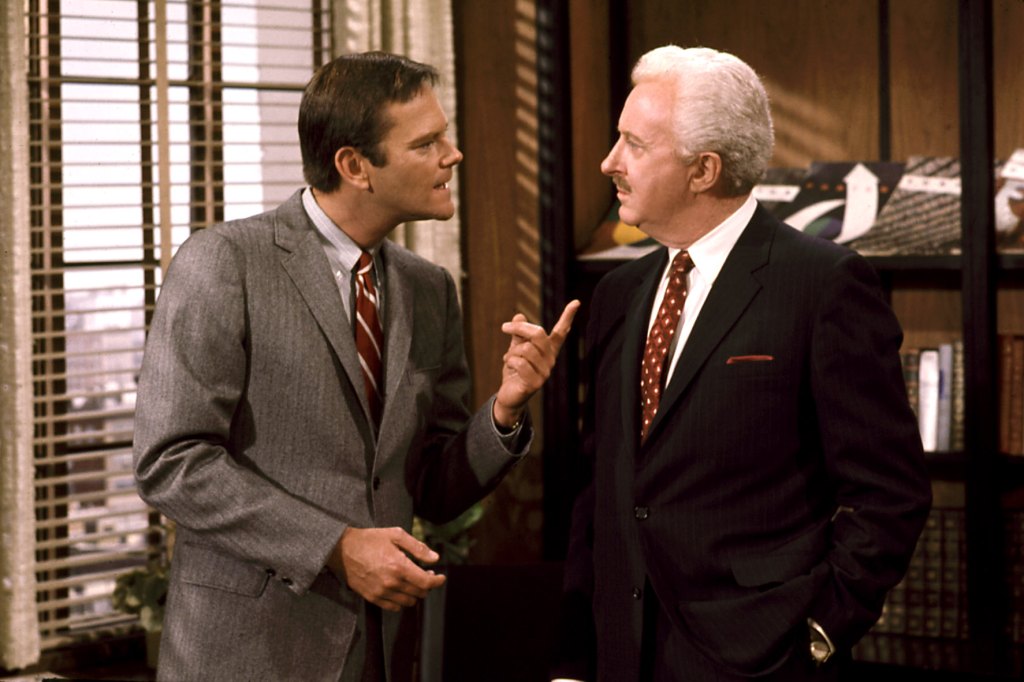
On Bewitched, he played Darrin’s perpetually demanding boss, Larry Tate, appearing in an impressive 191 of the show’s 254 episodes. He was a constant, even if audiences didn’t always consciously realize it. And part of the reason may be how completely he disappeared into the role.
DAVID WHITE (actor, “Larry Tate”): “I got the part because I was an honest man, and that’s how Larry and I were different. I’m not two-faced and he was. I had more integrity than Larry ever had. I was smarter and had a deeper sense of values. I had to diminish who I was to play Larry, whom I viewed as a very insecure person who only had a certain brilliance in certain areas. He was smart enough to hire people who possessed the skills he did not, like Darrin.” (via journalist Herbie J. Pilato)
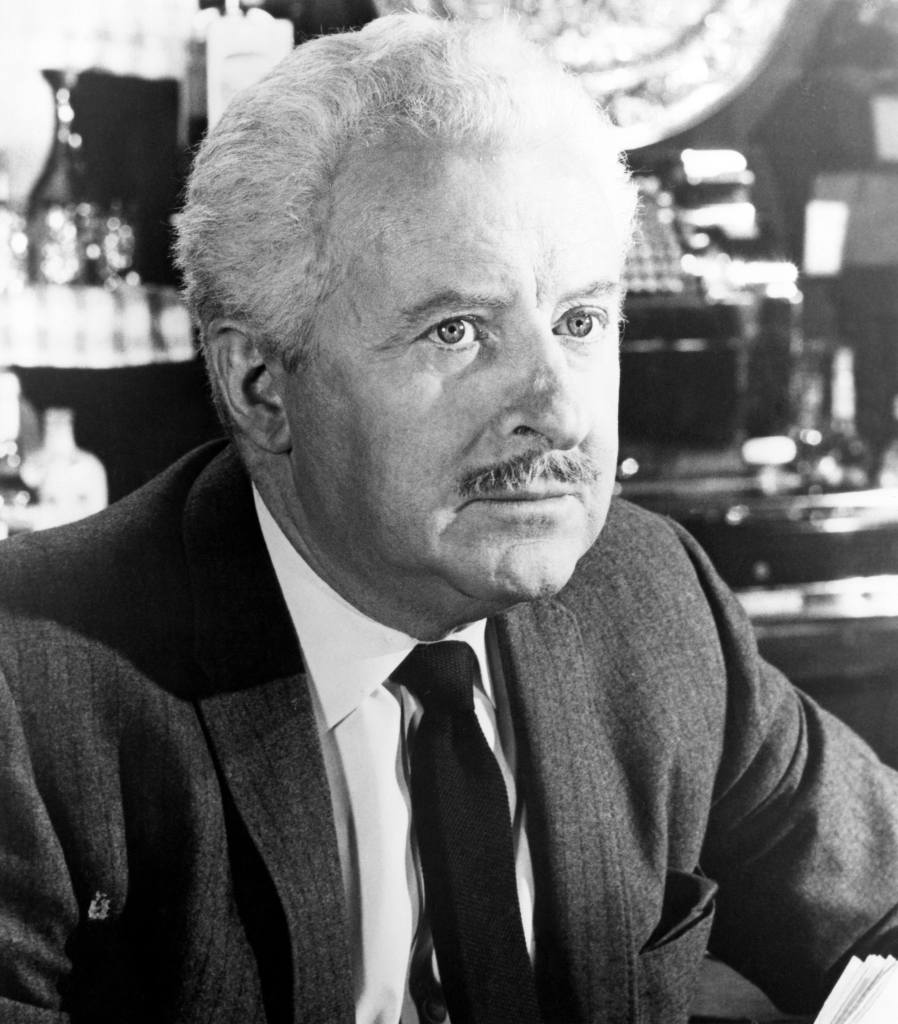
It’s a revealing insight—not just into Larry Tate, but into how White approached acting. Even when it meant pulling himself back, he was focused on serving the character. Behind the scenes, that work didn’t go unnoticed.
HERBIE J. PILATO (author, Twitch Upon a Star: The Bewitched Life and Career of Elizabeth Montgomery): “First and foremost, he was beloved by both Elizabeth and her husband, producer Bill Asher, who called his comic timing ‘quicksilver.’ And while he adored Elizabeth in return, he always felt slighted by Bill Asher, who he said would give him a hard time. For example, the opening credits of the show. David felt his name should have been included in the credits, either before or after Agnes Moorehead’s credit as Endora. And that finally happened in the last season or so, but he had wanted it there from the beginning.”
That says a lot about his experience on the show. He was essential to Bewitched, even if he wasn’t always recognized that way. Because while Larry Tate may have been second-in-command at McMann & Tate, David White’s presence on the series was anything but secondary.
From Colorado to the Stage
Long before suburban magic entered his life, David White’s story began far from Hollywood. Born April 4, 1916, in Denver, Colorado, he later moved with his family to Phoenixville, Pennsylvania. From there, his path toward acting took shape through formal training at Los Angeles City College and hands-on work at two of the country’s most respected acting schools: the Pasadena Playhouse and the Cleveland Play House.
Like many of his generation, his career was interrupted by World War II, during which he served in the United States Marine Corps. When he returned, he didn’t ease back into acting—he jumped in. His Broadway debut came in 1949 with Leaf and Bough, followed by a steady stream of stage work that included The Birdcage (1950), The Pink Elephant (1953), A Roomful of Roses (1955) and Romanoff and Juliet (1957).
By the time television exploded in the 1950s, White was already in position to take advantage of it. Beginning with The Ford Theatre Hour in 1949, he became a familiar face in the golden age of live television, appearing in anthology series like Lights Out, Hallmark Hall of Fame, Studio One, Playhouse 90 and even The Twilight Zone. At the same time, he built an impressive list of guest appearances on series like The Phil Silvers Show, Peter Gunn, Bonanza, The Untouchables and Have Gun – Will Travel. One of those appearances would later prove significant.
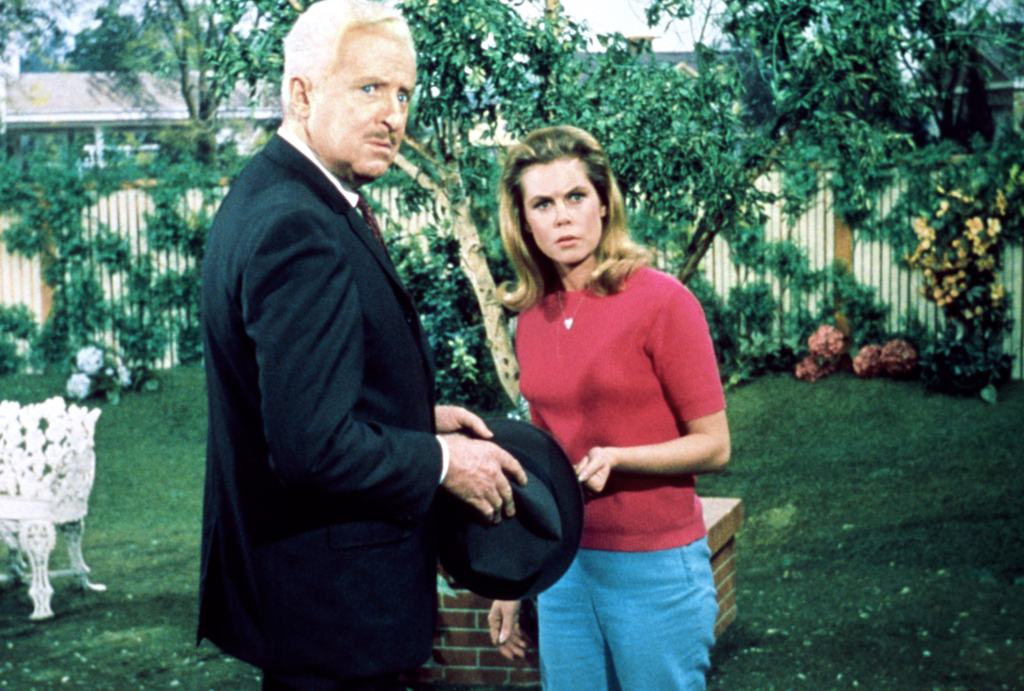
HERBIE J. PILATO: “David had worked with Elizabeth before Bewitched, in an episode of The Untouchables called ‘The Rusty Heller Story,’ in which she played a prostitute. It’s a role for which she received her first Emmy nomination.”
It’s the kind of detail that might seem small at first, but in television, familiarity matters. When Elizabeth Montgomery stepped into the role of Samantha Stephens, she was already working with someone she trusted. At the same time, White’s film career was also taking shape, with appearances in Sweet Smell of Success (1957), The Apartment (1960), Sunrise at Campobello (1960) and The Great Imposter (1961), among others.
Then, in 1964, came the role that would define him: with the debut of Bewitched, White was cast as Larry Tate—the fast-talking, often exasperated president of McMann & Tate. It was a role he would play throughout the entire run of the series. But as he made clear, it wasn’t something that came naturally.
DAVID WHITE: “I wasn’t born to play Larry. I had to create him. He was a make-believe character of his own truth slated in a comedy series. When playing humor and farce, you take that truth and stretch it as far as it will go. But not any farther. When I was playing Larry, though he was a funny character, I never tried to be funny. To me, acting has to do with fulfilling the needs of the character you’re playing, not the actor who’s playing him. Although the one thing the actor and the character have in common is that both have needs. A real heavy is a man who doesn’t have any moral structure whatsoever; one who ends up cheating or even killing someone. Larry was selfish, but he was never that extreme. If anything, he was still a little kid who never matured.”
Even after appearing in nearly 200 episodes, certain stories stayed with him. Among them was “The Moment of Truth,” which dealt with Samantha wrestling over whether to reveal daughter Tabitha’s powers, and “Bewitched, Bothered and Infuriated,” where a magical mishap leads to a prediction that Larry will break his leg. In “Toys in Babeland,” a toy soldier is magically brought to life, leading to one of White’s favorite moments—a simple scene at a bar, sharing a drink with the soldier.
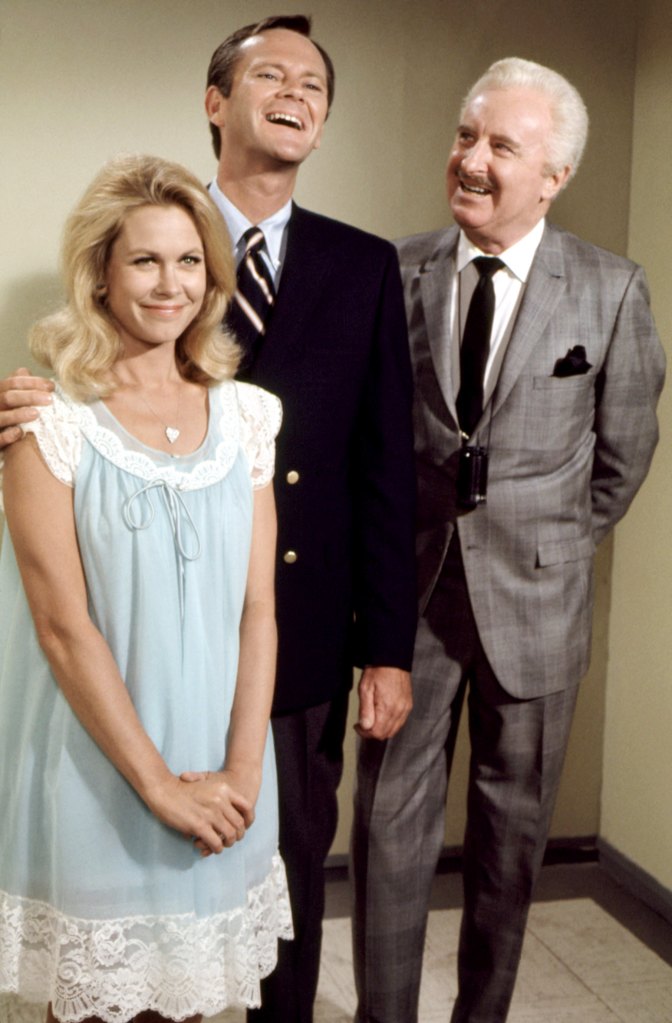
It’s a small moment, but it says a lot about what made the show work: the ability to ground the bizarre in something completely ordinary. At the same time, the actor had a lingering frustration throughout the series’ run.
HERBIE J. PILATO: “David ultimately felt he was never fully appreciated on the show. Years later, when Bill Asher was producing the Tabitha series, David refused Bill’s request to appear as Larry. ‘I didn’t need the money,’ he told me. ‘And I simply was not going to do it.’”
Life after ‘Bewitched’
When Bewitched ended, White returned to what he had always done best—working steadily. He appeared in series like Mission: Impossible, The Odd Couple, Rhoda and The Rockford Files, and in 1977 took on the role of Daily Bugle editor J. Jonah Jameson in The Amazing Spider-Man. His final television appearance came in 1986 on Dynasty.
While his professional life remained steady, White’s personal life was marked by profound tragedy. In 1952, he married stage actress Mary Welch. Three years later, they welcomed their son, Jonathan, but in 1958, while pregnant with their second child, Mary suffered an internal hemorrhage and died—a devastating loss that left White to carry on alone. He remarried in 1959 to Lisa Figus, and the couple had a daughter, Alexandra, but, sadly, heartbreak would return. On December 21, 1988, tragedy struck again when Jonathan—just 33 years old—was killed in the terrorist bombing of Pan Am Flight 103. It was a devastating loss.
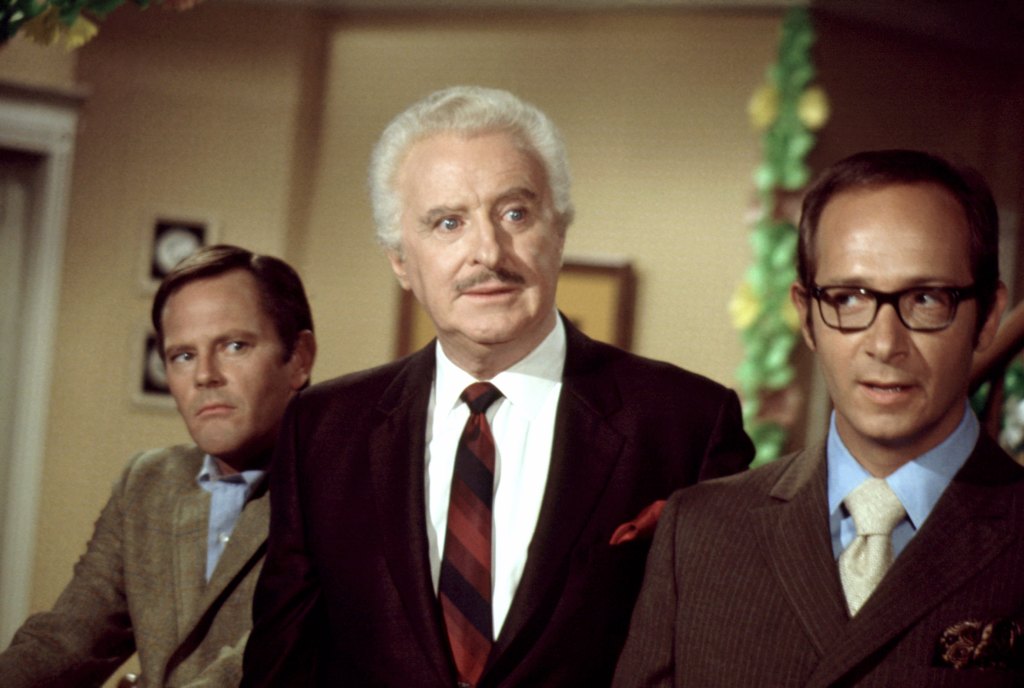
HERBIE J. PILATO: “That was one thing he never got over. He was heartbroken. And Elizabeth was not aware of this until they reunited during my combined interview with them for my second meeting with Elizabeth at her home. Jonathan was his only son and he loved him dearly,so much so that while doing Bewitched, he requested that Larry’s son also be named Jonathan, and the producers complied.”

Like many actors of his era, White didn’t fully grasp how lasting his work would be.
HERBIE J. PILATO: “Overall, David never really knew how beloved he was by fans. However, during the 1990s, he was amused when he learned of a local Los Angeles rock band called ‘The Larry Tate Experience.’”
It’s a fitting note to end on, because while David White may not have always received the recognition he felt he deserved, Larry Tate never really left. And, if you think about it, neither did he.
Conversation
All comments are subject to our Community Guidelines. Woman's World does not endorse the opinions and views shared by our readers in our comment sections. Our comments section is a place where readers can engage in healthy, productive, lively, and respectful discussions. Offensive language, hate speech, personal attacks, and/or defamatory statements are not permitted. Advertising or spam is also prohibited.