Elizabeth Montgomery’s Secret Heartbreak: How She Found Magic Despite Her Famous Father’s Cold Shadow
The 'Bewitched' star’s resilience was born from a complex bond with her Hollywood icon dad, Robert Montgomery

To millions of television viewers, Elizabeth Montgomery was Samantha Stephens—a woman who could smooth over life’s complications with a simple twitch of her nose. On Bewitched, problems never lingered for long. Love won, harmony returned and everything ended neatly before the closing credits. Such was the magic of classic TV.
But in real life, Elizabeth Montgomery carried a relationship that no amount of magic could ever fully resolve: the complicated, often painful bond she shared with her father, Hollywood star Robert Montgomery. It was a relationship defined by emotional distance, unspoken expectations and a lifelong longing for approval that never came easily.
In the oral history below—drawing on Elizabeth’s own words alongside insights from those who knew her best, including author and biographer Herbie J Pilato and pop culture historian Geoffrey Mark—we explore that private journey. For many women watching from home—women who have loved difficult parents, navigated divided loyalties or were forced to find inner strength in the absence of validation—Elizabeth’s story is as meaningful as anything she ever played on screen.
A star is born—whether her father liked it or not
Her desire to act appeared early. In a 1954 interview, she recalled that her love for performing began when she was just four years old, when she became, like most children, an enthusiastic “make-believe actress in play.” The difference, of course, was her bloodline.
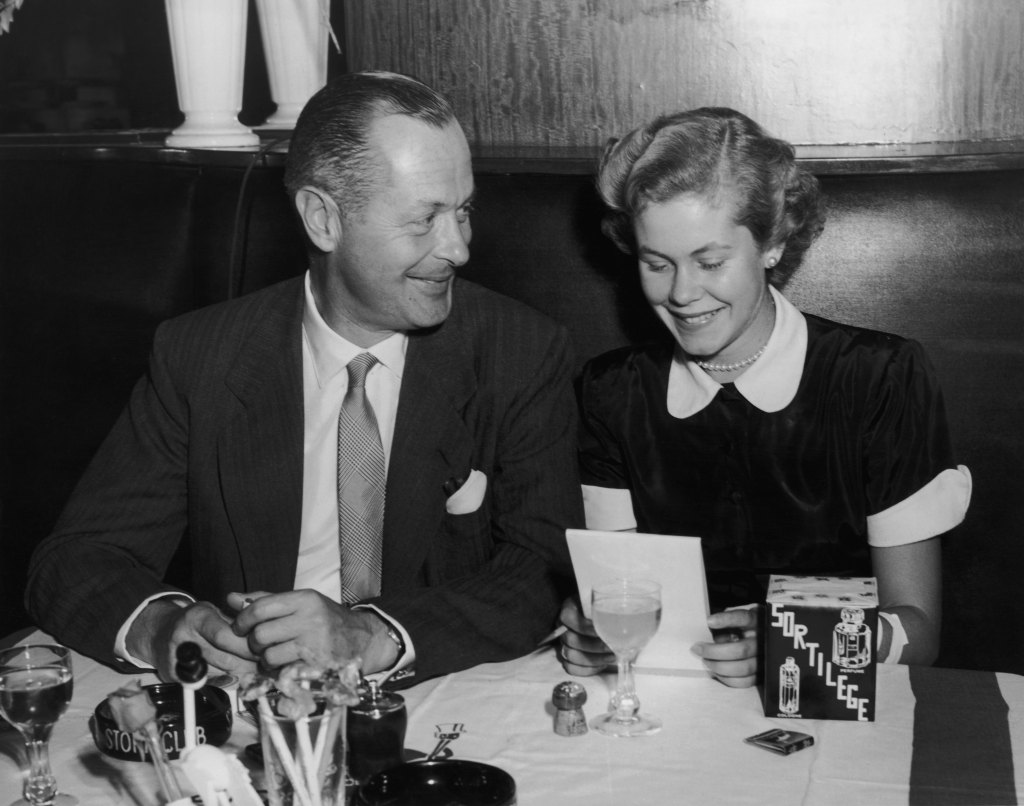
ELIZABETH MONTGOMERY: “Dad tells me I often climbed on his lap after dinner and remarked, ‘I’m going to be an actress when I grow up.’ I don’t know whether he encouraged me or not, but he told me he would humor me and would tell me to wait and see what happened when I grew up.”
Robert Montgomery was a respected leading man of Hollywood’s Golden Age; someone disciplined, traditional and deeply invested in structure and status. He envisioned a secure, socially polished life for his daughter which would be rooted in stability rather than performance. Acting was not the future he imagined for her.
HERBIE J PILATO (author, Twitch Upon a Star, Bewitched Forever and The Essential Elizabeth Montgomery): “Her father did not want her to follow in his footsteps and he didn’t even want her to go see movies; he was very strict. But as much as he didn’t want her to act, it was on his show that she made her debut and she did a number of those, so eventually he came around.”
ELIZABETH MONTGOMERY: “I’ll be real honest and say that Daddy did help me get a break in TV and I’m really grateful for his assistance and guidance. He’s my most severe critic, but also a true friend as well as loving father.”

The parent who showed up—and the one who didn’t
Praise, however, was rare. Approval felt conditional and that dynamic—striving under a watchful, exacting eye—would shape Elizabeth long after childhood. But if her relationship with her father was defined by distance, her bond with her mother, Elizabeth Bryan Allen, was defined by closeness. Her mother became her emotional anchor as a steady presence who offered warmth, understanding and protection. That bond deepened during one of the most painful chapters of Elizabeth’s early adulthood, when her parents’ marriage ended abruptly. The aftermath of that divorce, followed by her father’s swift remarriage, was devastating. But rather than retreat inward, Elizabeth found the strength she needed. As a result, she became her mother’s fiercest defender, standing beside her emotionally and unwavering in her support.
Elizabeth’s early professional life mirrored her personal one. Even when she appeared on anthology drama series Robert Montgomery Presents, she was required to earn her place. She auditioned alongside other young actresses and worked under her father’s critical eye.
ELIZABETH MONTGOMERY: “It was the chance I had been waiting for, and I was playing a daughter. I figured it was tailor-made for me, because who could put more into the role than a real-life daughter? But there was pressure. Everyone was on pins and needles as the hour for the [live] show approached. Dad called me into his dressing room for an old-fashioned, last-minute pep talk. I assured him everything was under control so far as I was concerned. I don’t know whether he could tell that I was shaking all over. But when the cameras came alive for the show, I had no trouble concentrating on my part and the program went off without a hitch.”
She would go on to appear in 30 episodes of the series, building a resume that also included Broadway, film and other television anthology work. Yet even as her career expanded, she remained acutely aware of the burden of her name.
ELIZABETH MONTGOMERY: “Being his daughter means that I have to work harder to prove myself to others. Others can make horrendous mistakes, I can’t. My ability as an actress and my personal life both reflect on him. It sort of means that I have to work a little harder at everything.”
Independence, marriage and a father who preferred her social life to her career
As Elizabeth matured, the gap between father and daughter widened. Their political views diverged sharply and their values no longer aligned, resulting in Elizabeth becoming increasingly determined to live on her own terms.

ELIZABETH MONTGOMERY: “My father hasn’t always encouraged my acting. For years, I announced to him that I was going to be an actress and that I would eventually do pictures. I’m not sure he was in favor of a screen career for me, but then I don’t believe I can develop in just one medium.”
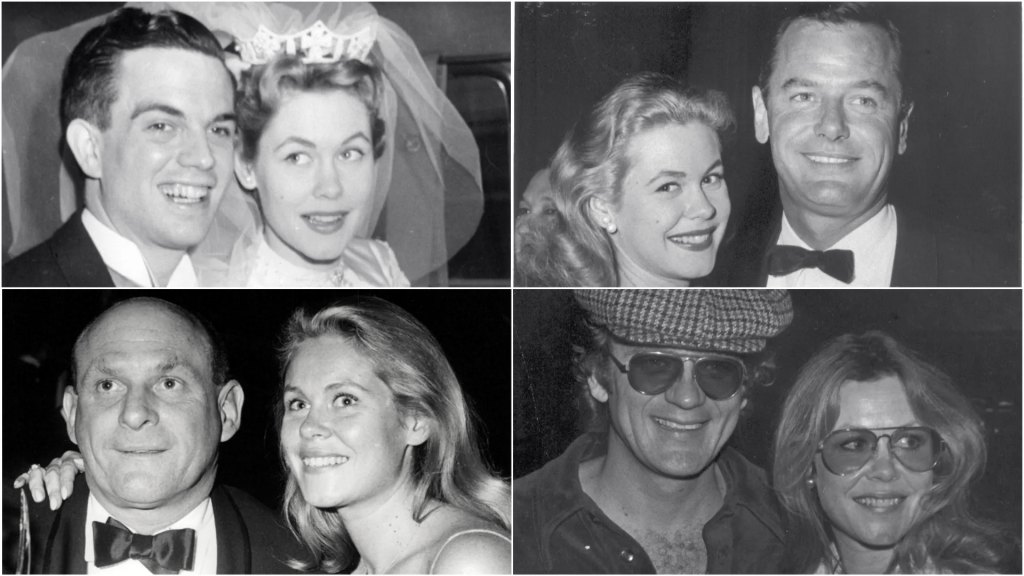
Her personal choices reflected that independence. Her marriages—first to Frederick Gallatin Cammann, then to Gig Young — were met with dramatically different reactions from her father.
HERBIE J PILATO: “He was much more interested in her marriages than her acting career. He was thrilled with her marriage to Frederick Gallatin Cammann, a New York socialite, because he was the same age as Elizabeth. But Fred wanted a wife and Elizabeth wanted to be a star. They divorced a year later. In 1956, she married actor Gig Young and her father was livid, because he was 20 years older than her and he just felt that was wrong. I think she married him out of spite, anyway. Sadly, that marriage was a horrible disaster. He was abusive to her, and it was a situation she got out of in 1963 after she met William Asher, who directed her in Johnny Cool. The funny thing is, they hated each other when they first met, but then they fell in love and were married that same year.”
ELIZABETH MONTGOMERY: “When it came to acting, Dad would say how dismal a life it was. Of course, knowing me, he’d always start his speech by saying, ‘Now, I know you’re not going to take my advice, but…’ And I never did. Maybe I should have. Being his daughter opened doors for me in the beginning, but it’s like the old saying goes: it’s easy for a girl to get a husband, but it’s hard to keep him. Well, it was easy for me to get in to see people, but after that, I had to make it on my own. I also had to be careful not to take certain roles that weren’t right for me, but were nonetheless offered because of his reputation. I wanted to do it, but I knew I couldn’t do a good job and had to say no—I couldn’t risk disgracing my name. If I’d been anybody else, I would have done it anyhow. It would have been fun.” (The Californian, 1956)
Building a career on her own terms
By the mid-1950s, Elizabeth Montgomery’s career was gaining real traction. Alongside her work on her father’s television show, she made her Broadway debut in Late Love, followed several years later by The Loud Red Patrick. Film soon followed, and in 1955, she appeared in The Court-Martial of Billy Mitchell, where working opposite Gary Cooper proved to be both an education and an inspiration. At the same time, she honed her craft across some of television’s most demanding anthology programs, appearing repeatedly on Kraft Television Theatre, Appointment with Adventure and Studio One, as well as on landmark series like Playhouse 90, Alfred Hitchcock Presents, The Twilight Zone, and Thriller. She supplemented that work with guest appearances on popular dramatic series such as Riverboat, Johnny Staccato, TV Western Wagon Train and The Untouchables.
ELIZABETH MONTGOMERY: “Being my father’s daughter means that I have to work harder to prove myself to others. Others can make horrendous mistakes, I can’t. My ability as an actress and my personal life both reflect on him. It sort of means that I have to work a little harder at everything. My biggest complaint is when I first started acting, nothing seemed to bother me at all. I guess I didn’t know any better. But in this business, the more you learn, the more nervous you get. Ten minutes before I go on nowadays, I fall apart. I haven’t made the grade yet and I know it, but I think I’m learning.” (The Times of San Mateo, California, 1956)
‘Bewitched’ changes everything—except her relationship with her father
As the new decade began, Elizabeth showed no signs of slowing down. She continued to make guest appearances on popular television series, including Clint Eastwood’s Rawhide, 77 Sunset Strip, and Burke’s Law, while also balancing film work in projects such as Bells Are Ringing and the 1963 features Johnny Cool and Who’s Been Sleeping in My Bed?. She also starred in television movies like The Spiral Staircase and Boston Terrier. Out of this busy and productive period came the decision she and William Asher made to move forward with a new series called Bewitched—which is when everything shifted in the father/daughter dynamic.
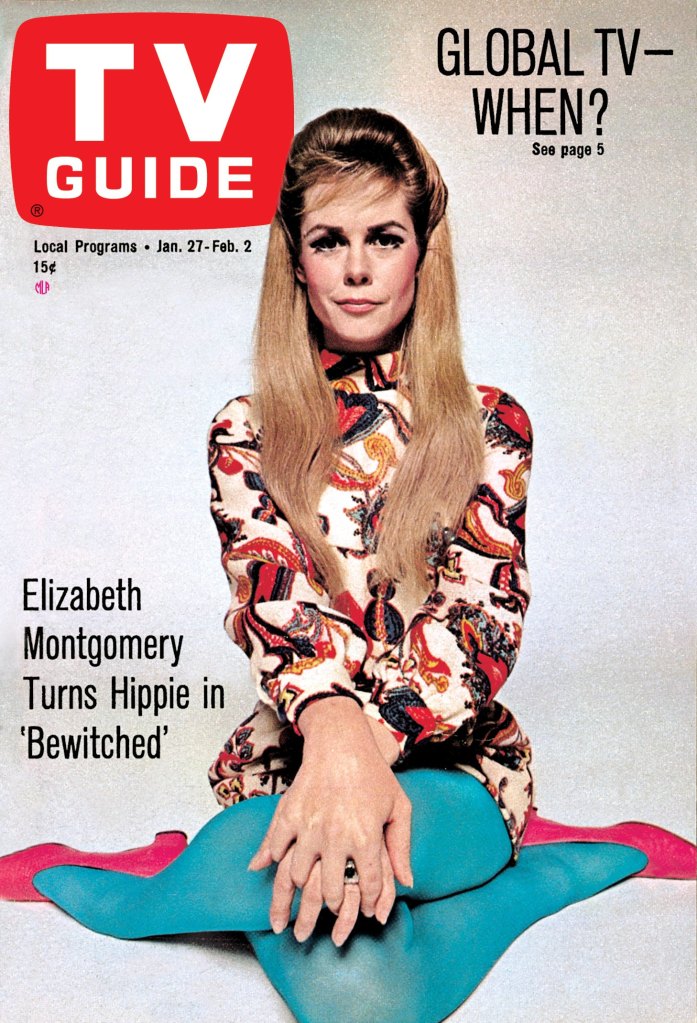
Bewitched began as a whimsical sitcom, but it became a cultural phenomenon as one of the best fantasy sitcoms of the 1960s, and Elizabeth emerged as one of television’s most recognizable stars. For the first time, she was no longer simply Robert Montgomery’s daughter as she had become a star in her own right, but success failed to resolve their complicated dynamic. When Elizabeth asked her father to appear on the series as Samantha’s father, Maurice, he declined.
HERBIE J PILATO: “What’s interesting is that when she used to talk about her father, she would sit back and say, ‘Well, one time Daddy said…,’ and it was very wistful. The way she said ‘Daddy’ was the way she would say Daddy to Maurice Evans on Bewitched. She actually asked her father to play the role and he turned her down, which was very hurtful to her. Ultimately, I think her father was jealous that Elizabeth became a bigger star on TV or otherwise than he ever was. I mean, Elizabeth was one of the biggest TV stars of the sixties. That’s all there is to it. That show put ABC on the map. So it started out being this resentful father-daughter relationship, because he didn’t want her to be an actress. Then a further wedge grew between them when he divorced her mother, who she loved dearly.”
“The biggest wedge came from the fact that before Elizabeth was born, a previous daughter, an infant, had died. My sense was that Robert Montgomery never got over the death of his first daughter and somehow seemed to resent Elizabeth from the beginning, almost for being born. It’s a hard thing to verbalize here, but that was my sense of it. So it was a very strange relationship.”

GEOFFREY MARK (pop culture historian): “Elizabeth had a very complicated relationship with her father, which colored her relationships with men most of her life. Part of it was being the child of a big celebrity, part of it was getting her first acting experience with daddy on his show, Robert Montgomery Presents, and part of it was seeing that daddy was not a very good husband to mommy. Elizabeth resented her father. She, as a married woman, irrespective of which marriage we’re talking about, did not like having her father visit, did not like exposing her children to her father. She was looking for a man who wouldn’t be the cold, withdrawn person that Robert had been with her. Bill Asher said, ‘I don’t myself quite understand why Liz was so against her father, but it really bothered her, having him around.’”
The end of ‘Bewitched’—and the beginning of something bolder
As Bewitched wrapped up its eighth season in 1972, the series had reached a natural stopping point. Elizabeth’s marriage to William Asher was breaking down, and even with strong ratings, those involved recognized that the time had come to step away.
HERBIE J PILATO: “ABC had renewed Bewitched for two or three more years, but Elizabeth’s marriage was not the same, the show was not the same—if you look at that last season, she’s dragging her feet. She’s just gone. She’s bored out of her skull and you can see it. Now, everybody thinks ABC canceled the show because of low ratings. Elizabeth Montgomery canceled the show. But she still had a couple of years on her contract, and ABC decided to cast her in her first TV movie post-Bewitched, The Victim. That was in 1972. And then she did Mrs. Sundance in 1974, which is where she met Robert Foxworth. They fell in love and were together until her death in 1995, although they only got married in 1993.”
“She liked him because, number one, he had her father’s name. Number two, he never watched Bewitched and she loved that. In any case, those movies were a result of her having a contract with ABC. But when she left ABC to do the NBC TV movie A Case of Rape, people were, like, ‘You can’t do this!’ Her peers, people in the industry and her fans were, like, ‘Wait, what?’ I have yet to see the movie fully, because I can’t watch Samantha get raped. It’s traumatic for me. But she was serious about it. There were two different rape scenes in that movie and NBC was going to cut one of them and Elizabeth said to them, ‘You cut either of those scenes, you can get somebody else to star in the movie.’”
ELIZABETH MONTGOMERY: “Women have been beaten down by the system for too long. That’s why this film has something important to say. I don’t know why women have put up with it for so long. Everything seems weighted in the rapist’s favor in court. Lawyers can destroy a woman’s name with slander and innuendo, but details of the rapist’s past cannot be brought out in the trial. And the laws are really out of date. The women are subject to all sorts of humiliation right after they’ve gone through the trauma of rape … It’s easy for me to understand why it has been estimated by police that only one fourth of the rapes committed in this country are reported.” (Santa Maria Times, 1974)
The role that changed television—and her legacy
The role brought Elizabeth a Primetime Emmy nomination in the category of Outstanding Lead Actress in a Special Program—Drama or Comedy. She went on to star in 1975’s The Legend of Lizzie Borden, portraying the historical figure at the center of one of America’s most notorious murder cases and found herself the recipient of another Emmy Award nomination.
HERBIE J PILATO: “She had one movie left on her ABC contract, so she did Lizzie Borden. Robert Foxworth said she delighted in doing that film, because she knew that it was going to freak people out.”
She found a natural home in television movies, where both the projects and the recognition continued to grow, furthering the professional distance between father and daughter. From Dark Victory in 1976 through Deadline for Murder: From the Files of Edna Buchanan in 1995, she appeared in 20 TV movies.
HERBIE J PILATO: “Before Jane Seymour, before Lindsay Wagner and before Valerie Bertinelli, Elizabeth was the first Queen of the TV movies; she went from queen of the witches to queen of the TV movie and it was no longer a struggle to break away from Bewitched. The ironic thing is that she died at about the same time there was the resurgence of classic TV and Nick at Night. You know, at one point, Barbara Eden was at some big event in Australia in the Jeannie costume, looking fabulous. The people at this particular arena went crazy and had Elizabeth lived, I think she would have done something like that. She would have gotten into the black ‘flying’ outfit again.”
Robert Foxworth, activism and the love that finally lasted
In her later years, she became deeply involved in women’s rights, AIDS activism and LGBTQ+ causes, lending her voice, time and resources with conviction. But through it all, things never changed with her father. Nonetheless, and perhaps not very surprisingly, when Robert Montgomery died in 1981, Elizabeth was devastated, her grief not just for the man he was, but the relationship that never fully became what she hoped it would be. For anyone who has mourned a complicated parent, that grief feels familiar.
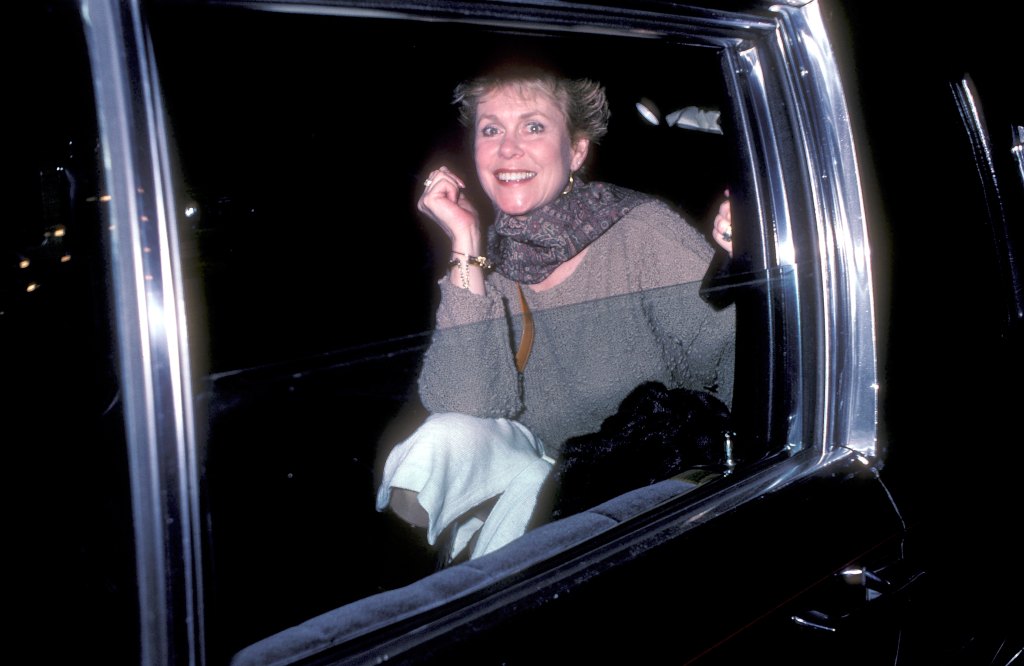
Away from the public eye, she endured a long battle with colon cancer. The disease was believed to have been under control, but it reemerged in the spring of 1995. She died on May 18, 1995, age 62. At the time, Robert Foxworth and her children issued a joint statement: “The image of Elizabeth Montgomery is the image of the medium of television itself. She was a friend who has been in our living rooms thousands of times and has impacted our lives in many ways. As an actress, she brought us joy with Bewitched and groundbreaking rape legislation with her performance in A Case of Rape. As an activist, she has been a longtime supporter of gay and lesbian civil rights, HIV-AIDS causes and animal-rights organizations. She was, most of all, a person who loved life and her work and shared both with us generously.”
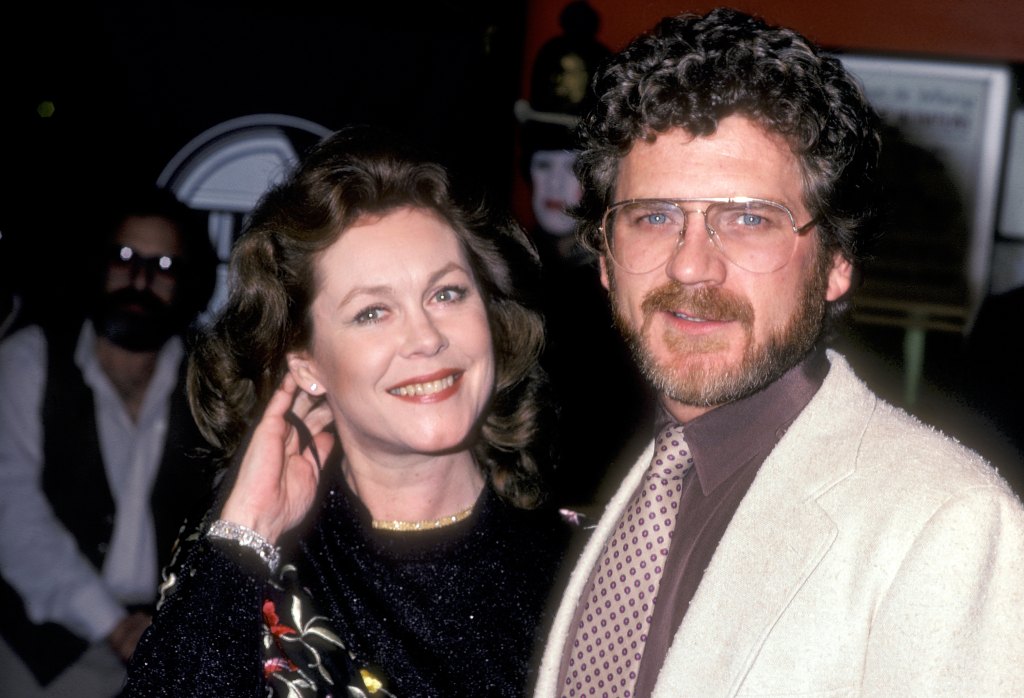
As so often happens in life, the sometimes-difficult relationship between child and parent offers challenges that are never surmounted. Humorously, though, it was Foxworth who seemed to nail the feeling behind the Elizabeth and Robert Montgomery relationship.

ROBERT FOXWORTH: “As it is well known, they didn’t get along very well and in The Legend of Lizzie Borden, when he saw the glee in her eyes as she took an ax to her father, he caught something there and said, ‘Well, you finally got me.’”
Ready for more? Subscribe to our YouTube channel for video podcasts, health tips and uplifting stories designed for women 40, 50, 60 and beyond.
Conversation
All comments are subject to our Community Guidelines. Woman's World does not endorse the opinions and views shared by our readers in our comment sections. Our comments section is a place where readers can engage in healthy, productive, lively, and respectful discussions. Offensive language, hate speech, personal attacks, and/or defamatory statements are not permitted. Advertising or spam is also prohibited.