‘Bewitched’ and the Two Darrins: The Real Reason Dick York Left the Classic Sitcom
When Dick York left 'Bewitched,' another Darrin took his place—and TV history was never quite the same

There’s a moment in television history that’s hard to explain to anyone who didn’t live through it. One week in 1969, viewers tuned into Bewitched and something felt… off. Samantha Stephens, played by Elizabeth Montgomery, was still the charming suburban witch audiences loved, the house looked the same, the theme song still sparkled and Endora was still causing trouble, but Darrin, Samantha’s mortal husband, wasn’t quite the same.
Gone was Dick York, the warm, slightly flustered ad man whose exasperation at his wife’s magic had fueled the show’s humor since 1964. In his place stood Dick Sargent, who was certainly amiable, earnest and trying his best to keep the same domestic chaos under control, but it’s a switch that wasn’t mentioned, explained or even hinted at. Television, especially in the 1960s, didn’t do that sort of thing.
But despite what network executives might have thought of viewers, they did notice. And for an audience who’d grown up watching Samantha and Darrin navigate their enchanted marriage, the change was jarring, and to those who worked on the show, the replacement didn’t take place easily. It was, in fact, the result of pain, exhaustion and the kind of behind-the-scenes heartache no magic spell could fix.
“Dick York had to leave Bewitched because of his terrible back injury,” says pop culture historian Geoffrey Mark, also a close friend to the show’s producer, William Asher. “It left the production in a very difficult place. He had given the character of Darrin such warmth and comic range and while he could be exasperated, he was also deeply human. Elizabeth Montgomery and York had great chemistry, and that connection really sold the show’s central premise—a mortal man trying to live an ordinary life while married to a witch.”

That chemistry became the emotional core of Bewitched, making the outrageous believable while grounding broomsticks and magic incantations in something domestic and real. And when York collapsed on set in 1969, the spell was broken, not only for the audience but for the people who had to decide what came next.
Dick York: the first Darrin

When Bewitched premiered on ABC in 1964, Dick York’s Darrin Stephens was the everyman anchoring a world of broomsticks and bewitchments. He wasn’t a swaggering TV husband but a gentle, quick-tempered realist. Behind the scenes, though, York was fighting a private war with pain. In 1959, while filming They Came to Cordura with Gary Cooper, York severely injured his back.
“Gary Cooper and I were propelling a handcar carrying several wounded men down the railroad track,” the actor shared. “I was on the bottom stroke of this sort of teeter-totter mechanism that made the handcar run. I was just lifting the handle up as the director yelled, ‘Cut!’ and one of the wounded cast members reached up and grabbed the handle. Now, instead of lifting the expected weight, I was suddenly, jarringly, lifting the entire weight off the flatbed; 180 pounds or so. The muscles along the right side of my back tore. They just snapped and let loose. And that was the start of it all.”

Mark notes that producer William Asher, who was married to Montgomery at the time, related to him that early on there were problems, even on the very first day of production, when York didn’t show up. “Bill,” he says, “called the security guards at the gate to the studio and said, ‘When Mr. York shows up, will you please let us know immediately?’ The security guard said, ‘He showed up hours ago. He signed in.’ So, Bill went out and looked for him, finding him in his car, passed out. Bill revived him and it was then that Dick told Bill that he had a back injury, causing him to need medication, and that sometimes this happened. Bill and Liz then had a conversation: Do we fire this guy? Do we recast this character or do we deal with the problem? And Liz felt that Dick was so talented that he brought such charm to Darrin, that they would be foolish to try and recast. They hoped that the first day would just be an anomaly. Dick could play the broad comedy this show called for and he was able to handle the dramatic moments as well. Unfortunately, the problem didn’t just go away.”
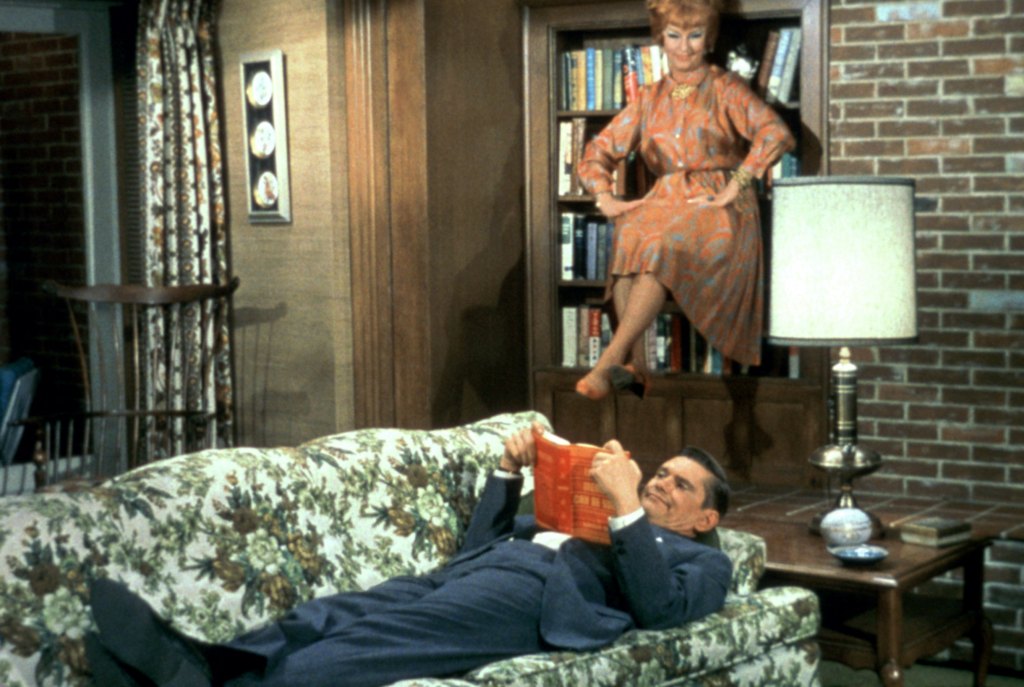
He continues, “Dick was just a little chubby in the beginning, but then he started losing weight. There were episodes where they had to limit what he was doing because he was too stoned on painkillers to really function well. When the show went to color, they had to heavily make him up because he looked ill—pale, thin, with new lines in his face. They used bronzer to make him look healthier and even padded his suits as he kept losing weight. He started to slouch. Rehearsals became difficult because Dick was out of it. Elizabeth and Bill really loved him and felt that as long as they could keep the show on schedule, he was worth the trouble. Elizabeth liked him as a person and truly loved working with him.”

Flash forward to the show’s fourth season, and suddenly Darrin wasn’t being featured in some of the episodes, the explanation being that the character was away on business. Says Mark, “They were able to cover it up, because it made sense that Darrin might be out of town for advertising purposes, and they had such a large group of wonderful costars on this show that they were able to cover for him. For a while. By the fifth season, it’s obvious that something is wrong if you watch the show. Then, Elizabeth Montgomery got pregnant again and they were going to write the pregnancy into the show. They wrote an episode for her to tell Darrin she was pregnant, but in the midst of shooting it, Dick had a seizure. Bill Asher put him in the hospital, but the only way they could get him to go to the hospital was if Bill guaranteed him he wasn’t going to lose his job.”

That promise couldn’t be kept. Beyond Elizabeth Montgomery’s frustration, there was concern that young Erin Murphy (playing Tabitha Stephens) was on set and this was not something she should be exposed to. “So,” Mark continues the scenario, “Liz put her foot down and said he was out. They rewrote the last few episodes of the season so that Samantha tells Darren she’s pregnant over the phone, and then they threw in a non-pregnancy episode or two at the end of the season, filming around Dick. Well, what do you do now? They decided that they were simply going to bring in Dick Sargent, who was available and who had tested so well for Darrin to begin with.”
Dick Sargent: the second Darrin
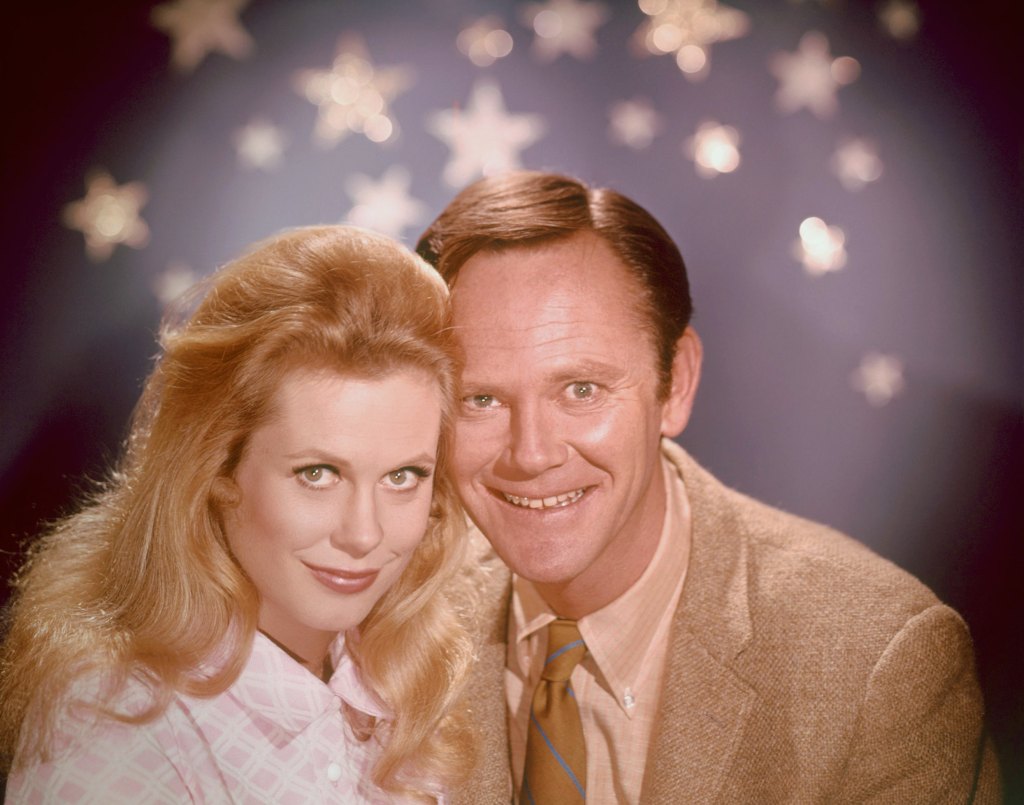
For producers, there was no graceful way to end the Dick York story and ABC wanted another season, given that Bewitched remained one of the network’s few dependable hits. “The network and producers made a rare decision for the time,” Mark explained. “They simply replaced him with another actor, Dick Sargent, and hoped the audience would accept it. This wasn’t like replacing a supporting player—it was one of the leads, the husband in a love story and, not surprisingly, people noticed.”
Sargent was no stranger to the role. Years earlier, before York was cast, he had been one of the first actors considered for the role of Darrin. When the opportunity resurfaced five years later, he accepted, aware of the challenge ahead.
To those behind the camera, Sargent brought a very different energy. “He was a very nice man, well-liked, and he tried to bring his own style to the role,” said Mark. “But there were many things working against him. The scripts had grown repetitive by that point, the tone of the show was changing and Elizabeth Montgomery herself was becoming restless.”
Television in 1969 was changing, too. Sitcoms like That Girl and the soon-to-arrive The Mary Tyler Moore Show were presenting more modern, independent women, and Bewitched’s once-progressive premise began to feel old-fashioned. “The industry itself was shifting, television was trying to appear more modern. You had women going braless on That Girl, and series like Bewitched were trying to seem contemporary without losing their family-friendly image. But that only made the old-fashioned setup of a husband constantly irritated by magic seem dated.”
Caught in that cultural shift, Dick Sargent had the unenviable task of trying to make Darrin relevant again. While he was confident, capable and professional, he lacked York’s kinetic vulnerability. “Sargent took much of the blame, which isn’t really fair,” says Mark. “He didn’t have the same comic flexibility that York had, but he also wasn’t given material that allowed him to explore the character in the same way. Darrin became more one-note—always annoyed, never enchanted. And the warmth drained out of the show. Viewers still loved Elizabeth, but the magic, literally and figuratively, was fading.”

Still, Sargent handled the situation well. He never spoke ill of York or the fans who missed him. In later interviews, Sargent said he understood why audiences preferred his predecessor and admitted that taking over was “an impossible job.” But he also saw the humor in the situation. As he once joked, “I was the other Darrin—which, I suppose, makes me half a witch myself.”

While the decision to recast kept Bewitched alive for three more seasons, it also marked the beginning of its slow decline. The show that once felt fresh and full of heart was now a relic of an earlier television age. And the truth is, the energy on Bewitched shifted the moment Dick Sargent arrived. It wasn’t his fault—the chemistry had changed, and the on-set atmosphere wasn’t the same. At the same time, Montgomery’s personal life was unraveling; her marriage to director-producer William Asher, who had guided Bewitched from its start, deteriorating. The couple’s tension inevitably affected the set.

By 1972, the show wrapped its final episode, “The Truth, Nothing But the Truth, So Help Me Sam.” It wasn’t a grand farewell and there was no sentimental goodbye. Instead, Bewitched simply ended, fading quietly from the ABC schedule after eight seasons and 254 episodes.
For Geoffrey Mark, that quiet exit felt fitting. “Bewitched had been part of the culture for so long that it didn’t need a big sendoff,” he muses. “It had already worked its magic. Even if the later years weren’t the same, the show had done something special: it brought warmth, humor and humanity to a fantasy premise. That’s why people still talk about it so many years later.”
Conversation
All comments are subject to our Community Guidelines. Woman's World does not endorse the opinions and views shared by our readers in our comment sections. Our comments section is a place where readers can engage in healthy, productive, lively, and respectful discussions. Offensive language, hate speech, personal attacks, and/or defamatory statements are not permitted. Advertising or spam is also prohibited.