Lindsay Wagner, 76, on ‘The Bionic Woman’ at 50: ‘She Just Lives On’ (Exclusive)
The star opens up about the 'living legacy' of strength and compassion Jaime Sommers shared with us all

When The Bionic Woman premiered in 1976, it was, on paper, a spin-off of The Six Million Dollar Man, created to give Lee Majors‘ Steve Austin a female counterpart. But 50 years later, the series—and the woman at its center—still resonates in ways few television shows ever manage.
For Lindsay Wagner, the realization that five decades have passed since she first stepped into the role of Jaime Sommers didn’t arrive gradually. It landed all at once. “A little bit,” she says when asked whether the anniversary feels mind-blowing. “It definitely is. It’s wonderful—but shocking. Somebody said, ‘Lindsay, are you going to do something for the 50th anniversary?’ And I said, ‘What?’ It was like, ‘Oh my gosh… really?’”
That moment when the past suddenly assembles itself into a full picture is something Wagner admits she doesn’t often consider. The show never truly went away and fans never stopped finding her, so, as a result, the passage of time didn’t feel quite as dramatic from the inside. “It’s been a part of my life full-time,” she explains. “But as your life goes on, you don’t think about being over 50 or over 60 until something happens to bring your attention to it. You just live. And this was one of those moments.”
“Everybody’s been so gracious and supportive all along,” she adds. “I go to the comic cons, and I like talking to people and hearing their stories. So, it’s not like I didn’t know it was still there. I just didn’t think about it in terms of the whole picture coming together.”
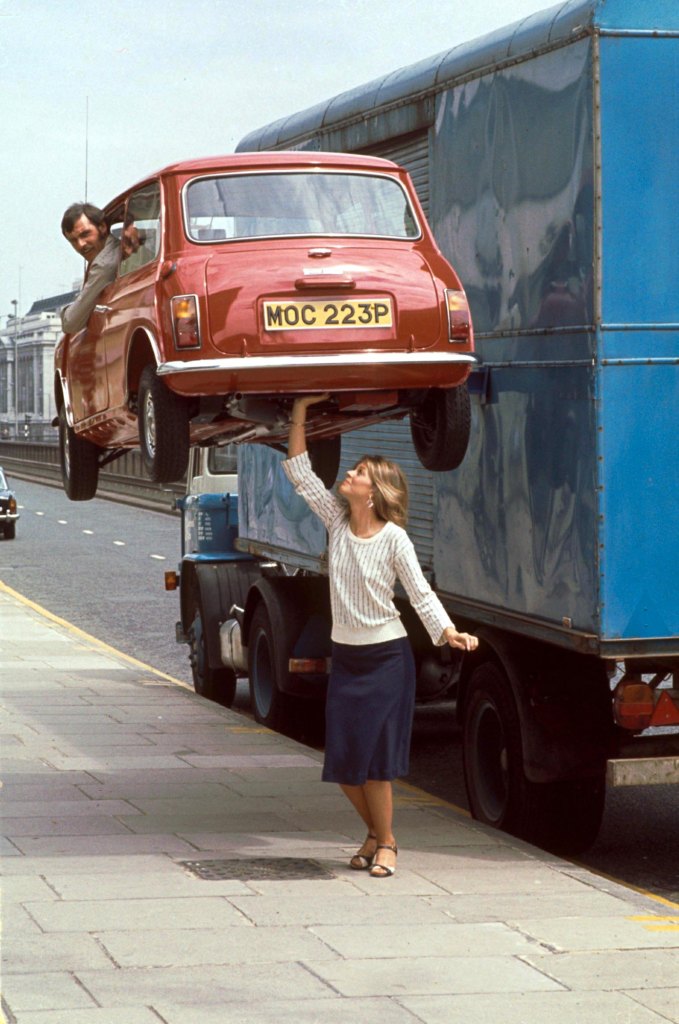
What’s striking, 50 years on, is how consistently those stories reflect something deeper than nostalgia. Wagner has long heard from fans who grew up watching Jaime Sommers and only later realized how much the character had shaped them. “We did a lot of subliminal teaching,” she says. “Just by the way Jaime was, by the choices we made for her, how she responded to certain situations, how she treated people and what she learned about herself. I didn’t want to do just an action show. I wasn’t interested in that. I didn’t want to be a guy in a skirt running around bashing people.”
That conviction was written directly into her contract. Wagner insisted on the ability to collaborate on story and character development—an unusual level of influence for a young actress at the time, and one that would shape the series in profound ways. “When they agreed to that, and I realized Kenny Johnson had an open mind, it was wonderful,” she recalls. “Nobody really had experience writing stories around a woman in that kind of powerful situation. My goal was to share what felt real to me as a woman. And every time a story was finished, Kenny would bring it to me and we’d sit there and act out the whole script together. He’d read the other characters and I’d read Jaime. Scene by scene, I’d give my thoughts—what felt right, what didn’t—and he’d go back and figure out how to make it work. That just wasn’t normal, and I give him a lot of credit for that.”
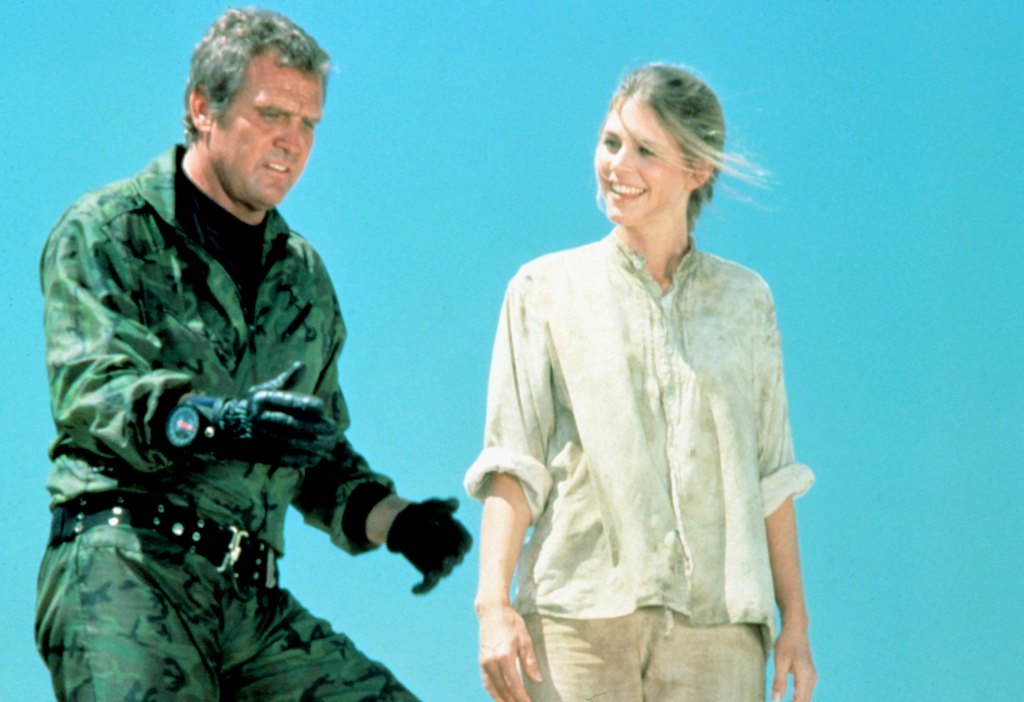
The result was a character who embodied something television had rarely attempted. “Until then, male and female roles were very defined,” Wagner suggests. “This is what women do. This is what men do. This is what they’re allowed to feel. And we wanted to show that strength and sensitivity could exist in one person. Both men and women have the ability to be strong—physically, psychologically and emotionally. And we also have the ability to be sensitive. Those things don’t have to be separate.”
At the time, she was satisfied with what they’d accomplished. Looking back now, she still sees that intention clearly reflected in how people respond to Jaime Sommers. “Women would come up to me as adults and they’d say, ‘Your show gave me the sense that I could just go do what I wanted to do.’ They’d say they went into a job or a career because they kept thinking about how Jaime would walk into something—even without using her bionics. But when the men started saying it, that’s when I was really surprised.”
The unexpected audience
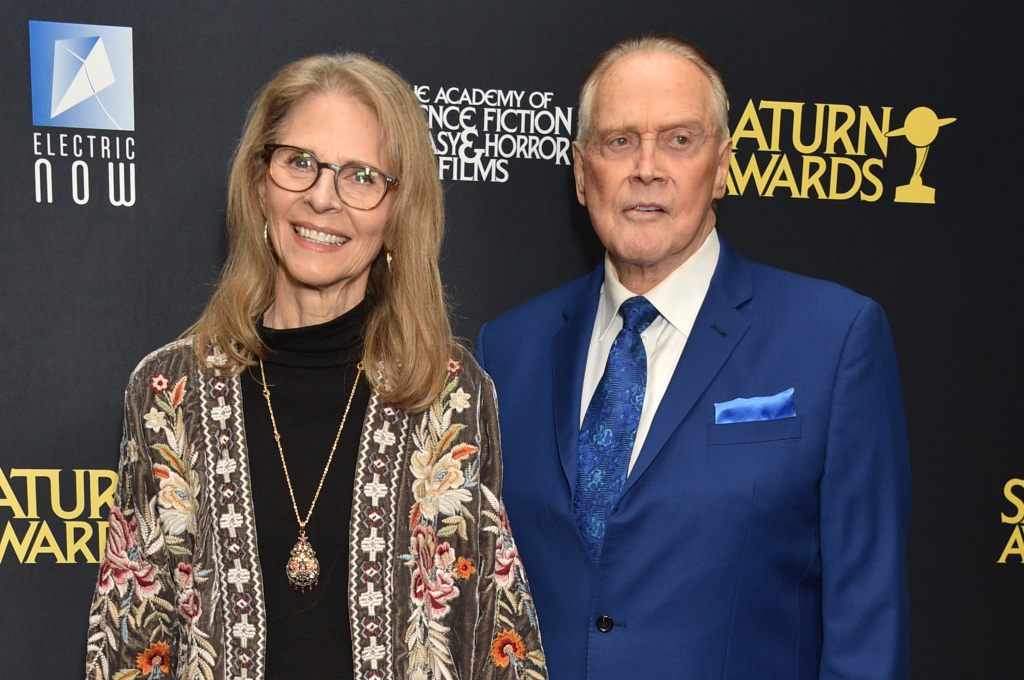
When Jaime first appeared on The Six Million Dollar Man and was then spun off into The Bionic Woman, its popularity was immediate and undeniable. Ratings were enormous, merchandise flooded stores and Jaime Sommers became a cultural fixture almost overnight. But what the show meant—particularly to certain viewers—didn’t fully reveal itself until years later. “At the time, it was off the charts,” Wagner says of the show’s reception. “It was crazy. Very, very positive. The ratings spoke for themselves.”
Yet Wagner wasn’t tracking reviews or headlines as the series aired. She was too busy making it. “I’m not somebody who goes, ‘What did they say today?’” she explains. “That’s not how I am. I was inspired by what we were doing and I stayed focused on that.”
And the stories from fans confirmed something that Wagner and Johnson had only aspired towards in the 1970s. “That sense of balance within ourselves as human beings—that’s what we were striving for,” she says. “And when people reflect that back to you decades later, you realize it really did happen. People tell me the show meant everything to them when they were growing up. When they had a lot of family problems, Jaime became their escape. She was strong, she was kind and she showed up for people. They talk about the way she was with kids, the way she treated people and how that affected them when they were young.”

Hearing those stories is deeply moving, but also emotionally demanding. “My challenge at a Comic-Con is not to spend the day crying,” she admits. “People share these incredibly personal things, and it’s so sweet. One woman told me that Jaime influenced her decision to become an engineer at NASA. Those are the moments that really stay with you.”
For Wagner, these conversations reinforce something she has believed since the beginning. “We were always trying to offer kids some conditioning that would hopefully help them in their life when they grew up… to have certain viewpoints which would make life easier for them, and also for them to be able to open up to their potential as opposed to what the external world often tells us about ourselves.”
Maintaining that tone, however, wasn’t guaranteed. Long-running television series often face pressure to change—either to chase trends or satisfy network demands. Wagner acknowledges that sustaining quality is rarely easy. “I was tired,” she says candidly. “Series television is work, work, work. But it was so successful that the network didn’t have much reason to push us. It was working, so they let us work. We were pushing for quality and we were able to keep doing that.”
Learning how to stay yourself

For all the love that followed The Bionic Woman, the actress admits that fame came with a cost she hadn’t fully anticipated—particularly for someone who never sought attention for its own sake. “I was always a really private person,” she says. “I’m not demonstrative. I’m not the life of the party. I’m actually kind of boring in some ways. But one has to get over the loss of anonymity very early on or they don’t do well psychologically. So, I found ways to make it fun for me, because otherwise it would have been very difficult.”
Still, that adjustment didn’t happen overnight. At first, the constant interruptions—especially during everyday moments—were genuinely upsetting. “I wasn’t always okay with being interrupted when I was out with my family,” she admits. “Or having to shop at 11 o’clock at night instead of during the day, because you don’t want to stop 12 times while you’re just trying to go through the store. Finally, I had to ask myself, ‘What’s really upsetting you? Why is this so hard for you to accept?’ I realized it was because I didn’t feel I had the right to say no, especially in moments when I really wanted privacy—like having dinner with my family.”
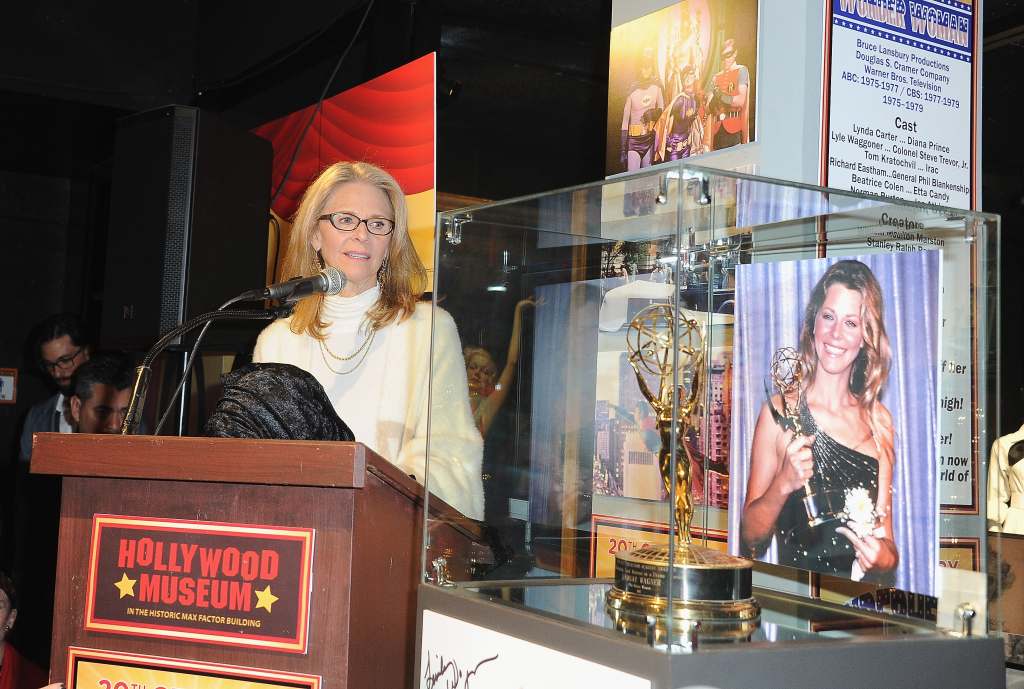
Learning to say no, albeit kindly, honestly and without guilt, became transformative. “You don’t have to be weird about it,” she says. “You can just say, ‘I’d rather not sign right now, if you don’t mind. I really appreciate you coming over to say hi.’ And when it’s said nicely, people understand. But over time I realized I wasn’t dealing with the adult—I was dealing with the inner child. They may be 50 years old, but in that moment, they’re seven. Or 12. They’re just thinking, ‘Oh my God, there she is.’ I get to see all the inner children in the world. If someone stopped me on the street and asked for an autograph, I might say, ‘No, but here, let’s have a handshake.’ That feels better for me, because now we’re two people saying hello to each other. Or I’d say, ‘I won’t sign that, but I’ll give you a hug.’ Then they’re really freaking out. I just stopped lying about being okay when I wasn’t, and once I did that, it all relaxed.”
Not every encounter, however, was simply awkward or touching. One moment in particular still stands out because it crossed every conceivable boundary. “I was at an event in one of the big hotels,” Wagner recalls. “I went into the ladies’ room, went into a stall, and a hand and a pen came under the stall door. I was absolutely in shock. All of a sudden, I had this image of the devil on one shoulder and the angel on the other. The devil was saying, ‘Take the paper, put a little DNA on it and hand it back.’ And the angel was saying, ‘Don’t do that.’ But what I did say was, ‘Can you please wait until I come out?’ And it just dawned on her that maybe she should think about that.”
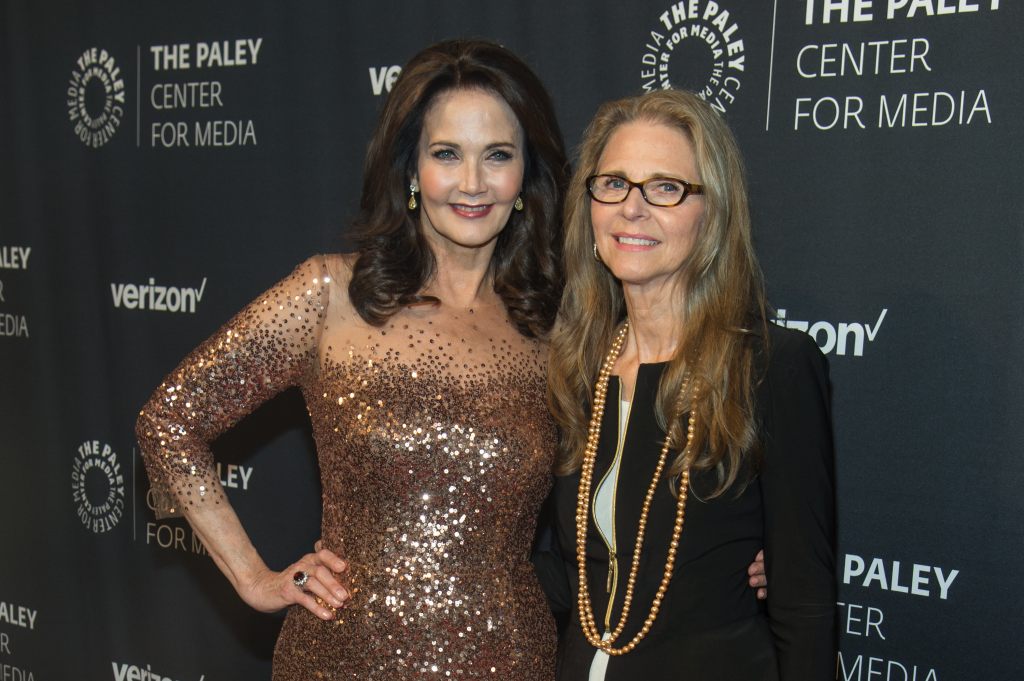
Wagner shakes her head at the memory, half-amused, half-bewildered. “I just don’t understand how people think sometimes,” she says. “But that one… that only happened once. Thank God.”
Even so, moments like that helped clarify something important: the necessity of self-care—not just physically, but emotionally. “Once I learned to take care of myself in those moments,” Wagner says, “it stopped being a big deal. Taking care of yourself isn’t selfish.”
The end of the series
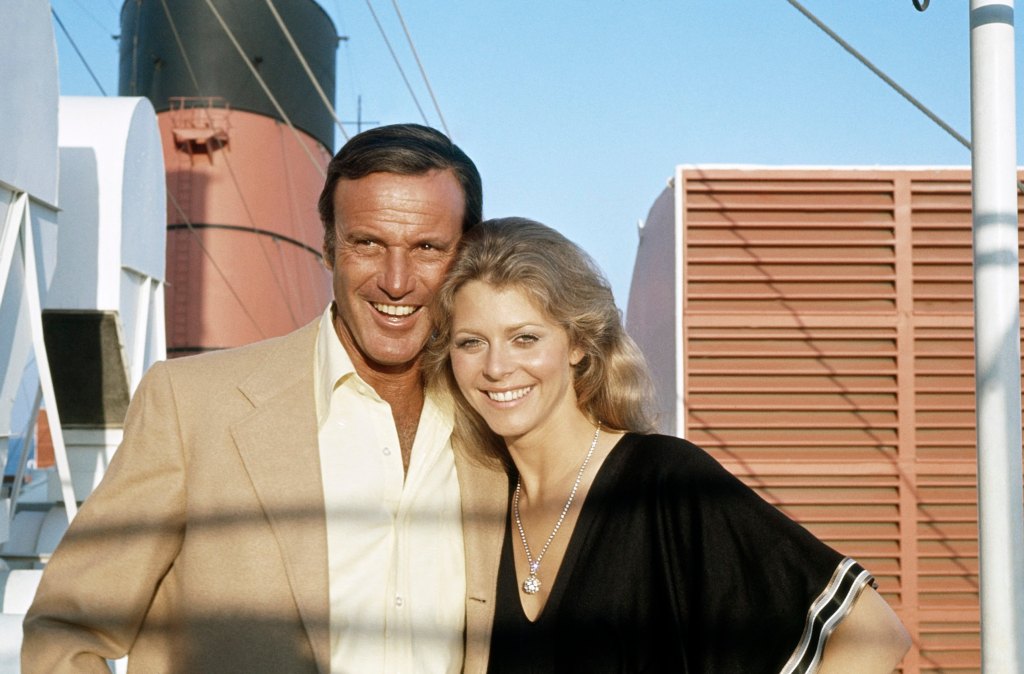
By the time The Bionic Woman reached its final season, the demands of the series were taking a real toll—not just on the character, but on Lindsay Wagner herself. And unlike many television finales, the show’s closing chapter didn’t ignore that reality. Instead, it confronted it head-on.
“I wasn’t like Lee,” she says, referring to Six Million Dollar Man star Lee Majors. “I wasn’t an athlete. It’s grueling enough for people who are fit, but I wasn’t like that at all. Trying to keep up with all the exercise and all that kind of stuff—it was a lot.”
That exhaustion found its way directly into the show’s final episode, which Wagner still considers deeply meaningful. “The last script of The Bionic Woman—the last show—we really capitalized on that,” she explains. “Jaime was burning out. They kept sending her on another mission and another mission and another mission. But she wasn’t somebody who signed up for the military. She literally fell from an airplane and ended up bionic—and property of the military. As a result, she didn’t have a personal life. There was no balance. But in that episode, she tried to quit and they wouldn’t let her. She freaked out. She left and they hunted her down.”
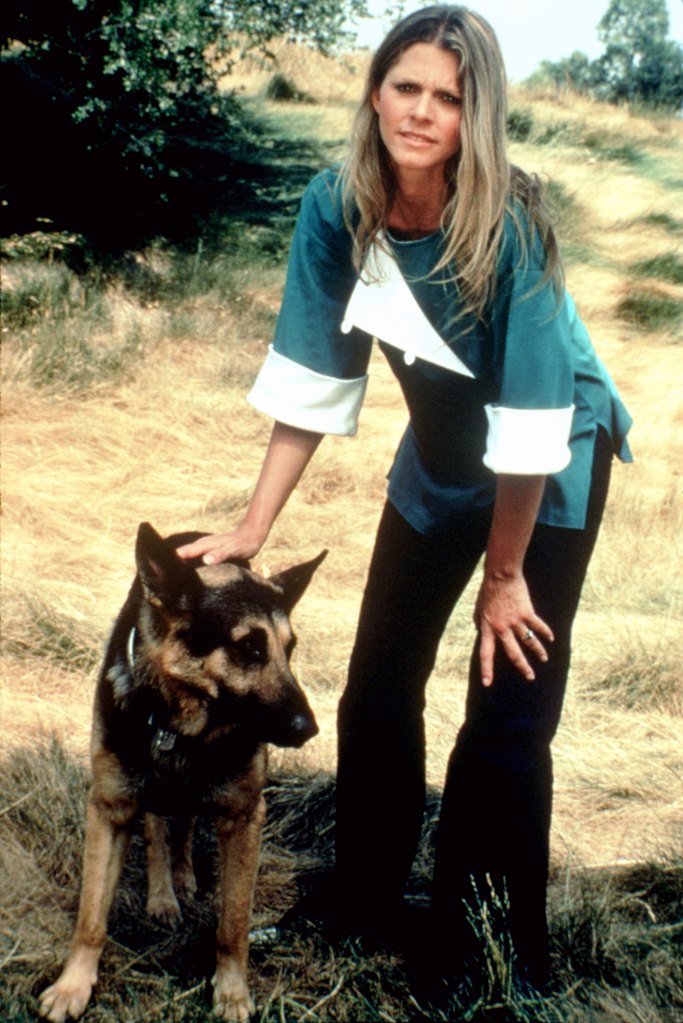
Along the way, Jaime encounters a young boy struggling with his own emotional upheaval—his father has gone blind, and the child can’t understand how to move forward. “As Jaime was helping him,” the actress reflects, “she realized that what she was saying to him was what she needed to hear herself. She realized she needed to learn how to love what she did—and her life—in a different way. She needed to go back and say, ‘I’m not going to run away from you, but I need something different in this relationship. I need to have more of a private life. I need to feel like a person, not just a machine.’ They finally understand what she’s talking about and they work it out so she can still do missions—but also take care of herself.”
The episode—known to fans as “On the Run”—carries another layer of history. Wagner’s personal script copy bears a different title. “The working title was ‘The Last Mission,” she explains. “That’s what it was called the whole time we were making it. So, people will say, ‘That wasn’t the name of the last episode,’ and I say, ‘It was. Until it wasn’t.’”

That script—Wagner’s own—is now part of the limited memorabilia she’s made available in honor of the show’s 50th anniversary at Bionic50.com. “I didn’t open an online store to be a store,” she says. “This was just about connecting with people who can’t get to conventions or can’t travel.” The anniversary offerings also include signed photos and video chats—another way of extending the relationship that has defined her connection to fans for five decades. “For people who want to say hi and visit,” she says, “this is a way to do that.”
For all the cultural weight The Bionic Woman carries, Lindsay Wagner is hesitant to frame her connection to the series in grand terms. Words like legacy, she admits, feel strangely abstract—almost inaccurate—when you’ve been a part of something for so long. “She just lives on,” Wagner says of Jaime Sommers. “People don’t watch it the way everybody watches it—they live with it. And because people still recognize me, still want to talk, it’s always there. My life goes on and it’s still part of my life every day. It’s almost like I have a third arm. It’s just there.”
Only now—during the show’s 50th anniversary—has she begun to experience moments where the idea of legacy truly lands. “People are talking about it differently,” she says. “They’re reflecting things back to me that make me go, ‘Wow… okay. That is pretty cool.’”
Conversation
All comments are subject to our Community Guidelines. Woman's World does not endorse the opinions and views shared by our readers in our comment sections. Our comments section is a place where readers can engage in healthy, productive, lively, and respectful discussions. Offensive language, hate speech, personal attacks, and/or defamatory statements are not permitted. Advertising or spam is also prohibited.