How Jaime Sommers Became TV’s Ultimate Heroine—and Why Fans Refused To Let ‘The Bionic Woman’ Die
Lindsay Wagner, who played the Bionic Woman, Lee Majors, series creator Kenneth Johnson and more remember the '70s sci-fi show that turns 50 in 2026

One of the defining television sensations of the 1970s was The Six Million Dollar Man, the story of astronaut Steve Austin (Lee Majors), who is rebuilt with state-of-the-art bionics after a catastrophic accident leaves him on the verge of death. What began as a trio of TV movies soon evolved into a weekly series built around Steve’s top-secret missions for the OSI, with Richard Anderson’s Oscar Goldman calling the shots. Exciting as the show was, it rarely gave Steve a chance at anything resembling a personal life — a gap Majors himself hoped to see addressed (and would be with a character who would be spun off into The Bionic Woman).
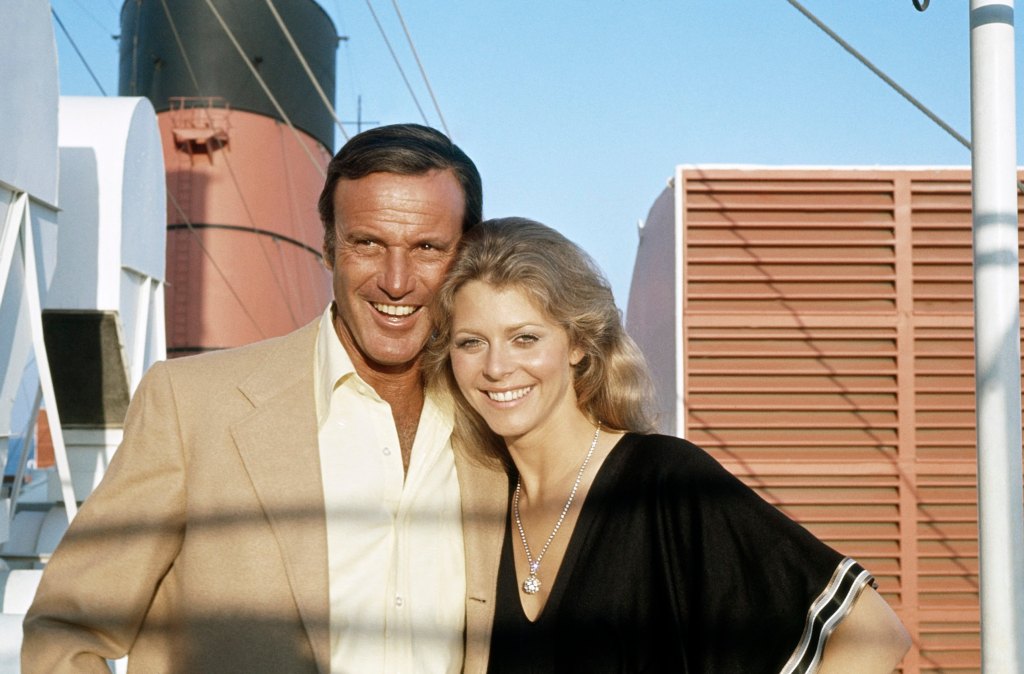
LEE MAJORS: “The first two years of The Six Million Dollar Man were really kind of boring to me. We’d be shooting out of town in an industrial park in a warehouse, or somewhere in an electric plant or out in the woods and I’d be fighting some other robot, or Bigfoot or bunches of bad people, and I just got tired of it. That’s why after two years I said, ‘Guys, I haven’t had a love interest on this show and I’m tired of looking at these hairy-legged guys running around here for two years, almost three.’ And that’s when we brought in Lindsay Wagner, who played the Bionic Woman, to be the first love interest and that went over well.”
That opportunity arrived with the introduction of future The Bionic Woman star Lindsay Wagner as Jaime Sommers, a former love from Steve’s past. Their reunion is warm, romantic, and seemingly destined for happiness—until Jaime suffers a terrible skydiving accident. Desperate not to lose her again, Steve begs Oscar to authorize a risky bionic procedure to save her life. The operation works… at first. But just as audiences were embracing this powerful new pairing, Jaime’s body began to reject her implants. Her death, played out across a two-part episode, stunned viewers and left Steve shattered. Except, of course, it wasn’t the end.
Offscreen, producers realized Jaime had connected with audiences in a way they hadn’t anticipated. Behind the scenes, she was quietly revived for “The Return of the Bionic Woman,” setting the stage for a spin-off series built around her character. The catch? Jaime’s memories—including those of her relationship with Steve—were largely gone, leaving the two to rebuild their connection under far more complicated circumstances.
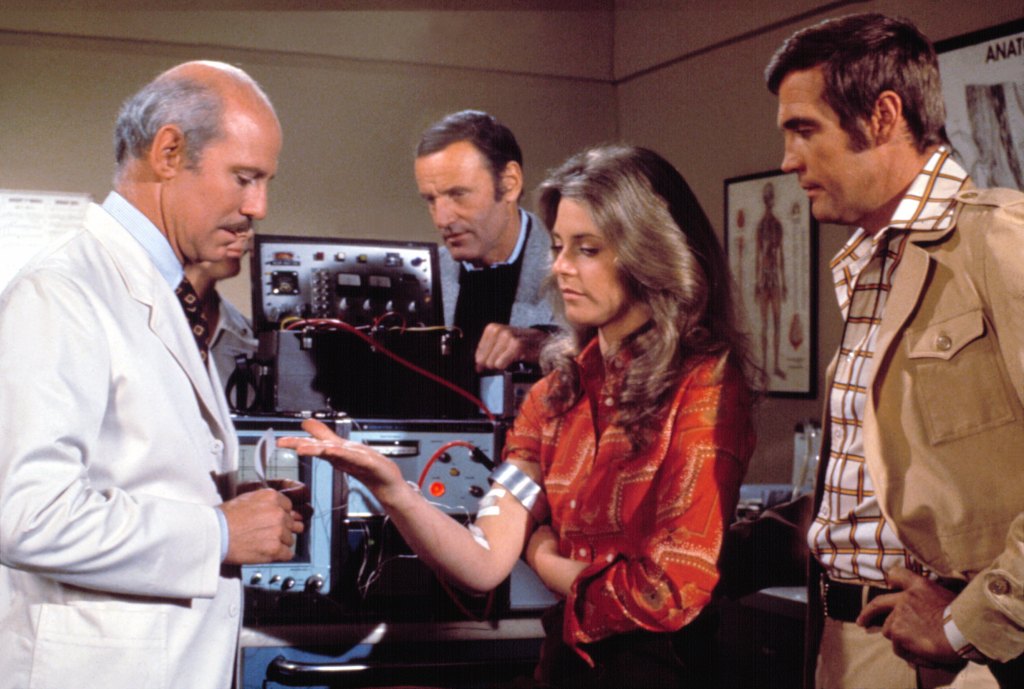
Jaime Sommers was the creation of writer-producer Kenneth Johnson (the creator the original V miniseries from 1983), who reflects on her origins and impact in an exclusive excerpt from his forthcoming autobiography, A Flurry of Sparks: My Life and (Mostly) Fun Times in Show Business, continues the scenario.
KENNETH JOHNSON: “Lindsay Wagner had received nice notices for a feature, Paper Chase, but her career hadn’t really popped. [Executive producer] Harve Bennett and I screened an episode of Steve Cannell’s Rockford Files, where Lindsay shined. She was pretty, but not Hollywood gorgeous. A very believable girl-next-door. She was charming and witty, but what intrigued me most was her excellent spontaneity. Lindsay had the rare ability to seem as though she was totally making up all her lines as she went along — like people do in real life. She had an unstudied, fresh quality and a wonderful dramatic range of colors in her performance. We’d found our Jaime.”
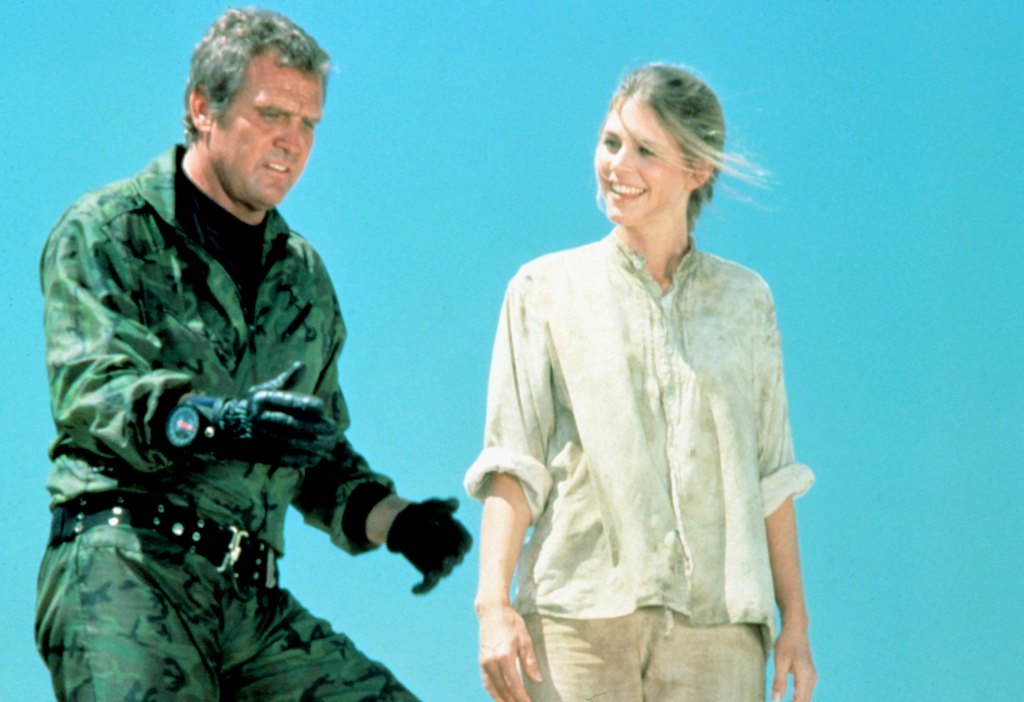
HERBIE J PILATO (author, The Bionic Book: The Six Million Dollar Man & The Bionic Woman Reconstructed): “The audience immediately fell in love with Lindsay as Jaime. But the viewers were subsequently devastated when Jaime died in the second of those two initial episodes, so much so that fans utilized their own bionic strength in numbers—insisting that Jaime return, as played by Lindsay.”
KENNETH JOHNSON: “Thousands of letters poured in to Universal bemoaning—or outright angry about—her death. The most castigating letter came from the head of the psychology department at Boston University, who had essentially said, ‘How dare you!? Why in the world would you create such a potent female archetype and role model— then callously cast her aside?’ In addition to mountains of similar mail, ABC and Universal brass carefully noted that Six Mill ratings and female demographics had spiked so high because of the Bionic Woman. They said to me, ‘Why did you kill her off, Kenny? That was a dumb idea. You need to bring her back to life!’ Oh, like I said from the beginning?”
HERBIE J PILATO: “There was one problem: Universal had let her contract lapse, so the studio suggested other actresses to play the role of Jaime. Names like Sally Field, Stefanie Powers, even Farrah Fawcett were thrown around. But ABC was not having any of it. They rallied, ‘Get Lindsay Wagner!'”
KENNETH JOHNSON: “The first offer was for $2,500 an episode. Lindsay’s manager, Ron Samuels, demanded $25,000 per hour. The studio brass s–t a brick. Never in the history of Western civilization had there been such an outrageous proposal. The world would end before they would ever stand for such an egregious outrage! She was paid $50,000 for ‘The Return of the Bionic Woman.’ However, nobody expected the popularity of the second two-parter. The Six Million Dollar Man shot up into the Top 10 for the first time. The result? Everyone involved demanded a spinoff series.”
HERBIE J PILATO: “Well, guess what? Because Universal had only signed Lindsay to a two-part special extension of her contract, they had to sign a very exclusive deal for a new series and she ended up taking the studio and the network to the bank.”
LINDSAY WAGNER: “Before the new contract was signed, I wanted to stick strictly to movies. Now I can do both, so I won’t be locked into the series.” (Tampa Bay Times, 1975)
KENNTH JOHNSON: “We attempted to maintain a sense of reality to the show with Lindsay’s portrayal of Jaime being the thing that would keep things rooted. Throughout the first season of Bionic Woman, I concentrated on spending lots of time one-on-one with Lindsay. I carefully listened to her speech patterns, her idiomatic phrasing, the way she used words and the words she used. I fashioned Jaime’s dialogue so that it would fit easily into Lindsay’s mouth. Alone in her trailer or at her new (and much larger) house, she and I read through every script together. She’d play Jaime and I’d read all the other parts. She joked that we should actually do an episode with my playing all the other parts.”
HERBIE J PILATO: “It was on Lindsay’s insistence that Jaime had flaws and that she was not seen as indestructible or overpowering. She knew her audience and made sure that the scripts and dialogue of The Bionic Woman catered to her own sensitivity as a human being.”
LINDSAY WAGNER: “I’m flattered to be playing the lead in a dramatic television series. Except for Angie Dickinson, the other actresses are starring in situation comedies. And there’s a difference between the character I play and Angie’s. She’s surrounded by an entourage of men who help her get out of trouble. I play a school teacher who is called upon by the government for dangerous assignments. I’m making sure the Bionic Woman isn’t a fighter, but she does have a lot of physical adventures that keep me fit and the show has been fun so far. I’m a dramatic actress and not really emotionally exhausted at the end of the day like I was in my two movies, Second Wind and Two People. But I think it’s about time little girls had a heroine of their own.”
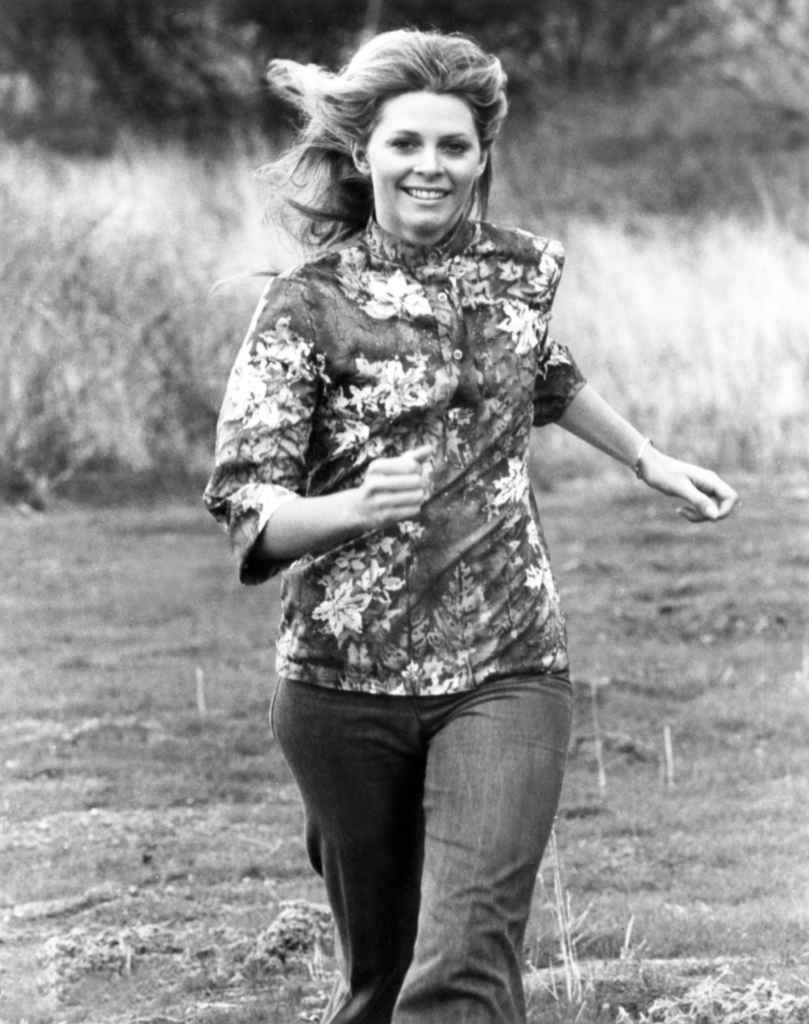
HERBIE J PILATO: “Lindsay was very aware that there were many young fans watching the show. For that reason, she felt a certain responsibility to that sector of the viewers at home. She also wanted to be a true role model for females of all ages, making certain that many times, Jaime would utilize her wit and humor to help solve any conflict she may have been dealing with. Certainly, she would employ her special bionic abilities, but only as a last resort. Jaime didn’t like guns or violence, but she also didn’t put up with anyone’s inauthentic or hurtful actions or behavior. And she called them on it. While Jaime would each time put thugs away, she was charming millions of TV viewers with her own special powers in the guise of her endless charm as an actress and as a human being.”
LINDSAY WAGNER: “Why shouldn’t little girls have a symbol? Little boys have lots of them. I know that that sort of thing really affects children. They really pay attention to their idols. Little kids have been coming up to talk to me and it’s kind of scary, but rather nice. I never thought about that kind of thing until this all started happening. I had an idol, too; someone who had nothing to do with bionic superpower: Sophia Loren. I hope the Bionic Woman can be something little girls can really get off on. But I want Jaime Somers to be a lady. I know she’s a fantasy character, but I don’t want her to be a cartoon, a Batwoman. I want her to be a person who happens to have added powers. It’s not feminine to walk up and bash somebody in the face, and I’m still a woman who likes to keep her femininity. I have no concept of who’s in our audience, but I’m hoping it includes men and boys.” (Austin American-Statesman, 1976)

The Bionic Woman wrapped its run in 1978, and Lindsay stepped back for a time to catch her breath after the intensity of the series. It didn’t take long, though, before she returned to acting.
LINDSAY WAGNER: “The snobbishness of movies toward television is disappearing, thank God. An actor can work in both now and that’s what I intend to do. I feel strongly about remaining in television because it is the most influential of the media. There are so many opportunities that aren’t being taken. So much can be done in television once people in the industry begin to care about something besides bucks and ratings.”
It’s remarkable to think that The Bionic Woman has been off the air for nearly 50 years, yet its presence hasn’t faded. Lindsay and Lee Majors continue to celebrate the series, participating in DVD releases and appearing at conventions to revisit that world with fans. Not to mention a trio of reunion TV movies with Lee and Lindsay: The Return of the Six Million Dollar Man and the Bionic Woman (1987), Bionic Showdown: The Six Million Dollar Man and The Bionic Woman (1989) and Bionic Ever After (1994). And while no one can pinpoint exactly why the show endures as strongly as it does, Lindsay has certainly shared her own thoughts on what keeps The Bionic Woman alive.
LINDSAY WAGNER: “I think part of the success of it had a lot to do with breaking molds in our culture. It was really the first show that had a woman being in full power with no excuses and not having to be a sidekick to a man. It was also at a time when our culture was undergoing a very profound awakening with the women’s movement.”
Conversation
All comments are subject to our Community Guidelines. Woman's World does not endorse the opinions and views shared by our readers in our comment sections. Our comments section is a place where readers can engage in healthy, productive, lively, and respectful discussions. Offensive language, hate speech, personal attacks, and/or defamatory statements are not permitted. Advertising or spam is also prohibited.