The Truth About ‘Mister Ed’: Why Actor Alan Young Invented the Peanut Butter Talking Lie
Wilbur Post didn't want to disappoint children, so he made up a story that fooled us all for decades

Television in the 1960s had an unusually high tolerance for strange ideas. Audiences happily followed suburban witches (Bewitched), bumbling secret agents (Get Smart), astronauts from deep space (My Favorite Martian) and castaways who somehow never got rescued (Gilligan’s Island). Against that backdrop, the idea of a talking horse didn’t feel quite as outrageous as it sounds today. In fact, it fit right in, and if viewers had any questions about the concept, most of them boiled down to one simple thing: who was the Mister Ed actor and voice?
It wasn’t an unreasonable question considering that was the central gamble behind Mister Ed, a sitcom built around a simple but slightly unnerving premise: a perfectly ordinary man discovers that his horse can talk—but only to him. Wilbur Post, an earnest architect played by Alan Young, spends the series trying to navigate everyday life while being constantly undermined by a wisecracking animal who refuses to utter a single word in front of anyone else. From the outside, Wilbur looks unhinged. From Ed’s point of view, that’s half the fun.
What could have been a novelty that wore out its welcome after a season instead ran for five and a half years, producing 143 episodes between 1961 and 1966. The reason was deceptively simple: the show understood its own absurdity and leaned into it. Ed wasn’t just a gimmick, but was, instead, needy, manipulative, jealous, occasionally generous and often more emotionally honest than the humans around him. He behaved less like a magical creature and more like a roommate who just happened to live in a stable.

There was never any guarantee that Mister Ed would work. Despite Alan Young’s steady, likable performance, the series ultimately rose or fell on whether audiences accepted a horse as a full-fledged comic character. Somehow, they did. And once viewers bought into that central relationship, the show had room to run—or gallop, as it were—not because the premise was silly, but because the execution was smart enough to make it feel real.
Meet the real Mister Ed

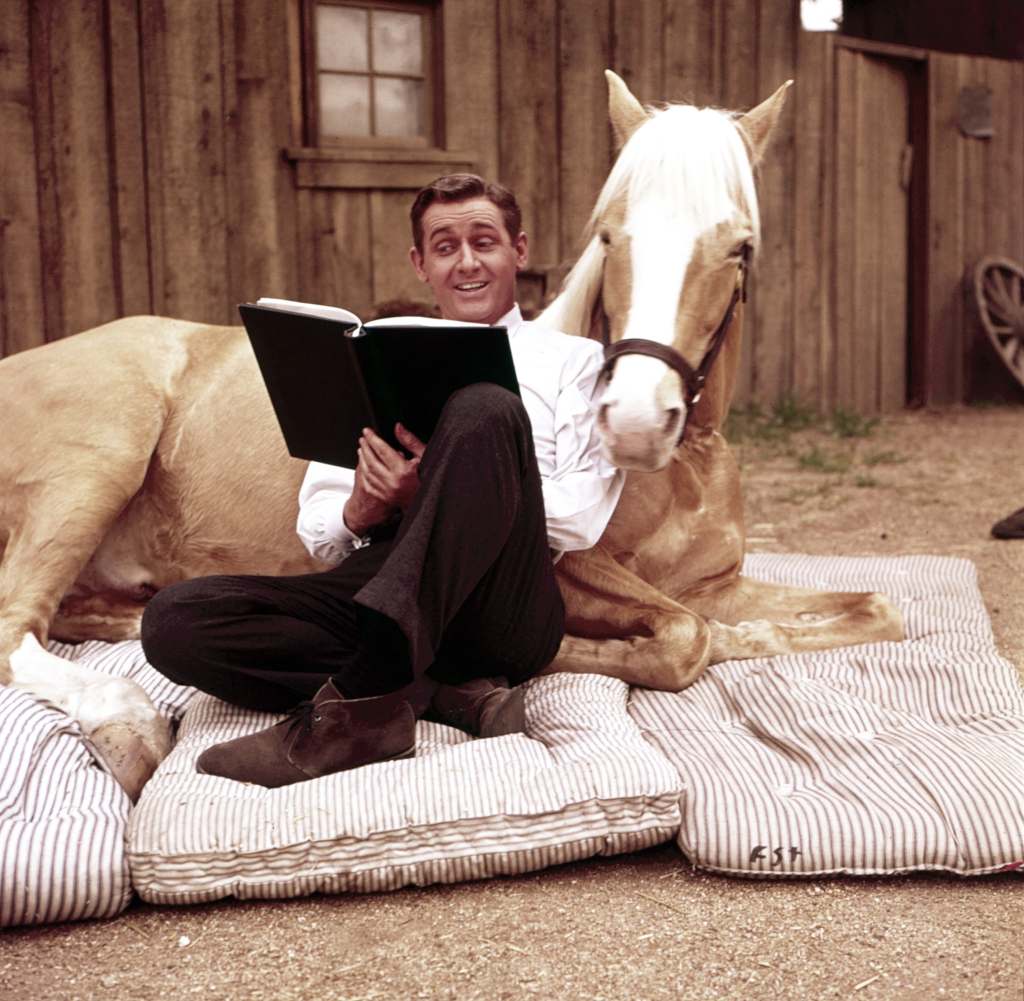
This will no doubt come as a shock, but the horse who played the title character, Bamboo Harvester (how’s that for a name?), did not actually speak—though he certainly looked like he did. The horse came from animal trainer Lester Hilton, who, according to Alan Young, had a very specific philosophy about what made the right kind of animal performer.
“As he taught me later,” Young recalled to the Television Academy Foundation, “when you want a horse, you don’t want a trick horse. You want a horse that’s nosy, inquisitive and docile. And that’s what Ed was. He was the nosiest character, but very quiet, very docile. So that’s how we got Ed, but that wasn’t his real name. His name was Bamboo Harvester, and he’d never acted before. I think he was a parade horse and had just done ‘horsey’ things before, so it was quite novel.”
One of Young’s fondest memories was the first time Bamboo walked onto the set and immediately began looking around “as nosy as can be.” The horse’s calm demeanor, even under pressure, made a lasting impression.
“One time, I was sitting in the chair with Les, the trainer, and he was holding Ed by the reins. The set had these great big light bulbs; one of them fell and it was like a grenade going off. I went up in my chair, Lester jumped and Ed simply raised his head and looked, like, ‘What was that?’ It was the Greta Garbo look. That’s the way she looked—she turned slowly and that was always Ed’s reaction. It was beyond his comprehension, so he wouldn’t bother with it.”
Who was the voice of Mister Ed?
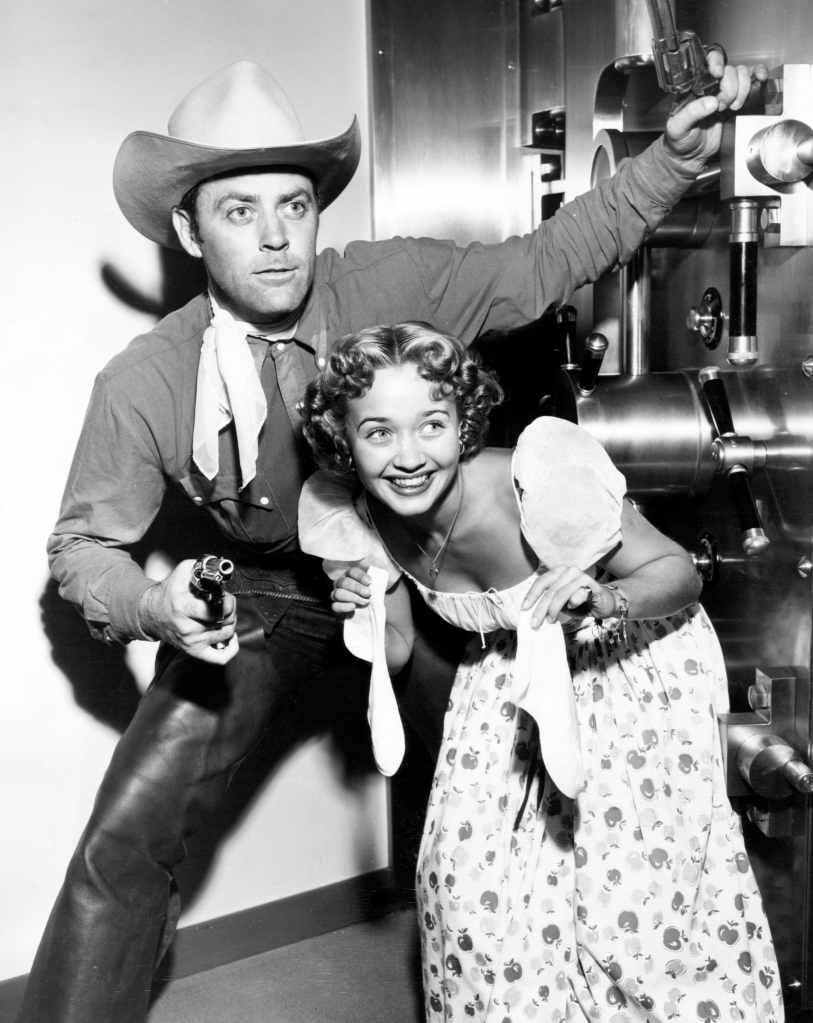
Although the credits jokingly suggested otherwise, Mister Ed was brought to vocal life by Allan “Rocky” Lane, a prolific actor whose career stretched from the late 1920s through the mid-1960s. Lane appeared in dozens of films—many of them low-budget Westerns and action pictures—and built a solid reputation as a dependable B-movie leading man. By the time Mister Ed came along, he was seasoned but struggling.
“Rocky Lane had been a big Western star,” Young explained. “But when Westerns had kind of faded away, he’d faded with them and at the time was sleeping on Lester Hilton’s couch. So, we’re taking photograph publicity pictures and suddenly we heard this voice come out, ‘Hey, Lester, where do you keep the coffee?’ And everybody looked around and said, ‘That’s Ed’s voice!’”
The producers quickly made Lane an offer—but he had one condition, says Young. “So they went to him and asked if he wanted to do the voice. He said he would, but said, ‘I was a star once. People will know I’m doing the voice of a horse.’ So they said, ‘Okay, we won’t mention your name. You just do it.’ Well, when the show clicked, Rocky came to them and said, ‘I’d like credit for this,’ but in the credits it says Ed plays himself and kids believe that, so they couldn’t change it. They gave him a raise and he was happy, but he never got any credit for that voice.”
As a result, Lane’s most recognizable contribution to popular culture went largely uncredited during his lifetime. While his on-screen work faded from public memory, his voice lived on—wisecracking from a stable and becoming one of television’s most distinctive unseen performances.
So how did Mister Ed talk? The secret behind the lip-syncing magic
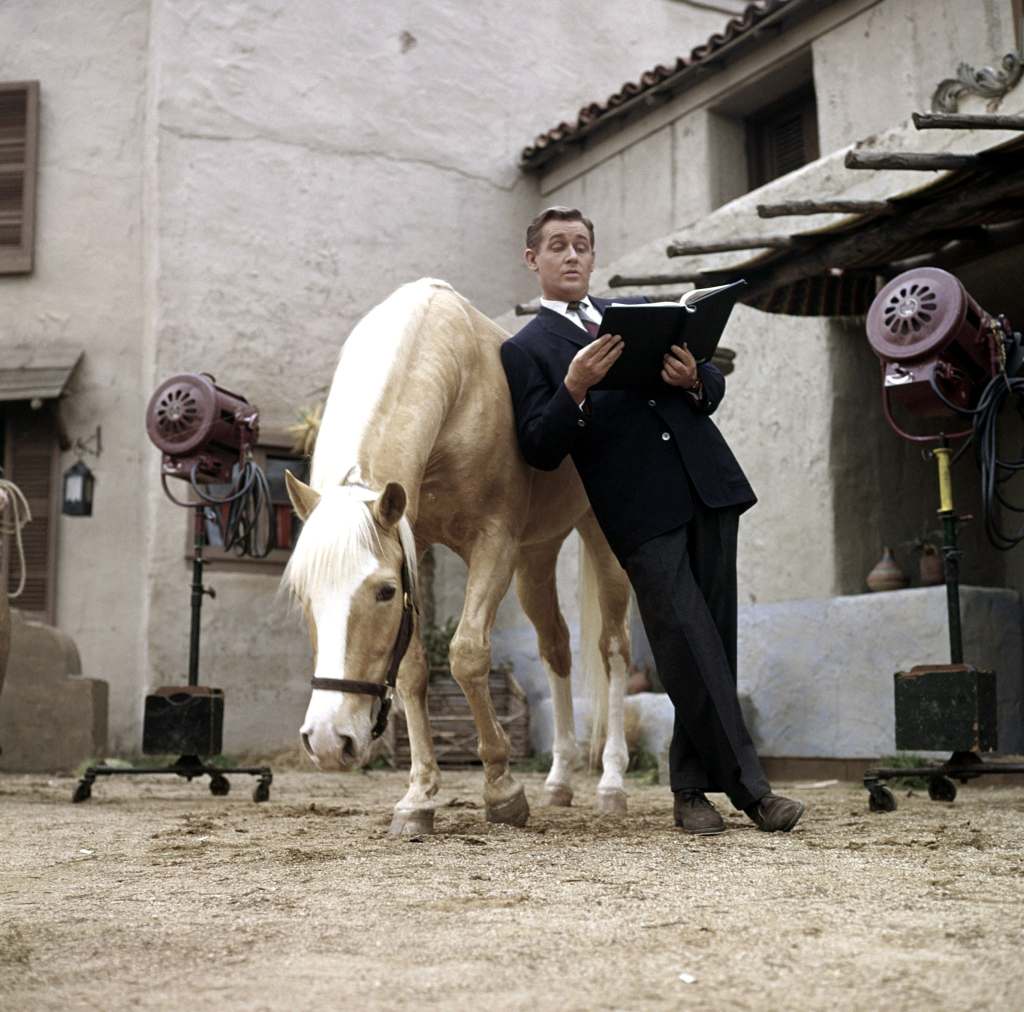

Which brings us back to the question audiences kept asking: how did they actually make it look like Mister Ed was talking? Today, it would be a simple visual-effects trick, but in the early 1960s, the solution had to be practical. The illusion relied on a combination of methods. Lane supplied the voice, but the key was getting Bamboo’s mouth to move in sync. Early on, this was accomplished with a thin, harmless thread—an approach already used in the Francis the Talking Mule films—that encouraged the horse to move his lips at the right moments. It wasn’t painful or cruel, just another bit of low-tech movie magic.
As the series went on, the process became easier. Bamboo was well-trained and responsive, and mechanical assistance wasn’t always necessary. Over the years, however, another explanation entered the legend: peanut butter. The story was that it was sometimes placed in the horse’s mouth, prompting him to move his lips as he tried to clean it off. Whether that method was used regularly or only sparingly has never been fully confirmed—but it became part of Mister Ed lore all the same.

Speaking to Cinemaretro.com, Young explained how that myth took hold. “[The kids] would write and ask if the horse really could talk! Al Simon and Arthur Lubin, the producers, suggested we keep the method a secret because they thought kids would be disappointed if they found out the technical details of how it was done, so I made up the peanut butter story, and everyone bought it. Ed actually learned to move his lips on cue when the trainer touched his hoof. In fact, he soon learned to do it when I stopped talking during a scene, which actually could be a bit of a problem. Ed was very smart and, despite what some people have written about him, he was the gentlest horse you ever saw.”
In the end, what made the illusion work wasn’t any single trick. It was the timing, the editing, the voice work and—above all—Alan Young’s commitment to playing every exchange completely straight. Put it all together, and audiences didn’t worry about how Ed talked. They simply accepted that he did and happily listened in.
Conversation
All comments are subject to our Community Guidelines. Woman's World does not endorse the opinions and views shared by our readers in our comment sections. Our comments section is a place where readers can engage in healthy, productive, lively, and respectful discussions. Offensive language, hate speech, personal attacks, and/or defamatory statements are not permitted. Advertising or spam is also prohibited.