‘Yellowstone Is Bonanza on Steroids’: The Shockingly Dark Connection Between Two Western Dynasty Classics
This classic 1960s TV hit walked so Taylor Sheridan's dark Western series could run

Key Takeaways
- 'Yellowstone' and 'Bonanza' both explore the brutal cost of family dynasties.
- Western historian Rob Word calls 'Yellowstone' '"Bonanza" on steroids.'
- A 1962 'Bonanza' episode eerily foreshadowed 'Yellowstone's darkest themes.
When watching Yellowstone, it’s easy to think its creator, Taylor Sheridan, more or less reinvented the television Western by taking ranch life and transforming it into ruthless warfare surrounding dynasties. And to be fair, Sheridan has successfully managed to push the genre into darker territory, removing the romance that has generally surrounded the family ranch, only to replace it with violence and power struggles. But the reality is that that darkness has always been there for the TV Western, going as far back as the Lorne Greene series Bonanza.
The ‘Yellowstone’-‘Bonanza’ connection explained
Legacy has long been a part of the Western, with powerful patriarchs building personal empires in hostile territory with the intent that future generations will protect what they labored so hard to create. For decades, classic TV took a gentler look at that concept with clear-cut heroes and morality, and families that tended to survive each week’s crisis with their bonds intact. Yet beneath all of that, something darker was there.
That’s where Yellowstone and Bonanza unexpectedly connect. “These are violent shows from Taylor Sheridan,” observes Western historian Rob Word, creator of the A Word on Westerns YouTube channel. “Yellowstone is Bonanza on steroids. In Bonanza, you had Pa and then you had the sons, all well-defined, but good people. Well, Ben Cartwright becomes John Dutton in Yellowstone and everybody’s dysfunctional on that show, but it’s the same umbrella of family.”
The ‘Yellowstone’ Season 3 finale that redefined ‘ranch warfare’
The two series obviously come from completely different eras of television, but both recognize the fact that building a family empire is one thing, while holding onto it can come with an awful price from the people who are intended to inherit it. That point is clearly seen in the explosive Season 3 finale of Yellowstone, “The World is Purple.”
By that point, three seasons of episodes have shown the Dutton family defending its land from developers, politicians and corporate interests determined to take a piece of their Montana holdings. And Kevin Costner’s John Dutton isn’t presented as a traditional noble rancher, conveying the essence of more of a battlefield general, proving himself fiercely protective and fully aware that only warfare can preserve the Yellowstone ranch.
All of that presents itself in brutal fashion during that finale as (spoiler alert) Beth opens a package and is caught in a devastating explosion, Kayce is pinned down in a hail of gunfire and John is shot multiple times and left bleeding on the roadside after attempting to help a stranded woman. While the violence is shocking, it also drives home the lesson that Sheridan has built: the ranch is viewed as territory rather than a homestead.
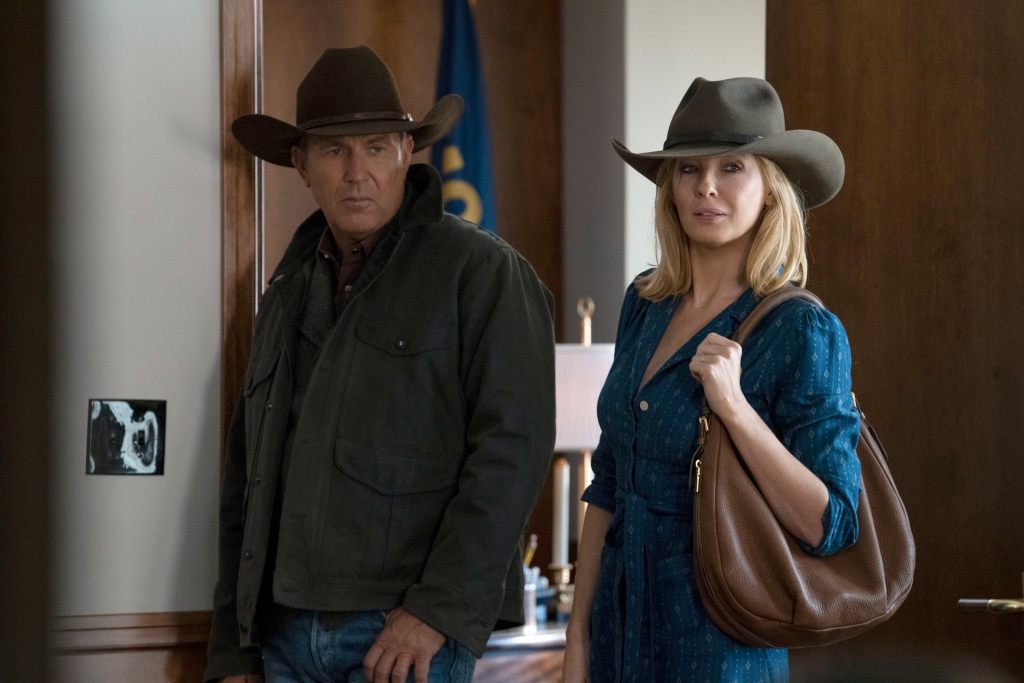
In Yellowstone, the Duttons defend their land like an empire under siege. Rather than being a symbol of achievement and freedom, it becomes a source of endless conflict, frequently ending in bloodshed.
Suggests Word, “I think it goes back to why people like Westerns—you’ve got somebody who is in control, a patriarch, a matriarch, whatever it’s going to be. In the traditional Western, it was always the right decision being made. Now you’ve got heroes that are darker and there’s no clear-cut good guy and bad guy, though they have good elements about them. Of course, in the older tropes, the good guys win, which is a bit more satisfying for a lot of viewers.”
‘Bonanza’s ‘The Crucible’: The episode that still shocks viewers
That may feel like a modern reinvention of the genre, but Bonanza explored similar territory decades earlier in one of its most unsettling episodes, “The Crucible.”
Classic TV comfort was the role that Bonanza played for viewers for much of its run. Ben Cartwright and his sons, Adam (Pernell Roberts), Hoss (Dan Blocker) and Little Joe (Michael Landon) were decent and dependable people. Their ranch, the Ponderosa, was one of television’s great symbols of stability, family and moral order. But, in looking at “The Crucible,” it seemed to shatter the illusion it had so carefully constructed.
According to Word, the episode was born out of Roberts’ continuing complaining about the show, the lack of challenges it presented to an actor and so on. In response, writer John T. Dugan came up with this scenario, and series creator David Dortort enlisted the aid of his friend, Lee Marvin, who, while more focused on building his film career, agreed to appear on Bonanza. In the end, given what Marvin brought to the part, Pernell got his wish in terms of having to reach greater depths as an actor.
In the episode, Adam Cartwright is traveling alone through the desert when (another spoiler alert) he’s ambushed, robbed and left to die in the heat. Exhausted and barely conscious, he is discovered by Peter Kane, portrayed with unnerving intensity by Marvin, a prospector living in isolation in a barren canyon. At first, Kane appears to be Adam’s salvation, but instead becomes his tormentor.
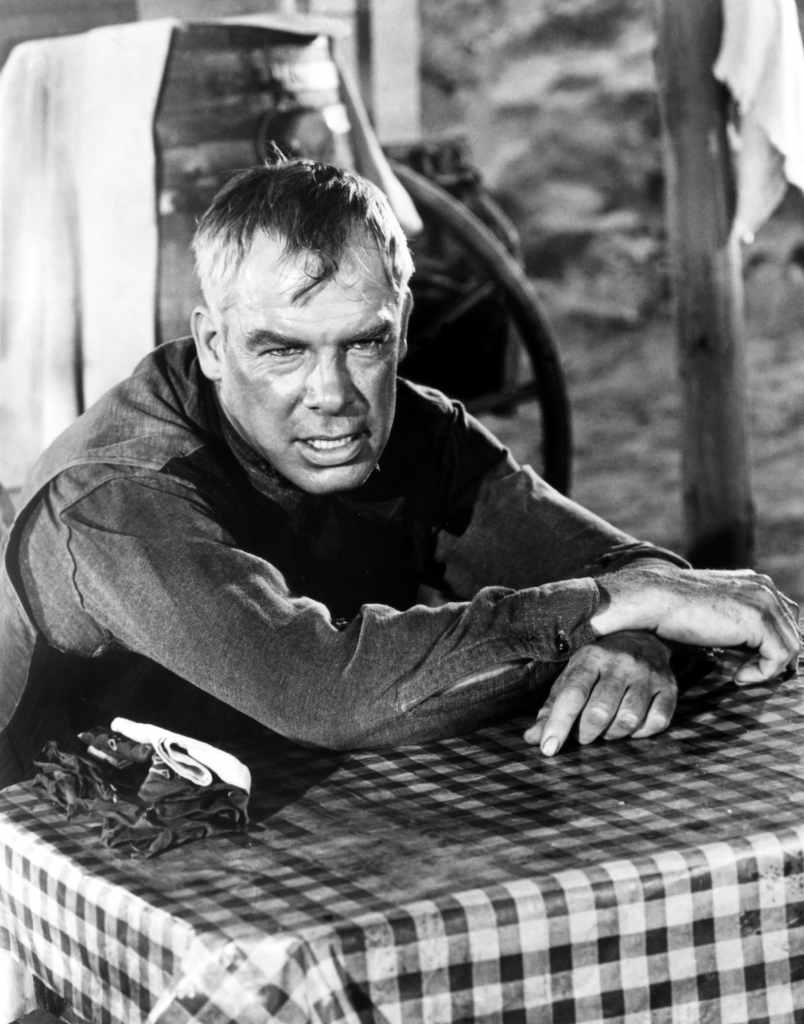
Kane takes Adam back to his crude camp and quickly reveals his true nature. Bitter, unstable and consumed by resentment, he becomes obsessed with breaking the oldest Cartwright son physically and psychologically. He withholds food and water, imprisons him in a cave and forces him into a brutal fight for survival. For Kane, this isn’t just cruelty—it’s about tearing apart everything Adam represents. He wants to prove that beneath the education, status and strength associated with the Cartwright name, Adam is no different from anyone else when stripped down to pure survival.
This is what makes “The Crucible” so powerful, and results in it being such a different sort of episode than most that Bonanza produced. And this is where the connection to Yellowstone becomes clear: both strip away the mythology surrounding the concept of the Western dynasty, asking whether or not land/ranch ownership actually provides security or simply brings with it new forms of danger.
The threat in Yellowstone is obviously far more modern, arriving in the form of developers, corporations and political rivals, while in Bonanza, it’s more savage and personal, taking the form of a broken man consumed by bitterness and using it as a weapon. But both stories also expose how fragile these family empires really are. And it absolutely connects the Duttons and the Cartwrights.
Why the Western dynasty genre continues to captivate audiences

So much may have changed in the half-century between when the shows were produced, whether it be the setting, tone or television itself, but the deeper truth is apparent: family empires are a fragile thing, and there reaches a point where preserving the dynasty becomes more destructive than possibly losing it.
The biggest difference between the two shows lies in how they handle the aftermath. On Yellowstone, the violence and trauma continue to shape the characters long after the bloodshed ends, influencing not only the main series but its expanding universe of spinoffs as well. On Bonanza, Adam Cartwright’s trauma in “The Crucible” effectively ends with the episode itself, reflecting the self-contained storytelling of classic television. Yet both remain powerful explorations of the same enduring truth: protecting a family empire always comes at a cost.
For Word, all of this talk about Yellowstone and Bonanza proves one thing: “The Western is not dead. Keeping it alive are people who understand the genre and care about it, and are able to create real-life-blood characters who are compelling for people to watch.”
Conversation
All comments are subject to our Community Guidelines. Woman's World does not endorse the opinions and views shared by our readers in our comment sections. Our comments section is a place where readers can engage in healthy, productive, lively, and respectful discussions. Offensive language, hate speech, personal attacks, and/or defamatory statements are not permitted. Advertising or spam is also prohibited.