Octopuses May Actually Dream in Their Sleep—and the Science Behind the Phenomenon Is Fascinating
Research indicates octopuses may dream in their sleep, and the science behind the phenomenon is quite interesting

If you’ve ever wondered what goes on in the minds of ocean creatures, this discovery might make your jaw drop. Scientists have found that octopuses appear to enter a sleep state that looks remarkably similar to the REM sleep we humans experience when we’re dreaming. Those clever eight-armed animals that already amaze us with their intelligence? They might be having little underwater dreams of their own.
An octopuses skin puts on a light show while they snooze
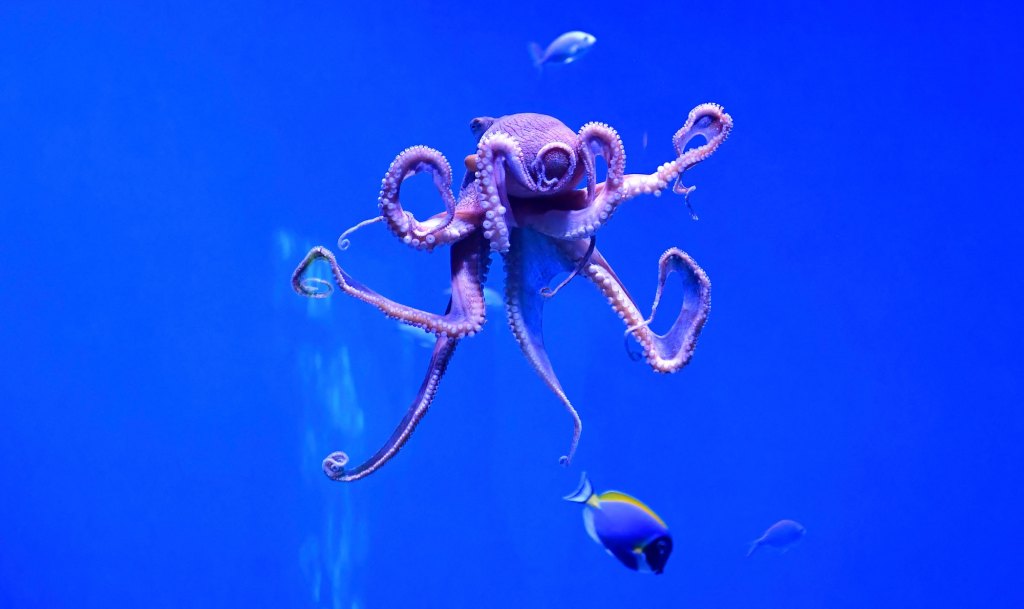
Here’s where the science gets truly captivating. Octopuses cycle through two sleep states: quiet sleep and active sleep. Quiet sleep is pretty much what it sounds like—the octopus stays still and pale. But active sleep? That’s when things get remarkable.
During active sleep, octopuses display rapid changes in skin color and texture, visible twitching and noticeable body movements. Imagine an octopus lying on the ocean floor, seemingly out cold, then suddenly cycling through a kaleidoscope of colors and patterns. Graduate researcher Sylvia Medeiros described what she observed: “For around 40 seconds, they dramatically change their color and their skin texture. Their eyes are also moving,” per NPR.

Those viral clips you may have spotted online of sleeping octopuses flashing through colors like a living mood ring? This is exactly the phenomenon scientists are now studying closely.
So are they really dreaming?
This is the big question, and researchers are being thoughtful with the answer. A team at the Okinawa Institute of Science and Technology confirmed that octopuses are genuinely asleep during this active phase rather than simply resting, and that the state closely resembles REM sleep in vertebrates, including humans, per The Guardian.
For a bit of context: REM sleep in humans is characterized by rapid eye movements, irregular breathing and increased brain activity that closely resembles wakefulness, according to the National Sleep Foundation. It’s strongly associated with dreaming and memory consolidation, learning and emotional processing.
According to neuroscientist Sam Reiter, the findings are consistent with the possibility of dreaming, though they don’t provide definitive proof. “We can associate certain skin patterns during wakefulness to specific situations: hunting, social displays, threat displays, camouflage to different sorts of environments. We show that these patterns reappear during active sleep,” he said.
He went on: “So, if we are looking at something like dream, and I repeat this is a possibility we do not prove in this study, they would resemble a pseudo random walk over different types of waking experiences.”
In plainer terms? If octopuses are dreaming, their dreams might replay bits and pieces of daily life—hunting, hiding, showing off.
A 500-million-year mystery surrounding the octopus
Here’s a detail that really stopped us in our tracks: octopuses and mammals are separated by more than 500 million years of evolution, per NPR. That means this REM-like sleep state may have evolved completely independently in two wildly different branches of life. The presence of a REM-like state in octopuses suggests complex sleep patterns may not be unique to vertebrates.
Marine biologist Carrie Albertin explained why this finding matters so much. Cephalopods are particularly valuable for research because “they are a separate example of the evolution of large brains,” offering insights into the biological requirements of complex nervous systems.
These dreams are short but apparently necessary

Neuroscientist Sidarta Ribeiro noted, “If they are dreaming, they are dreaming for up to a minute.” Laboratory observations showed active sleep episodes occur roughly every 30 to 60 minutes and last around 40 to 60 seconds. Medeiros explained that due to the brief duration, any potential dreams are unlikely to be complex or symbolic, though they may still support memory consolidation and learning.
And when octopuses are deprived of sleep, they enter active sleep more quickly and experience it more frequently — a sign that this state is homeostatically regulated. They need it.
Albertin put it plainly: “It’s really hard to deny that something is going on, but it’s really important to actually quantify it and do the study … so that you can characterize it in a rigorous way.”
What we know (and what we don’t)
Scientists can’t definitively say octopuses dream. The observed activity could reflect internal neural processes, such as refinement of camouflage abilities. But the behavioral and neurological similarities to vertebrate sleep are striking—and the possibility that these ocean creatures share something so deeply human with us is the kind of discovery that makes you look at the natural world with fresh wonder.
Conversation
All comments are subject to our Community Guidelines. Woman's World does not endorse the opinions and views shared by our readers in our comment sections. Our comments section is a place where readers can engage in healthy, productive, lively, and respectful discussions. Offensive language, hate speech, personal attacks, and/or defamatory statements are not permitted. Advertising or spam is also prohibited.