Scientists Found a Turquoise Pit Viper and a Flying Snake Hiding in Cambodia’s Unexplored Caves
Researchers just found new species in Cambodia’s caves — snakes, geckos and creatures never seen before.

Thousands of miles of limestone caves in Cambodia’s Battambang province have barely been mapped, let alone searched for wildlife. When researchers finally went looking — at night, with torches, across razor-sharp rock — they found creatures that exist nowhere else on Earth.
A turquoise pit viper. A flying snake. Several geckos. Two micro-snails. Two millipedes. All new to science.
The discoveries came from a survey of 64 caves across 10 hills in northwest Battambang, conducted from November 2023 to July 2025. UK-based Fauna & Flora led the effort alongside Cambodia’s Ministry of Environment and local field experts. Their report was published Monday.
The viper and three of the geckos are still being formally named and characterized. The others have been officially recognized.
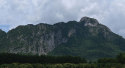
Each cave is its own ‘island laboratory’
What makes this region so remarkable isn’t just what’s inside the caves — it’s how isolated they are from one another. The karst landscape, shaped from ancient limestone, creates hills and cave systems that function as sealed-off worlds. Each one evolves on its own terms.
Lee Grismer, an evolutionary biologist at La Sierra University, put it this way: “Think of it as their own vignette of biodiversity, where nature is performing the same experiment over and over again independently.”
“We go to these separate places and analyse the DNA of the species, and we see how the experiment has run. Some look alike, some look different, and by analysing this we can get an idea of what the driving forces are behind the way they evolve,” Grismer said.
One example: the striped Kamping Poi bent-toed gecko, Cyrtodactylus kampingpoiensis, found in 2024. Four different populations of this single species are already evolving differently from one another.
Searching by torchlight
Pablo Sinovas, who led the Fauna & Flora team, described the fieldwork to CNN. Surveys ran day and night, with local researchers playing a key role. The nighttime work is where things got interesting.
“Fun part – look for creatures at night, when they come out of hiding,” Sinovas said. “After sunset, spend hours traversing sharp, rocky terrain with torches, looking around every crevice, caves, rocks, branches, vegetation. Kind of a nice search party.”
Some caves hold up to 1 million bats. The research team did not enter large bat colonies due to health concerns.
Beyond the new species, the survey also documented globally threatened animals already known to science, including the Sunda pangolin, green peafowl, long-tailed macaque and northern pig-tailed macaque.
Karst landscapes make up 9% of Cambodia — roughly 20,000 square kilometers (7,722 square miles) — and a large portion remains unknown to science. On just one karst hill in Banan district, 14 previously unsurveyed caves were registered during the effort.
“There is more exploration to be done,” Sinovas said. “Only scratched the surface in terms of biodiversity waiting to be discovered in Cambodia.”
A race against cement and overtourism
These caves aren’t just wildlife habitat. They’re also used as shrines, meditation spaces and ritual sites, visited by tourists and pilgrims. But the karst landscape faces mounting threats from poorly planned cement extraction, overtourism, wildlife hunting, logging and wildfires.

“Growing demand for cement and karst limestone is useful for making cement,” Sinovas said. “But if you destroy area where species live, and those species don’t live anywhere else, could lead to extinction, some species not even described yet.”
Sinovas added that Fauna & Flora is “working with government to ensure important areas better protected. Ongoing discussions on giving this area protective status for future preservation.”
As Grismer framed it: “If we are truly going to conserve the biodiversity on this planet, we need to understand what is there. We can’t protect something if we don’t know it exists.”
Conversation
All comments are subject to our Community Guidelines. Woman's World does not endorse the opinions and views shared by our readers in our comment sections. Our comments section is a place where readers can engage in healthy, productive, lively, and respectful discussions. Offensive language, hate speech, personal attacks, and/or defamatory statements are not permitted. Advertising or spam is also prohibited.