Researchers Exploring Thailand at Night Discovered a Creature Never Seen Before
A tiny nocturnal gecko hiding in Thailand’s karst terrain has been confirmed as a new species.

Picture this: scientists walking through a lush stretch of eastern Thailand at night spot something unexpected clinging to the rocks. A tiny creature with enormous brown eyes, bumpy skin and a triangular little head stares back at them.
It looks unlike anything they’ve seen before — and for good reason.
After careful study, they confirmed it’s a new species of gecko, one that had been quietly living its life in the dark without anyone knowing it existed.
A gecko with a face you won’t forget
The species has been formally named Cyrtodactylus khlonghatensis, but you can call it the Khlong Hat bent-toed gecko. That name honors Khlong Hat District in eastern Thailand, the only place where the gecko has been found so far.
So what does this little guy look like? At just over 7 inches long, it’s small but not the tiniest gecko around.
What catches your eye first is that triangular-shaped head paired with large, slightly protruding brown eyes that give it an almost startled expression — like it’s perpetually surprised you noticed it. (Honestly, relatable.)
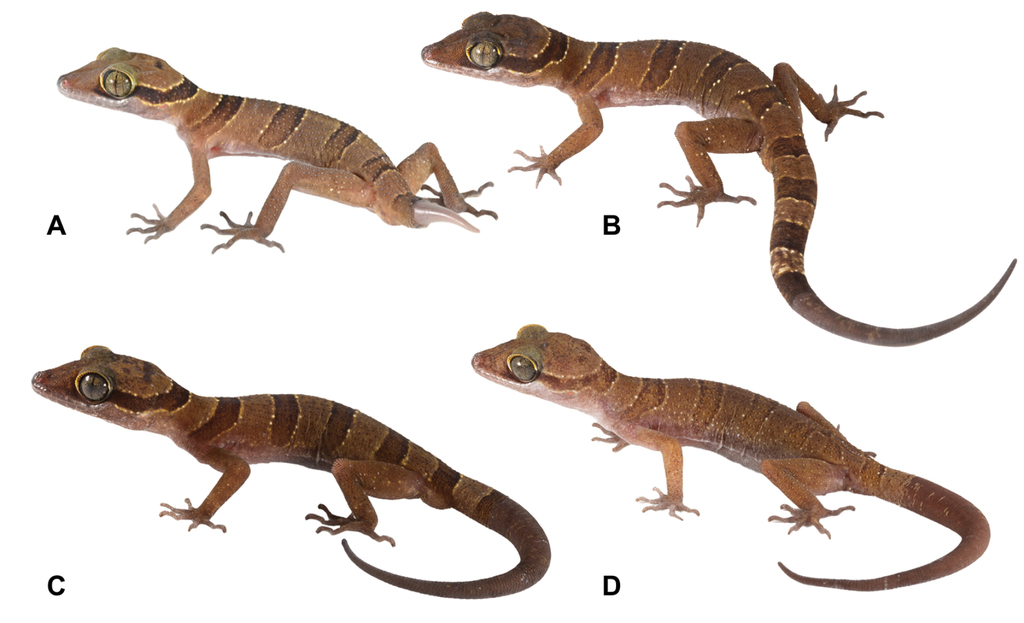
Its slender body is covered in bumps and equipped with short claws that help it grip and scramble across rocky surfaces. The coloring is striking: a light brown body marked with dark brown bands edged in white running across its back. A U-shaped band wraps around its head, connecting the eyes and giving it a look all its own.
Those physical details aren’t just charming. They were central to how the research team identified it as a species distinct from any gecko previously documented.
Where it calls home
Khlong Hat District sits about 150 miles east of Bangkok, close to the Cambodia border. The area is recognized as a biodiversity hotspot, meaning it supports an unusually high concentration of plant and animal life.
The geckos were found living around karst rock formations — a type of landscape shaped by dissolving rock that creates dramatic caves, crevices and rugged terrain.
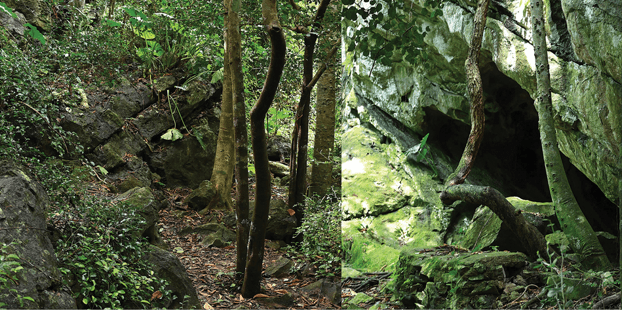
All those nooks and crannies give the small reptiles plenty of places to hide during the day and surfaces to navigate when they come out at night.
That remote, ecologically rich setting has proven to be fertile ground for new discoveries, and this gecko is the latest species to emerge from the area’s web of life.
A night owl (or night gecko)
The Khlong Hat bent-toed gecko is nocturnal. It spends daylight hours resting in shaded spots and comes alive after dark, moving across rocks, vegetation and the karst terrain of its home territory.
Researchers observed the geckos in a range of spots that paint a vivid picture of how they live.
Some were spotted on cave walls and tucked into rocky crevices. Others turned up on dry vines and logs along trails. In one memorable observation, a juvenile gecko was discovered clinging upside down on a shrub — just hanging out, literally.
These varied sightings suggest the gecko is adaptable within its habitat, making good use of everything the landscape offers.
How the team cracked the case
Confirming a new species takes painstaking work. The research team compared the gecko against known species using a range of physical and genetic criteria. They looked at body size, scale patterns, coloration, finger and toe structure and skin texture.
Then came DNA analysis, which revealed at least 5% genetic divergence from related gecko species. That gap was significant enough to classify it as its own distinct species rather than a variation of one already known.
Genetic divergence is one of the most reliable tools scientists use to distinguish between closely related species that might look similar to an untrained eye. Combined with the visible physical differences, the evidence was strong.
The discovery was made during wildlife surveys conducted in 2022 and 2023 by a six-member research team: Natee Ampai, Attapol Rujirawan, Siriporn Yodthong, Korkhwan Termprayoon, Bryan Stuart and Anchalee Aowphol.
Their fieldwork and detailed laboratory analysis led to the formal description of the species, published in the journal ZooKeys in 2024.
What this discovery tells us
Every newly identified species adds to our understanding of the natural world.

The Khlong Hat bent-toed gecko speaks to the ecological richness of eastern Thailand’s karst landscapes and how much remains undiscovered even in areas already recognized as biodiversity hotspots.
The fact that this species has turned up only in Khlong Hat District raises questions about how widespread the gecko may be — and what other undocumented creatures might be sharing its habitat, waiting to be found on a cave wall or clinging to a shrub in the dark.
Somewhere out there, another wide-eyed little face may be waiting for its close-up.
Conversation
All comments are subject to our Community Guidelines. Woman's World does not endorse the opinions and views shared by our readers in our comment sections. Our comments section is a place where readers can engage in healthy, productive, lively, and respectful discussions. Offensive language, hate speech, personal attacks, and/or defamatory statements are not permitted. Advertising or spam is also prohibited.