How to Grow Potatoes in Containers at Home: Get Helpful Tips From a Garden Pro
You can have your own little crop of potaotes just outside your home!

From homemade French fries to soft baked potatoes, spuds are likely a staple in your weekly menu. If the thought of growing your own potatoes to cook up for meals sounds extra appealing, it’s easier than you think to do! Best of all? You don’t need a huge garden or a lot of experience either. Below, a gardening pro shares all you need to know about growing potatoes in containers, from what sized vessel it requires to how to ensure healthy plants.
Why grow potatoes in containers?
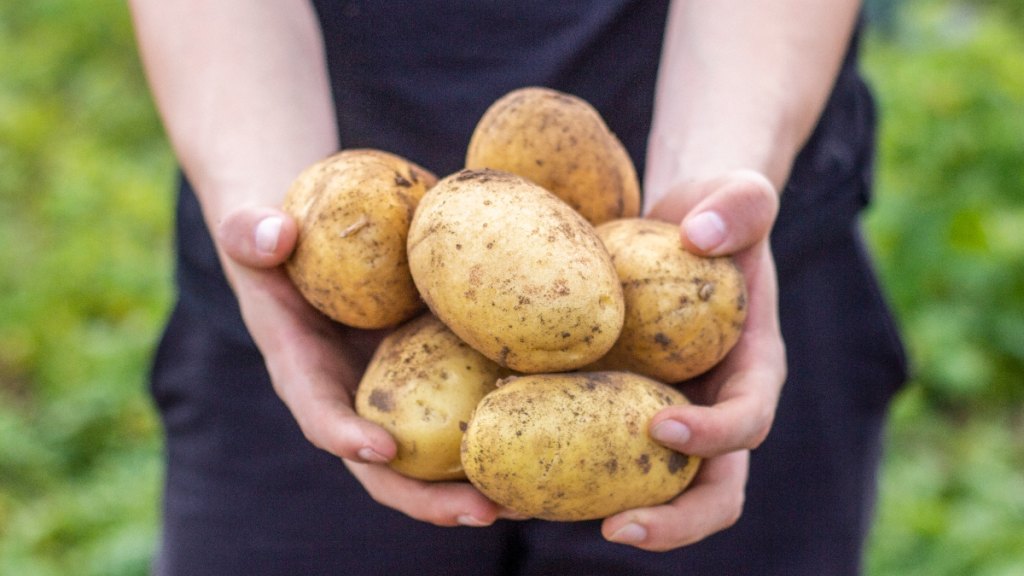
When you live in an apartment with a patio, have a small yard or simply have no room left in your garden bed, it may seem that growing your own potatoes is out of the question. Thankfully, that’s not the case!
“If you’re short on garden space, growing potatoes in containers is an easy alternative,” shares Susan Mulvihill, author of The Vegetable Garden Problem Solver Handbook. “Be sure to choose a sunny location for it.” You can still get a bountiful harvest without needing a large amount of room for the plants! (Click through for more small garden ideas.)
What kind of containers do you use to grow potatoes?
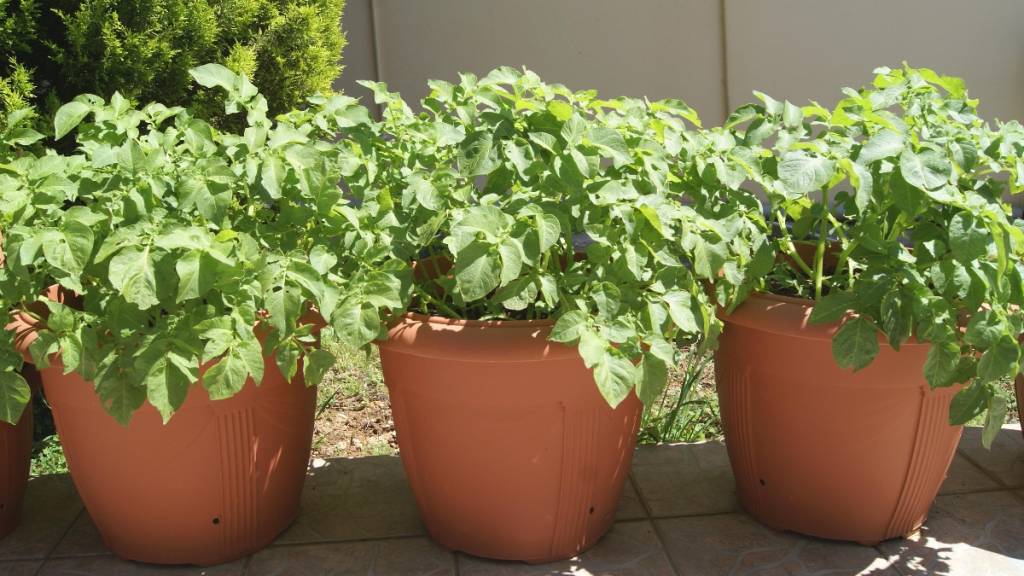
There are many options available when it comes to growing potatoes in containers. The key is making sure they’re large enough! Also, regardless of what type of container you use, you’ll want to make sure it’s clean and has drainage holes. “The holes aren’t a concern for cloth grow bags as excess water will seep through the fabric,” adds Mulvihill.
“Potatoes should be grown in containers that are at least 5 gallons in size, although you’ll get a much larger harvest if you go with a 15-gallon pot,” Mulvihill explains. “Cloth grow bags are a simple alternative to plastic or ceramic pots since they’re inexpensive and easy to work with.”
You can even grow potatoes in a large bucket! Just use a drill to makes holes in the bottom, as seen in the video below. This ensures proper drainage when watering the plants.
@livingonlife101 Growing potatoes in buckets #potato #growpotatoes #garden #homegarden #summergarden #bucket #organic #natural
♬ original sound – Shannon McNitt
For a bucket, check that it’s meeting the 5-gallon minimum requirement, as too small of a container can stunt growth. “They really need some room!” she shares.
How to plant potatoes in containers
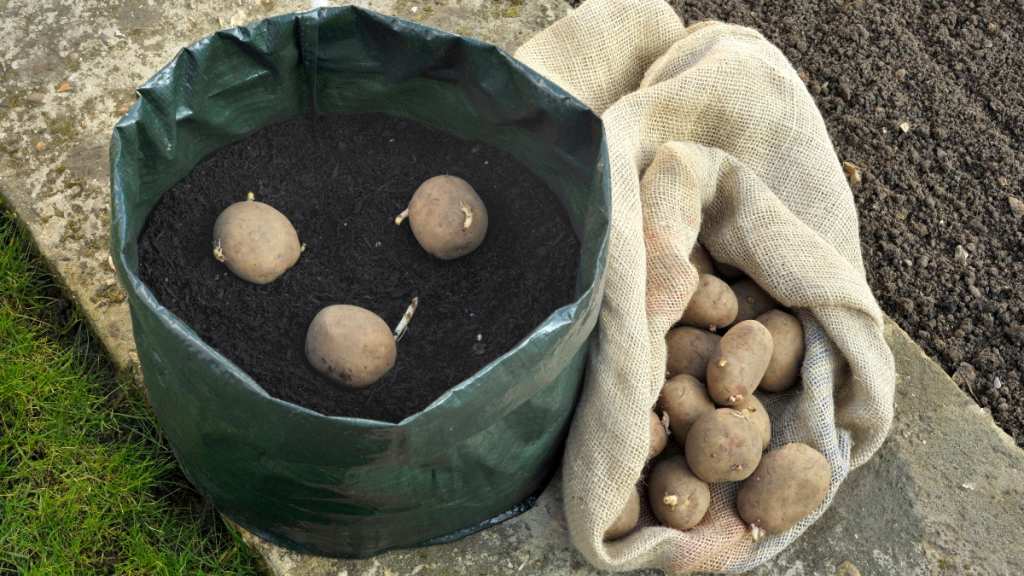
Once you have your container selected and cleaned, it’s time to start planting. Most gardeners prefer to do this with “seed potatoes,” which are sprouted tubers that are disease-free and ready to plant. They will grow to produce spuds that are genetically identical to what you’re planting (like Yukon Gold or Red Ruby, for example).

“Then place about 4 inches of potting soil into the bottom of the container and mix in some bonemeal according to the package directions,” suggests Mulvihill. “Bonemeal is an organic soil amendment that’s high in phosphorus, which will help the tubers grow. Set your seed potatoes on top of that, lying on their sides, and then cover them with about 3 more inches of potting soil.”
The TikTok from @saltyacresnc below shows how easy it is to do:
@saltyacresnc Container Gardening is the only way to grow potatoes 🥔! #containergarden #potatoes #soil #dirt #containergardening #growyourownfood #diygarden
♬ original sound – Salty Acres
When to add more soil to potted potatoes
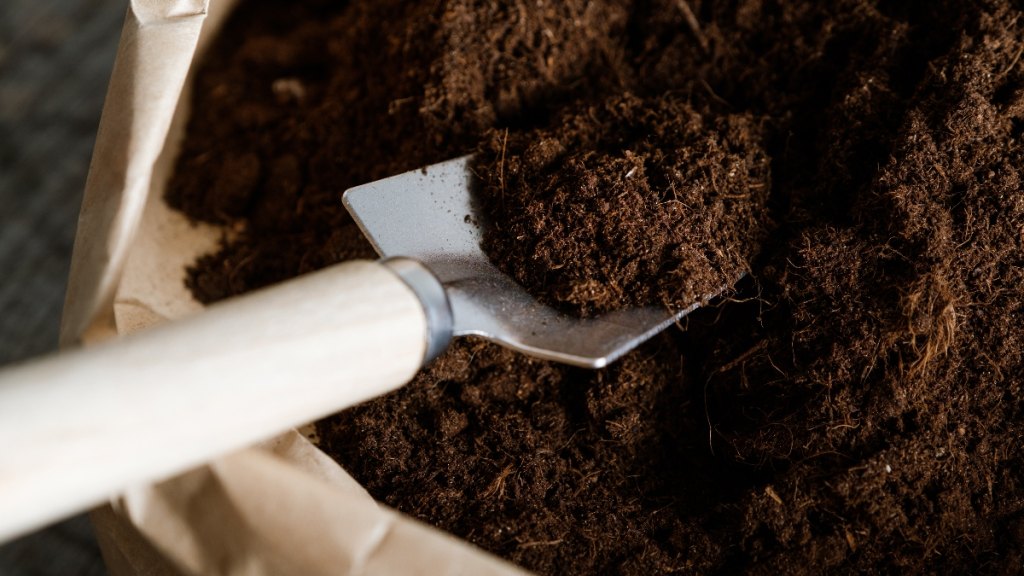
With most plants, you fill the container to the top with soil to properly protect the roots. This isn’t the case, however, with potato plants. More soil is added to the container as they grow.
“When the tubers sprout and develop some leaves, it’s time to add either more potting soil or compost to cover the stems, right up to the bottom of the leaves,” explains Mulvihill. “Let them grow about the same amount again, and again add more potting soil or compost. Repeat this process until the container is completely filled with soil and the plants are growing great.”
The reason? Covering or “hilling” the plants encourages the potato tubers to grow wider and deeper. It also allows for new potatoes to grow on top of ones that already maturing. Growing in containers means it’s easy to just pour in more soil as needed!
This is shown in the TikTok from @redleafranch below:
@redleafranch No room? No problem! #Grow #potatoes in containers 🤩🥔✨ #gardening #farmlife #abundance
♬ original sound – redleafranch
Potato plant care tips
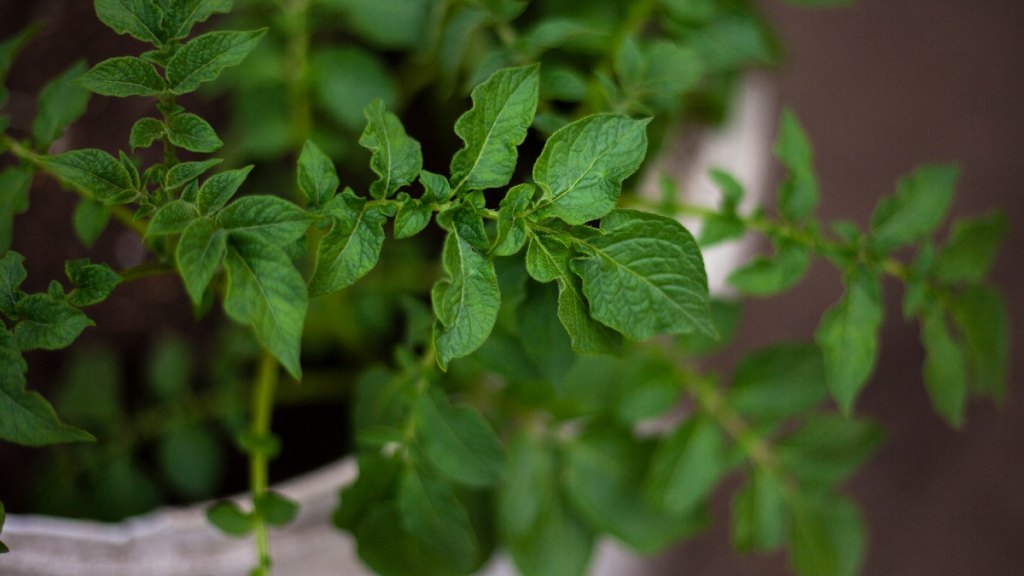
There are a few things to keep in mind when growing potatoes in containers to ensure they thrive. The first? Avoid overwatering or underwatering the container you’ve chosen. “The goal is for the soil to be lightly moist,” Mulvihill says.
Next, though potato plants need plenty of sun, you’ll want to make sure you protect any potatoes that are growing near the top of the soil from the rays. “Sunlight turns potatoes green and promotes the development of an alkaloid called solanine; it is harmful when consumed in large quantities,” cautions Mulvihill. “To prevent this from happening, apply a mulch to the surface of the container and leave it in place for the entire growing season.”
Once the potato foliage has turned brown, dried out and gone limp, it’s time to harvest your potato crop. Store the spuds in a cool, dark location to help them last. (Consider using your homegrown potatoes for a delicious baked potato bar!)

For more helpful gardening tips, keep reading!
Channeling Elvis Before Gardening Prevents Pain + More Hacks That Block Aches Head to Toe
Grow Your Own Succulent Garden, Plus How To Grow New Succulents From Their Leaves!
Garden Pros Share the Best Time to Plant Tomatoes — It’s Sooner Than You Might Think
Conversation
All comments are subject to our Community Guidelines. Woman's World does not endorse the opinions and views shared by our readers in our comment sections. Our comments section is a place where readers can engage in healthy, productive, lively, and respectful discussions. Offensive language, hate speech, personal attacks, and/or defamatory statements are not permitted. Advertising or spam is also prohibited.