‘Happy Money’ Episode 2: How to Divorce-Proof Your Midlife Finances, According to a Top Lawyer
In Episode 2 of the video series, expert James Sexton shares money tips to help you protect and rebuild your financial freedom
Going through a divorce or breakup is never easy—and when you add money worries to the mix, it can feel overwhelming. Navigating financial matters as a newly single individual may leave you with concerns about not only what to do next, but also how to be prepared in future relationships.
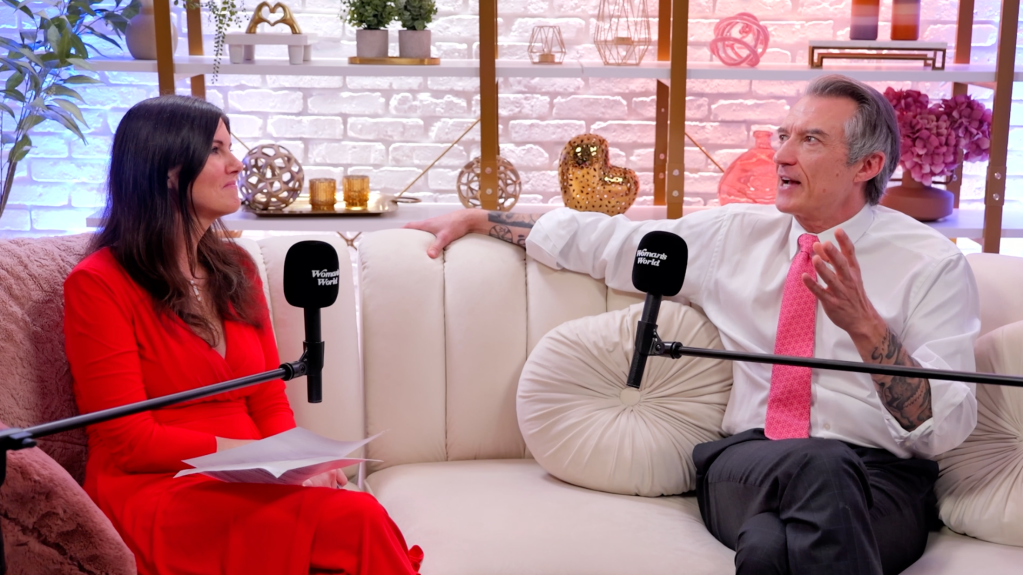
In Episode 2 of Woman’s World’s new “Happy Money” video series, all about finances in midlife—hosted by Digital Director Julia Dennison, America’s Divorce Lawyer James Sexton (creator of TrustedPrenup.com) reveals insights on financial freedom after heartbreak and the money tips that all couples should know.
Watch here and listen on Spotify, Amazon Music and Apple Podcasts.
Tune into Episode 2 right here! “The Divorce Reboot” with America’s Divorce Lawyer James Sexton
How to navigate finances before a divorce or breakup
Why getting expert help is your first smart move
If you’ve made the tough call to file for divorce, you might be wondering where to even begin. Sexton says you’ll want to get a consultation as soon as possible to help you navigate the situation.
“Get a lawyer,” he advises. “Don’t try to do it yourself. Don’t Google. Don’t Google it. Don’t use ChatGPT. I love those technologies, but they are not a substitute for good, qualified counsel.”
Getting outside help will also allow you to focus on your own mental health while still making progress forward.
“Be gentle with yourself,” Sexton adds. “I think it’s a real tough transition. It can be a hard process, but the only way out is through.”
This is your chance to build new money skills
After a divorce or split from a long-term relationship, you might feel uncertain about managing money on your own. This is especially true if your partner handled most of the finances.
But as you’re starting this new chapter, it’s an ideal time to become more knowledgeable about the topic.
“It really is a good opportunity for people to learn new financial habits, whether they should have learned them before or not,” says Sexton. “A big mistake people make is that during marriages or long-term relationships, we just fall into categories where one person does everything in one sphere.”
Now you have the chance to get comfortable with everything from budgeting to investing—and on your own terms.
It’s okay to protect what’s yours—here’s why
In the future, when you find yourself involved with a new significant other, you may be worried that you could take another big financial hit should the partnership end. Sexton assures it’s okay to exercise caution and be upfront about the plans for your individual assets if you break up. As you age, this step is even more recommended!
“You want to make sure that you’re protecting certain core interests, so that in the event that this relationship doesn’t work out, you’re not losing things that you’re not going to have the time to remake again,” he explains. “So you want to be a little more careful and a little more cautious about the things that you exchange, or what agreements you have in place, about how they’ll be divided.”
Similarly, if you have adult children, it’s a good idea to discuss with your new partner if you plan on supporting them financially in any way. This could be as simple as a large monetary gift or what assets will be passed to them after their death.
“I really do think that having conversations early in the relationship about, look, here’s the ways I want to be there for my kids,” suggests Sexton. “Like, ‘I know my kids are both successful, and one just got married himself,’ but like, I’d love to be able to give them a down payment on a house or an apartment.”
Open discussions are key: the more comfortable you both are with discussing finances together, the easier it will be to tackle those tough issues together.

Sexton’s top money tips for couples in midlife
1. Consider signing a prenup
Though prenups have long been commonplace in celebrity relationships, they aren’t just for those with serious wealth. More couples than ever are signing them before getting married, something Sexton highly recommends for peace of mind.
“It is really important for people to just be honest with themselves and each other, that a prenup is not a lack of confidence in the relationship,” he says.
In fact, a prenup can be a wise choice because it lets you tailor protections to your unique situation.
“Have a conversation about, ‘Hey, all marriages end…they end in death or divorce. I hope ours ends in death,” adds Sexton. “But if it doesn’t, if it ends like the other 56 percent in divorce or separation, what do we owe each other? How can we both feel safe? We’re going to have a prenup. It’s either going to be written by the government or by the two of us. Our relationship, our rules.”
2. Plan for the worst—even during the best of times
One of the benefits of having a prenup is that it encourages both of you to have an in-depth conversation about the future. Though no one likes to think about divorce as ever being a possibility, not knowing what would happen if the situation arises can leave you feeling helpless.
Sexton says he’s worked with many clients who had no idea about the legal ramifications of marriage until they were in his office, filing for divorce.
“The worst time to learn how to fight is when you’re in a fight, right? You have to learn it before,” he advises. “So it really is one of those things that I tell people, there is no time that is too soon to have a conversation with a divorce lawyer.”
3. Ensure both parties have some financial literacy
There’s no single right way for a couple to handle finances. Some keep their money in separate accounts entirely, while others decide to combine or opt for a mix of both. Regardless of the path you take, he says it’s crucial for both individuals to know how to access the finances—especially in case of an emergency or if one partner passes away.
“It’s really important, just from a safety perspective, for both of you to be responsible and to say, “Hey, we need to have some basic information together,” Sexton suggests. “But whether or not you have joint accounts or don’t have joint accounts, that’s really a function of the individual relationship.”
Whether you’re healing from a breakup or preparing for a secure future, remember: You have the wisdom and strength to take control of your financial life.

Read the full transcript below:
Dennison: Hi and welcome to “Happy Money,” a podcast with Woman’s World. I’m your host: Julia Dennison. I’m the Digital Director here at Woman’s World Magazine, and I’m here with my guest today, America’s Divorce Lawyer and founder of TrustedPrenup.com, Jim Sexton, or do I call you James?
Sexton: Jim is better. Jim is better. Sexton, I feel like I’m in court.
Dennison: So it’s interesting. Divorce is such an important topic when it comes to your finances, and with so many people going through more and more people are going through divorce after 50 than ever before so and having gone through it myself, often we think of divorce as this negative thing, which it can be obviously this heartbreak is the end of a relationship, but it also can represent a new chapter and freedom in your finances. So let’s dig into it. When a couple who’s been together for a long time, so say they’re in their midlife or later in life, and they’re looking at ending a marriage or ending a relationship, which is obviously not a fun thing to do. What are some of the biggest mistakes that you’ve seen people make when they approach divorce, especially in mid or later life? And then what are some things that people get right?
Sexton: Yeah, that’s a great question. I think the things that people get wrong very commonly is there, you know, I think most human problems stem from two things. We don’t know what we want and we don’t know how to express it once we know what we want. And I think the most dangerous lies we tell are the lies we tell ourselves. So I think people have unrealistic and unintentionally dishonest conversations with themselves and sometimes the people around them about what are they really going to need. Like, what are they going to need in the next chapter? Because I think you’re absolutely right, a divorce or an end of a relationship, it’s the end of one chapter, it’s the beginning of another. And what appealed to me when I first became a divorce lawyer 25 years ago was the opportunity to be part of the architecture of someone’s next chapter. I looked at it more like, how do I help this person and be of service to this person in giving them the tools they need to build the next chapter and make it a bright one? And so I think being honest with yourself is an incredibly important thing that a lot of people get wrong because they look at the relationship that they have and maybe they’ve fallen into the patterns where, like, one person does all the finances and the other person does all the things around the home. Well, they’re both in kind of disadvantaged positions then, because the person who does all the finances has superior knowledge about that, but they kind of have no idea what it costs to live and do their life, because they don’t really know what’s required for the nuts and bolts place. And you know, conversely, the person who doesn’t really follow finances isn’t really in a position to say, Well, what exactly do I need, and what does it cost, and what paperwork is involved, and how do I do the taxes so early on in a process, even ideally before, there’s the engagement of lawyers. There’s professionals like, you know, certified divorce financial planners. There are people like CFPs, financial planners themselves, that can give people a lot of insight into budgeting, looking at what are your finances now, and what will it be after? Because can’t cut something in half and have it be bigger than it was before. Like, ideally it’s going to be half the size, but a lot of times you lose something in the cutting. So it really is a good opportunity for people to learn new financial habits, whether they should have learned them before or not. A big mistake people make is that during marriages or long-term relationships, we just fall into categories where one person does everything in one sphere and one look, you know what? If you, if you and I are in a relationship, and you love to cook and I love doing the, you know, the finance stuff on the computer, wonderful. Like, you don’t force people to do things they don’t like to do, right? But I should know how to make a meal or two. I should know, like, because if you go away for the weekend, like, I can’t be like, well, now I just have to eat takeout. Like, it’s important to know a little bit. And similarly, you should always know, where are the finances generally, what’s going on with it? And that, by the way, can be in the relationship, a great opportunity, before things get rocky, to talk about the spheres of what we do and the value we bring to each other. And it can also create for us, post-divorce, post-separation, an ability to say, okay, in the next chapter, in my next relationship, I want to make sure I don’t let that happen again. You know, like, I’m divorced myself as well. And I always tell people, like, I never do anything perfectly the first time I do it, you know, so like, ideally, when a relationship ends, you learn something about what works for you and what doesn’t work for you, and you can go into that next relationship honestly and saying, Okay, I know what I’m going to look out for this time. I know what parts. I know where I screwed it up. I know that I didn’t express myself the right ways, or I didn’t, you know, like put out the little fires before they became big fires. So it really, I think that’s something. Really positive people can take out of that experience and bring into the next relationship.
Dennison: So you’re obviously in the business of prenups. So that’s really interesting. What you’re saying? It’s like there are things that you can do when you are in a happy relationship, potentially to protect for any future eventualities. What would you say in terms of finances in a relationship? Is it good to just pool your finances? Or would you say it’s better to kind of keep your finances slightly independent? Are there any reasons to keep your account separate, just thinking about people who are in happy relationships and aren’t thinking about divorce necessarily? But you know, these things happen.
Sexton: Yeah, so I think there’s a couple answers to that question. One is, I’ve always felt, just personally, that there are good reasons for people to have some, at least small level of financial autonomy in some aspects of their life. Because if we’re in a relationship and I want to buy you a birthday present, I kind of don’t need you seeing the credit card charge and what it is I paid for it and maybe even seeing it that I ideally, I bought it a few months before, not the day of. Yeah, you know. So I don’t want you seeing that go, Hey, what did you spend all that money at this place for and me having to go, Oh, that was for something else. So I think there’s something good about having a little bit of privacy in all circumstances. But beyond that, I’m not a big believer in one size fits all when it comes to relationships. You know, people say to me as a divorce lawyer all the time, because I see relationships that have fallen apart. And I’ve kind of figured out a way to reverse engineer from that, like, oh, you know, maybe don’t do this, and then you won’t get there. So it’s kind of like a opposite of a how to it’s like a how not to screw up. And what I often tell people is that, when it comes to money, you know, people have this reluctance to have conversations about money. But people also think, like, oh, well, this rule works, and this is what you should do. And the question really is, what works for you, you know, like, because, you know, people say all the time, like, oh, well, Lee, like, how much sex should we be having in our marriage? I’m like, You know what the answer is, enough that you both are happy, right? That’s really it. And maybe another couple, the answer might be more or less than that, right? But as long as the two people in that relationship are happy, that’s kind of all that matters. If you know it doesn’t matter what the neighbors are doing, right? So I think it’s the same thing about money, like if look, if both of you enjoy having conversations about money, or both of you don’t find it painful to have those conversations, then I think you can divide that labor however you want. But what I definitely think without question, is everyone should know a little bit about things, whatever the dynamic it is that you choose. And I think you shouldn’t try to force your partner to get engaged in things that they’re not super interested in. So I think you have to find that kind of fragile, nuanced balance between those two things. And again, I’d rather when it comes to like information is like ammunition. I’d rather have it and not need it than need it and not have it. And there’s lots of reasons why, other than potentially divorcing someday, that it’s really responsible and important to God forbid something happens to your partner? I don’t know where the accounts are. I don’t know what we have and where it is. It’s really important, just from a safety perspective, for both of you to be responsible and to say, hey, we need to have some basic information together. But whether or not you have joint accounts or don’t have joint accounts, that’s really a function of the individual relationship. For me, the biggest problem I see is sometimes people come into my office and I say to them, okay, like, what is the asset profile? And they go, I have no idea. You know, I know I drive a really nice car. And I’m like, Okay, do you own the car, or do you lease the car? You know? Like, I think we lease it, but I don’t know. And then I kind of go, okay, because I don’t know if that car is an asset or a liability, then. So it really is important to have some basic understanding of your financials, because one of the unsexy reasons that people have really serious problems in marriage and everyone’s very caught up on, like infidelity and things like that, but a lot of times like financial strain, financial tensions, financial dishonesty. That’s a real big marriage killer.
Dennison: It’s very stressful. So let’s play “Happy Money: Would You Rather.” I know you’re a prenup guy. Would you rather so if I were I’m divorced, if I were to be getting married again? Yes. Would you say to me, would you rather have the most expensive, fanciest, sparkliest engagement ring or a really solid prenup?
Sexton: Without question, a really solid prenup. I mean.
Dennison: Really?
Sexton: Yeah. Look, first of all, I could make a pretty solid argument in 25 years of doing divorces that the bigger the engagement ring, the more expensive the divorce eventually. And I don’t know how we would study, like, do a double blind study of that, but I sometimes feel like, like, the more performative the marriage is, the more that it’s because, you know, when you’re just genuinely happy, I don’t know about you, but like, when I’m genuinely happy in a relationship. I kind of like my happy place is sitting on the couch, watching something on a streaming service, eating some popcorn. Like, if you see me in the gym, like being super disciplined, it’s probably because my personal life’s not killing it at that moment. Like, yeah, because I’d rather sit there sort of putting on a couple extra pounds, enjoying some popcorn and watching something on a streaming service with my with my love, you know. So I think in engagement ring, listen, I love pretty jewelry, like the next person. I like nice things. I think there’s something very romantic, obviously, about, you know, making your partner smile with a gift like that. But a prenup, to me, is more of a statement of I want, you know, I think, I think it’s really hard to feel loved if you don’t feel safe. And I think part of the beauty of a prenup is it’s a way to say to someone, I’m marrying you because I want you to feel loved. But this is a step we’re going to take together, because I also want you to feel safe. I want you to know that if, if this, if somebody hurts you, even if that somebody was me, that you don’t have to be afraid that your safety is important to me. And I think that is a very beautiful way for people to introduce what could otherwise be a phrase differently, a difficult conversation.
Dennison: Yes, because so there’s a lot of talk around big celebrities, obviously Taylor Swift and Travis Kelce, whether or not they’re getting a prenup. But then you also see plot lines on Love is Blind, where one couple, one person wanted to write. You remember that with Love is Blind. It was, but one of the couples wanted a prenup, and the other one was insulted that she would even bring it up. And she said, it just makes financial sense, but it was, it was brought up as if it was something unromantic right now, obviously, we talk about celebrities and prenups, but are you seeing more and more everyday couples getting prenups?
Sexton: 100 percent.
Dennison: And what do those look like?
Sexton: For many, many years, people were very much of the mind that prenups are only something you need if you’re ultra wealthy. And in fact, it’s actually quite the opposite, like people on the come up are actually much more likely to need a prenup. Because look, you know, even if Taylor Swift gave away half of her net worth, she’s still worth hundreds of millions of dollars at that point. So you’re going to be okay, like, there’s only two amounts of money enough and not enough. That’s it. Like it was the only two amounts my I have a client worth $8 billion and I have some clients that are regular W-2 age earners, right? There’s only two amounts of money enough and not enough. And so if you’ve got a couple 100 million bucks, you can be all right, you’re going to be all right, like we’re not going to be worrying about you. But what I think, in a situation like that, you know, it is really important for people to just be honest with themselves and each other, that a prenup is not a lack of confidence in the relationship. That’s just not what it is. So for people who again, and I’m very I’m very pleased to see this as someone who’s on 53 so I’m very pleased to see that this younger generation, late 20s, early 30s, the prime years, where people often have their first marriages, they have, like so many other things that that that generation has done, they have normalized prenups. You know, there was a time in New York City, if I said, you know, like, Oh, my therapist says, we’ll be like, Oh, who’s got a therapist Crazy, right? And now, if I say, oh, you know, my therapist and I were talking about that, people like, Oh, what is your therapist say, Oh, my God. I talked about that with my therapist, and it’s no longer a weird thing. I love that prenups. I mean, the same thing is happening. I have young people. They don’t really have assets. Maybe they have student loans and no assets, but they come in and they just say, hey, we just want to have a rule set. Because the main thing that we talk about when we talk about trusted prenup.com is every marriage has a prenup. Every single one has a prenup. It’s either one that was written by the government, the state legislature of the state in which you reside. And by the way, they can change it without your knowledge, without your consent, and once they change it, you can’t opt out of the contract for you. They will. If they change the laws, the domestic relations law, it still applies to you, right? But they’re all a prenup is, is a rule set. So are you that confident in not only the current but all future governments that you would say, Oh yeah, I’m going to let them write the rules of my relationship. I got to tell you, like, I have you been to the DMV? I’ve been to the DMV. I never walked in there and looked at a bunch of government workers and went, Oh yeah, let’s put these people in charge of everything. Yeah. They should definitely be allowed to decide what happens to our property if we divorce. Look, you have a person you have chosen out of the 8 billion other options in the world, right? And you have, at that moment, an abundance of love, affection and optimism. What better time to have a conversation about, hey, all marriages end, they end in death or divorce. I hope ours ends in death. But if it doesn’t, if it ends like the other 56% in divorce or separation, what do we owe each other? How can we both feel safe? We’re going to have a prenup. It’s either going to be written by the government or by the two of us. Our relationship, our rules. And that’s what we say at Trusted Prenup is really, Hey, your relationship, your rules. And that’s the message that I think is resonating. We’re seeing a tremendous number of people, 20s, 30s, coming to the site, making their prenup. We’ve made it accessible. We’ve democratized it. Because there was a time where prenups, even though, you know, because technology wasn’t really where it is, 25 years ago. You know, we used to dictate into these little things and then hand them off to a secretary. Now, with technology being where it is, we are able to provide clients at a very reasonable price point the same quality prenup that I used to charge 15, $20,000 to draft for multi millionaire clients, and it’s as binding, it’s as comprehensive, but we’re leveraging AI and technology to really make, you know, this an easier, more democratized process. And I’m telling you, I think in five, five years, 10 years, there’s not going to be any stigma around having prenups. Maybe people won’t, you know, post on their Instagram like, Oh, we’re signing the prenup like they do with here’s the cake and here’s the dress. But I still, I think it will already be something much more normalized,
Dennison: That emotion will be taken out of it. It’ll just be a conversation.
Sexton: Or the right emotion will be loaded into it, right? Which is, this is how responsible we are. This is how much we trust each other, this is how much we’re willing to have challenging conversations, which bodes really well for their marriage, I will tell you, and I statistically, there’s no way to study this. For 25 years, I’ve been doing Prenuptial agreements. So I’ve probably done, at this point, 1000s of them. I think I’ve only twice done the divorce of a person who we did a prenup for, okay? And the overwhelming majority of those people, I’ve still had some kind of tie to them, and I know they’re still married. So something that I feel like there is something self-selecting about the kind of people that can have the conversation about, hey, yeah. Because you know, one of the most important skills, you know, as a person who was married and divorced, yeah, one of the most important skills is being able to have uncomfortable conversations, maybe even disappointing your partner a little, so that you don’t later disappoint them a ton or build resentment in yourself. So sometimes, I think the people that are able to do the prenup conversation, it’s a great test for a how do I communicate a challenging thing, and can I do it in a way that expresses more love and doesn’t bring out defensiveness in the person? Because it’s all about framing, and also to the extent that it is a little bit challenging of a conversation. Like, there’s a lot of conversations we have to have that are challenging, yeah, you know, like, what do we do when it comes to mom and dad? Or, you know, like, Hey, we got to do our wills. Like, who we want to leave this to, if, God forbid, we both passed away, right? You need to be but those are important. So I think the sooner you start working those muscles in a relationship, the stronger they get, and the easier the rest of it gets.
Dennison: So I love that for the younger generation, yeah, but you know, a lot of our listeners, and we’re approaching midlife, or in midlife, and I’m there solidly, right? And so prenups for that generation, where it was not something that people could do as much. So if you are looking at the end of your relationship and you don’t have a prenup, what are some of the first things you should do? And I’m thinking, especially if maybe you’re thinking about divorce, and maybe you haven’t even had that conversation with your partner yet, what are some of the things you should do right away?
Sexton: Great question. I think, I think the first thing people should do is start thinking about this stuff sooner rather than later, maybe even consult with counsel sooner rather than later. I have a lot of people who come into my office very sheepishly and they say, Look, I’m not sure I want to get divorced. I’m not sure I need to get divorced, but I just want to kind of learn my rights and potential obligations. And I say to them, this is the perfect time for you to be here, because you should be making informed decisions. Look, you know what? You buy an apartment, you get a HUD-1, a lead paint disclosure, all this information about what you just signed. You get married, you didn’t get a pamphlet. You just did the most legally significant thing you’re ever going to do, other than die, and no one explained it to you. The first time most people learn about what happened to them legally when they got married is when they’re in my office getting divorced. And let me tell you something, the worst time to learn how to fight is when you’re in a fight, right? You have to learn it before. So it really is one of those things that I tell people like, there is no time that is too soon to have a conversation with a divorce lawyer. If I could wave a wand or pass legislation unilaterally, every person who’s about to get married would have to have a one-hour consultation with a divorce lawyer just to learn, hey, here’s what’s gonna happen to your estate rights, your rights when it comes to ownership of property and title. Here’s what spousal or child support obligations can potentially be just so you go in making informed decisions, right? Because I think sometimes when you provide people with information, then they can make thoughtful decisions. I have so many people who come in and say, Well, I didn’t come in sooner, even though we’ve been very unhappy. Happier I’ve been a victim of domestic violence because I know that I’m going to have to do X, Y and Z financially. And you go, that’s not true. Like, where did you get that from? They’re like, Oh, I did an Internet search. And I’m like, Yeah, that’s not that’s not okay. Like you, it does not take that much to reach out speak to counsel. It’s totally confidential. When you talk to a lawyer, attorney client privilege they have you will never be disclosed to anyone. I have to take my client secrets to my grave, so there’s no risk in talking to a matrimonial lawyer and saying to them, explain my rights and obligations to me so I can make informed decisions.
Dennison: Are there any such things as a prenup while you’re still married, or is there anything you can do if you’re already married?
Sexton: Yeah, there’s, there’s something called a post nuptial agreement, which, again, without getting too technical, there are some logical concerns with it from an enforceability standpoint, because in contract law, there’s this concept of mutuality, of consideration, which means we can trade things in a contract, but we both have to get value. So if I say, I’ll give you this pillow, if you give me that pen, even if they’re not worth the same, if we both, you know, agree to that, it’s okay, right? But if you say, Sexton, I’m going to give you this pen when we finish this show, and then I say, later, Hey, can I have that pen? And you go, Oh, I’m sorry I changed my mind. It’s okay. Because even though maybe, you know, unfriendly and rude, I want the pen, but it may, you know, there was no consideration. I didn’t give anything up in exchange for it. So really, what happens with a post-nup is, when you’re not married and you have a prenup, it’s Hey, we don’t have to get married, and we don’t have to sign this contract, but if you sign the contract, then we can get married. That’s mutuality of consideration. It’s a binding contract. We’re already married. We’ll stay married if you sign this piece of paper, that’s not some states have said that’s not really mutuality of consideration, and therefore it doesn’t stand up. So what could a person do if they’ve married and now it feels like, Hey, maybe I should have had a prenup. Definitely. Again, have a conversation with a qualified, experienced matrimonial lawyer, because there are a lot of even in the absence of a prenup, financial practices a person can engage in that will protect them quite a bit in the if there is a divorce, look, I look at a prenup like I look at airbags and seat belts, right? Like in a perfect world, you’d have functioning airbags, functioning seat belts. And you know, again, I’m not planning on getting in a car accident, but I know that I’m not the only factor in that equation. What you don’t want is to think you have an airbag and you don’t, because, again, like, I might drive a whole lot slower and safer if I knew, hey, my car’s airbags don’t work right now, right? So it’s the same thing. I think people, even if they’re in a relationship, in a marriage, if there’s any reason like educational information, it’s better to have it and not need it than need it and not have it.
Dennison: Right? That’s so true. So Sexton, are there assets that people forget about? I know people think about their bank accounts, they think about their house, they think about maybe their cars. But is there anything that people don’t think about when they’re getting divorced they should?
Sexton: Yeah. I mean, retirement assets is a big piece. Obviously, people kind of put that aside, including things like a pension a defined benefit plan, which is really ultimately credits that you’re putting into a system that you could eventually receive benefit for for the rest of your life. Thinking about health insurance and the expense that that is for people. A lot of people don’t realize when they divorce, if they’re on their spouse’s health insurance, yell, they help cover rights for a certain period of time under federal law. But then, you know, I’ve had clients who are like, Yeah, okay, I’m getting $2,000 a month in child support. My health insurance is going to be $1,500 a month, right? So that’s really challenging for people and planning for that, and thinking about that assets really. You know, all property acquired from the date of marriage to the date of filing for divorce is presumed to be marital property in the absence of a prenup that says otherwise. So thinking about not only assets, but also liabilities, credit card debts in your spouse’s name, your name or joint names, yeah, debt isn’t that is something that is subject to division. So what happens if it’s debt you did not know about? Again, there is an argument that can be made that it’s what’s called a wasteful dissipation of marital assets, but quite often, you could be on the hook for that debt. Wow, and that’s another reason why trust a prenup. What we talk to people about when I counsel clients about prenups, I always say to them, we want to include in here some provisions about what I would call yours, mine and ours, and if it’s an asset and it’s in my name, or if it’s a liability and it’s in my name, it’ll be my responsibility in the event that we split up, right? And only if it’s a liability in joint names will it be a joint liability in the absence of a prenup; you are one person in the eyes of the law. So if I buy you a Birkin bag for your birthday, I bought myself one half of a Birkin bag. And if you buy me a Rolex for my birthday, you bought yourself one half of a Rolex, because you’re one person in the eyes of the law. So a prenup is a tool for people to be able to define what categories it’ll be. And again, it’s not one size fits all. Some people do prenups that just say, Here’s what we’re going to do about ownership of property or debts, yeah. And some people do everything, spousal support, child support, what goes on with their pets? Any number of things.
Dennison: So speaking of kids and pets, a lot of our listeners are in midlife, so their kids might be grown up or in college, or maybe 18 or older. Is there anything in terms of when you’re getting divorced and you have older kids that you should bear in mind?
Sexton: Yeah. I mean, listen, I have older kids, 26 and 28 and they’re still my kids. You know? I imagine someday they’ll be completely out of my pocket. But, you know, they’re always your kids. You’re always going to want to be able to give them as much as you can and be there for them in the ways that you can be there for them. So I think it’s important to be honest with yourself about that. Also, definitely be thinking about estate rights. You know, when you marry, if you die without a will or without a prenup, that says something in the contrary, your spouse is automatically your beneficiary above your children, right? So, you know, you really want to be careful about that, because there are a lot of people that say, Hey, my kids have been my kids for 30 years. My husband’s been my husband for a month and a half. Like, this is a second marriage or third marriage. If I die without a will, I don’t want everything I own to go to him. I want it to go to my kids, or something to him, but most of it to my kids, well, in the absence of a prenuptial agreement or careful estate planning. So definitely think about it from an estate perspective. And the other things, you know, again, I think people tend to when they’re dating, they may not have as many conversations about money, because we’re weird in this culture about money, like it’s like, this weird thing, we’re not allowed to talk. Yeah, I was never good at that. I’m being right, but I’m very sort of like, oh yeah. Like, let’s talk about stuff, like we’re gonna know anything. And I’m not the strong silent type, if you haven’t figured it out, but I really do think that having conversations early in the relationship about, look, here’s the ways I want to be there for my kids. Like, I know my kids are both successful, and one just got married himself, but like, I’d love to be able to give them a down payment on a house or an apartment. You know, that’s part of my parenting journey. Is to give that to them, to not have them struggle the ways that maybe I struggled when I was their age. So I really want to set them up for success, but if I was getting married to someone and I hadn’t had that conversation, I think it’s fair for them to say, Well, wait a minute, you’re taking your bonus this year and you’re giving it to the kid. Like, that’s not my kid. Like, can we save some of that together? So I think having proactive conversations is way better. And I think those are the kinds of topics that come up.
Dennison: Working those muscles, getting comfortable with those harder conversations, talking about finances earlier rather than later, and continuing to talk about them throughout the relationship. And you know, hopefully you don’t get divorced, but if you do, feeling comfortable and having those tools in your pocket, so say the divorce has happened. Now. We were saying before about how divorce can also represent financial freedom for a lot of people, or a new chapter. I always say, you know, having gotten divorced myself, you know, it’s easy to say when you hear friends getting divorced, like, Oh, I’m so sorry, which you absolutely should be there for your friends. But you can also kind of say like, congrats, you’ve gotten through a hard thing, and you come out the other side. So if you’re talking to people who’ve come out the other side, what are some of the first things that they should do when they’re out on their own financially, to ensure that they have that robust future as a single person?
Sexton: Yeah, so I think you know, every chapter in life, different things become important in different ways, and just like when you work with an investment person, they’re going to say to you the risk level that you can tolerate when you’re in your 20s and 30s, because you have so much time, you have this gift of time, our only non renewable resource, you know, and so you have this ability to go, Okay, make certain decisions, because if the market goes up or down, no big deal. Whereas 50s, 60s, 70s, you might not want to tolerate those kinds of market fluctuations. So maybe you’re going to make moves. Well, it’s really kind of the same thing from a legal standpoint. You want to make sure that you’re protecting certain core interests, so that in the event that this relationship doesn’t work out, you’re not losing things that you’re not going to have the time to remake again, right? Like this is the pool of what you have, and maybe you already gave away half of it, you know, in your prior relationship. So you want to be a little more careful and a little more cautious about the things that you exchange, or what agreements you have in place, about how they’ll be divided. So I see, as I kind of enter my own, you know, later midlife journey, that the things that are important to me now that may not be the things that were as important to me in my 20s and 30s, like I, you know, if a relationship ended, I wouldn’t be like, well, I want to make sure I get to keep my watch, like, maybe in my 20s. That would have been a big deal. But now it’s like, yeah, whatever, your priorities change exactly right. And I think align your priorities and values and with your focus should be aligned with those things, and don’t be afraid of that. Like, I think the only constant is change. I know and change is important, but transitions are hard, and divorce is a transition, and remarriage is a transition, and the most biggest gift you can give to yourself is to be honest with yourself and then figure out a way to be candid with your partner about the things that are important to you, because the truth is like, I would rather be, you know, loved for an honest version of who I am than loved for like a presentation or a persona that doesn’t ever talk about difficult things. Like part of the beauty of love, romantic love is the feeling, you know, the word intimacy. People associate it with sex, but the definition of it is the ability to be completely yourself with another person, and so I think that’s what these conversations should be about, is, how can I be completely myself? How can I share with you? Here’s what I’m scared of. Here’s the things in the past that were hard for me. Here’s the things when I think about the future I want it to look like, right? And I think that’s a conversation worth having,
Dennison: All right. Sexton, so real quick, if someone says to you, they’re getting divorced in midlife, what is one thing you would say to them?
Sexton: Get a lawyer. Don’t try to do it yourself. Don’t Google. Don’t Google it. Don’t use ChatGPT. I love those technologies, but they are not a substitute for good, qualified counsel. And you know, be gentle with yourself. I think it’s a real tough transition. It can be a hard process, but the only way out is through.
Dennison: That’s wonderful. Thank you, James Sexton, for coming on Happy Money. Where can people find you?

Sexton: You can find me at TrustedPrenup.com, you can find me on Instagram @NYCdivorcelawyer, and you can find me at SextonShow.com any of those, just Google me. You’ll find me all over the place, but mostly you’ll find me in a courtroom downtown Manhattan.
Dennison: Well, thank you for listening to “Happy Money.” I’ve been Julia Denison, your host, and remember, the best investment is the investment you make in yourself.
Conversation
All comments are subject to our Community Guidelines. Woman's World does not endorse the opinions and views shared by our readers in our comment sections. Our comments section is a place where readers can engage in healthy, productive, lively, and respectful discussions. Offensive language, hate speech, personal attacks, and/or defamatory statements are not permitted. Advertising or spam is also prohibited.