‘The Pitt’ Star Katherine Lanasa, 59, on Her ‘Dark’ Breast Cancer Journey and Early Screenings (Exclusive)
'That very dark journey was really purposeful,' the actress who plays Nurse Dana revealed

Key Takeaways
- Katherine LaNasa, 59, derived deep purpose for her role on 'The Pitt' from her cancer fight.
- Early screening offers a 99%+ survival rate—don't wait until 40 to speak with a doctor.
- Bringing a friend or planning a reward can help ease anxiety around mammogram screenings.
Emmy-winning actress Katherine LaNasa, 59, who plays compassionate charge nurse Dana Evans on HBO Max’s The Pitt, is using her own experience as a breast cancer survivor to help women prioritize their health through Novartis’ “Your Attention, Please” campaign. The global health care company, which has spent more than 30 years advancing breast cancer care, is encouraging women to understand their risk, talk with their doctors and stay up to date on screenings.
“You don’t have to wait until you know you’re 40. You can get your mammograms now. You can start talking to your doctor about it early,” LaNasa tells Woman’s World. After discovering a lump in her 30s and learning she had dense breasts, she knew the importance of staying vigilant. “One in eight women will get breast cancer. That’s such a huge statistic, but only half of us are doing our yearly screenings. And if you are screened early, you have a higher than 99 percent rate of survival. So those are really good odds.”
Here, LaNasa shares with Woman’s World how her history with breast cancer impacts how she plays her role on The Pitt as a nurse, the compassion she felt from her own nurses when she was a patient and what women can start doing now to stay healthy and proactive.

How Katherine LaNasa’s breast cancer journey shaped her role on The Pitt
For LaNasa, playing a nurse who comforts patients through their most frightening moments has taken on special meaning after her own diagnosis and treatment. She recalls the difficult period when she was battling cancer, a time that ultimately gave her a deeper understanding of what patients experience.
“Coming full circle and feeding into this role within a year of having breast cancer and breast cancer surgery was very spiritual. It just really was the soil from which that role grew out of. That very dark journey was really purposeful,” she says. Having experienced the fear and uncertainty of being a patient herself, LaNasa found that her personal journey helped her bring a new depth of understanding to Nurse Dana.
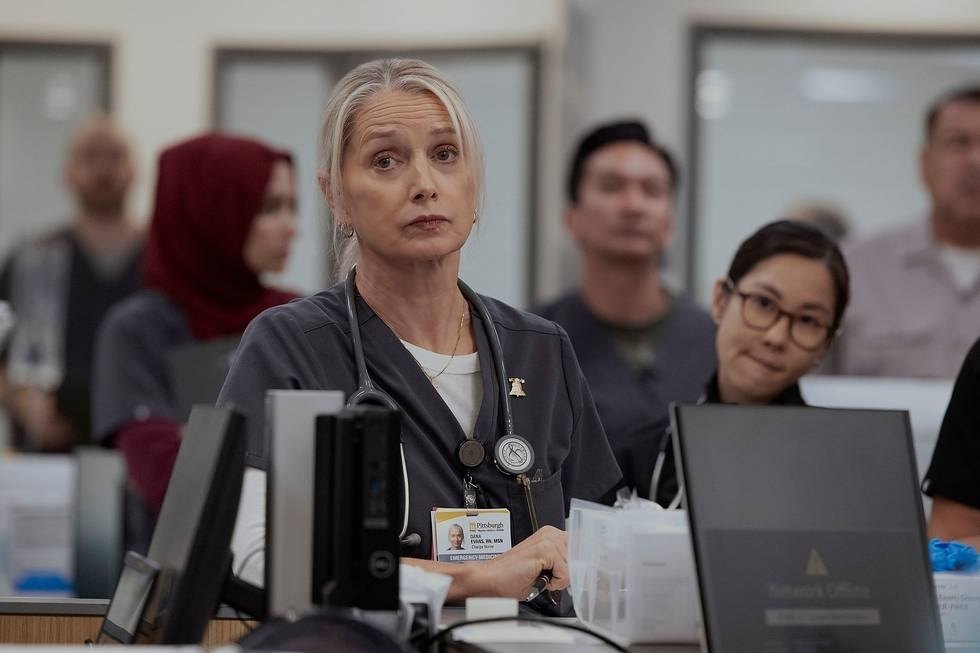
The Pitt highlights the importance of compassionate care
LaNasa’s experience with breast cancer also gave her a personal appreciation for the nurses who helped her through an overwhelming time. She remembers a nurse who spoke hope over her when she became frightened by possible complications after treatment.
“The nurse just took me aside, and she said, ‘You know, it’s really normal for things to be bumpy after cancer. My sister-in-law just went through this, things don’t last forever. This will change. This is a period. You’ll get through this,’ and just the fact that she took that time to comfort me really changed my day. It really kind of changed everything,” LaNasa recalls.
That kindness continues to inform her portrayal of Nurse Dana, particularly when frightened patients and their loved ones arrive at the emergency department. “And so I think every time someone comes in, they’re freaked out. I think I’m always leading with that in the character, that I understand that they are legitimately freaked out. Either they or their loved one is in a lot of trauma, and they’re scared to death. And so, really coming with that understanding every time was one of the gifts of my experience.”
Why women should talk to their doctors early
Breast health deserves attention at every age, and LaNasa hopes her own story will serve as a reminder for women—especially when it comes to understanding individual risk factors and deciding when to begin screening. “You can start the conversation with your doctor at any point. You can inquire about your own family history,” she says.
She also knows firsthand how much reassurance and information can help ease the anxiety surrounding medical tests. After her own diagnosis, a radiologist took the time to explain how the machines worked and answer questions about her breasts before she began imaging. “The doctor became somebody that I wanted to be in the role. Someone that had patience to explain to a patient what was going on, and respecting their fear and respecting their need to know about what was going on with their body,” she says.
For women who feel nervous about scheduling an appointment, LaNasa suggests making the experience less intimidating by taking a friend or planning something enjoyable afterward.

One breast cancer screening can start a chain reaction

Through Novartis’ “Your Attention, Please” campaign, LaNasa hopes to turn the lessons of her own breast cancer journey into a reminder that could make a difference for women everywhere. She has already seen how sharing her experience can encourage someone else to take action, and she hopes to reach many more women with that message.
“Only one in two women who are eligible to get screened are getting screened. Right after I had cancer, I stayed with a friend, and she was inspired by me and decided to get screened. She had a big mass, and she got it taken care of. So I was able to affect this one person I knew with my story. So if I can get this broader platform and get more women out there getting screened, I’m all for it,” she says.
To learn more about breast cancer risk, screening and resources for finding a screening location, visit YourAttentionPlease.com. Because a conversation today could help a woman take an important step toward protecting her health tomorrow.
Conversation
All comments are subject to our Community Guidelines. Woman's World does not endorse the opinions and views shared by our readers in our comment sections. Our comments section is a place where readers can engage in healthy, productive, lively, and respectful discussions. Offensive language, hate speech, personal attacks, and/or defamatory statements are not permitted. Advertising or spam is also prohibited.